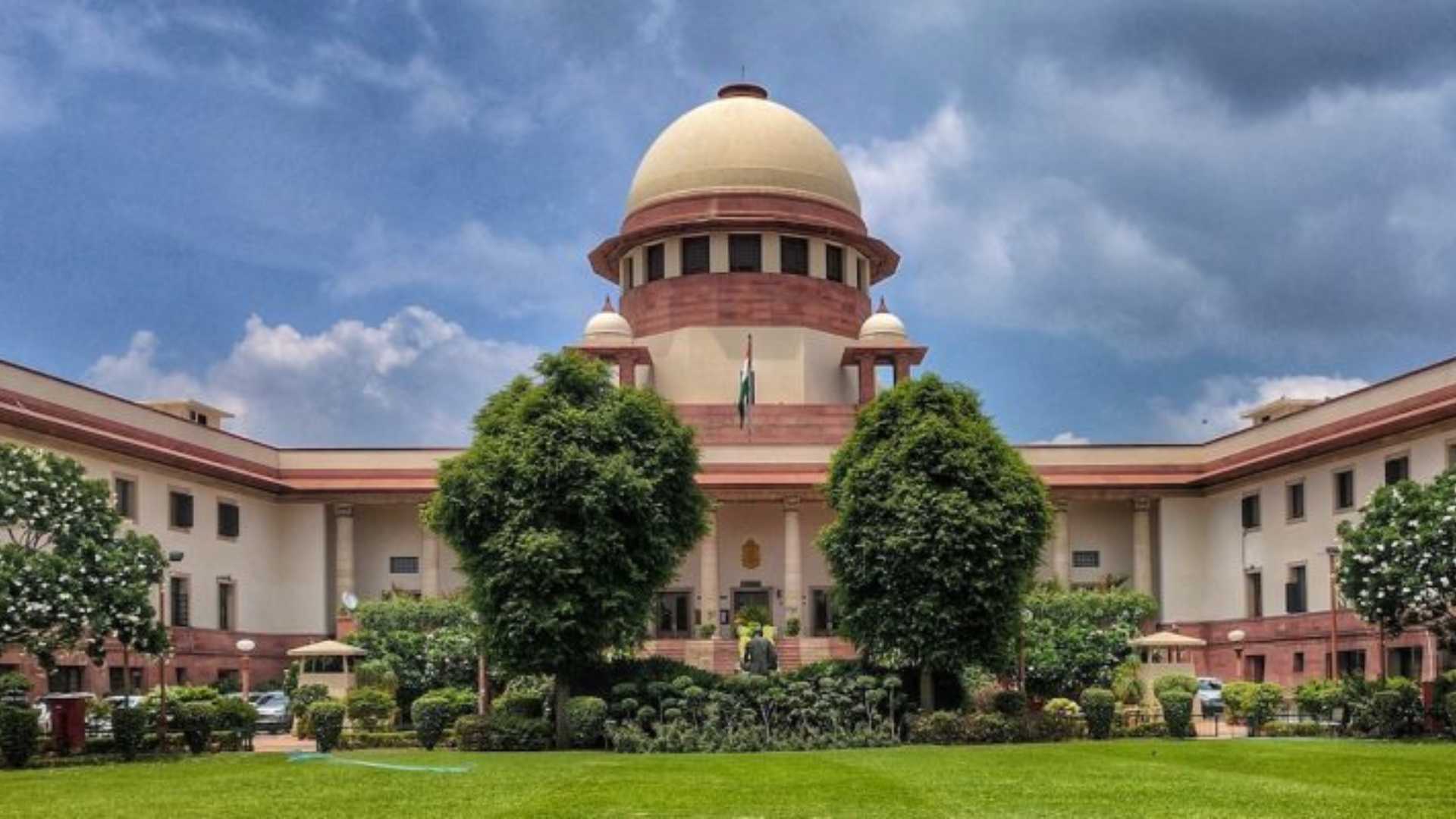
Supreme Court's Take on Hate Speech and Fraternity

"Hate speech is not merely a deviation from acceptable discourse; it is fundamentally antithetical to the constitutional value of fraternity and strikes at the moral fabric of our Republic." — Supreme Court, 2026
In a 125-page judgment, the Supreme Court has delivered a definitive constitutional statement on hate speech — locating it not merely as a law-and-order problem but as a civilisational threat to fraternity, while simultaneously drawing a firm line on the limits of judicial legislation.
| Legal Provision | Coverage |
|---|---|
| BNS Section 196 | Promoting enmity between groups |
| BNS Section 197(1) | Acts prejudicial to national integration |
| BNS Section 299 | Outraging religious feelings |
| BNS Section 302 | Wounding religious feelings |
| BNS Section 356 | Promoting enmity/mischief |
| BNSS Section 173(4) | Complainant can write to SP if local police refuse FIR |
Background & Context
India lacks a standalone hate speech law — a legislative gap repeatedly flagged by courts, civil society, and UN bodies. Despite Supreme Court directions in Tehseen Poonawalla (2018) mandating immediate FIR registration, hate crimes have continued. A series of petitions — including by journalist Qurban Ali — sought judicial direction to enact specific hate speech legislation. The 2026 judgment is the court's most comprehensive response yet.
Core Holdings of the Judgment
1. Hate Speech as Fraternity Violation: The court elevated hate speech from a penal category to a constitutional wrong — directly antithetical to the Preamble's value of fraternity and India's civilisational ethos of Vasudhaiva Kutumbakam.
2. Court Cannot Legislate: Despite acknowledging the gravity of hate speech, the bench firmly declined to direct enactment of new laws — upholding the separation of powers doctrine. Judicial law-making would "impermissibly trench upon functions assigned to the legislature."
3. Enforcement Gap, Not Legal Gap: The problem is not absence of law but failure of enforcement. Existing BNS and BNSS provisions are sufficient; the deficiency lies in selective, politically motivated, or negligent application by police.
4. No Prior Sanction Required: Magistrates can take cognisance of hate speech complaints directly — removing a procedural barrier that had been used to delay action.
5. Immediate FIR Mandatory: Reiterating Tehseen Poonawalla (2018) — police must register FIRs immediately upon receiving hate speech complaints, with no discretion to screen or delay.
Constitutional Framework
| Concept | Dimension |
|---|---|
| Fraternity (Preamble) | Hate speech directly undermines constitutional belonging |
| Article 19(1)(a) | Free speech — hate speech operates at its outer limit |
| Article 19(2) | Reasonable restrictions — public order, decency, morality |
| Article 21 | Dignity of targeted communities |
| Separation of Powers | Courts interpret law; legislature enacts it |
Critical Analysis
Enforcement argument's limitation: Directing better enforcement of existing laws assumes police neutrality — a structurally weak assumption in a politically polarised environment where hate speech often has majoritarian backing. Laws unenforced by design require legislative intervention, not judicial exhortation.
Legislative vacuum argument: India's BNS provisions are broad and general — not calibrated to the specific harms of targeted identity-based hate speech as understood in international human rights law (ICCPR Article 20). A standalone law could provide definitional precision, graduated penalties, and mandatory timelines.
Judicial restraint vs. judicial abdication: The court's separation of powers reasoning is constitutionally sound, but critics argue that in the face of persistent state inaction, restraint becomes complicity — particularly when the court has previously issued detailed directions in areas like sexual harassment (Vishaka Guidelines) and mob lynching.
Comparison: Global Approaches to Hate Speech Laws
| Country | Approach |
|---|---|
| Germany | Standalone Volksverhetzung law; strict liability |
| UK | Public Order Act + specific hate crime legislation |
| USA | First Amendment protection; minimal restriction |
| India | Scattered BNS provisions; no standalone law |
| South Africa | Promotion of Equality and Prevention of Unfair Discrimination Act |
Conclusion
The 2026 judgment is constitutionally significant on two counts: it deepens the jurisprudential meaning of fraternity — transforming it from a Preamble aspiration into an enforceable constitutional value — and it restates with clarity that courts govern through interpretation, not legislation. The harder question it leaves unanswered is whether a democracy can rely on executive goodwill to enforce laws that powerful political actors have an interest in not enforcing. The judgment passes the baton to Parliament — but Parliament's will to act remains the decisive, and uncertain, variable.
Attribution
Original content sources and authors

Syllabus classification
How this article maps to GS papers
Main syllabus
GS1Indian SocietyQuick Q&A
What is the Supreme Court’s interpretation of hate speech in the context of constitutional values?
From a constitutional perspective:
- Fraternity: Hate speech undermines the sense of brotherhood essential for unity in diversity.
- Dignity: It violates the intrinsic dignity of individuals and communities.
- Secular ethos: It contradicts India's civilisational principle of Vasudhaiva Kutumbakam (the world is one family).
The Court’s interpretation aligns hate speech with a threat to the moral fabric of the Republic, not just public order.
For example, inflammatory speeches targeting religious communities often lead to communal tensions and violence, illustrating how speech can translate into real-world harm. Thus, the Court situates hate speech within a normative constitutional framework, emphasizing its corrosive impact on democratic coexistence.
Why did the Supreme Court refuse to direct the enactment of a separate law on hate speech?
The reasoning can be understood through the following points:
- Institutional boundaries: Judicial law-making would encroach upon legislative functions.
- Existing legal framework: Provisions under the Bharatiya Nyaya Sanhita (BNS) already address hate speech and related offences.
- Democratic legitimacy: Law-making requires deliberation and representation, which only Parliament can ապահով.
For instance, sections dealing with promoting enmity or outraging religious feelings already provide legal remedies, indicating that the issue lies in implementation rather than absence of law.
Thus, the Court adopted a restrained and constitutionally consistent approach, emphasizing that any new law must emerge through democratic processes rather than judicial directives. This preserves institutional balance while still acknowledging the seriousness of hate speech.
How do existing legal provisions in India address hate speech and related offences?
Key provisions include:
- Section 196: Promoting enmity between groups
- Section 197(1): Acts prejudicial to national integration
- Section 299 & 302: Outraging or wounding religious feelings
- Section 356: Acts causing public mischief and disharmony
Additionally, Section 173(4) of BNSS empowers citizens to escalate complaints to the Superintendent of Police if local police fail to register FIRs, ensuring procedural accountability.
For example, in cases of communal violence triggered by inflammatory speeches, these provisions can be invoked to prosecute offenders. The Supreme Court has also reiterated in cases like Tehseen Poonawalla (2018) that police must promptly register FIRs in such situations.
Thus, the framework is comprehensive in scope, but its effectiveness depends on timely and unbiased enforcement. The Court emphasized that strengthening implementation mechanisms is more critical than creating new laws.
What are the underlying reasons for the persistence of hate speech and hate crimes despite existing laws?
Key reasons include:
- Societal divisions: The “us versus them” mindset fosters prejudice and hostility.
- Weak enforcement: Delays or reluctance in registering FIRs reduce deterrence.
- Political patronage: In some cases, perpetrators may enjoy implicit protection.
- Lack of awareness: Victims may not be aware of legal remedies available to them.
For instance, incidents of mob lynching or communal clashes often involve hate speech as a trigger, yet delayed police action undermines justice.
Moreover, the rise of social media has amplified the spread of misinformation and rumours, making regulation more complex. This creates a gap between legal provisions and ground-level realities.
Therefore, addressing hate speech requires not only legal enforcement but also social reform, administrative accountability, and digital governance to tackle its root causes effectively.
Critically analyse the Supreme Court’s emphasis on enforcement over new legislation in tackling hate speech.
Strengths of this approach include:
- Avoidance of legal redundancy: Prevents duplication of laws and confusion.
- Focus on accountability: Encourages better performance by law enforcement agencies.
- Preservation of constitutional balance: Respects the separation of powers.
However, certain limitations must be considered:
- Ambiguity in existing laws: Definitions of hate speech may lack clarity.
- Implementation challenges: Structural issues like police bias or capacity constraints persist.
- Emerging threats: Digital platforms create new forms of hate speech not fully addressed by traditional laws.
For example, while laws exist to curb communal incitement, their inconsistent application often leads to selective justice.
Thus, while the Court’s stance is institutionally sound, it must be complemented by administrative reforms, capacity building, and possibly nuanced legislative updates to address evolving challenges effectively.
How can the principles laid down in the Supreme Court’s judgment be applied in a real-world administrative scenario involving hate speech?
Administrative actions should include:
- Immediate FIR registration: As mandated in the Tehseen Poonawalla case.
- Use of relevant BNS provisions: Charging offenders under sections related to promoting enmity and public mischief.
- Supervisory oversight: Magistrates ensuring fair investigation.
- Public communication: Countering rumours through verified information.
For example, if a viral video spreads misinformation targeting a community, authorities can invoke legal provisions and simultaneously use digital platforms to clarify facts and prevent escalation.
Broader implications include:
- Strengthening public trust in institutions
- Preventing escalation into violence
- Reinforcing constitutional values of fraternity and dignity
This case illustrates that effective governance, rather than new laws, is often the key to addressing hate speech. It underscores the need for capacity building, accountability, and proactive administration in maintaining social harmony.
Practice questions
2 questions for mains preparation