GS1 Geography

India deepens Venezuela ties and mineral cooperation

India's Energy Security and Critical Minerals Diplomacy: Expanding Partnerships in a Changing Global Order

PM Modi and Delcy Rodriguez hold talks to enhance energy ties, addressing geopolitical and economic interests for the Global South.
Dhinesh Balasubramanian Dhinesh Balasubramanian
4 mins read

India is increasingly strengthening international partnerships to secure energy supplies, diversify strategic resources, and build resilient supply chains. Recent engagements with Venezuela and the United Kingdom highlight India's efforts to enhance energy security and critical mineral access while deepening cooperation within the Global South and beyond.

India–Venezuela Relations: A Renewed Strategic Partnership

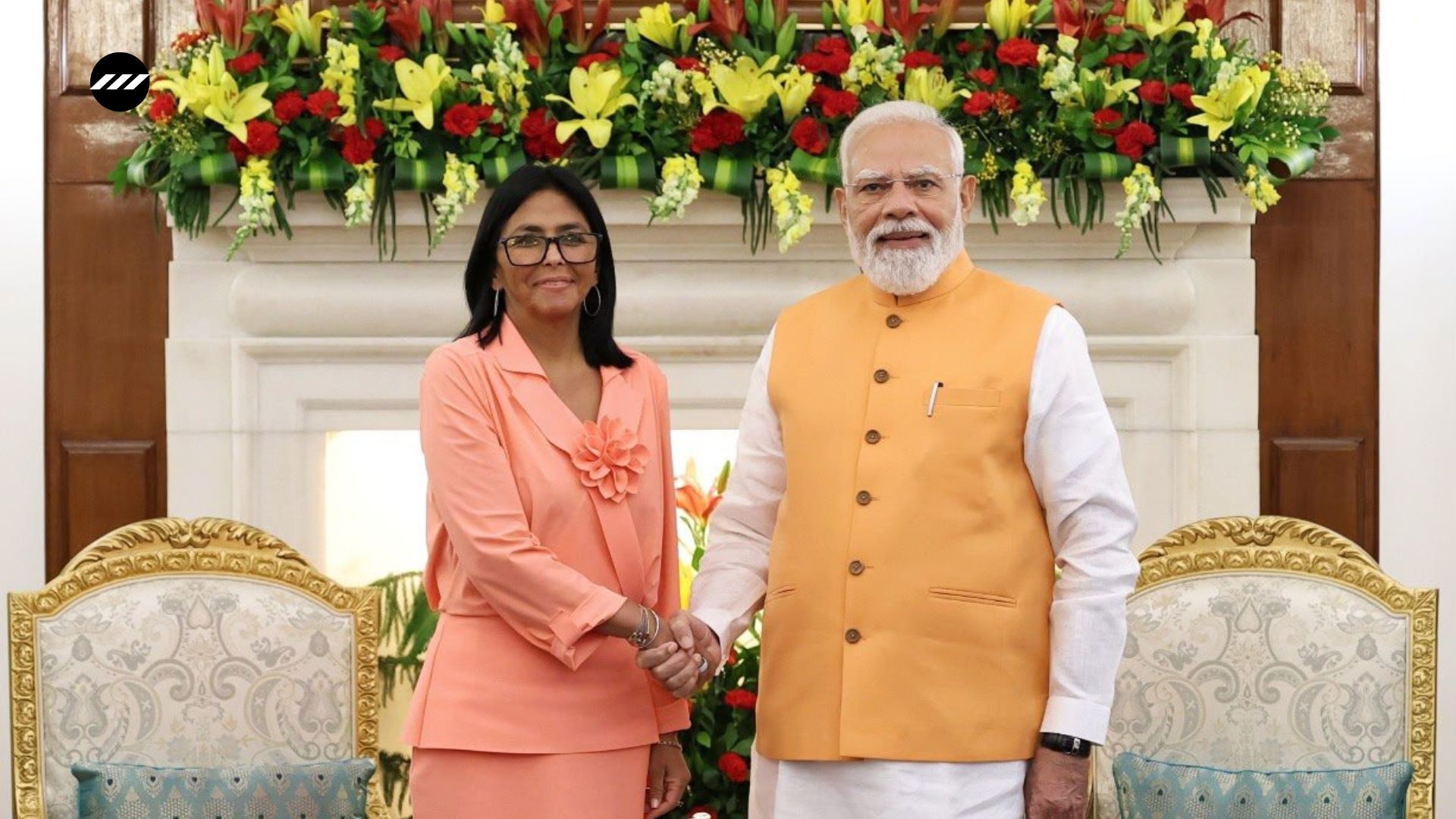
During the visit of Delcy Rodriguez, Acting President of Venezuela, Prime Minister Narendra Modi described India-Venezuela cooperation as being of "immense importance for the Global South."

The visit comes amid political and economic changes in Venezuela and reflects a renewed emphasis on bilateral cooperation.

Areas of Cooperation

SectorFocus Area
EnergyOil and energy security
Critical MineralsResource cooperation
TechnologyTechnology sharing
AgricultureFood and agricultural cooperation
HealthHealthcare collaboration
People-to-People TiesCultural and societal exchanges

"As a valued partner in Latin America, our close cooperation with Venezuela holds immense importance for the Global South." — Prime Minister Narendra Modi

Why Venezuela Matters to India

Venezuela possesses some of the world's largest proven oil reserves.

At a time of uncertainty in global energy markets, Venezuela has become increasingly important for India's energy strategy.

Emerging Energy Partnership

According to Union Petroleum Minister Hardeep Singh Puri:

  • Venezuela emerged among India's largest crude oil suppliers during April-May 2026.
  • An Indian technical team will soon visit Venezuela.
  • Indian companies already have investments in Venezuela.
Venezuela
     ↓
Large Oil Reserves
     ↓
India's Growing Energy Demand
     ↓
Strategic Energy Partnership

Officials described the relationship as one of "perfect complementarity" between a major producer and a large consumer.

Energy Security in a Turbulent Global Environment

India's efforts to diversify energy sources are influenced by ongoing geopolitical uncertainties.

Key concerns include:

  • Volatility in global oil markets.
  • Disruptions linked to the U.S.-Israel-Iran conflict.
  • Strategic vulnerabilities around the Strait of Hormuz.
  • Rising energy demand from India's growing economy.

In this context, expanding energy partnerships helps reduce supply risks.

The Global South Dimension

The visit also highlighted broader geopolitical objectives.

Both countries emphasized:

  • South-South cooperation.
  • Greater economic collaboration.
  • Multipolar global governance.
  • Mutually beneficial development partnerships.

The Venezuelan side described India as a "trusted partner" and highlighted the role of energy security as a fundamental pillar of bilateral relations.

Critical Minerals: The New Strategic Resource

Alongside energy security, India is also focusing on securing access to critical minerals.

Critical minerals are essential for:

  • Electric vehicles
  • Renewable energy systems
  • Batteries
  • Electronics
  • Defence technologies
  • Clean energy transitions
Critical Minerals
        ↓
Batteries + Solar Panels + EVs
        ↓
Energy Transition
        ↓
Strategic Importance

As global competition for these minerals intensifies, resilient supply chains have become a strategic priority.

India–U.K. Critical Minerals Partnership

India and the United Kingdom formally launched the Critical Minerals Global Supply Chain Observatory (GSCO).

The initiative was first announced during U.K. Prime Minister Keir Starmer's visit to India in 2025.

Institutional Partners

IndiaUnited Kingdom
TEXMiNUniversity of Cambridge
IIT (ISM) DhanbadResearch and Analytics Support

The observatory will function as a data-driven platform to:

  • Monitor global supply chains.
  • Analyse mineral availability.
  • Assess supply vulnerabilities.
  • Support investment decisions.

Why the Observatory Matters

The platform aims to improve:

  • Supply chain resilience.
  • Strategic planning.
  • Information sharing.
  • Resource security.

"This is a major step towards strengthening critical mineral supply chains and supporting clean energy transitions." — G. Kishan Reddy

The U.K. also highlighted that improved information-sharing would benefit both countries and strengthen broader strategic cooperation.

Strategic Significance for India

Together, the Venezuela and U.K. engagements reflect two complementary pillars of India's resource diplomacy.

Strategic NeedPartner
Energy SecurityVenezuela
Critical Mineral SecurityUnited Kingdom
Clean Energy TransitionBoth
Supply Chain ResilienceBoth
Energy Security
       +
Critical Mineral Security
       ↓
Economic Growth
       +
Clean Energy Transition
       ↓
Strategic Autonomy

These partnerships support India's efforts to reduce vulnerabilities in an increasingly uncertain global environment.

Way Forward

  • Diversify sources of crude oil imports.
  • Expand overseas investments in energy assets.
  • Strengthen critical mineral acquisition and processing capabilities.
  • Deepen international partnerships for resource security.
  • Promote strategic reserves for energy and minerals.
  • Enhance domestic exploration and mining capacity.
  • Build resilient and transparent global supply chains.
  • Support technology-sharing and research collaboration.

Conclusion

India's engagements with Venezuela and the United Kingdom demonstrate a broader strategy aimed at securing both traditional and emerging strategic resources. While Venezuela contributes to India's energy security through oil supplies, the U.K. partnership strengthens access to critical minerals required for future technologies and clean energy transitions. Together, these initiatives reinforce India's quest for strategic autonomy, resilient supply chains, and a stronger role within the evolving global economic order.

Attribution

Original content sources and authors
Kallol Bhattacherjee Author Kallol Bhattacherjee The Hindu Source The Hindu

Syllabus classification

How this article maps to GS papers

Main syllabus

GS1Geography

Also covers

GS2International Relations

Quick Q&A

What is the significance of India's expanding partnership with Venezuela in the context of energy security and the Global South?
India's growing partnership with Venezuela represents an important dimension of its energy diplomacy and engagement with the Global South. Venezuela possesses one of the world's largest proven crude oil reserves, while India is among the fastest-growing energy consumers. This natural complementarity has made energy cooperation a central pillar of bilateral relations. Prime Minister Narendra Modi described the relationship as being of 'immense importance' for the Global South during the visit of Acting President Delcy Rodriguez in June 2026. Venezuela also termed energy security as a fundamental pillar of bilateral cooperation. According to Indian officials, Venezuela emerged among India's largest crude oil suppliers during April and May 2026. Historically, India and Venezuela have maintained friendly relations and collaborated at bilateral and multilateral forums. The current phase of cooperation extends beyond oil and encompasses critical minerals, technology, agriculture, health and people-to-people exchanges. The relationship has acquired additional significance amid disruptions in global energy markets caused by geopolitical tensions, including the U.S.-Israel conflict with Iran and concerns over the Strait of Hormuz. Diversification of energy sources has therefore become a strategic imperative for India. For UPSC aspirants, the issue is relevant to GS-II International Relations and GS-III Economy and Energy Security. It illustrates India's policy of strategic autonomy and South-South cooperation while highlighting how energy resources shape foreign policy and economic resilience in an increasingly uncertain geopolitical environment.
Why is energy security emerging as a major pillar of India's foreign policy and international partnerships?
Energy security refers to the uninterrupted availability of energy resources at affordable prices. For a rapidly growing economy like India, ensuring stable access to crude oil, natural gas and critical minerals is essential for sustaining industrialization, transportation and economic growth. India imports nearly 85% of its crude oil requirements, making it vulnerable to external shocks. Geopolitical developments such as the Russia-Ukraine conflict, tensions in West Asia and disruptions around the Strait of Hormuz have underscored the risks associated with excessive dependence on limited suppliers. Consequently, India has pursued diversification of energy sources and strengthened partnerships with countries such as Venezuela, the United States, Russia, Saudi Arabia and the UAE. During Delcy Rodriguez's visit in June 2026, both countries emphasized the complementarity between Venezuela's vast oil reserves and India's growing energy demand. Energy security today extends beyond hydrocarbons. The transition towards renewable energy has increased the importance of critical minerals such as lithium, cobalt and rare earth elements, which are essential for batteries and clean technologies. The concept is closely linked with economic security, strategic autonomy and national development. Volatile energy prices directly affect inflation, trade deficits and industrial competitiveness. From the UPSC perspective, the topic is relevant to GS-II International Relations and GS-III Economy and Environment. It demonstrates how foreign policy, economic planning and technological transitions are interconnected in shaping India's long-term developmental trajectory and global standing.
How does the Critical Minerals Global Supply Chain Observatory strengthen India-United Kingdom cooperation and clean energy transitions?
The Critical Minerals Global Supply Chain Observatory (GSCO), launched jointly by India and the United Kingdom in June 2026, represents an important initiative aimed at strengthening resilient and sustainable supply chains for strategic minerals. The observatory was first announced during British Prime Minister Keir Starmer's visit to India in October 2025. The platform is jointly operated by India's Technology Innovation in Exploration and Mining Foundation (TEXMiN), IIT (ISM) Dhanbad and the University of Cambridge. It is designed as a data-driven mechanism to monitor and analyze global supply chains related to critical minerals. Critical minerals such as lithium, cobalt, nickel and rare earth elements are indispensable for electric vehicles, renewable energy technologies, semiconductors and defence systems. The concentration of their production and processing in a few countries has created vulnerabilities and heightened geopolitical competition. The observatory seeks to improve information-sharing, facilitate investment opportunities and strengthen technological cooperation. According to Union Minister G. Kishan Reddy, the initiative supports clean energy transitions and resilient global supply chains. British Foreign Secretary Yvette Cooper also emphasized its potential to expand cooperation across strategic industries. The initiative reflects the increasing importance of mineral security in international relations. It also aligns with India's objective of reducing dependence on concentrated supply chains and promoting sustainable industrial development. For UPSC preparation, the topic is relevant to GS-II International Relations, GS-III Science and Technology, Environment and Economy. It highlights the intersection of geopolitics, technology and sustainability.
What are the reasons behind the growing global competition for critical minerals and strategic resources?
The growing importance of critical minerals stems from the ongoing global transition toward green technologies, digitalization and advanced manufacturing. Minerals such as lithium, cobalt, graphite and rare earth elements have become indispensable for electric vehicles, solar panels, wind turbines and semiconductors. One major reason for increasing competition is the concentration of production and refining capacities in a limited number of countries. This creates strategic vulnerabilities and raises concerns regarding supply disruptions. Countries are therefore seeking diversified sources and stronger international partnerships. Another factor is the accelerating clean energy transition. According to the International Energy Agency, demand for minerals used in clean technologies is expected to increase substantially in the coming decades. Consequently, access to these resources has become a strategic issue comparable to oil security. Geopolitical rivalries have also intensified the competition. Major powers such as the United States, China, the European Union and India are developing policies aimed at securing supply chains. Strategic industries including defence, electronics and artificial intelligence increasingly depend on these minerals. The India-UK Critical Minerals Global Supply Chain Observatory is an example of efforts to address such vulnerabilities through information-sharing and technological cooperation. However, mining activities also raise environmental and social concerns. Balancing resource extraction with sustainability remains a challenge. For UPSC aspirants, this issue is relevant to GS-II International Relations, GS-III Economy, Environment and Science and Technology. It illustrates how natural resources are becoming central to geopolitics, economic competitiveness and sustainable development.
What is a critical analysis of India's strategy of pursuing South-South cooperation and diversified energy partnerships?
India's strategy of strengthening South-South cooperation and diversifying energy partnerships reflects its pursuit of strategic autonomy and economic resilience. Relations with countries such as Venezuela illustrate India's efforts to engage with developing nations while reducing dependence on any single bloc or region. Supporters argue that such partnerships provide India with access to energy resources, new markets and geopolitical influence. Prime Minister Narendra Modi emphasized the importance of cooperation with Venezuela for the Global South, highlighting broader objectives beyond commercial interests. Diversification also reduces vulnerability to geopolitical disruptions. Recent tensions involving Iran and the Strait of Hormuz have reinforced the importance of securing alternative energy sources. Similarly, cooperation with the United Kingdom on critical minerals demonstrates India's intention to prepare for future technological transitions. However, challenges remain. Political instability in partner countries, sanctions regimes and fluctuations in commodity prices can complicate economic engagements. Venezuela itself has experienced political transition and economic transformation in recent years. Critics also argue that excessive dependence on fossil fuels may conflict with India's climate commitments under the Paris Agreement. Therefore, balancing conventional energy security with renewable energy expansion remains crucial. Another challenge lies in navigating great power rivalries while maintaining strategic autonomy. India seeks to avoid alignment with any particular bloc and instead promotes multipolarity and issue-based partnerships. For UPSC aspirants, this topic is relevant to GS-II International Relations and GS-III Economy and Environment. It highlights the opportunities and complexities associated with India's evolving foreign policy in an era of geopolitical uncertainty.
What lessons can be drawn from India's recent engagements with Venezuela and the United Kingdom regarding resource diplomacy?
India's recent engagements with Venezuela and the United Kingdom provide valuable insights into the evolving nature of resource diplomacy. These cases illustrate how energy security, critical minerals and strategic partnerships are increasingly interconnected. The engagement with Venezuela demonstrates the importance of diversification in oil supplies. With Venezuela possessing some of the world's largest oil reserves and India representing a major consumer market, both countries enjoy a natural complementarity. The visit of Acting President Delcy Rodriguez in June 2026 reinforced the significance of South-South cooperation. Simultaneously, the launch of the India-UK Critical Minerals Global Supply Chain Observatory highlights India's recognition that future economic growth will depend not only on oil but also on access to minerals required for clean energy technologies and advanced manufacturing. These developments indicate a shift from traditional energy diplomacy to broader resource diplomacy encompassing technology, investment and resilient supply chains. They also reflect India's aspiration to position itself as a key player in emerging strategic industries. Another lesson concerns the importance of institutional cooperation. Partnerships involving academic institutions such as IIT (ISM) Dhanbad and the University of Cambridge demonstrate how knowledge sharing contributes to economic security. For UPSC candidates, these developments provide excellent examples linking GS-II International Relations with GS-III Economy, Environment and Science and Technology. They illustrate how foreign policy increasingly revolves around securing resources, promoting sustainable development and strengthening resilience in a rapidly changing global order.

Practice questions

1 question for mains preparation

In the context of India's growing energy needs and clean energy transition, examine the strategic importance of energy security and critical mineral security for achieving economic development and strategic autonomy.

10 marks · 150 words · 8 mins
