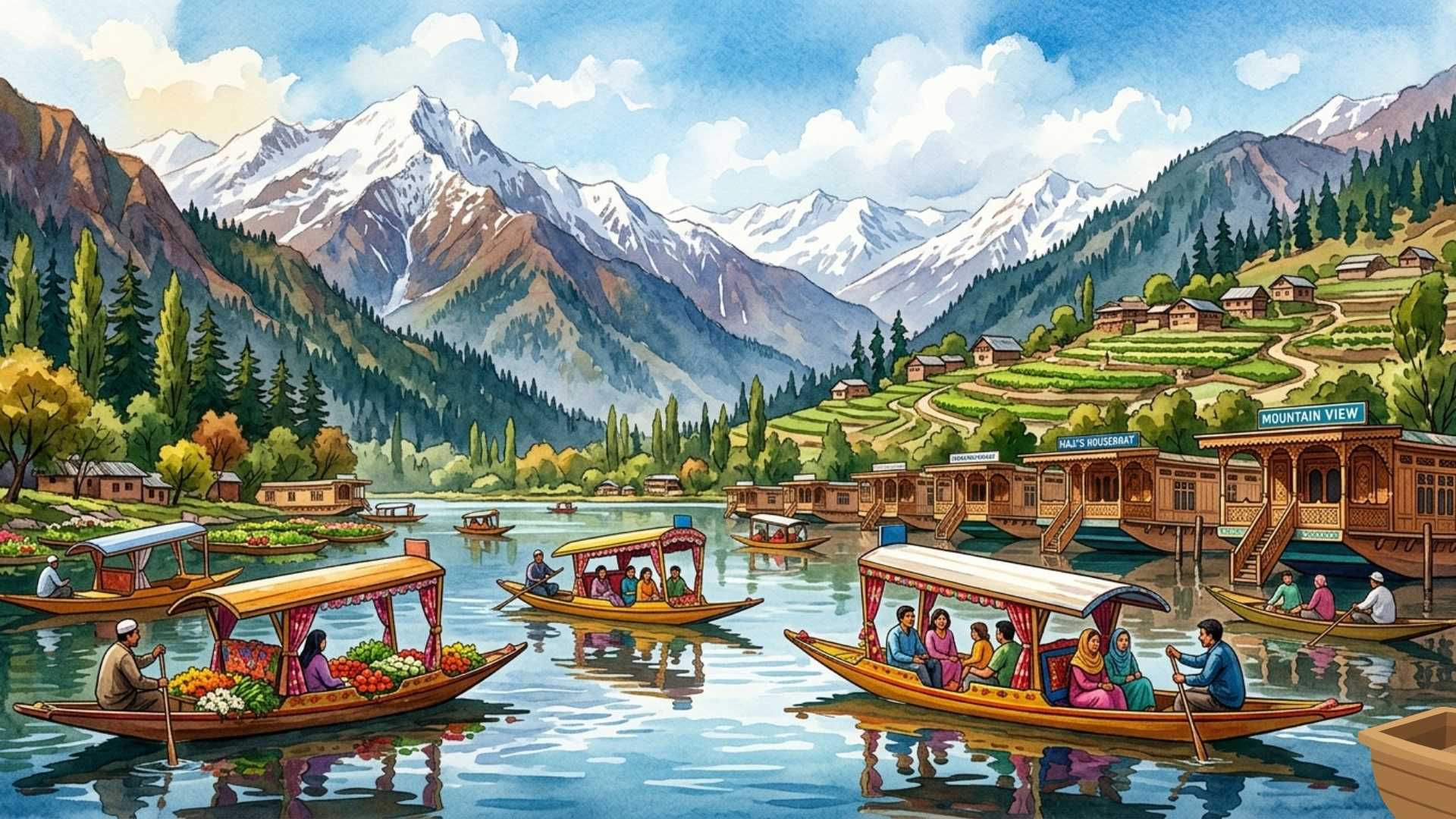
Kashmir’s Tulip and Almond Festivals Aim to Revive Tourism
The government hopes spring blooms will attract visitors after the Pahalgam attack hit tourism.
Context
- Tourism in Jammu & Kashmir declined sharply after the Pahalgam terror attack (April 26, 2025) that killed 26 civilians including 25 tourists.
- Security concerns and Operation Sindoor (May 2025) further affected tourist inflow.
- Tourist arrivals dropped from 26 lakh in 2024 to 11.16 lakh in 2025.
- Tourism contributes about 7% to J&K’s Gross State Domestic Product (GSDP).
- The government is using spring blossom festivals and gardens to revive tourism.
Government Initiatives to Revive Tourism
Spring Festival at Badamwari
- To be inaugurated by Chief Minister Omar Abdullah in Srinagar.
- Focus on showcasing almond blossom season.
- Designed to attract domestic and international tourists during spring.
Expansion and Beautification of Badamwari Garden
- 300 new almond trees planted to increase flowering density.
- Creation of a lavender patch across 50 kanal (6.25 acres) to extend flowering till May–June.
- Introduction of new flowering plants to enhance colour and fragrance.
- Addition of selfie points and renovated wooden rain shelters to improve visitor experience.
- Objective: Convert the site into an all-season tourist garden.
Badamwari Garden: Key Features
- Spread across 300 kanal (37.5 acres) in Srinagar.
- Historical garden dating back to before the 14th century.
- Located near Hari Parbat Fort (Afghan-era fort).
- Area includes shrines respected by Hindus, Muslims, and Sikhs, highlighting Kashmir’s cultural diversity.
Tulip Garden Initiative
Indira Gandhi Memorial Tulip Garden
- Opening from March 16 for the tulip blooming season.
- Contains 1.8 million tulip bulbs.
- Includes 70–75 tulip varieties.
- Comparable to the Keukenhof Garden in the Netherlands.
Tourism Promotion Measures
- Installation of selfie points.
- Integration of gardens into tourist itineraries similar to Japan’s cherry blossom festivals.
- Focus on short-duration seasonal bloom tourism.
Tourism Impact of Security Concerns
- 44 tourist destinations closed after the 2025 attack.
- Gradual reopening after security audits.
- Tulip garden reopened to encourage tourist confidence.
Significance of Blossom Tourism
- Promotes seasonal tourism during spring.
- Enhances destination branding of Kashmir as a floral tourism hub.
- Supports local employment and hospitality sector.
- Encourages eco-tourism and cultural tourism.
Way Forward
- Strengthen security measures to rebuild tourist confidence.
- Promote festival-based tourism (almond blossom, tulip bloom).
- Develop year-round garden tourism infrastructure.
- Use digital promotion and social media for global outreach.
- Integrate nature, heritage, and cultural tourism for sustainable growth.
Attribution
Original content sources and authors
Syllabus classification
How this article maps to GS papers
Main syllabus
GS1Indian CultureQuick Q&A
What role does tourism play in the economy of Jammu and Kashmir, and why is it considered a strategic sector for regional development?
Tourism is one of the most important economic sectors in Jammu and Kashmir (J&K), contributing significantly to employment generation, income creation, and regional development. According to estimates, tourism contributes nearly 7% to the Union Territory’s Gross State Domestic Product (GSDP). The sector supports a wide range of economic activities including hospitality, transport, handicrafts, agriculture, and local trade, thereby benefiting both urban and rural communities.
The region’s natural beauty, including snow-capped mountains, lakes, gardens, and cultural heritage sites, has historically made Kashmir one of India’s most popular tourist destinations. Iconic attractions such as Dal Lake, Gulmarg, Pahalgam, the Mughal Gardens, and the Tulip Garden draw millions of visitors annually during stable periods. In addition to leisure tourism, religious tourism associated with shrines such as the Amarnath Yatra and Vaishno Devi also plays a major role in sustaining the tourism economy.
Given its multiplier effects, tourism is often described as a “sunrise industry” for the region. The sector provides livelihoods to thousands of local residents through hotels, houseboats, handicrafts, taxi services, and tour operations. Therefore, the revival and promotion of tourism—especially after disruptions caused by security challenges—remains a priority for policymakers seeking to stabilise the economy and promote inclusive growth in Jammu and Kashmir.
The region’s natural beauty, including snow-capped mountains, lakes, gardens, and cultural heritage sites, has historically made Kashmir one of India’s most popular tourist destinations. Iconic attractions such as Dal Lake, Gulmarg, Pahalgam, the Mughal Gardens, and the Tulip Garden draw millions of visitors annually during stable periods. In addition to leisure tourism, religious tourism associated with shrines such as the Amarnath Yatra and Vaishno Devi also plays a major role in sustaining the tourism economy.
Given its multiplier effects, tourism is often described as a “sunrise industry” for the region. The sector provides livelihoods to thousands of local residents through hotels, houseboats, handicrafts, taxi services, and tour operations. Therefore, the revival and promotion of tourism—especially after disruptions caused by security challenges—remains a priority for policymakers seeking to stabilise the economy and promote inclusive growth in Jammu and Kashmir.
Why has the Jammu and Kashmir government focused on spring festivals and floral tourism as part of its strategy to revive tourism?
The Jammu and Kashmir government has increasingly promoted spring festivals and floral tourism as a strategy to revitalise tourism in the Valley, particularly after disruptions caused by security incidents such as the Pahalgam terror attack in 2025. Flowering gardens like the Badamwari almond garden and the Indira Gandhi Memorial Tulip Garden offer visually striking seasonal attractions that can quickly draw visitors back to the region.
Floral tourism provides several advantages. First, it highlights Kashmir’s unique natural landscape and biodiversity, creating a distinctive tourism brand. For example, the tulip garden in Srinagar—featuring over 1.8 million tulip bulbs across 70–75 varieties—has often been compared to the famous Keukenhof Gardens in the Netherlands. Similarly, almond blossom festivals showcase the region’s cultural and historical heritage while providing picturesque experiences for tourists.
Second, such events generate significant publicity through social media and destination marketing. The introduction of selfie points and visitor-friendly facilities encourages tourists to share their experiences online, amplifying promotional outreach. By organising spring festivals and enhancing floral attractions, the government aims to rebuild tourist confidence, stimulate local businesses, and gradually restore the tourism economy of the region.
Floral tourism provides several advantages. First, it highlights Kashmir’s unique natural landscape and biodiversity, creating a distinctive tourism brand. For example, the tulip garden in Srinagar—featuring over 1.8 million tulip bulbs across 70–75 varieties—has often been compared to the famous Keukenhof Gardens in the Netherlands. Similarly, almond blossom festivals showcase the region’s cultural and historical heritage while providing picturesque experiences for tourists.
Second, such events generate significant publicity through social media and destination marketing. The introduction of selfie points and visitor-friendly facilities encourages tourists to share their experiences online, amplifying promotional outreach. By organising spring festivals and enhancing floral attractions, the government aims to rebuild tourist confidence, stimulate local businesses, and gradually restore the tourism economy of the region.
How can tourism infrastructure and cultural festivals help revive tourism in regions affected by conflict or instability?
Tourism infrastructure development and cultural festivals can play a crucial role in reviving tourism in regions affected by conflict or instability. The first step involves restoring confidence among tourists by ensuring safety, improving facilities, and promoting positive narratives about the destination. Security audits, reopening previously closed tourist sites, and strengthening coordination between tourism and security agencies can reassure potential visitors.
Cultural and seasonal festivals act as powerful tools for destination marketing. Events such as the Kashmir Tulip Festival or almond blossom festivals provide unique experiences that attract tourists during specific seasons. Such festivals not only highlight the natural beauty of the region but also showcase local culture, cuisine, and handicrafts, thereby enhancing the overall tourism experience.
Additionally, modern tourism infrastructure—such as improved transport connectivity, digital ticketing, eco-friendly visitor facilities, and social media promotion—can significantly enhance accessibility and visitor satisfaction. For example, by introducing curated gardens, selfie points, and extended blooming seasons through landscaping initiatives, authorities can create year-round attractions that encourage repeat visits and strengthen the long-term resilience of the tourism sector.
Cultural and seasonal festivals act as powerful tools for destination marketing. Events such as the Kashmir Tulip Festival or almond blossom festivals provide unique experiences that attract tourists during specific seasons. Such festivals not only highlight the natural beauty of the region but also showcase local culture, cuisine, and handicrafts, thereby enhancing the overall tourism experience.
Additionally, modern tourism infrastructure—such as improved transport connectivity, digital ticketing, eco-friendly visitor facilities, and social media promotion—can significantly enhance accessibility and visitor satisfaction. For example, by introducing curated gardens, selfie points, and extended blooming seasons through landscaping initiatives, authorities can create year-round attractions that encourage repeat visits and strengthen the long-term resilience of the tourism sector.
What factors explain the sharp decline in tourist arrivals in Kashmir after the 2025 terror attack?
The sharp decline in tourist arrivals in Kashmir after the 2025 terror attack can be attributed to several interconnected factors. The immediate impact of such attacks is the erosion of tourist confidence and perception of safety. Incidents involving tourists often receive widespread national and international media coverage, which can discourage potential visitors from travelling to the affected region.
In the case of Kashmir, the Pahalgam attack in April 2025 resulted in the deaths of several civilians, including tourists. This incident significantly disrupted tourism flows, with visitor numbers dropping sharply from about 26 lakh tourists in 2024 to around 11.16 lakh in 2025. The closure of around 44 tourist destinations and subsequent security operations further contributed to the decline.
Another factor is the ripple effect on tourism supply chains. When tourist numbers fall, hotels, transport operators, tour guides, and handicraft sellers experience reduced income, leading to broader economic stress. The tourism sector is highly sensitive to perceptions of risk; therefore, even isolated incidents can have prolonged economic consequences for destinations dependent on tourism.
In the case of Kashmir, the Pahalgam attack in April 2025 resulted in the deaths of several civilians, including tourists. This incident significantly disrupted tourism flows, with visitor numbers dropping sharply from about 26 lakh tourists in 2024 to around 11.16 lakh in 2025. The closure of around 44 tourist destinations and subsequent security operations further contributed to the decline.
Another factor is the ripple effect on tourism supply chains. When tourist numbers fall, hotels, transport operators, tour guides, and handicraft sellers experience reduced income, leading to broader economic stress. The tourism sector is highly sensitive to perceptions of risk; therefore, even isolated incidents can have prolonged economic consequences for destinations dependent on tourism.
Critically examine the potential and limitations of tourism-led economic revival in conflict-prone regions like Jammu and Kashmir.
Tourism-led economic revival offers significant opportunities for conflict-prone regions such as Jammu and Kashmir. Tourism generates employment across multiple sectors including hospitality, transport, handicrafts, and agriculture. It also promotes cultural exchange and helps integrate local economies with national and global markets. Successful tourism promotion can enhance the region’s image and attract investment in infrastructure and services.
However, tourism as a development strategy also has certain limitations. One major challenge is the sector’s vulnerability to security disruptions. Even a single incident of violence can cause a sharp decline in tourist arrivals, as seen in Kashmir following the 2025 terror attack. This makes tourism-dependent economies highly volatile and unpredictable.
Another limitation is the risk of seasonal and uneven development. Many tourist destinations experience high visitor numbers during specific seasons but remain underutilised during the rest of the year. Policymakers must therefore diversify tourism products—such as eco-tourism, cultural tourism, winter sports, and wellness tourism—to ensure year-round economic activity. Ultimately, tourism can be a powerful driver of growth, but it must be complemented by broader economic diversification and sustainable development policies.
However, tourism as a development strategy also has certain limitations. One major challenge is the sector’s vulnerability to security disruptions. Even a single incident of violence can cause a sharp decline in tourist arrivals, as seen in Kashmir following the 2025 terror attack. This makes tourism-dependent economies highly volatile and unpredictable.
Another limitation is the risk of seasonal and uneven development. Many tourist destinations experience high visitor numbers during specific seasons but remain underutilised during the rest of the year. Policymakers must therefore diversify tourism products—such as eco-tourism, cultural tourism, winter sports, and wellness tourism—to ensure year-round economic activity. Ultimately, tourism can be a powerful driver of growth, but it must be complemented by broader economic diversification and sustainable development policies.
What are some international examples of flower festivals and nature-based tourism that have successfully boosted regional tourism?
Several international destinations have successfully leveraged flower festivals and nature-based tourism to attract large numbers of visitors. One of the most famous examples is the Keukenhof Garden in the Netherlands, often referred to as the "Garden of Europe." Every spring, millions of tulips bloom across vast landscapes, attracting more than a million visitors annually. The festival has become a major tourism brand for the Netherlands.
Another example is Japan’s Cherry Blossom (Sakura) Festival, which celebrates the blooming of cherry trees across the country. Cities such as Tokyo and Kyoto witness massive tourist inflows during the sakura season. The event combines natural beauty with cultural traditions, including picnics and cultural performances, making it a unique tourism experience.
Inspired by such global models, the Kashmir Tulip Festival and almond blossom festivals aim to create similar seasonal attractions in India. By highlighting the Valley’s floral diversity and scenic landscapes, these initiatives seek to position Kashmir as a distinctive destination for nature-based tourism.
Another example is Japan’s Cherry Blossom (Sakura) Festival, which celebrates the blooming of cherry trees across the country. Cities such as Tokyo and Kyoto witness massive tourist inflows during the sakura season. The event combines natural beauty with cultural traditions, including picnics and cultural performances, making it a unique tourism experience.
Inspired by such global models, the Kashmir Tulip Festival and almond blossom festivals aim to create similar seasonal attractions in India. By highlighting the Valley’s floral diversity and scenic landscapes, these initiatives seek to position Kashmir as a distinctive destination for nature-based tourism.
Suppose you are a policy advisor tasked with designing a sustainable tourism revival plan for Kashmir. What key measures would you recommend?
Designing a sustainable tourism revival plan for Kashmir would require a multi-dimensional strategy that balances economic growth with environmental conservation and security considerations. The first priority would be to strengthen tourism infrastructure and safety measures. This includes improved connectivity, reliable public transport, enhanced tourist information centres, and effective security coordination to reassure visitors.
Second, diversification of tourism products is essential to reduce dependence on seasonal attractions. Authorities could promote eco-tourism, adventure tourism, winter sports, cultural heritage tourism, and wellness tourism. Developing trekking routes, promoting traditional handicrafts, and organising cultural festivals can create year-round tourism opportunities.
Finally, sustainability must remain a central focus. Over-tourism can damage fragile ecosystems in mountainous regions. Policies should therefore emphasise responsible tourism practices, waste management, community participation, and environmental conservation. By integrating economic development with ecological protection and local community engagement, Kashmir can build a resilient and sustainable tourism sector for the future.
Second, diversification of tourism products is essential to reduce dependence on seasonal attractions. Authorities could promote eco-tourism, adventure tourism, winter sports, cultural heritage tourism, and wellness tourism. Developing trekking routes, promoting traditional handicrafts, and organising cultural festivals can create year-round tourism opportunities.
Finally, sustainability must remain a central focus. Over-tourism can damage fragile ecosystems in mountainous regions. Policies should therefore emphasise responsible tourism practices, waste management, community participation, and environmental conservation. By integrating economic development with ecological protection and local community engagement, Kashmir can build a resilient and sustainable tourism sector for the future.
Practice questions
1 question for mains preparation