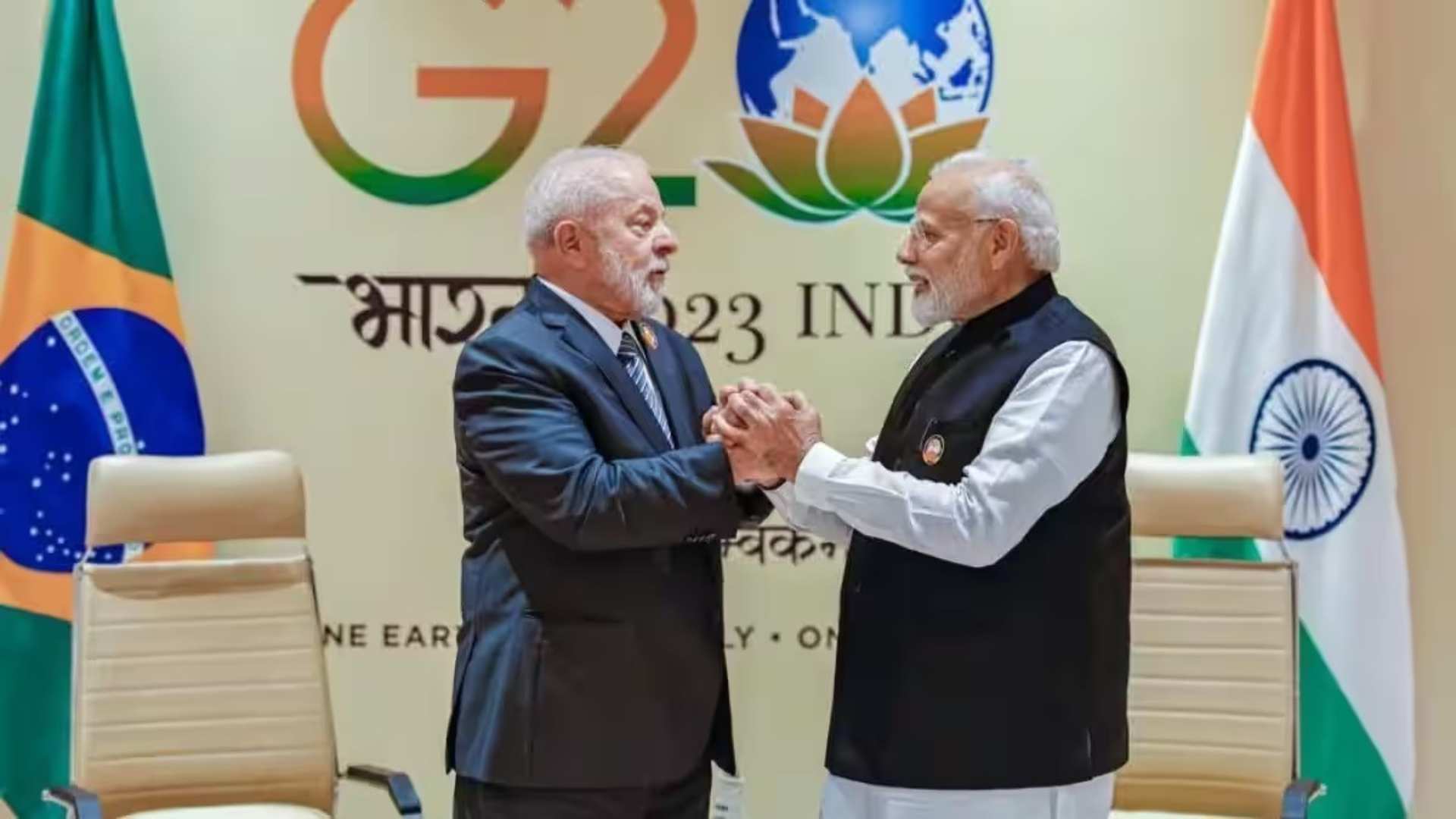
Strengthening Brazil-India Trade Relations for Shared Prosperity
1. Context and Significance of Lula’s Visit
Brazilian President Luiz Inácio Lula da Silva visited India on a four-day state visit with the largest-ever Brazilian delegation, signalling heightened momentum in bilateral ties. The visit underscores the convergence of the two countries’ democratic values, economic interests, and global governance priorities.
Bilateral trade reached $15 billion in 2025, which is considered below potential given the combined populations of 1.4 billion in India and 215 million in Brazil. The visit aims to deepen trade relations, attract investment, and expand private sector partnerships, including participation in the Brazil-India Business Forum with 600 representatives from both countries.
High-level diplomatic visits with accompanying business delegations serve as instruments to translate political goodwill into economic and strategic outcomes. Ignoring such engagements may slow market diversification and limit the leverage of emerging economies in global trade.
2. Trade and Economic Cooperation
Trade diversification is a central focus of Brazil’s long-term economic strategy. Agreements expected during the visit include:
- Critical minerals: First-ever Brazilian agreement with India
- Small and medium-sized enterprises (SMEs): Job creation and entrepreneurship focus
The Brazil-India trade agenda aligns with Brazil’s broader strategy of diversifying partners in the face of global trade tensions and protectionism. Both countries also share interests in biofuels, defence, space technology, science & technology, and health.
Impacts:
- Enhanced bilateral trade flows and market access
- SME-led employment generation
- Strengthened industrial and technological collaboration
“Two of the world’s largest democracies… have an obligation to build a much closer relationship.” — Luiz Inácio Lula da Silva
Bilateral trade expansion strengthens economic resilience, reduces over-dependence on traditional partners, and promotes inclusive development through SME participation.
3. Mercosur-India Trade Agreement
Brazil highlighted the importance of advancing the Mercosur-India trade agreement (in force since 2009) to unlock potential in goods and services trade. This builds on Brazil’s multilateral agreements with the EU, EFTA, and Singapore, reflecting a strategic response to protectionism.
“Expanding the Mercosur-India Agreement… is one of the priorities of my visit.” — Luiz Inácio Lula da Silva
Negotiations focus on leveraging complementary sectors, including biofuels, AI, and technology, to facilitate fair, rules-based trade anchored in WTO principles.
Modernising trade agreements with strategic partners like India ensures both nations can participate effectively in the global economy while mitigating the risks of unilateral trade disruptions.
4. Technological Cooperation and Artificial Intelligence
Brazil and India advocate for equitable AI development to prevent “digital colonialism” and ensure that emerging economies have access to technology. Both countries stress the importance of:
- Joint development of AI technology
- Social inclusion embedded in AI algorithms
- Intergovernmental governance under UN frameworks
The AI Impact Summit in Delhi highlighted the potential for the Global South to shape AI rules, preserving cultural diversity and using AI as a tool for peace.
“Brazil and India are interested in an emancipatory artificial intelligence… that strengthens cultural diversity and serves as a tool for peace, not war.” — Luiz Inácio Lula da Silva
Technological cooperation in AI ensures that emerging economies are not sidelined in the Fourth Industrial Revolution, thereby safeguarding developmental and strategic interests.
5. BRICS Cooperation and Global Governance
Brazil supports India’s BRICS presidency in 2026 to advance agendas on health, climate change, AI, and multilateral governance reforms. Both countries advocate:
- Strengthening the voice of the Global South
- Reform of the UN Security Council to include India, Brazil, and African countries as permanent members
- Promotion of multipolar global governance anchored in peace and rules-based order
“BRICS has a very important role… the voice of the Global South carries weight.” — Luiz Inácio Lula da Silva
Coordinated action in multilateral forums enhances the geopolitical influence of emerging economies and enables them to shape global norms in trade, technology, and security.
6. Strategic Implications
The visit reflects Brazil’s and India’s shared approach to:
-
Economic diversification to reduce vulnerability from trade wars
-
Strategic sector cooperation in biofuels, defence, space, and health
-
Technological sovereignty in AI
-
Global governance reform to reflect multipolar realities
Implications:
- Increased South-South cooperation
- Strengthened political and economic ties
- Creation of joint frameworks for technology and trade
- Enhanced negotiation leverage in multilateral institutions
Integrating economic, technological, and diplomatic strategies enhances resilience, promotes equitable development, and strengthens leadership of emerging economies in global governance.
Conclusion
President Lula’s visit represents a decisive moment to transform Brazil-India relations into a multidimensional partnership encompassing trade, technology, and global governance. Strengthening the Mercosur-India trade framework, promoting equitable AI development, and coordinating within BRICS will enable both countries to assert leadership in the Global South, support sustainable development, and navigate an increasingly multipolar world.
Attribution
Original content sources and authors
Syllabus classification
How this article maps to GS papers
Main syllabus
GS2Bilateral RelationsQuick Q&A
What is the strategic significance of Brazilian President Lula da Silva's visit to India with the largest-ever delegation?
- Trade Diversification: Bilateral trade in 2025 reached $15 billion, far below potential given India’s 1.4 billion and Brazil’s 215 million population. The visit aims to expand trade flows, particularly through agreements on critical minerals and small and medium-sized enterprises, sectors crucial for employment generation.
- Private Sector Engagement: The Brazil-India Business Forum, involving 600 representatives from both countries’ private sectors, highlights a collaborative approach to translating diplomatic goodwill into tangible economic outcomes.
- Geopolitical Alignment: Both countries advocate for fair, multilateral, rules-based trade through platforms like the WTO, aligning their economic and strategic interests in an increasingly multipolar world.
Overall, the visit is both symbolic and functional, demonstrating political commitment while laying the foundation for long-term economic and technological cooperation.
Why is the expansion of the Mercosur-India trade agreement considered a priority during this visit?
- Complementary Economies: Brazil and India have complementary sectors such as biofuels, artificial intelligence, defence, space technology, and healthcare. Expanding the agreement facilitates exchange and cooperation in these high-value areas.
- Countering Protectionism: In a global environment marked by trade wars and rising protectionism, strengthening bilateral agreements provides a shield against adverse external shocks and promotes diversified trade partnerships.
- Global South Leadership: By enhancing South-South cooperation, both nations can shape trade norms that reflect their developmental priorities and reduce dependency on traditional Western economies.
The agreement, therefore, is not just a commercial tool but a strategic lever for economic resilience, technological collaboration, and multilateral influence.
How can India and Brazil leverage cooperation in artificial intelligence (AI) to lead the Global South in technology governance?
- Joint Development: Collaborative research and development projects can create AI solutions tailored to the social, economic, and cultural contexts of the Global South.
- Intergovernmental Governance: Both countries advocate for United Nations-led frameworks to govern AI, ensuring all states have a voice in setting standards and ethical guidelines.
- Social Inclusion: AI initiatives should embed principles of social equity, cultural diversity, and transparency, ensuring that technology serves development goals rather than exacerbating inequality.
Through these mechanisms, India and Brazil can shape global AI norms, encourage capacity-building, and prevent technological dependency on developed nations.
Critically analyse the implications of Brazil-India cooperation for multilateralism and global governance.
- Enhanced Global Voice: Through platforms like BRICS, they amplify the perspectives of the Global South on issues like climate change, health, and technology, challenging the dominance of traditional powers.
- Institutional Reforms: Both nations support including India, Brazil, and African countries as permanent UN Security Council members, which could democratize global decision-making.
- Risk and Challenge: Aligning policy priorities between emerging economies is complex. Differences in domestic priorities, economic structures, and regional geopolitics may affect consensus-building.
In conclusion, Brazil-India cooperation has the potential to reshape global governance by promoting inclusive multilateralism, though success depends on sustained political alignment and effective institutional engagement.
Provide examples of sectors where Brazil-India collaboration can create tangible economic and technological benefits.
- Critical Minerals: Agreements in this sector can secure supply chains essential for electronics, renewable energy, and defence industries.
- Biofuels: Joint R&D can optimize sustainable energy production, leveraging Brazil’s expertise in ethanol and India’s growing renewable energy infrastructure.
- Healthcare: Collaboration on combating socially determined diseases and strengthening public health systems can improve outcomes for both populations.
- Defence and Space Technology: Sharing technology and co-developing platforms can enhance indigenous capabilities and reduce dependency on imports.
- Artificial Intelligence: Joint AI initiatives can foster inclusive technology governance, benefiting domestic innovation ecosystems and Global South partners.
These sectoral collaborations exemplify how strategic bilateral engagement can translate into employment, technological advancement, and broader economic resilience.
What are the reasons behind Brazil and India prioritizing South-South cooperation in trade and technology?
- Diversification of Partnerships: By engaging with fellow emerging economies, both countries reduce dependency on traditional Western markets and mitigate risks associated with trade wars and global volatility.
- Shared Development Goals: India and Brazil face similar challenges in sustainable development, technology adoption, and social equity. Cooperation allows them to exchange best practices and scale solutions suitable for the Global South.
- Global Influence: Joint initiatives in multilateral platforms like BRICS, WTO, and the UN enable them to advocate for reforms in global governance, ensuring the voices of developing countries are heard.
In essence, South-South cooperation is not just economic pragmatism but a strategic move to promote inclusive development, equitable technology access, and a more balanced global order.
Practice questions
1 question for mains preparation