India Strengthens Defence and Energy Alliances with UAE
 Gopi
Gopi
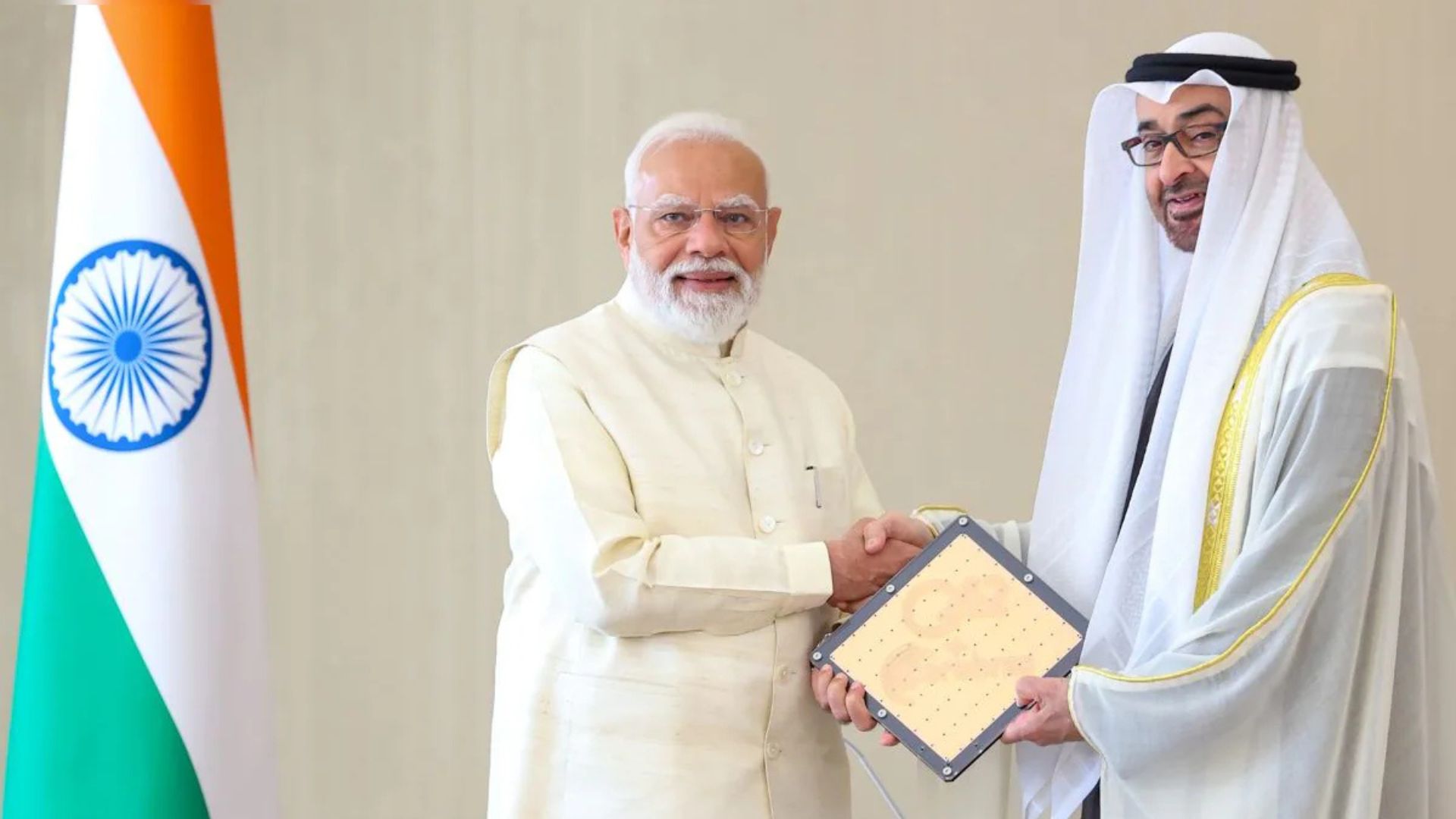
As the Iran war reshapes West Asia's geopolitical landscape, India and the UAE moved decisively on May 15, 2026 to upgrade their bilateral relationship — signing agreements spanning defence, energy security, and investment during Prime Minister Modi's visit to Abu Dhabi.
What Was Agreed?
The visit yielded three categories of outcomes:
Defence
- A formal framework for a strategic defence partnership — covering defence industrial collaboration, advanced technology, maritime security, cyber defence, and secure communications
- This formalises a letter of intent signed in January 2026
Energy
- ADNOC (Abu Dhabi's state oil firm) to expand crude oil storage in India by up to 30 million barrels — strengthening India's Strategic Petroleum Reserves (SPR)
- Exploration of crude storage in UAE's Fujairah as part of India's reserve architecture
- Expanded LPG supply between ADNOC and Indian Oil Corporation (IOC)
- This builds on a $3 billion LNG deal already signed in January 2026
Investment
- UAE investments worth $5 billion announced, including:
Emirates NBD  →  60% stake in RBL Bank       = $3 billion (2025)
Abu Dhabi IHC →  Sammaan Capital investment  = $1 billion
The Iran War Context
The trigger for this accelerated partnership is structural:
- U.S. and Israeli strikes on Iran on February 28 started the war
- Iranian strikes hit Gulf states including the UAE; the Strait of Hormuz was closed, roiling global energy markets
- A fragile ceasefire was reached last month
- The UAE's decision to leave OPEC is expected to boost its production capacity — directly benefiting import-dependent India
"India's scale and growth trajectory make it one of the defining energy markets of our time. As demand accelerates alongside a rapidly expanding population, the strength of the UAE-India energy partnership becomes ever more critical." — Sultan Ahmed Al Jaber, ADNOC MD & CEO
The Pakistan Factor
India's urgency in cementing the UAE partnership is not purely bilateral — it is also a response to shifting regional alignments:
- Pakistan signed a mutual defence accord with Saudi Arabia last year
- Pakistan has emerged as the key mediator between Washington and Tehran, elevating its strategic standing
- Saudi Arabia pledged $3 billion in additional support to Pakistan linked to debt repayment to the UAE
- Pakistan has actively shored up Saudi Arabia's defences following Iranian missile and drone attacks on the kingdom
This creates a clear strategic calculus for India: as Pakistan deepens ties with Riyadh, New Delhi must anchor Abu Dhabi firmly in its own strategic orbit.
Why This Matters for India
| Dimension | India's Interest |
|---|---|
| Energy Security | SPR expansion + LPG/LNG supply diversification away from Iran-disrupted routes |
| Defence | Maritime security in the Arabian Sea; technology and training access |
| Investment | UAE capital flowing into Indian banking, infrastructure |
| Geopolitics | Counter-balancing Pakistan-Saudi axis in West Asia |
The UAE is India's third-largest trading partner. With West Asia exports already down 28% due to the crisis (April 2026 data), locking in the UAE as a long-term strategic partner provides both an economic floor and a diplomatic anchor.
Way Forward
- India must operationalise the SPR expansion rapidly — the Hormuz closure demonstrated that reserve depth is not an abstraction but an active security variable
- The defence industrial collaboration framework needs a concrete joint production roadmap, not just MoU language
- India should use the UAE relationship as a bridge to the broader Gulf — mediating carefully between its Abu Dhabi ties and the Saudi-Pakistan dynamic rather than treating it as a zero-sum competition
- Investment partnerships must move beyond banking acquisitions into manufacturing and logistics — UAE's Fujairah, as a storage hub, is one such node worth developing further
Conclusion
The India-UAE strategic partnership announced on May 15 is the product of compounding pressures — an ongoing war, a disrupted energy corridor, and a reconfiguring regional order. India's response has been pragmatic: secure energy supply, deepen defence ties, and attract capital — all through one bilateral relationship. The real test lies in converting framework agreements into operationalised infrastructure before the next disruption arrives.
Attribution
Original content sources and authors

Syllabus classification
How this article maps to GS papers
Main syllabus
GS2Bilateral RelationsQuick Q&A
What is the strategic significance of the India-UAE defence partnership in the context of West Asian geopolitics?
This partnership gains significance in the context of the Iran conflict, which has destabilized Gulf security. The closure of the Strait of Hormuz highlighted vulnerabilities in energy transport and maritime trade. India, which imports a substantial share of crude oil through this route, has strong incentives to secure regional stability. The UAE, facing direct threats from Iranian strikes, also seeks trusted security partners beyond traditional Western allies.
Strategic implications:
- Enhances India’s role as a net security provider in the Indian Ocean region.
- Strengthens defence diplomacy in the Gulf.
- Creates opportunities for defence manufacturing and technology cooperation.
Why is energy security emerging as a core pillar of India’s foreign policy with Gulf countries?
The recent agreement with the UAE on strategic petroleum reserves and expanded LPG supply demonstrates this priority. The Iran war disrupted regional shipping, exposing India’s dependence on chokepoints such as the Strait of Hormuz. By increasing ADNOC crude storage in India and exploring reserves in Fujairah, India seeks to create supply buffers against geopolitical shocks.
Why this matters:
- Reduces vulnerability to supply disruptions.
- Strengthens economic stability by managing fuel price shocks.
- Supports strategic autonomy in crisis periods.
Thus, energy diplomacy has become a strategic tool rather than just a trade arrangement. It intersects with maritime security, infrastructure investment, and regional balancing.
How can strategic petroleum reserves strengthen India’s economic and national security during global crises?
The UAE agreement to potentially expand ADNOC’s storage in India up to 30 million barrels significantly strengthens India’s reserve capacity. These reserves allow the government to release stored crude when international markets are disrupted, thereby reducing domestic shortages and moderating inflation. They also provide leverage in international energy negotiations.
Benefits include:
- Ensuring uninterrupted fuel availability.
- Reducing price volatility during crises.
- Strengthening strategic bargaining power.
For India, SPRs are not merely storage infrastructure but strategic assets linked to national security, inflation control, and long-term energy planning.
What explains India’s deeper engagement with the UAE amid shifting Saudi-Pakistan strategic ties?
India seeks to maintain its strategic influence by strengthening ties with the UAE, an important regional economic and security partner. The defence pact and investment commitments indicate India’s intent to prevent strategic isolation while securing energy interests. This is a balancing strategy within a multipolar regional environment.
Key reasons:
- Counterbalance Pakistan’s growing Gulf engagement.
- Secure uninterrupted energy access.
- Expand strategic partnerships beyond traditional allies.
This demonstrates that bilateral partnerships are increasingly shaped by third-country relationships, making regional diplomacy more complex and strategic.
Critically analyze whether India’s expanding strategic ties with Gulf states may complicate its relations with Iran.
Closer defence cooperation with the UAE could be perceived by Iran as alignment with its regional adversaries. This may affect India’s ability to maintain neutrality in future regional crises. However, India’s foreign policy traditionally emphasizes strategic autonomy, allowing it to engage multiple actors without exclusive alignment. The challenge lies in balancing competing partnerships.
Pros and concerns:
- Pros: Enhanced Gulf security ties and energy access.
- Concerns: Potential strain on India-Iran cooperation.
- Risk: Diplomatic pressure during regional conflicts.
The success of this strategy depends on diplomatic finesse. India must ensure that partnerships remain issue-based rather than bloc-based, preserving flexibility in a volatile region.
As an Indian policymaker, how would you design a long-term strategy to secure India’s interests in West Asia amid repeated conflicts?
First, India should deepen strategic reserves and diversify energy imports to reduce overdependence. Second, maritime security partnerships with countries like the UAE and Oman should be expanded to protect shipping lanes. Third, India must maintain constructive ties with Iran, Saudi Arabia, and the UAE simultaneously. This multipolar diplomacy preserves flexibility.
Policy measures:
- Expand strategic oil reserves in India and abroad.
- Strengthen naval presence in the Arabian Sea.
- Promote bilateral investment and technology cooperation.
Such a strategy ensures resilience against regional crises while strengthening India’s role as a credible strategic actor in West Asia.
Practice questions
1 question for mains preparation