GS2 Development Stakeholders

FCRA Bill 2026: Regulation or Overreach?

FCRA (Amendment) Bill, 2026: Regulation or Expansion of State Control?

The 2026 FCRA Amendment raises serious concerns about state overreach and its implications for NGOs in India.
Gopi Gopi
4 mins read

"The strength of a democracy is measured not only by the power of its government but also by the freedom of its civil society."

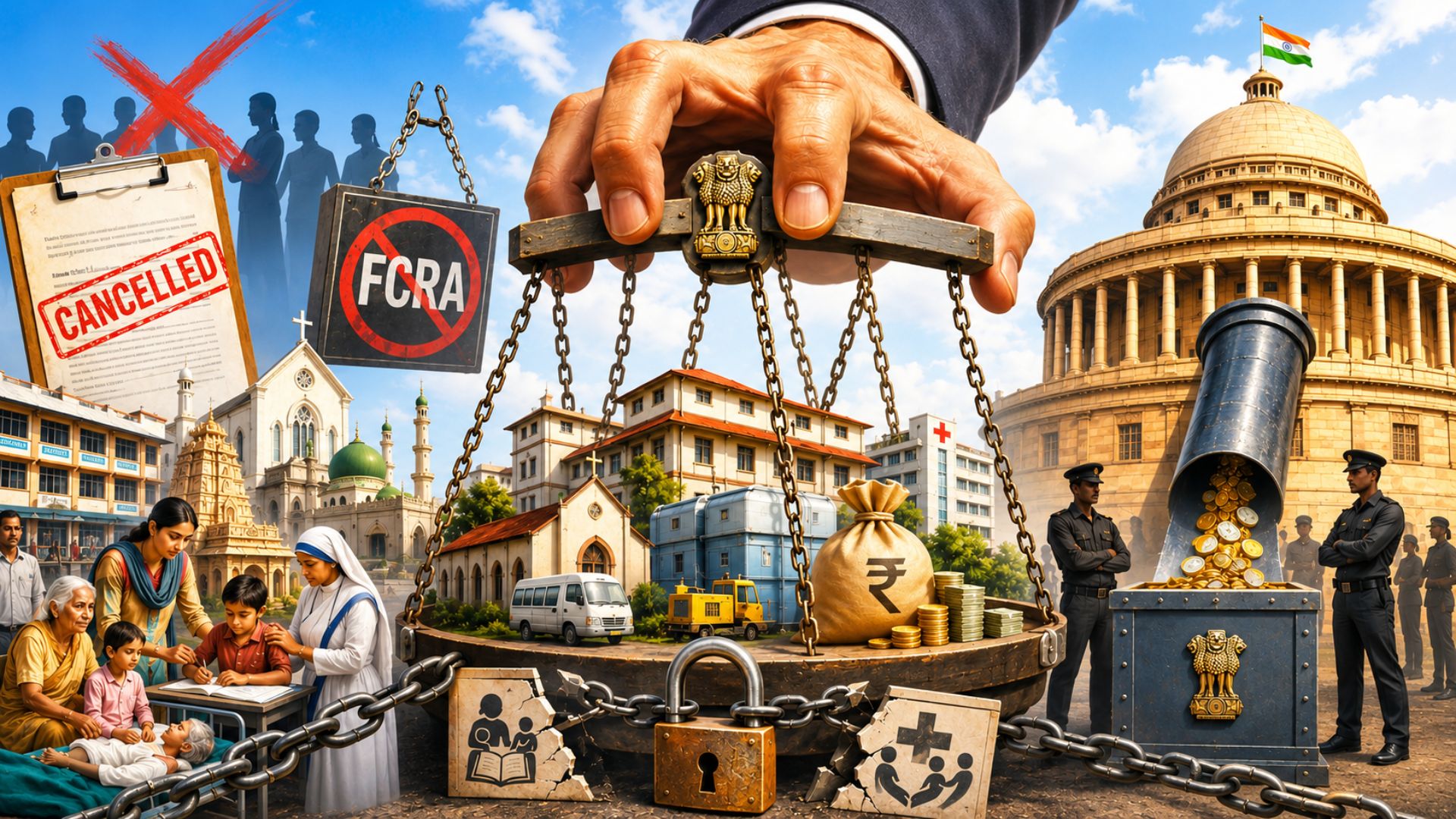
The proposed Foreign Contribution (Regulation) Amendment Bill, 2026 seeks to enhance transparency and national security in the regulation of foreign funds. However, critics argue that the Bill marks a shift from regulatory oversight to extensive executive control over NGOs, charitable trusts, educational institutions, and religious organisations.

Why is the Bill Significant?

The FCRA framework was already stringent after the 2020 amendments, which:

  • Mandated routing of foreign funds through a single SBI branch in New Delhi.
  • Reduced administrative expenditure limits from 50% to 20%.
  • Prohibited sub-granting to smaller NGOs.
  • Expanded suspension powers.

The 2026 Bill introduces a new Chapter IIIA and significantly strengthens government authority over organisations receiving foreign contributions.

Key Provisions of the 2026 Amendment

ProvisionImplication
Section 14BAutomatic cessation of FCRA registration due to non-renewal, delayed application, or pending renewal
Section 16AAutomatic provisional vesting of assets in a government-designated authority
Amended Section 13Restricts management of assets during suspension without approval
Amended Section 43Centralises investigations by requiring Union Government approval
Removal of Section 22Eliminates existing provisions on disposal of assets of defunct organisations

What is Section 16A?

The most debated provision is Section 16A.

When an FCRA registration is:

  • Cancelled,
  • Surrendered, or
  • Deemed to have ceased,

all foreign contributions and assets derived from them automatically vest in a government-designated authority, even before judicial review.

NGO Registration Cancelled
          โ†“
Section 16A Triggered
          โ†“
Assets Provisionally Vest
          โ†“
Designated Authority Takes Control
          โ†“
Possible Transfer / Sale of Assets
          โ†“
Proceeds Credited to Consolidated Fund of India

Why Are Critics Concerned?

Broad Grounds for Action

Cancellation can occur on vague grounds such as:

  • "Public interest"
  • Alleged violations
  • Procedural non-compliance

This raises concerns regarding due process and administrative discretion.

Risk of Asset Takeover

The provisions may affect:

  • Schools
  • Colleges
  • Hospitals
  • Orphanages
  • Charitable trusts
  • Churches
  • Mosques
  • Temples

even if these institutions were built over decades and serve large communities.

Extraordinary Powers of Designated Authority

The authority may:

  • Take possession of assets.
  • Manage institutions.
  • Oversee finances.
  • Alter operations.
  • Transfer or sell assets.

If registration is not restored within the prescribed period, vesting may become permanent.

Impact on Civil Society

The amendments could create a climate of uncertainty for NGOs and charitable institutions.

Potential Consequences

  • Reduced donor confidence.
  • Fear among trustees and volunteers.
  • Disruption of welfare programmes.
  • Closure of community institutions.
  • Increased compliance burden.
Affected Sectors

โœ“ Child protection
โœ“ Healthcare & immunisation
โœ“ Nutrition programmes
โœ“ Early childhood education
โœ“ Skill development
โœ“ Tribal welfare
โœ“ Human rights initiatives
โœ“ Access to government schemes

Impact on Minority Institutions

Christian organisations, particularly in states such as Kerala, Tamil Nadu, Nagaland, Mizoram, and Meghalaya, operate:

  • Schools and colleges
  • Mission hospitals
  • Orphanages
  • Tribal welfare institutions

Many depend on foreign funding from churches, diaspora groups, and humanitarian agencies.

Critics argue that procedural lapses or delayed renewals could expose such institutions to government control under Section 16A.

Economic and Social Significance of NGOs

IndicatorContribution
Share in GDPAround 2%
Employment Generated27 lakh jobs
Full-Time Volunteers34 lakh
Local Employment Impact47% of surveyed NGOs were primary employers in many localities

The sector therefore represents both a social and economic pillar.

Constitutional Concerns

The Bill has generated debate regarding its compatibility with:

  • Article 14 โ€“ Equality before law
  • Article 19(1)(c) โ€“ Freedom of association
  • Articles 25 & 26 โ€“ Religious freedom
  • Articles 29 & 30 โ€“ Rights of minorities and educational institutions
  • Article 300A โ€“ Right to property

Critics argue that concentration of power in the executive may weaken institutional autonomy and procedural safeguards.

Way Forward

  • Establish independent oversight before asset vesting.
  • Define clear timelines for registration and renewal decisions.
  • Introduce judicial review prior to takeover of assets.
  • Differentiate procedural lapses from serious violations.
  • Ensure transparency in cancellation orders.
  • Protect institutions providing essential public services.
  • Balance national security concerns with civil society autonomy.

Conclusion

The FCRA (Amendment) Bill, 2026 represents one of the most consequential changes to India's foreign funding regime. While greater accountability and transparency are legitimate objectives, regulatory powers must be accompanied by due process, independent oversight, and safeguards against arbitrary action. A balanced framework is essential to protect national interests without undermining the role of civil society, charitable institutions, and constitutional freedoms.

Attribution

Original content sources and authors
P. Wilson Author P. Wilson The Hindu Source The Hindu

Syllabus classification

How this article maps to GS papers

Main syllabus

GS2Development Stakeholders

Quick Q&A

What are the key provisions and broader implications of the Foreign Contribution (Regulation) Amendment Bill, 2026, for civil society organisations in India?
The Foreign Contribution (Regulation) Amendment Bill, 2026 represents a significant evolution in India's regulatory framework governing foreign funding. Introduced in the Lok Sabha on 25 March 2026, the Bill seeks to expand executive powers over non-governmental organisations (NGOs), charitable trusts, educational institutions and religious bodies receiving foreign contributions. It builds upon the stringent provisions introduced through the FCRA Amendment Act, 2020. The Bill introduces Chapter IIIA and proposed Sections 14B and 16A. Section 14B provides for automatic cessation of FCRA registration if renewal applications are delayed, denied or remain pending. Section 16A empowers a government-designated authority to provisionally vest and subsequently permanently control assets and foreign contributions without prior judicial review. Assets may eventually be transferred or sold, with proceeds credited to the Consolidated Fund of India. The amendments also strengthen executive control during suspension periods, restrict asset management and centralise investigations under Union Government approval. Broader definitions of key functionaries increase personal liabilities for office-bearers. Supporters argue that the Bill enhances transparency, accountability and national security. Critics contend that it transforms a regulatory statute into an instrument of state control, potentially threatening due process and institutional autonomy. From a UPSC perspective, the issue relates to GS-II topics concerning governance, development stakeholders and civil society. It also intersects with constitutional principles, administrative law and debates regarding balancing national security with democratic freedoms. The Bill has implications for social welfare delivery, minority institutions and participatory democracy.
Why are non-governmental organisations considered important stakeholders in governance and socio-economic development in India?
Non-governmental organisations (NGOs) constitute an essential pillar of participatory democracy and developmental governance in India. They complement state efforts by delivering services to vulnerable sections and acting as intermediaries between citizens and government institutions. Their contributions span education, healthcare, child welfare, women's empowerment, tribal development, environmental protection and disaster relief. According to the 2014 report of the Ministry of Statistics and Programme Implementation (MoSPI), civil society organisations generate nearly 27 lakh jobs and engage approximately 34 lakh full-time volunteers, exceeding employment in several segments of the public sector. A separate survey involving 515 NGOs revealed that nearly 47% served as the primary source of employment in more than half the localities where they operated. NGOs also facilitate the implementation of government schemes and contribute to immunisation, nutrition, skill development, neonatal healthcare and early childhood education. Many organisations supported by foreign contributions provide essential services in remote and underserved regions. Historically, voluntary associations have played an important role in India's freedom struggle and post-independence nation-building. Constitutional values of association and citizen participation underpin their existence. For UPSC aspirants, the topic is highly relevant to GS-II under governance and development stakeholders. It also overlaps with GS-I themes relating to vulnerable groups and GS-III issues concerning inclusive growth. Current debates surrounding FCRA regulations illustrate the tension between ensuring transparency and preserving the autonomy of civil society institutions. Effective governance requires cooperation between the state and non-state actors rather than excessive centralisation.
How do the proposed provisions relating to asset vesting and registration under the FCRA Amendment Bill, 2026 affect the functioning of NGOs?
The FCRA Amendment Bill, 2026 introduces provisions that fundamentally alter the relationship between the state and organisations receiving foreign contributions. Proposed Sections 14B and 16A establish mechanisms for automatic cessation of registration and provisional vesting of assets in favour of a government-designated authority. Under Section 14B, an organisation may lose its registration not only due to proven violations but also because of delayed applications or pending renewals. This creates uncertainty and allows procedural issues to disrupt organisational functioning. Once registration ceases, Section 16A provides for automatic transfer of control over foreign contributions and associated assets without prior judicial scrutiny. The designated authority is empowered to manage finances, supervise institutions and, if restoration does not occur, permanently transfer or dispose of assets. Sale proceeds are credited to the Consolidated Fund of India. Critics argue that these powers effectively amount to executive expropriation. Further, amended Section 13 restricts organisations from managing assets during suspension without prior approval, thereby paralysing operations. Section 43 centralises investigations by requiring Union Government approval before state agencies can act. Supporters claim that such measures strengthen accountability and prevent misuse of foreign funds. Opponents argue that excessive concentration of power undermines due process and creates a climate of uncertainty. From the UPSC perspective, these developments are relevant to GS-II themes relating to governance, accountability and administrative reforms. They also illustrate broader debates concerning regulatory oversight, federalism and the balance between national security and democratic freedoms.
What are the major constitutional and democratic concerns raised by critics regarding the FCRA Amendment Bill, 2026?
Critics argue that the FCRA Amendment Bill, 2026 raises important constitutional and democratic concerns because of the extensive powers vested in the executive and the limited safeguards available to affected institutions. One major criticism relates to the broad and subjective standard of 'public interest', which may enable arbitrary decisions and undermine legal certainty. The Bill has implications for several constitutional provisions. Article 14 guarantees equality before law and protection against arbitrary state action. Article 19(1)(c) protects freedom of association, while Articles 25 and 26 safeguard religious freedom and management of religious institutions. Articles 29 and 30 protect minority educational institutions, and Article 300A guarantees protection against deprivation of property except by authority of law. Critics contend that automatic vesting of assets without prior judicial review weakens due process and violates principles of natural justice. Absence of clear timelines for approvals and renewals increases administrative uncertainty. Lack of transparency in cancellation decisions, often justified on national security grounds, further limits effective legal remedies. Another concern is the possible chilling effect on donors, volunteers and trustees. Organisations engaged in human rights, tribal welfare, environmental advocacy and minority rights may face apprehensions regarding regulatory action. However, supporters maintain that stricter regulations are necessary to prevent money laundering, foreign interference and misuse of funds. For UPSC aspirants, this debate is highly relevant to GS-II topics relating to constitutional bodies, governance and civil liberties. It also offers valuable material for Ethics and Essay papers dealing with accountability, transparency and democratic values.
What are the major reasons behind the increasing regulatory scrutiny and tightening of foreign funding laws in India?
The increasing regulatory scrutiny of foreign funding in India is driven by concerns relating to national security, transparency, financial accountability and sovereignty. Governments across the world have sought to regulate cross-border funding to prevent money laundering, terror financing and undue foreign influence over domestic policies. India enacted the Foreign Contribution Regulation Act in 1976 during the Emergency period and subsequently replaced it with the FCRA Act, 2010. The 2020 amendments introduced stricter compliance mechanisms, including routing contributions through a designated SBI branch, reducing administrative expenditure limits from 50% to 20% and prohibiting sub-granting. Supporters argue that these measures prevent misuse of foreign funds and enhance accountability. They contend that organisations receiving overseas contributions should be subject to rigorous monitoring to ensure that activities remain consistent with national interests. However, critics believe that excessive regulation risks undermining civil society and restricting developmental activities. Between 2014 and 2026, approximately 22,000 FCRA licences were reportedly cancelled, raising concerns regarding transparency and proportionality. Global trends also influence policy. Several countries, including Russia and China, have enacted stringent regulations governing foreign-funded organisations. Nonetheless, democratic societies generally seek to balance national security with protection of associational freedoms. From a UPSC perspective, this issue is relevant to GS-II themes concerning governance, internal security and development stakeholders. It demonstrates the challenge of balancing legitimate state interests with constitutional freedoms and highlights the need for transparent procedures, judicial safeguards and institutional accountability.
How can the role and contribution of NGOs in India be understood through their impact on employment generation and welfare delivery?
The contribution of NGOs to India's socio-economic development can be understood through their extensive involvement in welfare delivery and employment generation. Civil society organisations have emerged as important partners in addressing developmental gaps that government institutions alone may find difficult to bridge. According to the Ministry of Statistics and Programme Implementation's 2014 report, NGOs generate around 27 lakh jobs and engage approximately 34 lakh full-time volunteers. Another survey covering 515 NGOs found that nearly 47% constituted the principal source of employment in more than half the localities where they functioned. Beyond employment, NGOs provide essential services in sectors such as healthcare, child protection, nutrition, education, immunisation and skill development. They are particularly active in underserved and geographically remote regions. Faith-based and charitable organisations have established schools, hospitals, orphanages and welfare institutions benefiting diverse communities. Several programmes relating to neonatal health, parental awareness, tribal welfare and access to government schemes depend significantly on voluntary organisations. Their work contributes to inclusive growth and social capital formation. The debate surrounding FCRA regulations demonstrates how disruptions in funding and licensing can affect service delivery. Cancellation of registrations may adversely impact vulnerable populations dependent on such institutions. From the UPSC perspective, this case study highlights the role of development stakeholders under GS-II and connects with GS-III themes concerning inclusive development and employment. It underscores the importance of fostering collaborative governance while ensuring transparency, accountability and constitutional safeguards for civil society institutions.

Practice questions

1 question for mains preparation

Critically examine whether the proposed FCRA (Amendment) Bill, 2026 represents a shift from the regulation of foreign contributions to enhanced executive control over civil society organisations . Discuss its implications for constitutional freedoms, institutional autonomy, and democratic governance.

10 marks ยท 150 words ยท 8 mins
