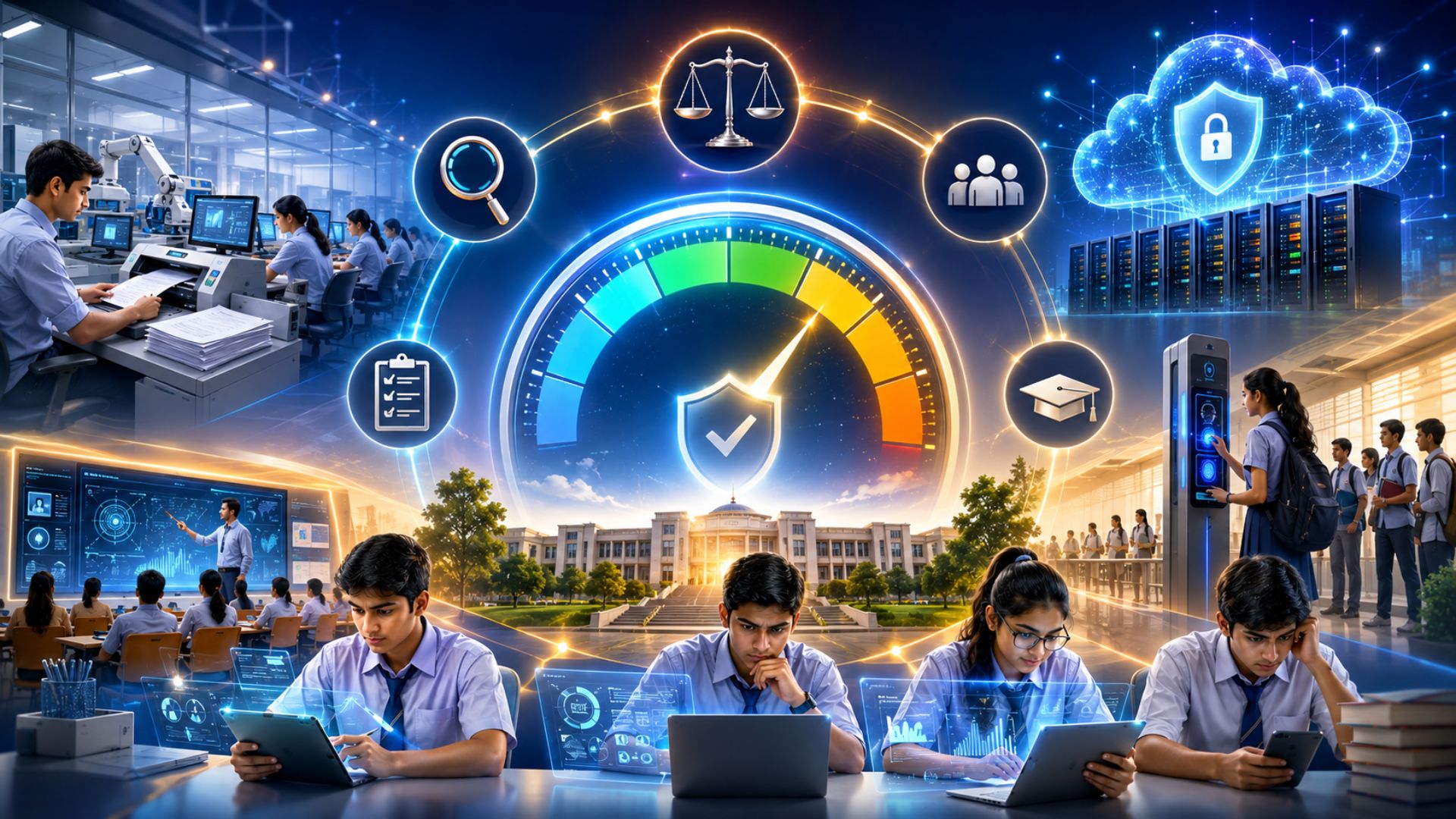
Central Board of Secondary Education: Exam Reforms and Credibility

India's education system is facing a crisis of institutional credibility. Two major examination bodies — the National Testing Agency (NTA) and the Central Board of Secondary Education (CBSE) — have, in quick succession, demonstrated that scale and ambition have outpaced preparation, process, and accountability. The students who bear the consequences number in the crores.
The NTA's Uneven Competence
The NTA presents a paradox of institutional capability:
- It conducts the JEE seamlessly — a high-stakes engineering entrance of comparable complexity
- Yet its handling of NEET — affecting nearly 22 lakh students — exposed deep structural flaws that caused immense and avoidable suffering
This is not a resource problem. It is a governance and process problem — where one division of the same agency operates with rigour while another appears, in the article's words, "completely out of its depth." The NEET fiasco raised fundamental questions about whether high-stakes examinations of this magnitude can be administered uniformly across a country as large and diverse as India without differentiated oversight mechanisms.
The CBSE's OSM Disaster: Reform Without Readiness
The CBSE's introduction of On Screen Marking (OSM) for Class 12 answer scripts — affecting approximately 18 lakh students — is a textbook case of reform implemented without due diligence:
- Little to no training was given to staff responsible for scanning answer sheets
- No Standard Operating Procedures (SOPs) were established after expert consultation
- Evaluators were not adequately prepared for the new digital interface
- Screen fatigue and its impact on scoring accuracy was never evaluated
- Despite this, nearly one crore sets of answer papers were scanned in record time — speed prioritised over accuracy
The correct methodology for introducing OSM would have been:
- Pilot the system on a smaller subset of answer sheets
- Run it in parallel with the traditional evaluation mode
- Test for statistically significant deviation in scores between the two methods
- Use findings to implement corrective measures before full-scale rollout
None of this was done. The consequences were immediate and severe — widespread reports of:
- Mismatched scripts delivered to students
- Unevaluated supplementary sheets
- Unclear or illegible scans
- Students not receiving their scanned copies at all
The Institutional Response: Damage Control Over Accountability
The CBSE's response has been reactive rather than structural:
- Slashed fees for accessing answer scripts and re-evaluation
- Promised refunds where re-evaluation is justified
- Extended deadlines for script access repeatedly, finally closing on May 25
- Over 1.25 lakh students applied to access nearly four lakh answer scripts within hours of the window opening
- The Education Minister confirmed IIT involvement in troubleshooting — an acknowledgment that internal capacity was insufficient
Notably, the CBSE has not yet announced its re-evaluation plans — despite the scale of applications — leaving lakhs of students in prolonged uncertainty about their academic futures.
Way Forward
Immediate priorities:
- Complete re-evaluation transparently and to the satisfaction of affected students, with clear timelines
- Publish a detailed error audit of the OSM rollout — what went wrong, at which stage, and why
Structural reforms:
- Mandatory piloting of any new examination technology on a statistically valid sample before full-scale deployment
- Develop and enforce SOPs for digital evaluation in consultation with psychometricians, educators, and technology experts
- Institutionalise screen fatigue protocols for evaluators — a well-documented problem in digital assessment contexts
- Establish an independent examination standards authority to audit NTA and CBSE processes before high-stakes rollouts
- The NTA must undergo an internal capability audit — understanding why competence varies so sharply across examinations it administers
Conclusion
What is at stake in both the NEET and CBSE episodes is not merely institutional credibility — it is the future of millions of students whose opportunities are determined by examinations they trust to be fair. Reform in examination systems is necessary and inevitable, but reform without readiness is not progress — it is a transfer of institutional failure onto the most vulnerable participants in the system. India's examination bodies must internalise a fundamental principle: at this scale, there is no room for a beta test on real students.
Attribution
Original content sources and authors
Syllabus classification
How this article maps to GS papers
Main syllabus
GS2EducationQuick Q&A
What does the recent CBSE On Screen Marking (OSM) controversy reveal about the structural challenges in India’s examination system?
The article points out several procedural shortcomings in the rollout of OSM. These included insufficient training for staff involved in scanning answer sheets, lack of standard operating procedures (SOPs), inadequate evaluator preparation, and absence of mechanisms to measure screen fatigue and its impact on assessment quality. Reports of mismatched answer scripts, unevaluated supplementary sheets, and unclear scans further weakened public trust in the examination process. Such errors directly affect students’ academic futures and psychological well-being.
The controversy also reflects broader governance issues within educational institutions. Large public examination bodies such as the CBSE and the National Testing Agency (NTA) operate under immense pressure due to the scale and stakes involved. However, technological modernization without institutional capacity building can create more problems than solutions. Reforms in education assessment require careful planning, expert consultation, pilot implementation, and continuous monitoring.
Another major challenge is the high-stakes nature of India’s examination culture. Competitive exams and board results often determine access to higher education, scholarships, and employment opportunities. Therefore, even minor procedural errors can have disproportionate consequences for lakhs of students. The NEET controversy and the current CBSE issue indicate systemic stress in India’s educational governance architecture.
The larger lesson is that educational reforms must prioritize reliability, transparency, and student welfare. Technology can improve efficiency, but it cannot substitute institutional preparedness and accountability. India’s education system requires stronger regulatory oversight, robust testing mechanisms, grievance redressal systems, and evidence-based policy implementation to restore public confidence in examination processes.
Why is the credibility of public examination institutions crucial for social justice and human capital development in India?
For many students, especially those from economically weaker or rural backgrounds, examinations represent one of the few opportunities for upward mobility. A transparent and credible assessment system ensures that success is based on merit rather than privilege or administrative arbitrariness. When examination systems fail due to procedural errors, technological glitches, paper leaks, or evaluation inconsistencies, students from vulnerable backgrounds suffer disproportionately because they often lack alternative opportunities and resources.
The CBSE OSM controversy and the NEET fiasco demonstrate how institutional failures can undermine confidence in the education system. Reports of mismatched answer sheets, unevaluated supplementary pages, and flawed scanning processes create uncertainty regarding fairness. Such incidents not only affect academic outcomes but also impose severe psychological stress on students and families. The resulting anxiety can weaken trust in public institutions and increase perceptions of systemic injustice.
From an economic perspective, reliable examination systems are essential for building human capital. India aspires to become a global knowledge economy with a skilled workforce capable of competing internationally. However, educational governance failures can compromise talent identification and weaken the quality of higher education intake. If deserving students are disadvantaged due to administrative lapses, the long-term impact extends beyond individuals to national productivity and innovation.
Credible examination systems also strengthen democratic legitimacy. Public institutions derive authority from trust and accountability. Therefore, reforms in examination governance must prioritize transparency, technological reliability, grievance redressal, and institutional responsibility. In the long run, safeguarding examination integrity is not merely an educational concern but a social, economic, and constitutional imperative linked to equality of opportunity and inclusive development.
How can technology-driven reforms such as On Screen Marking (OSM) be implemented effectively in India’s education system?
The first requirement for effective implementation is pilot testing. Before introducing OSM nationwide, authorities should conduct controlled trials on smaller sets of answer scripts while simultaneously using traditional evaluation methods. Comparative analysis can then determine whether significant differences emerge in scoring patterns, evaluator consistency, or technical reliability. Such pilot exercises help identify weaknesses before full-scale deployment.
Second, capacity building and training are essential. Evaluators, scanning personnel, and administrators must receive proper orientation regarding the technology, interface, workflow, and troubleshooting procedures. The article suggests that many evaluators were unfamiliar with the digital interface and were not adequately prepared for screen-based evaluation. Continuous training and technical support are necessary to minimize human errors and maintain evaluation quality.
Third, robust technological infrastructure is crucial. High-quality scanning systems, secure servers, backup storage mechanisms, and error-detection software must be integrated into the process. Standard Operating Procedures (SOPs) should clearly define protocols for handling supplementary sheets, unclear scans, mismatched scripts, and data verification. Independent audits and cybersecurity safeguards are also important to maintain integrity and prevent tampering.
Another important aspect is student-centric grievance redressal. Transparent mechanisms for accessing answer scripts, seeking re-evaluation, and reporting discrepancies should be institutionalized. Real-time communication with students and parents can reduce anxiety and prevent misinformation from spreading on social media.
Finally, technology reforms must be guided by evidence-based policymaking. Educational institutions should collaborate with technical experts, IITs, psychometricians, and academic researchers before introducing large-scale changes. Technology should complement educational objectives rather than being adopted merely for administrative convenience. Effective digital reforms require balancing efficiency with fairness, transparency, and accountability to ensure that student welfare remains central to educational governance.
Critically analyze the advantages and risks of digitizing examination and evaluation systems in India.
One major advantage of digitization is administrative efficiency. Digital evaluation systems can reduce logistical burdens associated with transporting physical answer sheets, speed up result processing, and minimize risks of manual tampering or loss of documents. Technology can also enable centralized monitoring, data analytics, and standardized evaluation practices across different regions. In the long run, digital systems may improve transparency and accessibility for students seeking copies of answer scripts or re-evaluation.
Digitization can also strengthen accountability. Automated tracking systems make it easier to monitor evaluation timelines, identify discrepancies, and maintain digital records. Artificial intelligence and analytics may further help detect unusual scoring patterns or examiner inconsistencies. Countries with advanced educational systems increasingly rely on digital tools for large-scale assessments, suggesting that technological modernization is an inevitable component of educational reform.
However, the risks are equally significant. India’s educational ecosystem is characterized by vast regional disparities in digital infrastructure, administrative capacity, and technical expertise. Poorly implemented reforms can create confusion, increase errors, and undermine public trust. The CBSE OSM issue revealed problems such as mismatched answer scripts, poor-quality scans, unevaluated supplementary sheets, and inadequate evaluator training. These failures directly affect students’ academic prospects and mental health.
Another concern is overdependence on technology without institutional preparedness. Digital systems are vulnerable to technical glitches, cybersecurity threats, data breaches, and algorithmic biases. Moreover, evaluation remains partly subjective, and prolonged screen-based assessment may affect examiner concentration and consistency. Without proper pilot testing and expert consultation, digitization can amplify rather than reduce systemic inefficiencies.
Therefore, digitization should be viewed as a tool rather than a complete solution. Successful reform requires strong governance, phased implementation, infrastructure development, independent audits, and continuous stakeholder engagement. Technology can improve educational administration only when combined with accountability, transparency, and a student-centric approach. The challenge for India is to modernize its examination systems without compromising fairness and public trust.
What are the major reasons behind recurring examination-related controversies in India, such as the NEET and CBSE crises?
One major reason is the excessive centralization and high-stakes nature of examinations. Exams such as NEET, JEE, and CBSE board examinations determine access to higher education and career opportunities for millions of students. Because competition is intense and opportunities are limited, even small procedural errors create widespread anxiety and public outrage. High dependence on single examinations increases pressure on institutions and magnifies the consequences of administrative failures.
Another key issue is inadequate institutional preparedness. The article points out that CBSE introduced On Screen Marking without sufficient pilot testing, evaluator training, or standard operating procedures. Similarly, the NEET controversy exposed weaknesses in examination management, coordination, and transparency within the National Testing Agency. Rapid reforms without capacity building often result in implementation failures.
Technological vulnerabilities also contribute significantly. While digitization promises efficiency, weak infrastructure, poor cybersecurity, technical glitches, and lack of trained personnel create risks. Errors in scanning, data handling, and evaluation processes can directly affect student outcomes. In some cases, social media amplifies confusion and misinformation, further eroding trust in institutions.
Governance and accountability deficits are another important factor. Examination bodies often lack robust independent oversight mechanisms. Decision-making can become opaque, and grievance redressal systems are frequently slow or ineffective. Students and parents therefore perceive institutions as unresponsive during crises. Delayed communication and absence of transparency further intensify dissatisfaction.
Finally, India’s examination culture itself contributes to systemic stress. Excessive emphasis on marks and rankings creates psychological pressure and encourages coaching-driven competition. Educational reforms often focus more on administrative efficiency than student welfare and holistic learning outcomes.
Addressing these recurring controversies requires comprehensive reforms. India needs stronger institutional autonomy, transparent governance structures, technological safeguards, mental health support systems, and diversified evaluation methods. Sustainable reform must focus not only on conducting examinations efficiently but also on ensuring fairness, credibility, and student well-being.
Suppose you are part of a government-appointed committee tasked with restoring public trust after a major examination evaluation failure. What measures would you recommend?
The immediate priority would be damage control and grievance redressal. Authorities should establish a transparent mechanism for students to access scanned answer scripts, request re-evaluation, and report discrepancies. Independent expert panels involving academic institutions such as IITs, psychometricians, and technology specialists should supervise the review process. Timelines for re-evaluation must be clearly communicated, and justified grievances should receive fee refunds and corrective action without bureaucratic delays.
Second, a comprehensive technical and administrative audit should be conducted. The committee should investigate whether errors resulted from poor scanning quality, software issues, inadequate training, or flawed operational procedures. Accountability should be fixed at multiple levels, including contractors, administrators, and technology providers where necessary. Public release of audit findings would help restore confidence in institutional transparency.
For long-term reform, the committee should recommend phased implementation of technological innovations rather than abrupt nationwide adoption. Pilot testing, parallel evaluation systems, and statistical validation studies must become mandatory before introducing major reforms. Evaluators should undergo standardized digital training, while ergonomic and psychological factors such as screen fatigue should also be assessed scientifically.
Institutional reforms are equally important. Examination bodies should establish permanent technology advisory boards and independent oversight mechanisms. Robust cybersecurity frameworks, backup systems, and real-time monitoring tools should be integrated into examination governance. Student grievance redressal portals with AI-enabled tracking systems can improve responsiveness and accountability.
Finally, communication and trust-building are essential. Government agencies must proactively engage with students, parents, schools, and media to prevent misinformation and panic. The larger goal should be to transform examinations from opaque administrative exercises into transparent and accountable public institutions.
Ultimately, restoring trust requires more than technical correction. It demands a commitment to fairness, transparency, and student welfare as foundational principles of India’s education system.
Practice questions
1 question for mains preparation