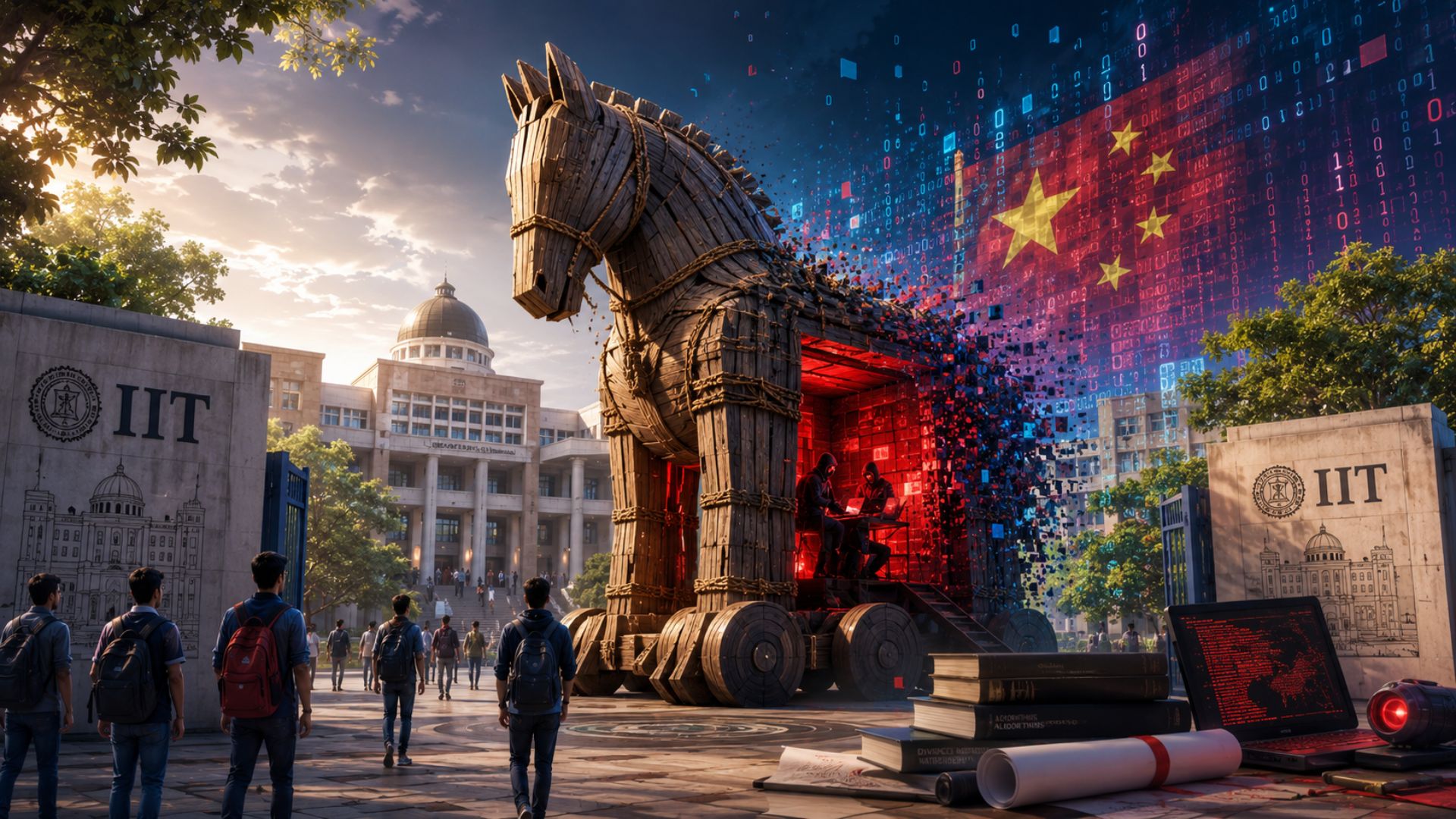
Indian Knowledge Systems and Scientific Temper: Balancing Cultural Heritage with Academic Rigor

"A civilisation's intellectual heritage is strengthened not by unquestioned belief, but by critical inquiry and verifiable knowledge."
The Indian Knowledge System (IKS) initiative seeks to integrate India's intellectual traditions into modern education. While reclaiming indigenous knowledge is a legitimate academic objective, concerns have emerged regarding the growing inclusion of claims that critics describe as pseudoscientific within premier institutions of higher education.
What is the Indian Knowledge System (IKS)?
At its core, IKS aims to revive and study India's intellectual contributions across disciplines.
Examples of Genuine Knowledge Traditions
• Panini's linguistics
• Nyaya school of logic
• Kerala school of mathematics
• Wootz steel metallurgy
• Classical astronomy and mathematics
These contributions are widely recognised as significant achievements in India's intellectual history.
Why Has the Debate Intensified?
Critics argue that the current institutionalised version of IKS increasingly blurs the distinction between:
| Evidence-Based Knowledge | Contested Claims |
|---|---|
| Historical scholarship | Mythology as history |
| Scientific inquiry | Ritual as technology |
| Verifiable evidence | Puranic science |
| Empirical research | Metaphysical assertions |
The debate gained prominence following the implementation of the National Education Policy (NEP), 2020, which encouraged greater engagement with indigenous knowledge traditions.
Expansion of IKS Centres
Several institutions have established dedicated IKS centres.
Major Centres
- IIT-Kharagpur
- IIT-Gandhinagar
- IIT-Bombay
- IIT-Kanpur
- IIT-Mandi
Critics particularly point to activities at IIT-Kanpur and IIT-Mandi involving studies on:
• Consciousness
• Reincarnation
• Vedic biology
• Astrology-linked investigations
The Reincarnation Research Controversy
A recent special session hosted by IIT-Mandi and IIT-Kanpur focused on the "science" of reincarnation.
Proposed Methodology
Researchers suggested:
- Studying children claiming past-life memories.
- Using EEG (electroencephalogram) recordings.
- Examining astrological birth charts.
- Measuring responses to "past-life-related stimuli."
The programme involved participation from the University of Virginia's Department of Perceptual Studies (DOPS), a controversial research centre known for studying paranormal phenomena.
Why Are Critics Concerned?
Methodological Issues Raised
| Concern | Explanation |
|---|---|
| Small sample size | Conclusions drawn from a single child |
| Confirmation bias | Researchers may create expected outcomes |
| Lack of falsifiability | Claims difficult to scientifically test |
| Mixing astrology with neuroscience | Methodological inconsistency |
| Anecdotal evidence | Individual experiences treated as proof |
Critics argue that exposing a child to photographs collected from a claimed previous-life family could itself shape responses, undermining the objectivity of the experiment.
"An anecdote cannot substitute for scientific evidence."
The Broader Academic Debate
Supporters argue that IKS helps:
- Decolonise knowledge systems.
- Recover neglected intellectual traditions.
- Promote indigenous perspectives.
However, critics cite historical examples demonstrating that cultural pride and scientific rigor can coexist.
Bengal Renaissance Example
• Jagadish Chandra Bose
• Prafulla Chandra Ray
These scholars integrated Indian identity with modern scientific methodology rather than replacing evidence-based inquiry with belief-based claims.
Institutional Concerns
Critics contend that the prestige of IITs may lend scientific legitimacy to claims that have not undergone rigorous validation.
Key Concerns
- Mandatory attendance of doctoral students at such sessions.
- Use of institutional funds for unconventional research.
- Use of research fellows in projects involving paranormal claims.
- Potential erosion of academic credibility.
The debate intensified further after the University Grants Commission's 2023 guidelines encouraged IKS-related courses in higher education.
Implications for Higher Education
Potential consequences highlighted by critics include:
• Decline in research standards
• Damage to institutional reputation
• Reduced international academic credibility
• Brain drain of talented researchers
• Confusion between faith and scientific inquiry
The central concern is not the study of Indian traditions itself, but whether such studies adhere to accepted standards of evidence and verification.
Way Forward
- Promote evidence-based study of India's intellectual traditions.
- Distinguish clearly between philosophy, culture and science.
- Encourage interdisciplinary research with rigorous methodologies.
- Subject all claims to peer review and empirical scrutiny.
- Strengthen scientific temper as envisaged under Article 51A(h).
- Preserve academic autonomy and institutional credibility.
- Integrate traditional knowledge without compromising scientific standards.
Conclusion
India possesses a rich intellectual heritage worthy of scholarly exploration and recognition. However, the long-term credibility of both Indian Knowledge Systems and higher education institutions depends on maintaining a clear distinction between cultural traditions and scientific evidence. A meaningful engagement with India's knowledge legacy must combine civilisational confidence with critical inquiry, ensuring that the pursuit of indigenous knowledge strengthens rather than weakens scientific temper and academic excellence.
Attribution
Original content sources and authors
.jpeg)

Syllabus classification
How this article maps to GS papers
Main syllabus
GS2EducationQuick Q&A
What is the Indian Knowledge System concept and why has its institutionalisation generated debates in higher education?
Why is the distinction between decolonisation of knowledge and promotion of pseudoscience important in higher education institutions?
How should higher education institutions integrate traditional knowledge systems while maintaining scientific rigor and academic credibility?
What are the major arguments for and against the contemporary institutionalisation of Indian Knowledge Systems in universities and IITs?
What lessons can be drawn from the Bengal Renaissance as a case study for balancing cultural identity and scientific inquiry?
What are the possible consequences of weakening scientific temper and academic standards within premier higher education institutions?
Practice questions
3 questions for mains preparation