The Failure of NTA’s ‘Zero Error’ Policy in NEET

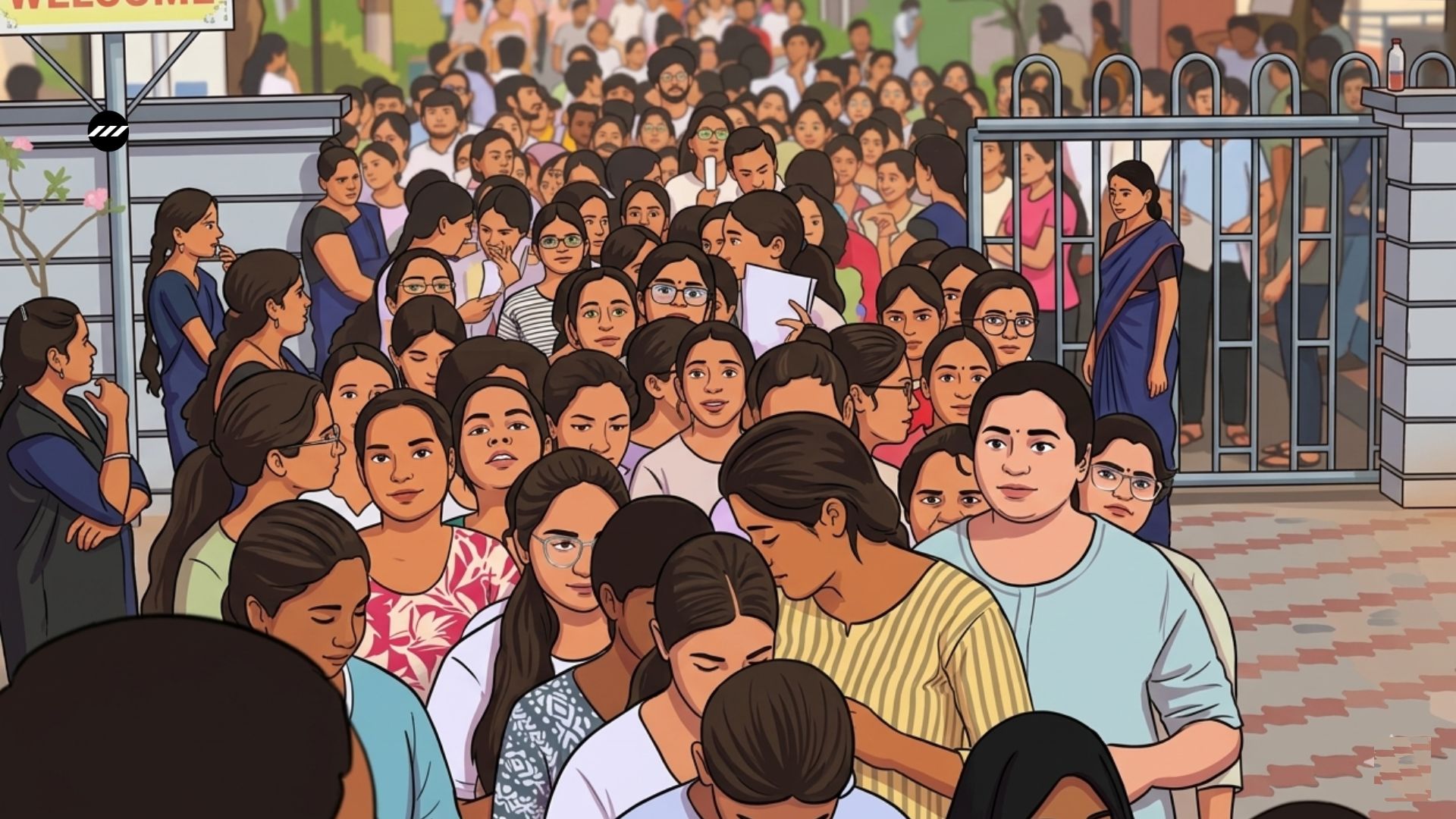
Nine days after 22.79 lakh medical aspirants wrote the National Eligibility cum Entrance Test (NEET-UG) on May 3, 2026, the National Testing Agency (NTA) dropped a bombshell — the exam had been "compromised," and a retest would be conducted. The announcement is unprecedented in NEET's history, but the rot it exposed is anything but new.
A Pattern of Failure
Paper leak controversies have shadowed NEET for years. The 2024 edition was particularly alarming:
- For the first time, 67 out of the top 100 scorers received full marks — compared to just two in 2023 and none in 2022.
- 155 students allegedly benefited from leaked question papers.
- 13 lakh students competed for approximately 1.1 lakh MBBS seats, with rank inflation making the competition near-chaotic.
Students demanded a retest in 2024. Their demand was ignored.
A Credibility Ledger That Only Grows
NEET has faced opposition since its very introduction, with several States resisting the centralised format. But even setting aside that structural debate, the NTA's conduct of the exam has been marked by recurring failures:
2019 → Impersonation scam in Tamil Nadu
        (students used proxies to write the exam)

2022 → Frisking controversy in Kerala
        (girl examinees subjected to invasive checks)

2024 → Paper leak + grace marks controversy
        (67 of top 100 scorers received full marks;
         155 students allegedly benefited from leaked papers)

2026 → Guess paper leak; exam cancelled for 22 lakh students
As the editorial puts it pointedly — NEET was introduced to bring "a single, standardised, and transparent entrance exam" for medical admissions. The only transparency it has delivered is "of an entirely different kind: leaks and breaches of confidentiality."
The "Zero Error" Promise That Rang Hollow
After the 2024 debacle, IAS officer Subodh Kumar Singh, then Director General of NTA, was removed and transferred — first to the Ministry of Steel, now serving as Principal Secretary to the CM of Chhattisgarh. NTA then remained without a full-time chief for over a year.
In March 2026, former IndiaAI Mission CEO Abhishek Singh took charge and declared a bold "Zero Error, Zero Tolerance" policy. The NTA publicly boasted of its 2026 security apparatus:
✔ GPS-enabled vehicles with police escorts
✔ CCTV surveillance at all 5,432 centres (up to 1,50,000 feeds)
✔ Aadhaar-based biometric authentication
✔ High-sensitivity metal detector frisking
✔ Centralised real-time monitoring
✔ 2 lakh+ personnel deployed
✔ 120 Telegram channels blocked for fake paper circulation
Despite all this, Rajasthan Police investigations revealed that a "guess paper" containing 120 out of 410 exam questions had allegedly been circulating for nearly a month before the exam. The entire security theatre had failed at its most basic function.
The Radhakrishnan Committee: Recommendations Gathering Dust
Following the 2024 controversy, the Ministry of Education formed a high-level committee under former ISRO chairman K. Radhakrishnan. Its October 2024 report was unambiguous:
- The existing pen-and-paper test (PPT) model was flagged as "a major security risk."
- It recommended a transition to Computer-Based Testing (CBT) — the same format used successfully for JEE Main.
- As an interim step, it recommended Computer-Assisted Secure PPT, where encrypted papers are delivered digitally to centres and printed locally just before the exam.
Neither recommendation was implemented. NTA instead doubled down on GPS vehicles and police escorts — physical security for a problem that is fundamentally digital and systemic.
The reason? Abhishek Singh himself admitted that NTA can currently conduct CBT for only 1.5 lakh students per day — against an exam population of 22+ lakh. NTA has only 552 CBT centres, primarily used for JEE and CUET. A 2024 tender to expand computer lab capacity was floated but never finalised.
"Talks for administering NEET-UG in CBT mode have been ongoing for at least five years now. The recent paper leak fiasco should serve as an eye-opener to change the format of the exams." — NTA official, speaking to The Hindu
The shift to CBT also requires a "high-level ministry call" involving both the Ministries of Health and Education — a bureaucratic bottleneck that has allowed inertia to persist.
Way Forward
The FAIMA (Federation of All India Medical Association) has already moved the Supreme Court, seeking either the replacement of NTA or major structural reforms. The path forward is clear:
- Accelerate CBT infrastructure — the 552-centre cap is indefensible for a 22-lakh exam.
- Implement Computer-Assisted Secure PPT as an immediate interim measure.
- Depoliticise NTA leadership — a year-long vacancy at the top is unacceptable for an agency handling national-level exams.
- Enforce committee recommendations — the Radhakrishnan panel did the work; the system simply refused to act on it.
Conclusion
NEET-UG 2026 is not a one-off failure. It is the logical consequence of a system that responds to crises with personnel transfers and press releases rather than structural reform. When 22 lakh students stake years of preparation on a single exam, institutional accountability cannot remain optional. The question is no longer whether the system is broken — it is whether there is the political will to fix it.
Attribution
Original content sources and authors

Syllabus classification
How this article maps to GS papers
Main syllabus
GS2EducationQuick Q&A
What does the NEET 2026 controversy reveal about the structural challenges in India’s centralised examination system?
At the institutional level, the issue points to governance deficits within the National Testing Agency (NTA). Leadership instability, delayed reforms, and weak implementation of expert recommendations have reduced trust. The NTA remained without a permanent chief for over a year after the 2024 controversy, reflecting administrative discontinuity.
- Mass-scale paper distribution increases vulnerability to leaks.
- Dependence on physical logistics creates human intervention points.
- Weak accountability undermines credibility of institutions.
The larger implication is that centralised exams are not merely testing systems but public institutions that determine social mobility. If trust erodes, meritocracy itself is questioned.
Why has the NTA’s ‘Zero Error, Zero Tolerance’ policy failed to prevent recurring controversies?
The problem is institutional rather than purely technological. Security systems can monitor centres, but leaks often occur before papers reach centres. The human chain—from printing to distribution—remains vulnerable. Without internal auditing, staff accountability, and independent oversight, technological tools are insufficient.
Case study: Similar controversies in public recruitment exams such as SSC and state PSCs show that examination integrity depends on governance culture.
- Technology can detect malpractice at centres.
- It cannot alone prevent insider collusion.
- Institutional trust requires transparency and accountability.
Thus, the NTA’s failure reflects systemic weaknesses in institutional design.
How can shifting from pen-and-paper testing to computer-based testing improve examination integrity?
The Radhakrishnan Committee recommended CBT and computer-assisted secure PPT. Under secure PPT, encrypted papers are digitally transmitted and printed locally just before the exam. Such systems reduce time windows for leaks. JEE Main already uses CBT, demonstrating feasibility in India.
However, implementation challenges remain. NTA currently has capacity for only 1.5 lakh students per day and 552 CBT centres. NEET requires infrastructure for over 22 lakh students. This demands staggered testing, expanded digital infrastructure, and standardised cybersecurity.
In principle, CBT can strengthen fairness, but only with:
- Expanded computer infrastructure
- Robust cybersecurity systems
- Equal digital accessibility for rural candidates
What are the broader social implications of repeated controversies in examinations like NEET?
Repeated controversies undermine public faith in meritocracy. When leaks, inflated scores, or rank distortions occur, genuine candidates feel disadvantaged. In 2024, 67 students scored full marks compared to only two in 2023, triggering rank inflation and public distrust.
Social implications include:
- Increased student stress and mental health concerns
- Distrust in state institutions
- Expansion of private coaching dependence
Case study: Similar exam controversies in recruitment tests have led to protests, litigation, and delayed admissions. Thus, examination credibility directly affects governance legitimacy.
Critically analyse whether technology can solve the crisis in India’s examination system.
The deeper issue is governance. Transparent procurement, independent audits, personnel vetting, and timely action on committee recommendations are equally essential. The Radhakrishnan panel’s suggestions remained largely unimplemented despite being submitted in 2024.
Advantages of technology:
- Reduces impersonation
- Improves transparency
- Allows real-time monitoring
- Cannot eliminate insider leaks
- Requires infrastructure equity
- Can create digital exclusion
Hence, technology should be treated as an enabler, while institutional reform remains the core requirement.
How does the NEET 2026 issue serve as a case study for public administration and governance reform?
From a public administration perspective, three issues emerge:
- Weak implementation of expert recommendations
- Institutional leadership instability
- Inadequate capacity building
The inability to expand CBT centres since 2024 shows a disconnect between committee recommendations and administrative execution.
As a governance lesson, the issue shows that trust in institutions depends not only on procedures but on outcomes. For civil servants, it underlines the importance of responsive institutions, proactive reforms, and evidence-based decision-making.
Practice questions
1 question for mains preparation