GS2 Government Policies

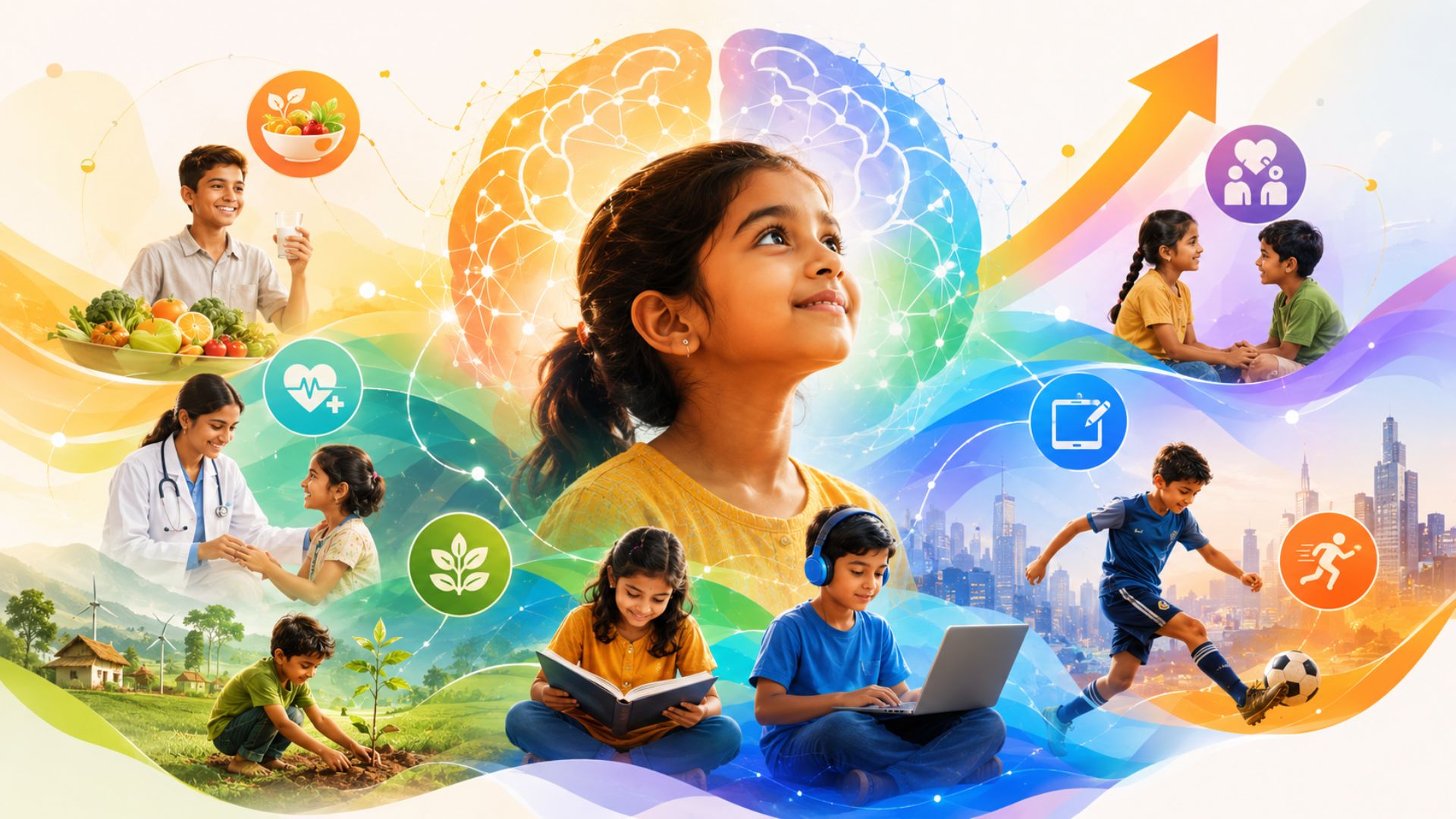
Nurturing minds and bodies through Anganwadis builds India’s future generations.

Beyond Nutrition: Why Early Childhood Development Must Become India's Next Human Capital Mission

The potential of Anganwadis in fostering cognitive development through integrated early childhood interventions in India.
Surya Surya
4 mins read

"The first years of life are not merely about survival; they are about building the foundations of human potential."

India has made remarkable progress in improving child survival outcomes. Under-five mortality declined from 43 (2012) to 32 (2020) according to UNICEF and World Bank estimates. The Anganwadi system supports nearly eight crore children (0-6 years) through nutrition, growth monitoring, health services, counselling and home visits.

However, emerging evidence suggests that nutrition alone is insufficient. Early childhood development is shaped by a combination of nutrition, health, stimulation, learning and caregiving.

Why the Early Years Matter

The human brain develops at an extraordinary pace during early childhood.

Brain Development IndicatorsSignificance
Brain consumes nearly one-fifth of body's energy at restHigh nutritional demand
Grey matter increases by 149% in first yearRapid cognitive development
Cerebellum grows by 240% in first yearSupports movement and learning
Millions of synapses formedFoundation for language, planning and behaviour

This shows that body and brain development occur simultaneously, not separately.

The Ecological Model of Child Development

Early childhood development is influenced by multiple interacting factors.

Key Determinants

  • Adequate nutrition
  • Good health and immunisation
  • Safe sanitation
  • Responsive caregiving
  • Early learning opportunities
  • Emotional support
  • Healthy home environment

A child's development depends not only on what is provided, but also on the environment in which growth occurs.

Two children may receive similar nutrition.
The child who is regularly talked to,
played with and emotionally supported
is more likely to show better cognitive outcomes.

Evidence from Global and Indian Research

Jamaica Study (1980s)

Researchers studying stunted children found:

InterventionOutcome
Nutrition aloneBetter physical health
Nutrition + psychosocial stimulationStronger cognitive gains

The study highlighted the importance of love, talk, play and responsive interaction.

Vellore Birth Cohort Study

A cohort of 250 children was followed from birth to age nine.

Key findings:

  • Early stunting was linked to poorer cognitive performance.
  • Children who recovered physically showed better cognitive outcomes.
  • Home stimulation significantly influenced developmental outcomes.
Recovery from early stunting improved not only
physical growth but also later cognitive performance,
showing the interconnected nature of development.

Why Nutrition Alone Cannot Solve the Problem

Research demonstrates that nutrition is mediated by environmental conditions.

Factors Affecting Nutrient Utilisation

  • Repeated infections
  • Enteric dysfunction
  • Poor sanitation
  • Inflammation
  • Toxic exposures
  • Lack of stimulation

Studies in Vellore found that children with:

  • Iron deficiency
  • High lead exposure

performed worse on cognitive assessments even when height and weight appeared normal.

Thus, growth charts alone cannot fully capture developmental progress.

Preschool Education and Cognitive Gains

Perhaps the most encouraging evidence relates to early education.

Impact of Structured Preschool

StudyOutcome
Vellore Cohort+7 IQ points among regular preschool attendees
Brazilian Cohort+8 cognition points at age five

Importantly, these gains persisted even after accounting for:

  • Poverty
  • Maternal education
  • Early childhood stunting

This indicates that nutrition and stimulation produce independent and complementary benefits.

Transforming Anganwadis into Development Centres

India is increasingly adopting a holistic approach to child development.

Major Initiatives

InitiativeObjective
AadharshilaStrengthen play-based preschool education
NavchetanaPromote early stimulation through caregivers
Poshan Bhi Padhai BhiIntegrate nutrition with learning
Poshan Pakhwada 2026Community awareness on brain development and play-based learning

These programmes seek to transform Anganwadis from nutrition centres into vibrant early childhood development hubs.

Role of Families

Simple daily interactions can significantly improve outcomes:

  • Talking while feeding
  • Storytelling
  • Playing together
  • Reading aloud
  • Limiting screen exposure
  • Responsive caregiving

The home environment lays the foundation, while Anganwadis reinforce learning through structured activities and peer interaction.

Wider Social Benefits

An ecological approach benefits entire communities.

Positive Spillovers

  • Reliable childcare enables women to work.
  • Mothers gain opportunities for education and employment.
  • Local childcare workers receive livelihood opportunities.
  • Communities experience stronger social development.
When childcare support is available,
women can participate in the workforce,
creating a virtuous cycle of care and economic growth.

Way Forward

  • Strengthen Anganwadis as integrated child development centres.
  • Expand play-based and activity-based learning.
  • Mainstream caregiver education programmes.
  • Improve sanitation and environmental health conditions.
  • Reduce childhood exposure to toxins such as lead.
  • Promote community participation through campaigns.
  • Strengthen convergence among health, nutrition and education departments.
  • Monitor cognitive and developmental indicators alongside nutrition indicators.

Conclusion

For a Viksit Bharat, progress cannot be measured by calories alone. Nutrition, health, learning, emotional support and responsive caregiving must work together. By transforming Anganwadis into centres that nurture both mind and body, India can strengthen human capital, improve cognitive outcomes and unlock the potential of future generations.

Attribution

Original content sources and authors

Beena Koshy Author Beena Koshy The Hindu Source The Hindu

Syllabus classification

How this article maps to GS papers

Main syllabus

GS2Government Policies

Also covers

GS2Education

Quick Q&A

What is the ecological approach to early childhood development and why is it significant for strengthening the Anganwadi system in India?
The ecological approach to early childhood development refers to the understanding that nutrition, health, sanitation, emotional support and early learning are interconnected factors that together shape a child's physical, cognitive and socio-emotional growth. Instead of treating body and brain development as separate domains, this framework recognises that the child's home environment, community interactions and access to quality services jointly determine developmental outcomes. The approach has gained prominence globally through developmental neuroscience and paediatric research. India's Anganwadi system, under the Integrated Child Development Services (ICDS), currently reaches nearly eight crore children aged 0-6 years with supplementary nutrition, immunisation support, growth monitoring and counselling services. Recent evidence from Vellore and international studies demonstrates that cognitive development cannot be ensured through nutrition alone. Brain development is highly energy intensive, and during the first year, grey matter volume increases by nearly 149%, while the cerebellum grows by around 240%, indicating the importance of stimulation and responsive caregiving. The significance of this approach lies in its emphasis on combining nutrition with play, storytelling, emotional bonding and preschool education. National initiatives such as Aadharshila, Navchetana and Poshan Bhi Padhai Bhi embody this philosophy by integrating play-based learning with health and nutrition interventions. For UPSC aspirants, the topic is relevant to GS-II (Government Policies and Social Justice), GS-III (Human Resource Development) and Essay papers. It also reflects India's broader vision of Viksit Bharat, where investments in early childhood are seen as investments in human capital, productivity and inclusive development.
Why is holistic early childhood development increasingly becoming an important policy priority for India and UPSC aspirants?
Holistic early childhood development has emerged as a major policy priority because scientific evidence increasingly shows that the first six years of life are critical for lifelong cognitive, emotional and physical development. India has made substantial progress in reducing under-five mortality, which declined from 43 in 2012 to 32 in 2020 according to UNICEF and World Bank estimates. However, policymakers now recognise that survival alone is insufficient; children must also thrive and develop their full potential. The importance of this issue stems from its implications for human capital formation. Studies from India and Brazil indicate that structured preschool exposure can improve cognitive scores by seven to eight IQ points. Such gains translate into better educational outcomes, higher productivity and improved economic prospects. Therefore, investment in early childhood development contributes directly to demographic dividend and sustainable development. The topic is closely linked with the National Education Policy (NEP) 2020, Poshan Abhiyaan, Saksham Anganwadi and Mission Poshan 2.0. It also addresses Sustainable Development Goals relating to health, education, nutrition and gender equality. From a UPSC perspective, the issue intersects with GS-II topics such as welfare schemes, vulnerable sections and policy implementation. It also has relevance for GS-III through human resource development and inclusive growth. Debates surrounding inadequate infrastructure, workload on Anganwadi workers and disparities in service delivery further make it an important area for interview discussions. Thus, early childhood development is increasingly viewed not merely as a welfare concern but as a strategic investment in India's future social and economic transformation.
How do nutrition, health, sanitation and psychosocial stimulation interact to influence cognitive outcomes among children in India?
Nutrition, health, sanitation and psychosocial stimulation function in an interconnected manner and collectively determine a child's developmental trajectory. Developmental neuroscience has established that the brain requires not only adequate nutrients but also a healthy environment and meaningful social interactions to form neural connections effectively. Research conducted in Jamaica during the 1980s demonstrated that nutritional supplementation alone improved physical growth, but when combined with psychosocial stimulation involving love, talk, play and responsive caregiving, children exhibited significantly stronger cognitive outcomes. Similar findings emerged from the Vellore birth cohort study, which tracked around 250 children from birth to nine years of age. Poor sanitation and enteric dysfunction reduce the body's ability to absorb nutrients effectively. Likewise, infections, inflammation, iron deficiency and exposure to toxic substances such as lead adversely affect cognitive development even when height and weight measurements appear normal. Therefore, growth charts alone cannot capture developmental well-being. Equally important is the home environment. Studies consistently show that children who are talked to, read to and emotionally supported perform better on developmental assessments. Structured preschool education and peer interaction further enhance language, memory and social skills. This understanding has influenced India's policy architecture through programmes such as Poshan Bhi Padhai Bhi, Aadharshila and Navchetana, which integrate nutrition with early learning and parental engagement. For UPSC preparation, this topic demonstrates the multidisciplinary nature of public policy involving health, education, sanitation and social welfare. It highlights the need for convergence among ministries and emphasises the importance of evidence-based policymaking in achieving inclusive development.
What important empirical studies and case examples support the shift towards play-based and stimulation-oriented early childhood policies?
Several landmark studies have provided compelling evidence in favour of integrating early stimulation and preschool education with traditional nutrition programmes. These studies have significantly influenced global and Indian policy frameworks. One of the earliest examples emerged from Jamaica during the 1980s. Researchers studying stunted children found that nutritional supplementation alone improved physical health, but the addition of psychosocial stimulation produced substantially better cognitive gains. This established the importance of responsive caregiving and interaction. In India, the Vellore birth cohort study followed approximately 250 children from birth to the age of nine years. It showed that children suffering from early stunting performed poorly in cognitive assessments. However, those who experienced physical recovery also demonstrated improved intellectual outcomes. The study further revealed that regular attendance in preschool programmes, including Anganwadi centres for 18 to 24 months, resulted in cognitive scores nearly seven IQ points higher compared to children without preschool exposure. Internationally, a Brazilian birth cohort study found an increase of approximately eight IQ points among children receiving structured preschool education by age five. Additional studies from Vellore highlighted the adverse effects of iron deficiency and lead exposure on cognitive development. These findings have shaped initiatives such as Aadharshila, Navchetana and Poshan Bhi Padhai Bhi under the Ministry of Women and Child Development. Poshan Pakhwada 2026 also promoted play-based learning and reduced screen exposure. For UPSC aspirants, these case studies provide valuable examples for GS-II answers, Essay papers and interview discussions on evidence-based governance, child welfare and human capital development.
What are the major achievements, challenges and policy debates surrounding the transformation of Anganwadis into holistic early childhood education centres?
The transformation of Anganwadis from nutrition delivery centres into holistic early childhood development institutions represents a major shift in India's social policy. The Anganwadi network, established under the Integrated Child Development Services in 1975, has historically focused on supplementary nutrition, health monitoring and immunisation support. Recent reforms seek to expand its mandate towards cognitive and socio-emotional development. Among the major achievements are initiatives such as Aadharshila, which promotes play-based learning, and Navchetana, which equips parents with scientific approaches to early stimulation. Programmes like Poshan Bhi Padhai Bhi and Poshan Pakhwada 2026 further reinforce community participation and parental awareness. However, significant challenges remain. Anganwadi workers often face excessive workloads and limited training. Infrastructure deficiencies, inadequate digital resources and disparities between urban and rural centres hinder implementation. There are also concerns regarding low remuneration and insufficient recognition of Anganwadi workers despite their critical role. Policy debates revolve around whether Anganwadis should prioritise nutrition or assume broader educational responsibilities. Some experts advocate stronger integration with the school education system under NEP 2020, while others caution against overburdening frontline workers without corresponding investments. Another challenge concerns measuring developmental outcomes beyond height and weight indicators. Experts argue for adopting comprehensive indicators covering language skills, emotional well-being and cognitive growth. For UPSC, this topic is relevant to GS-II, governance and social justice. It also illustrates themes of cooperative federalism, capacity building and outcome-based public policy. The broader lesson is that welfare institutions must evolve continuously to address changing developmental priorities.
How do the Vellore experience and community-based initiatives illustrate the broader developmental impact of early childhood interventions?
The Vellore experience provides an important case study demonstrating that early childhood interventions generate benefits extending far beyond child nutrition. Longitudinal research conducted in the region has highlighted how physical growth, cognitive development and family well-being are interconnected. The Vellore birth cohort study revealed that regular preschool attendance significantly improved children's cognitive outcomes. Children exposed to structured preschool environments for 18 to 24 months scored approximately seven IQ points higher than those who did not attend such programmes. Importantly, these gains persisted even after accounting for poverty, maternal education and early stunting. Beyond child outcomes, community-based childcare initiatives in Vellore have empowered women economically. Training women as childcare workers created employment opportunities, enhanced social status and strengthened local support systems. Reliable childcare also enabled mothers to pursue education, employment and economic activities, thereby generating a virtuous cycle of empowerment. National campaigns such as Poshan Pakhwada 2026 have expanded this philosophy by promoting parental engagement, reducing screen exposure and encouraging community participation. The emphasis on 'loving, talking and playing' reflects scientific evidence that learning begins at home long before formal schooling. The Vellore example demonstrates that investments in early childhood development contribute to multiple Sustainable Development Goals, including quality education, gender equality and poverty reduction. It also highlights the importance of community mobilisation and behavioural change. For UPSC aspirants, this case study can enrich answers in GS-II and Essay papers by illustrating how social welfare interventions can simultaneously promote human capital formation, women's empowerment and inclusive growth, thereby supporting the vision of Viksit Bharat.

Practice questions

1 question for mains preparation

India's progress in early childhood development requires moving beyond a nutrition-centric approach towards an integrated model of health, stimulation and early learning. Examine the role of the Anganwadi system in building human capital through holistic early childhood development.

10 marks · 150 words · 8 mins
