GS2 Government Policies

SC links migration to human trafficking risks

Human Trafficking, Migration and the Law: The Supreme Court's Call for Reform

A recent Supreme Court judgment highlights how migration-related vulnerabilities, outdated legal frameworks, and emerging digital threats continue to fuel human trafficking in India
Gopi Gopi
4 mins read

Migration and Trafficking: An Uneasy Relationship

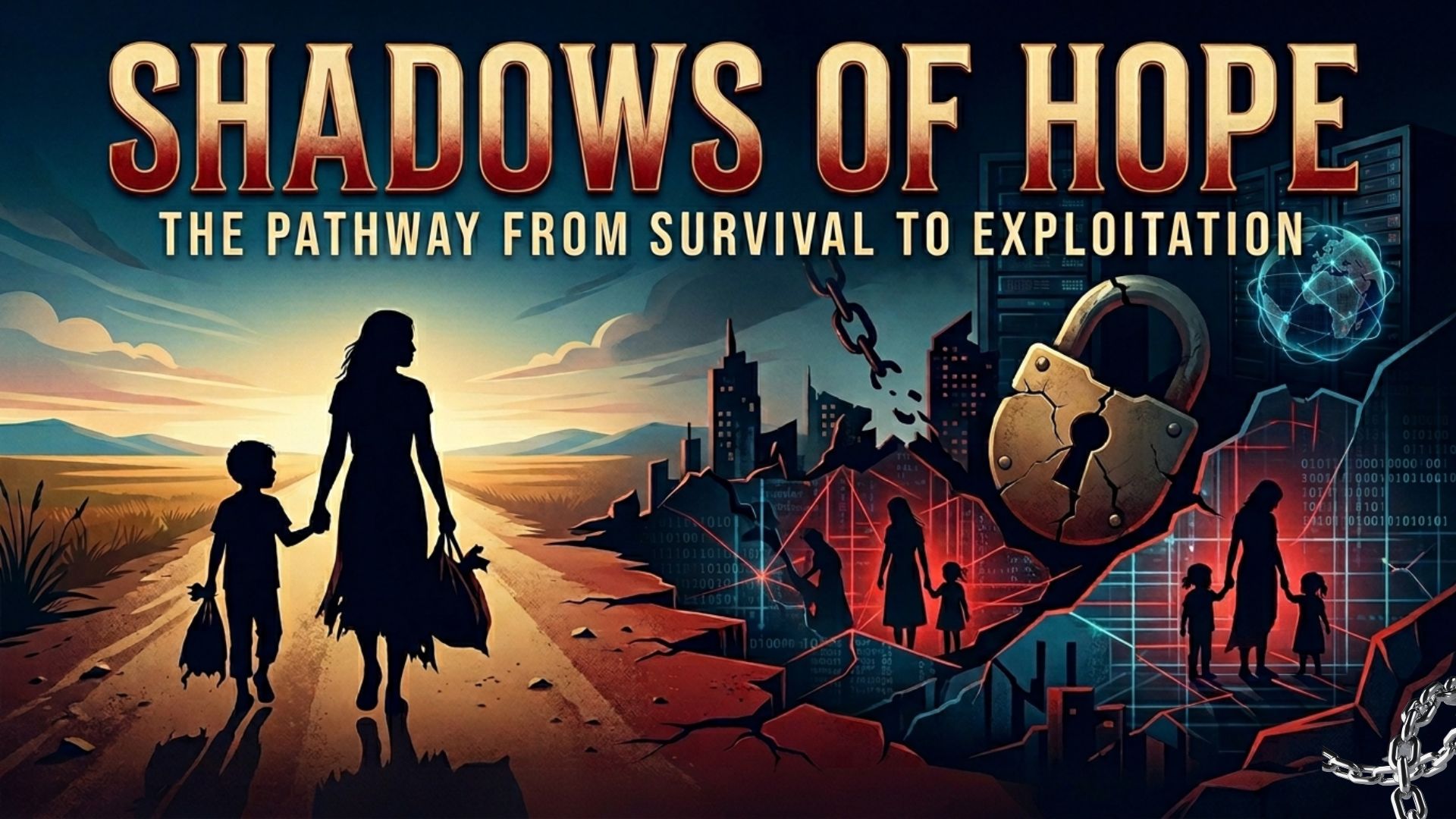
The Supreme Court has described human trafficking as one of the worst forms of human exploitation and drawn attention to its close connection with migration.

According to the Court, many people migrate in search of:

  • Livelihood opportunities
  • Economic security
  • Dignified living conditions

However, these journeys often expose vulnerable individuals, particularly women and children, to exploitation.

Justice J.B. Pardiwala observed:

"Systemic inequalities transform a survival strategy into a pathway of exploitation."

The Court clarified that while not all migration results in trafficking, trafficking frequently emerges within broader migration flows.

Migration
     ↓
Economic Vulnerability
     ↓
Coercion / Deception
     ↓
Human Trafficking

This highlights how poverty, inequality, and lack of opportunities can create conditions that traffickers exploit.

Why Trafficking Persists

The judgment stresses that trafficking cannot be viewed merely as a criminal law issue.

It is closely linked to:

  • Economic distress
  • Social inequalities
  • Lack of livelihood opportunities
  • Weak protection mechanisms
  • Gender-based vulnerabilities

For many migrants, the search for employment becomes a pathway through which criminal networks operate.

Re-examining Sex Work and Trafficking

A major focus of the judgment is the distinction between:

  • Sex trafficking
  • Voluntary adult sex work

The Court noted that the Immoral Traffic (Prevention) Act (ITPA) does not adequately recognise the rights of voluntary adult sex workers.

According to the Court, this legal silence has reinforced:

  • Social stigma
  • Marginalisation
  • Exclusion from legal protections

Justice Pardiwala stated:

"The rights of sex workers can exist without there being a right to sex work."

The Court suggested that a meaningful first step would be official recognition of the rights and protections owed to voluntary adult sex workers.

The Court identified a conflict between the Bharatiya Nyaya Sanhita (BNS) and the ITPA.

Under Section 143 of the BNS

Trafficking requires three elements:

  • Act
  • Means
  • Purpose

The "means" element includes:

  • Force
  • Coercion
  • Deception
  • Inducement
Trafficking Framework

Act
 +
Means
 +
Purpose
 =
Trafficking

Under the ITPA

The Act operates differently.

It often treats prostitution involving third parties as trafficking, irrespective of whether force, coercion, deception, or inducement is present.

The Court observed that this approach conflates trafficking with all forms of sex work.

Concerns About Victim Protection

The judgment also highlighted shortcomings within the ITPA.

Key concerns include:

  • Harassment of victims during enforcement.
  • Insufficient recognition of voluntary adult sex workers.
  • Lack of clear exclusion of children from certain provisions.

According to the Court, a law intended to protect victims should not become a source of further victimisation.

Special Protection for Children

The Court emphasized that child trafficking must be treated differently from adult trafficking.

Children face:

  • Greater physical harm
  • Psychological trauma
  • Long-term social consequences

Justice Pardiwala stressed:

Evidence of force, coercion, or deception should not be required when the victim is a child.

Adult Trafficking
→ Act + Means + Purpose

Child Trafficking
→ Presence of exploitation is sufficient;
proof of coercion should not be mandatory

The Court noted that international standards, including principles reflected in the Palermo Protocol, support stronger protections for children.

The Emerging Digital Threat

Another major concern is the growing use of cyberspace by trafficking networks.

The Court warned that trafficking remains largely hidden, with only a small proportion of cases reaching authorities.

At the same time, criminal networks are increasingly exploiting:

  • Social media platforms
  • Online recruitment channels
  • Digital communication tools
  • Anonymous online networks

Justice Pardiwala observed:

"Cyber-enabled commercial sexual exploitation has created a radical shift in the exploitation landscape."

Technology has expanded the reach, anonymity, and efficiency of trafficking operations while enforcement mechanisms struggle to keep pace.

Way Forward

  • Address the structural inequalities that drive vulnerable migration.
  • Strengthen anti-trafficking mechanisms at source and destination regions.
  • Distinguish clearly between trafficking and voluntary adult sex work.
  • Reform the ITPA to align with contemporary legal and human rights standards.
  • Provide stronger protections and rehabilitation mechanisms for victims.
  • Establish child-specific anti-trafficking safeguards.
  • Enhance cyber-monitoring and digital investigation capabilities.
  • Improve coordination between law enforcement, social welfare agencies, and civil society.

Conclusion

The Supreme Court's judgment broadens the understanding of human trafficking beyond criminal activity alone. It highlights how migration vulnerabilities, legal ambiguities, social stigma, and emerging digital threats intersect to create conditions for exploitation. Addressing trafficking therefore requires not only stronger enforcement but also legal reform, social protection, child safeguards, and inclusive policies that protect the dignity and rights of vulnerable individuals.

Attribution

Original content sources and authors
Krishnadas Rajagopal Author Krishnadas Rajagopal The Hindu Source The Hindu

Syllabus classification

How this article maps to GS papers

Main syllabus

GS2Government Policies

Also covers

GS1Population

Quick Q&A

What is the relationship between migration, vulnerability and human trafficking, and why has the Supreme Court highlighted this connection?
The relationship between migration and human trafficking lies in the structural vulnerabilities that often accompany population movement. Migration refers to the movement of people from one place to another in search of employment, safety, education, or better living conditions. Human trafficking, on the other hand, involves the recruitment, transportation, transfer, harboring, or receipt of persons through coercion, deception, force, abuse of vulnerability, or other exploitative means for purposes such as forced labor, sexual exploitation, slavery, or organ removal. The Supreme Court, in its May 2026 judgment delivered by Justices J.B. Pardiwala and R. Mahadevan, emphasized that while all migration is not trafficking, trafficking frequently emerges within migration flows. This is because poverty, unemployment, gender inequality, lack of education, displacement, and social exclusion often compel people to migrate under risky conditions. Traffickers exploit these vulnerabilities by promising employment, marriage, education, or better opportunities. Women and children are particularly vulnerable. According to various national and international studies, traffickers often target economically disadvantaged migrants who lack social protection and legal awareness. Internal migration from rural to urban areas and cross-border migration in South Asia have historically created opportunities for exploitation. The issue is significant for UPSC preparation because it intersects with GS-II topics such as social justice, vulnerable sections, governance, welfare policies, and human rights. It also relates to GS-I themes of migration and social change and GS-III concerns regarding organized crime and internal security. The Court's observations highlight that anti-trafficking strategies must address root causes such as poverty, inequality, and lack of livelihood opportunities rather than focusing solely on criminal prosecution.
Why is distinguishing between voluntary adult sex work and human trafficking important for social welfare policy and legal reform in India?
The distinction between voluntary adult sex work and human trafficking is crucial because the two involve fundamentally different legal, ethical, and human rights considerations. Human trafficking involves coercion, force, deception, abuse of power, or exploitation, whereas voluntary adult sex work involves consenting adults engaging in sex work by choice, irrespective of broader debates about the profession itself. The Supreme Court has highlighted that the Immoral Traffic (Prevention) Act (ITPA) often conflates sex work with trafficking, leading to unintended consequences. Under the existing framework, activities associated with prostitution involving third parties are frequently treated as trafficking even when no coercion or deception is present. This approach can result in the harassment, marginalization, and exclusion of adult sex workers from legal protections and welfare schemes. From a human rights perspective, denying recognition to voluntary adult sex workers may restrict their access to healthcare, housing, legal aid, financial services, and protection from violence. The Court observed that recognizing the rights of sex workers does not necessarily imply creating a legal right to sex work; rather, it ensures that individuals are protected from discrimination and exploitation. Critics of legal differentiation argue that prostitution often operates within unequal socio-economic conditions and may involve hidden coercion. Supporters of reform contend that conflating all sex work with trafficking weakens anti-trafficking efforts by diverting attention away from genuine victims. For UPSC aspirants, this debate is relevant to GS-II topics such as social justice, human rights, vulnerable groups, and legal reforms. It also connects with constitutional principles of dignity, equality, and personal liberty under Articles 14 and 21. The issue demonstrates the challenge of balancing welfare objectives, individual rights, and protection against exploitation within modern policymaking.
How does the Palermo Protocol influence India’s legal understanding of human trafficking and its distinction from related offences?
The Palermo Protocol, formally known as the Protocol to Prevent, Suppress and Punish Trafficking in Persons, Especially Women and Children, was adopted by the United Nations in 2000 as a supplement to the UN Convention against Transnational Organized Crime. It is one of the most influential international instruments guiding anti-trafficking legislation worldwide. The Protocol defines trafficking through a three-tier framework consisting of an 'act', 'means', and 'purpose'. The act may involve recruitment, transportation, transfer, harboring, or receipt of persons. The means include force, coercion, fraud, deception, abuse of vulnerability, or inducement. The purpose must involve exploitation, including sexual exploitation, forced labor, slavery, servitude, or organ removal. The Supreme Court noted that Section 143 of the Bharatiya Nyaya Sanhita (BNS) broadly reflects this framework. For an adult trafficking offence to be established, authorities must generally prove the existence of the act, means, and exploitative purpose. This approach helps distinguish trafficking from other activities that may involve migration, employment arrangements, or voluntary conduct. However, the Court also highlighted tensions between the Palermo framework and the Immoral Traffic (Prevention) Act. Unlike the Palermo model, the ITPA often treats prostitution involving third parties as trafficking without requiring proof of coercive means. Importantly, the Protocol treats child trafficking differently. In cases involving children, the 'means' requirement is generally unnecessary because children are inherently vulnerable and incapable of providing legally meaningful consent in exploitative situations. For UPSC preparation, the Palermo Protocol is relevant to GS-II topics concerning international conventions, human rights, and governance. It also connects with GS-III issues such as organized crime, transnational criminal networks, and internal security. Understanding the Protocol provides insight into how international norms shape domestic legal reforms and anti-trafficking strategies.
What are the major structural and socio-economic reasons that make women and children particularly vulnerable to trafficking in India?
Women and children are disproportionately vulnerable to trafficking due to a combination of economic, social, cultural, and institutional factors. Human trafficking is rarely caused by a single factor; rather, it emerges from multiple vulnerabilities that traffickers exploit for profit. Poverty remains one of the most significant drivers. Families facing economic hardship may accept risky employment offers or migration opportunities without adequate verification. In many cases, traffickers exploit aspirations for better livelihoods by making false promises regarding jobs, education, marriage, or migration. Gender inequality is another critical factor. Women often face restricted access to education, property ownership, employment opportunities, and financial independence. Such inequalities increase dependence on intermediaries and heighten exposure to exploitation. Child marriage, domestic violence, and social discrimination can further intensify vulnerability. Migration-related risks also play a major role. Internal migrants frequently work in informal sectors such as domestic work, construction, agriculture, and manufacturing, where regulatory oversight is weak. Migrants lacking identity documents, legal awareness, or social networks are particularly susceptible to coercion. Children face additional vulnerabilities due to their age, dependence, and limited ability to protect their interests. The Supreme Court emphasized that trafficked children suffer unique physical, psychological, and psychosocial harms. Consequently, international law and evolving domestic jurisprudence recognize the need for special protections. Technological changes have introduced new risks. Online recruitment, social media manipulation, fake employment advertisements, and cyber-enabled exploitation have expanded traffickers' reach. For UPSC aspirants, this issue relates to GS-II topics such as welfare policies, vulnerable groups, women and child development, and social justice. It also intersects with GS-I discussions on poverty, social change, and demographic challenges. Effective anti-trafficking strategies therefore require livelihood generation, education, gender empowerment, social protection, and digital safety initiatives alongside criminal law enforcement.
Critically analyse the limitations of the Immoral Traffic (Prevention) Act in addressing trafficking while protecting the rights of vulnerable individuals.
The Immoral Traffic (Prevention) Act (ITPA), enacted to combat trafficking and commercial sexual exploitation, has long served as India's principal legislation in this area. However, recent judicial observations have highlighted several limitations that warrant critical examination. One major criticism is the Act's tendency to conflate trafficking with sex work. Unlike modern trafficking frameworks inspired by the Palermo Protocol, the ITPA often does not require proof of coercion, force, deception, or inducement. As a result, voluntary adult sex workers may be treated similarly to trafficking victims or offenders, despite the absence of exploitative means. This conflation has significant welfare implications. Adult sex workers often face stigma, police harassment, social exclusion, and barriers to accessing healthcare, housing, legal remedies, and welfare benefits. The Supreme Court observed that the statute's silence regarding their rights has amplified existing discrimination. Another limitation concerns victim protection. Critics argue that enforcement practices sometimes target individuals in prostitution rather than criminal networks responsible for exploitation. Consequently, those intended to be protected may experience secondary victimization. The Court also highlighted concerns regarding children. The Act does not sufficiently distinguish child victims from adult persons in all contexts, creating ambiguities that may affect protection mechanisms. Supporters of the Act argue that strong restrictions are necessary to combat organized trafficking networks and sexual exploitation. However, opponents contend that excessive focus on criminalization can undermine rehabilitation and rights-based approaches. From a UPSC perspective, this debate relates to GS-II topics such as governance, legal reform, social justice, and human rights. It also raises broader questions about balancing law enforcement with welfare objectives. A modernized framework may require clearer definitions, stronger victim-centered protections, child-sensitive provisions, and better alignment with international anti-trafficking standards while preserving safeguards against exploitation.
How does the rise of cyber-enabled trafficking and online sexual exploitation represent a new challenge for governance and law enforcement agencies?
The emergence of cyber-enabled trafficking and online sexual exploitation represents one of the most significant transformations in the trafficking landscape during the digital era. The Supreme Court has noted that criminal networks increasingly exploit cyberspace because of its anonymity, accessibility, scalability, and transnational reach. Traditionally, traffickers relied on physical recruitment networks, intermediaries, and localized operations. Today, digital platforms, social media applications, messaging services, online gaming environments, and fraudulent employment websites allow offenders to identify, contact, groom, recruit, and exploit victims with unprecedented efficiency. Women, adolescents, and children are particularly vulnerable to online manipulation and deceptive recruitment tactics. Cyber-enabled exploitation can take multiple forms, including online grooming, livestreamed abuse, trafficking for commercial sexual exploitation, forced content production, and fraudulent job offers leading to labor exploitation. The borderless nature of the internet allows criminal groups to operate across jurisdictions, complicating investigations and prosecutions. Law enforcement agencies face several challenges. Digital evidence is often encrypted, rapidly deleted, or stored in foreign jurisdictions. Investigators require advanced cyber-forensic capabilities, specialized training, and international cooperation mechanisms. Existing legal frameworks may also struggle to keep pace with evolving technologies. At the same time, technology can be part of the solution. Artificial intelligence, predictive analytics, digital monitoring tools, and cross-border information-sharing mechanisms can help identify trafficking networks and rescue victims more effectively. For UPSC aspirants, this issue connects GS-II governance and social welfare with GS-III internal security, cyber security, and organized crime. It demonstrates how technological innovation creates both opportunities and risks. Addressing cyber-enabled trafficking requires a comprehensive strategy involving digital literacy, child protection systems, stronger cyber policing, international cooperation, platform accountability, and victim-centered rehabilitation measures. The challenge illustrates the growing intersection of technology, human rights, and public policy in contemporary governance.

Practice questions

1 question for mains preparation

Human trafficking is often rooted in socio-economic vulnerabilities rather than criminal activity alone." Discuss in the context of migration, gender, and child protection in India.

15 marks · 250 words · 8 mins
