GS2 Government Policies

NFHS-6 Reveals Progress And Persistent Nutrition Challenges

NFHS-6 and Child Nutrition in India: Progress, Persistent Gaps and the Road Ahead

The NFHS-6 reveals improvements in stunting rates but highlights persistent nutrition challenges in India that require urgent attention.
Surya Surya
4 mins read

“Child nutrition is shaped not only by food availability but also by health services, caregiving practices and social support systems.”

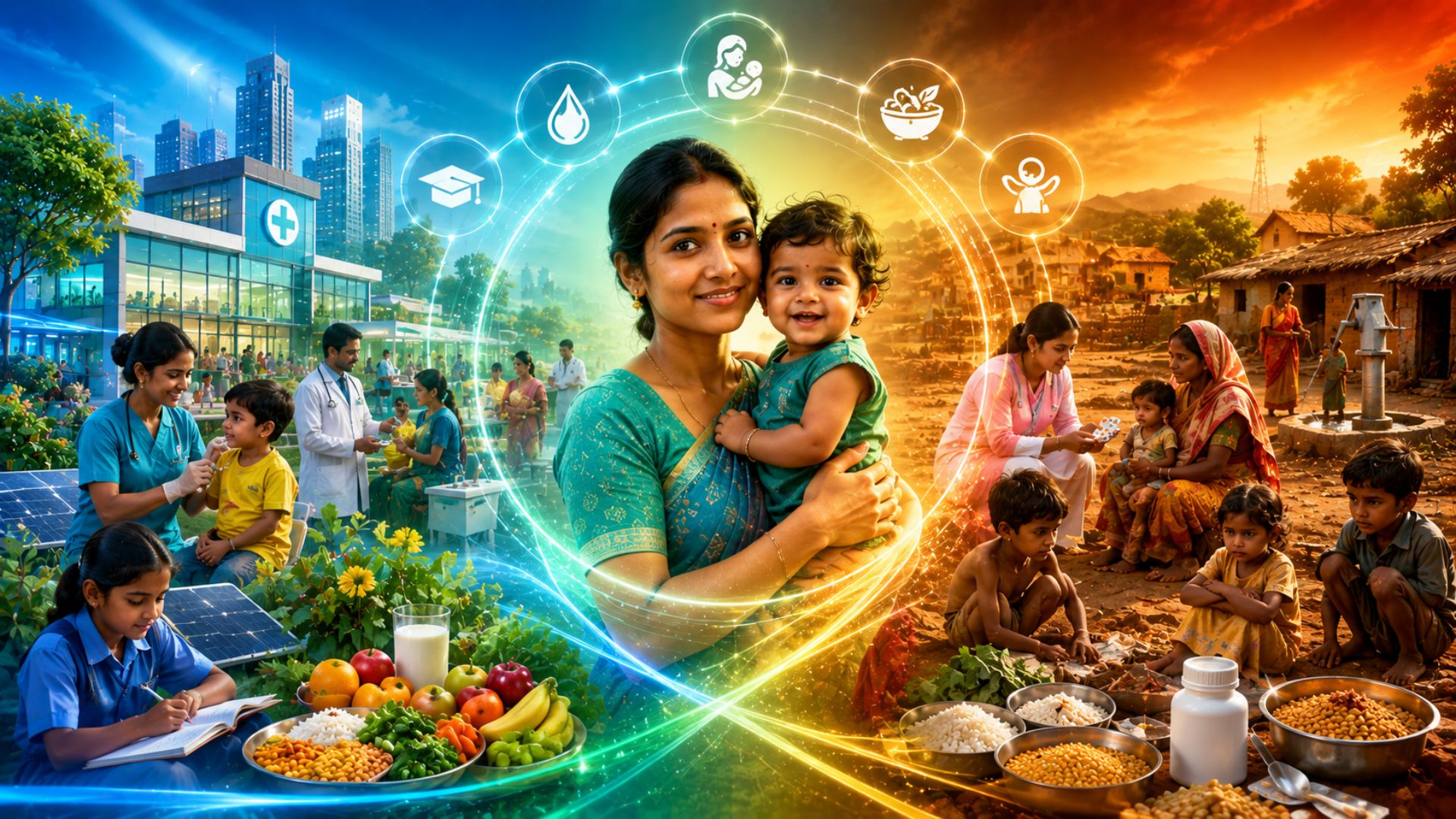
The National Family Health Survey-6 (NFHS-6) presents a mixed picture of India's child nutrition landscape. While improvements in health services and maternal care have contributed to a decline in stunting, persistent gaps in feeding practices, dietary adequacy and caregiving support continue to hinder progress.

Encouraging Gains in Child Nutrition

Key Improvements

IndicatorNFHS-5NFHS-6
Stunting (Under-5)35.5%29.3%
Institutional Births-90%
Deliveries by Skilled Personnel-91%
Antenatal Visits by Health Personnel-95%
Full Immunisation (12-23 months)-87%

The decline in stunting indicates gradual improvements in:

  • Maternal education.
  • Access to healthcare.
  • Immunisation coverage.
  • Housing conditions.
  • Safe drinking water.
  • Sanitation facilities.

However, wasting levels remain largely unchanged, indicating continuing nutritional vulnerabilities.

Role of Frontline Health Workers

India's high vaccination coverage reflects the contribution of:

  • Accredited Social Health Activists (ASHAs)
  • Anganwadi Workers (AWWs)
  • Auxiliary Nurse Midwives (ANMs)
Public Health Success:
• 87% children fully vaccinated
• Private facilities contribute only ~3% of vaccinations
• Majority coverage achieved through public outreach systems

Although regional disparities persist, access to health services has improved across States.

The Persistent Challenge of Poor Feeding Practices

Despite better institutional healthcare, infant and young child feeding remains inadequate.

Major Concerns

Feeding IndicatorStatus
Breastfeeding within first hour~50%
Complementary feeding (6-8 months)~60%
Adequate diet (6-23 months)Only 15%

Key issues include:

  • Delayed initiation of breastfeeding.
  • Delayed complementary feeding.
  • Poor dietary diversity.
  • Inadequate nutrient intake.

In India, complementary feeding is culturally linked to the annaprasana ritual. Delays in introducing complementary foods can lead to growth faltering during critical developmental stages.

Maternal Time Poverty: An Overlooked Factor

A growing determinant of child nutrition is the limited time available to mothers for caregiving.

Why Does It Matter?

  • Around 30% of women reported paid work.

  • Many more engage in unpaid family labour.

  • Women often combine childcare with:

    • Agriculture
    • Fisheries
    • Livestock care
    • Domestic work
In many rural areas:
Mother works in fields
          ↓
Child left with sibling or elder
          ↓
Reduced breastfeeding
          ↓
Poor complementary feeding
          ↓
Growth faltering

The absence of accessible crèche facilities further aggravates this challenge.

The Processed Food Trap

Recent consumption trends reveal changing food expenditure patterns.

Emerging Trend

  • Lower spending on cereals.
  • Higher spending on dairy products.
  • Rising expenditure on processed foods and beverages.

However, dietary diversity does not automatically translate into nutritional adequacy.

Nutritious Diet According to ICMR-NIN

A balanced diet should include:

  • Pulses
  • Millets
  • Fruits
  • Vegetables
  • Animal-source foods
  • Nuts

For many households, such diets remain unaffordable, whereas processed foods are:

  • Cheap
  • Easily available
  • Conveniently packaged

The Critical First 1,000 Days

The period from pregnancy to a child's second birthday is crucial for:

  • Physical growth.
  • Brain development.
  • Cognitive outcomes.

“Prevention is more effective than rehabilitation in combating child malnutrition.”

Growth faltering often begins before visible signs of undernutrition emerge.

Current Gap

POSHAN Abhiyaan primarily focuses on identifying and rehabilitating severely malnourished children.

Greater emphasis is needed on:

  • Early detection of growth stagnation.
  • Timely counselling.
  • Preventive interventions.

Strengthening Nutrition Governance

Improving Frontline Systems

  • Enhance anthropometric measurement skills of AWWs.
  • Improve quality of nutrition data.
  • Use local data analysis for timely intervention.
  • Recruit nutritionists and data analysts at district level.

Leveraging Technology

Digital tools can:

  • Support counselling.
  • Provide age-specific feeding guidance.
  • Promote use of locally available nutritious foods.

Behaviour Change Communication

Efforts should:

  • Be culturally grounded.
  • Integrate traditions such as annaprasana.
  • Improve family awareness regarding child feeding practices.

Importance of Multisectoral Convergence

Child nutrition cannot be addressed by the health sector alone.

Areas Requiring Coordination

  • Nutrition
  • Water supply
  • Sanitation
  • Anganwadi infrastructure
  • Local governance

Child nutrition should become a regular agenda item in:

  • Gram Sabhas
  • Panchayats
  • Community planning processes

Supporting Mothers and Caregivers

Improving nutrition outcomes requires:

  • Greater involvement of men in childcare.
  • Shared domestic responsibilities.
  • Expanded childcare support systems.

Community-based crèches can simultaneously:

  • Improve child nutrition.
  • Promote early learning.
  • Reduce women's unpaid care burden.
  • Enhance women's workforce participation.

Way Forward

  • Prioritise prevention of growth faltering during the first 1,000 days.
  • Strengthen breastfeeding and complementary feeding support.
  • Improve affordability of nutritious foods.
  • Expand crèche and childcare infrastructure.
  • Build capacity of ASHAs, AWWs and ANMs.
  • Strengthen local nutrition surveillance and data use.
  • Promote convergence across health, nutrition, water and sanitation sectors.

Conclusion

NFHS-6 highlights significant gains in child health, immunisation and maternal care, demonstrating the effectiveness of India's public health systems. However, persistent deficiencies in feeding practices, dietary adequacy and caregiving support continue to constrain nutritional progress. Achieving sustainable reductions in child malnutrition will require shifting from treatment-focused approaches to preventive, community-driven and multisectoral strategies centred on the critical first 1,000 days of life.

Attribution

Original content sources and authors

Soumya Swaminathan Author Soumya Swaminathan The Hindu Source The Hindu

Syllabus classification

How this article maps to GS papers

Main syllabus

GS2Government Policies

Quick Q&A

What do the findings of the National Family Health Survey-6 reveal about the changing status of child nutrition and public health in India?
The National Family Health Survey-6 (NFHS-6) presents a mixed picture of India's progress in child nutrition and public health. One of the most encouraging findings is the decline in stunting among children below five years from 35.5% to 29.3%, indicating improvements in long-term nutritional status. Stunting reflects chronic deprivation resulting from inadequate diet, poor maternal health, repeated infections, and deficiencies in water and sanitation. However, wasting, which measures low weight for height and indicates acute malnutrition, has shown little improvement except in severe forms. The survey also highlights remarkable achievements in healthcare access. Institutional deliveries have reached 90%, with 91% of births attended by skilled personnel. About 95% of mothers received at least one antenatal visit, and 87% of children aged 12-23 months are fully immunised. These achievements reflect the contributions of frontline health workers such as Accredited Social Health Activists (ASHAs), Anganwadi Workers (AWWs), and Auxiliary Nurse Midwives (ANMs). Despite these gains, deficiencies remain in infant and young child feeding practices. Only about half of newborns are breastfed within the first hour, and merely 15% of children between six and 23 months receive an adequate diet. These trends indicate that healthcare improvements alone cannot eliminate malnutrition. The issue is highly relevant to GS Paper II (Health and Social Justice), GS Paper III (Human Development), and Sustainable Development Goal 2 relating to Zero Hunger. NFHS-6 demonstrates that while India has strengthened healthcare delivery, achieving nutritional security requires multisectoral interventions addressing food quality, caregiving practices, gender inequality, and sanitation.
Why do improvements in healthcare services alone remain insufficient for eliminating child undernutrition in India?
Child undernutrition is a multidimensional challenge that extends beyond healthcare services. While NFHS-6 records substantial improvements in institutional births, immunisation, antenatal care, and healthcare access, these gains have not translated into equivalent progress in dietary outcomes. This indicates that nutrition is influenced by social, economic, cultural, and behavioural factors in addition to medical interventions. Healthcare services help prevent infections and reduce mortality, but adequate growth requires appropriate feeding practices and access to nutritious food. NFHS-6 reveals that only about 60% of children aged six to eight months receive complementary foods, and only 15% of children between six and 23 months consume an adequate diet. Delays in complementary feeding can lead to growth faltering and cognitive deficits. Another factor is affordability. Recent consumption trends show rising expenditure on processed foods and beverages, which may create dietary diversity without ensuring nutritional adequacy. According to the dietary guidelines of the Indian Council of Medical Research (ICMR) and the National Institute of Nutrition (NIN), balanced diets require pulses, fruits, vegetables, millets, nuts, and animal-source foods, which remain unaffordable for many households. The issue is linked to GS Paper II topics such as health and vulnerable sections, GS Paper III themes concerning poverty and food security, and ethics relating to distributive justice. Different scholars emphasize that nutrition requires convergence across sectors including agriculture, sanitation, education, gender empowerment, and social protection. Therefore, improvements in healthcare are necessary but not sufficient. A holistic strategy focusing on prevention, dietary diversity, maternal empowerment, and behaviour change is essential for sustainable reductions in child malnutrition.
How does maternal time poverty influence infant feeding practices and contribute to child malnutrition in India?
Maternal time poverty refers to the situation in which women are burdened with multiple responsibilities, leaving them with inadequate time for childcare, breastfeeding, and complementary feeding. NFHS-6 highlights this issue as an underexplored but significant determinant of child nutrition. Although around 30% of women reported engaging in paid work, this figure understates their total workload because many women perform unpaid labour in agriculture, livestock care, fisheries, household work, and family enterprises. In rural areas, the absence of childcare facilities such as crèches forces women to leave infants with grandparents or older siblings, often girls. This arrangement may adversely affect breastfeeding frequency and timely complementary feeding. Consequently, children may suffer growth faltering during the crucial first two years of life. The concept is closely associated with gender inequality and unpaid care work. Feminist economists have long argued that unpaid domestic labour remains invisible in conventional economic statistics. India's Time Use Survey of 2019 similarly showed that women spend significantly more hours on unpaid care work than men. This issue is relevant to GS Paper I (Society and Women), GS Paper II (Health and Social Justice), and GS Paper III (Human Development). It also connects with Sustainable Development Goal 5 on gender equality. Policy responses include expanding crèche facilities, promoting shared domestic responsibilities, and integrating childcare with nutrition and early learning programmes. Experts argue that social infrastructure supporting caregiving can simultaneously improve child development and enhance women's labour force participation. Thus, addressing maternal time poverty is both a nutritional and gender justice imperative.
Critically analyse the growing dependence on processed foods and its implications for nutritional security in India.
The increasing consumption of processed foods represents a significant challenge for India's nutritional transition. Recent consumer expenditure surveys indicate that households are spending less on cereals and increasingly on dairy products, processed foods, and beverages. Although such trends may create an appearance of dietary diversity, nutritional adequacy depends on the quality and composition of food rather than merely the variety of items consumed. According to the food-based dietary guidelines issued by the Indian Council of Medical Research (ICMR) and the National Institute of Nutrition (NIN), healthy diets should include pulses, millets, fruits, vegetables, nuts, and animal-source foods. However, these foods are often relatively expensive and inaccessible to economically weaker households. Processed foods, in contrast, are inexpensive, widely available, and marketed aggressively. Supporters of processed foods argue that they provide convenience and meet the needs of urban lifestyles. However, critics point to their high levels of sugar, salt, unhealthy fats, and preservatives, which contribute to the double burden of malnutrition. India increasingly faces both undernutrition and rising incidences of obesity, diabetes, and cardiovascular diseases. This issue is relevant to GS Paper III (Food Security and Human Development) and GS Paper II (Health). It also relates to Sustainable Development Goals 2 and 3. International experiences from countries such as Mexico and Chile have demonstrated the need for regulations, food labelling, and awareness campaigns. Therefore, nutritional security requires improving affordability and access to healthy foods rather than relying solely on market-driven dietary patterns. Public policy must promote dietary diversity while addressing the influence of processed food consumption on long-term health outcomes.
Why are the first one thousand days of life considered critical for child development and nutrition outcomes?
The first one thousand days, extending from conception to a child's second birthday, constitute the most critical period for physical growth, cognitive development, and immune system formation. Scientific evidence demonstrates that most brain development occurs during the first five years, with the foundations laid primarily during this early window. Nutritional deficiencies during this phase can have irreversible consequences for learning ability, productivity, and health throughout life. Growth faltering and stunting often begin during the first two years. NFHS-6 and related studies suggest that delays in breastfeeding and complementary feeding contribute significantly to undernutrition. In India, cultural practices such as the annaprasana ritual influence the timing of introducing solid foods. Delayed complementary feeding can negatively affect growth trajectories. The importance of this period has been recognized globally through initiatives such as the Scaling Up Nutrition movement and nationally through POSHAN Abhiyaan. However, experts argue that current programmes focus heavily on identifying severely malnourished children rather than preventing growth faltering through early interventions. The issue has relevance for GS Paper II (Health and Social Development), GS Paper III (Human Capital), and population-related themes. Countries such as Brazil and Thailand have demonstrated that investments during early childhood yield substantial economic and social returns. Policy measures include early growth monitoring, counselling mothers, promoting breastfeeding, and ensuring access to nutritious diets. Investments during the first thousand days are often regarded as among the most cost-effective interventions in public policy because they enhance cognitive abilities, educational outcomes, and productivity, thereby contributing to long-term national development.
What role do frontline workers and community institutions play in improving child nutrition outcomes in India?
Frontline workers constitute the backbone of India's public health and nutrition delivery system. Accredited Social Health Activists (ASHAs), Anganwadi Workers (AWWs), and Auxiliary Nurse Midwives (ANMs) have played a crucial role in expanding immunisation, maternal healthcare, and nutrition awareness. NFHS-6 data, showing that 87% of children aged 12-23 months are fully vaccinated, reflects the effectiveness of their outreach efforts. AWWs regularly collect anthropometric measurements and monitor children's growth. Strengthening their capacity in data collection and analysis can improve early identification of growth faltering. Experts have suggested appointing nutritionists and data analysts at district levels to enhance evidence-based interventions. Digital tools can further support workers by providing practical guidance on age-appropriate feeding practices. Community institutions such as Gram Sabhas and Panchayats also have a vital role. Child nutrition can be integrated into local governance by prioritising safe drinking water, sanitation facilities, and improved Anganwadi infrastructure. Multisectoral convergence is essential because nutrition outcomes depend on health, education, sanitation, and social protection. Numerous non-governmental organisations have developed successful crèche models that combine nutrition, childcare, and early learning. These initiatives simultaneously support child development and women's economic participation. The topic is relevant to GS Paper II concerning local governance, health, and welfare schemes. It also illustrates the importance of community participation in achieving Sustainable Development Goals. Thus, strengthening frontline workers and local institutions can transform nutrition programmes from reactive interventions into preventive systems focused on sustaining long-term human development.
What institutional and policy reforms are required to achieve sustained reductions in child malnutrition in India?
Sustainable reductions in child malnutrition require a comprehensive and multisectoral strategy rather than isolated interventions. While programmes such as POSHAN Abhiyaan have improved the identification and rehabilitation of severely malnourished children, experts emphasize the need to shift towards prevention of growth faltering. First, better data systems are required. Disaggregated information for children aged 0-2 years should be collected because this period is crucial for preventing stunting. Improving the quality of anthropometric measurements and strengthening local analysis of data can enable timely interventions. Second, capacity building of frontline workers is essential. Joint training of ASHAs, AWWs, and ANMs can improve counselling related to breastfeeding and complementary feeding. Culturally grounded behaviour change communication, including practices such as annaprasana, can make interventions more effective. Third, investments in social infrastructure such as crèches are needed. Such facilities reduce women's unpaid care burdens and support both child nutrition and female labour force participation. Promoting men's involvement in childcare can further improve caregiving practices. Fourth, local governance institutions must prioritize child nutrition. Gram Sabhas and Panchayats should integrate nutrition, sanitation, drinking water, and Anganwadi infrastructure into development planning. This issue is relevant to GS Paper II (Health, Women and Children), GS Paper III (Human Development and Food Security), and Ethics concerning social justice. International experiences demonstrate that coordinated action across sectors yields better outcomes. Ultimately, combating malnutrition requires treating nutrition not merely as a health issue but as a developmental challenge involving gender equality, social protection, agriculture, and community participation.

Practice questions

1 question for mains preparation

Nutrition is both an outcome and a determinant of human development. Examine this statement in the context of child nutrition challenges in India.

10 marks · 150 words · 8 mins
