GS2 Government Policies

Deadly hospital fire exposes persistent safety lapses

Urban Fire Safety in India: Tragic Muzaffarpur Hospital Fire Claims Five Lives

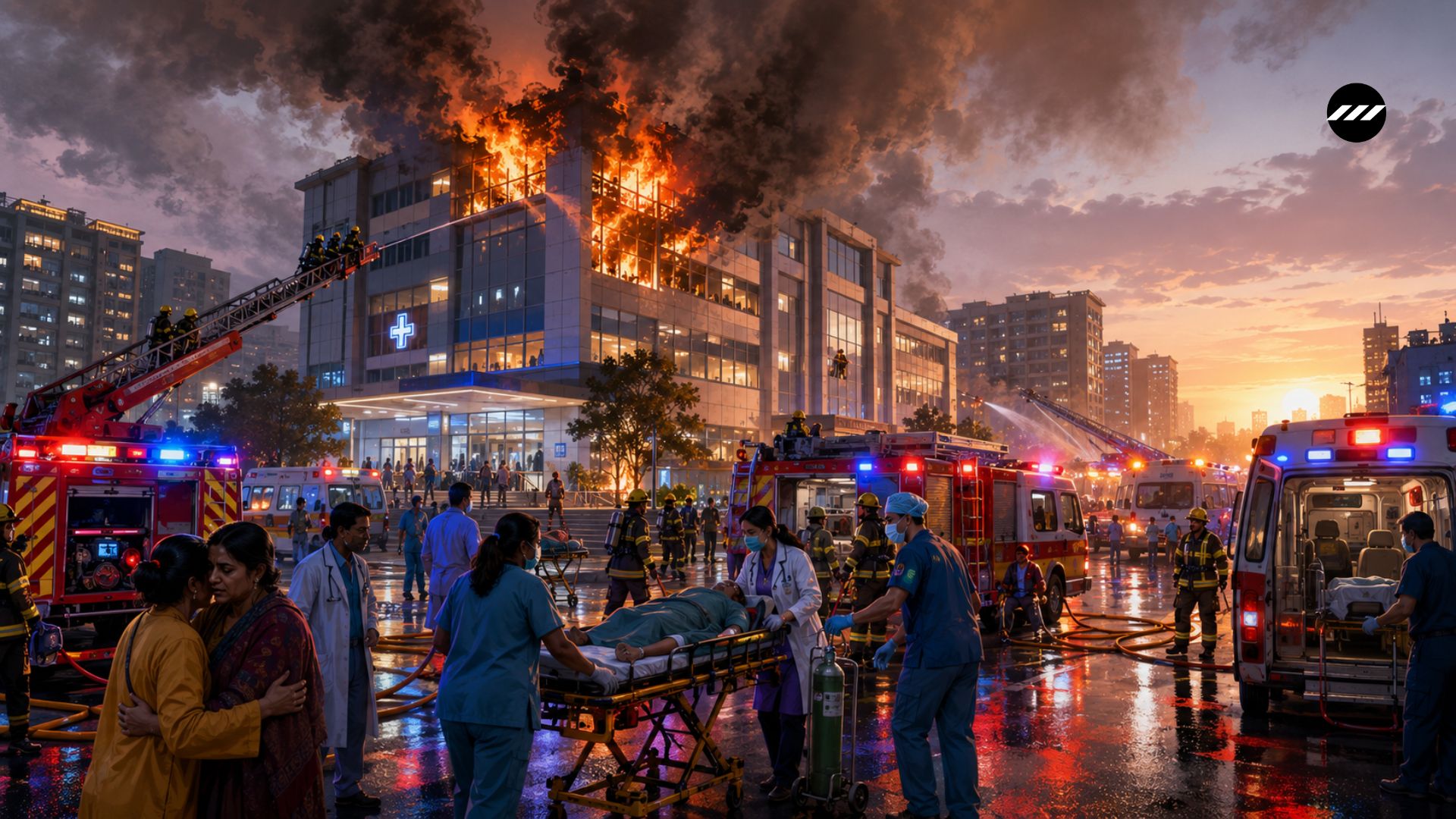
A fire at a hospital ICU in Muzaffarpur, Bihar, has resulted in five fatalities and numerous injuries, raising concerns about safety protocols.
Dhinesh Balasubramanian Dhinesh Balasubramanian
4 mins read

The fire at a private hospital in Muzaffarpur, Bihar, on June 4, 2026, and the deadly blaze in a Delhi guesthouse a day earlier once again highlight a recurring pattern in India's urban spaces: fires are often treated as isolated accidents, whereas they are frequently the outcome of deeper governance and regulatory failures.

Muzaffarpur Hospital Fire: What Happened?

A major fire broke out at Prasad Hospital in Muzaffarpur at around 3:55 a.m. in the Intensive Care Unit (ICU).

Key Facts

IndicatorDetails
LocationMuzaffarpur, Bihar
Time3:55 a.m.
DeathsAt least 5
ICU Patients13
Total Patients24
Suspected CauseShort Circuit

Fire personnel rescued around 15 people and shifted several patients to nearby hospitals.

Short Circuit (Suspected)
          โ†“
ICU Fire
          โ†“
Evacuation Challenges
          โ†“
Loss of Lives

The Bihar government announced an ex gratia payment of โ‚น4 lakh to the families of each victim and ordered an inquiry.

Not an Isolated Incident

The tragedy occurred just a day after a massive fire in Delhi's Malviya Nagar area that claimed at least 21 lives.

These incidents fit into a long pattern of urban fire disasters in India.

Major Fire Incidents

IncidentYear
Uphaar Cinema Fire1997
Arpora Nightclub Fire2025
Delhi Guesthouse Fire2026
Muzaffarpur Hospital Fire2026

Despite repeated inquiries, court interventions, and reforms, similar vulnerabilities continue to persist.

Common Causes Behind Urban Fire Tragedies

Investigations into past incidents reveal recurring factors.

Structural Problems

  • Overcrowding
  • Blocked emergency exits
  • Illegal modifications
  • Poor electrical safety
  • Absence of fire clearances
  • Weak enforcement
Safety Violations
        +
Weak Enforcement
        โ†“
High-Risk Buildings
        โ†“
Disaster Trigger

The immediate cause may vary, but the underlying risk environment often remains unchanged.

Delhi Fire: A Case Study in Regulatory Failure

Investigations revealed that the Delhi guesthouse:

  • Lacked fire department clearance.
  • Violated fire safety norms.
  • Had over three times the permitted number of rooms.
  • Benefited from land-use exemptions.

Authorities had already been directed by the Delhi High Court to conduct audits of hospitality hubs.

Yet violations reportedly continued.

Governance Questions

StakeholderResponsibility
Building OwnerSafety Compliance
Municipal AuthoritiesMonitoring
Fire DepartmentInspections
Tourism DepartmentRegulatory Oversight

The incident highlights failures not only by operators but also by oversight agencies.

Why Do Unsafe Conditions Persist?

The issue is often rooted in incentives.

Economic Factors

  • Safety systems increase costs.
  • Compliance inspections are often irregular.
  • Violations may remain undetected for years.

"The value of safety measures is often ignored because their success lies in preventing disasters that never happen."

As a result, investments in safety are frequently viewed as avoidable expenses rather than essential safeguards.

The Enforcement Deficit

After major incidents, owners are often prosecuted.

For example:

  • The Delhi Police charged the guesthouse owner with culpable homicide not amounting to murder.

However, experts argue that accountability should extend beyond individual operators.

Systemic Failures Include

  • Inadequate inspections
  • Delayed audits
  • Weak compliance monitoring
  • Lack of deterrent penalties
  • Administrative negligence
Unsafe Building
        โ†“
Inspection Failure
        โ†“
Regulatory Inaction
        โ†“
Disaster

Without addressing these systemic gaps, legal action after disasters provides limited deterrence.

Why Hospitals Require Special Attention

Hospitals are uniquely vulnerable during fires because many occupants:

  • Are elderly
  • Are critically ill
  • Have restricted mobility
  • Depend on life-support systems

The Muzaffarpur ICU fire demonstrates how evacuation becomes significantly more difficult in healthcare facilities.

Thus, hospitals require stricter fire-safety standards than ordinary buildings.

Fire Safety as an Urban Governance Challenge

Urban fires should not be viewed solely as emergency-response issues.

They are linked to:

  • Urban planning
  • Building regulations
  • Land-use governance
  • Public accountability
  • Disaster management

A fire is often the final manifestation of long-standing governance failures.

Way Forward

  • Conduct mandatory periodic fire audits of hospitals, hotels, schools, and commercial buildings.
  • Digitise fire-clearance and compliance systems.
  • Strengthen penalties for violations and non-compliance.
  • Establish independent third-party safety inspections.
  • Improve emergency evacuation infrastructure.
  • Integrate fire safety into urban planning and building approvals.
  • Conduct regular public awareness and mock-drill programmes.
  • Ensure accountability of both operators and regulatory agencies.

Conclusion

The Muzaffarpur hospital fire and the Delhi guesthouse tragedy are reminders that urban fire disasters rarely result from a single spark. They emerge from a combination of unsafe infrastructure, regulatory lapses, weak enforcement, and inadequate preparedness. Preventing future tragedies requires moving beyond post-disaster compensation and investigations toward a culture of compliance, accountability, and safety embedded within India's urban governance framework.

Attribution

Original content sources and authors

Amarnath Tewary Author Amarnath Tewary
The Hindu Source The Hindu

Syllabus classification

How this article maps to GS papers

Main syllabus

GS2Government Policies

Also covers

GS1Urbanisation

Quick Q&A

What are the major causes and recurring patterns behind deadly urban fire accidents in India?
Urban fire accidents in India are not merely isolated incidents but manifestations of deeper structural and governance failures. Recent tragedies such as the Muzaffarpur hospital ICU fire in June 2026, the Delhi Malviya Nagar B&B fire, the Arpora nightclub fire of 2025, and the Uphaar Cinema fire of 1997 reveal strikingly similar patterns. These include overcrowding, blocked escape routes, electrical short circuits, unauthorized modifications, poor adherence to fire safety standards, and weak regulatory enforcement. The Muzaffarpur incident claimed at least five lives after a fire reportedly caused by a short circuit broke out in the Intensive Care Unit, where patients were particularly vulnerable. Similarly, the Delhi hotel fire exposed violations involving excessive room construction and the absence of mandatory fire clearances. Rapid urbanization, commercialization, and cost-cutting often encourage establishments to compromise safety norms. Local bodies frequently fail to conduct periodic inspections, while loopholes in land-use regulations are exploited. Many facilities continue to operate without obtaining necessary approvals. From a governance perspective, these accidents demonstrate failures in institutional accountability rather than purely technical shortcomings. Investigations often identify immediate causes, but systemic negligence remains inadequately addressed. For UPSC aspirants, the issue is relevant to GS-II Governance and GS-III Disaster Management and Urban Development. It illustrates the need for effective regulation, institutional coordination and a preventive approach. Urban safety must be viewed as an essential component of sustainable development and citizen welfare rather than merely a compliance requirement.
Why does poor enforcement of fire safety regulations continue to remain a persistent challenge in Indian cities?
Weak enforcement of fire safety norms remains one of the most persistent governance challenges in India. Although laws, building codes and institutional mechanisms exist, implementation often suffers due to inadequate inspections, corruption, lack of manpower and administrative fragmentation. The June 2026 fires in Delhi and Muzaffarpur once again highlighted that regulatory failures are frequently as important as the immediate causes of fires. Reports indicated that the Delhi B&B lacked fire department clearances and had more than three times the number of rooms legally permitted. Despite previous court directives and audit requirements, such violations continued unchecked. Several factors contribute to this problem. First, urban economic ecosystems often tolerate unauthorized construction and unsafe practices in the interest of commercial gains. Second, inspections are frequently sporadic and reactive rather than systematic. Third, multiple agencies share responsibilities, leading to diffusion of accountability. Fourth, penalties imposed on violators often fail to create a strong deterrent effect. Another issue is the tendency to attribute blame solely to building owners while overlooking failures by municipal authorities and fire departments. Consequently, systemic shortcomings remain unresolved. The problem has broader implications for governance and public trust. Citizens expect the state to ensure safe public spaces, especially hospitals, hotels and commercial establishments. From a UPSC perspective, this issue is relevant to GS-II Governance, GS-III Disaster Management and Internal Security. It raises important themes concerning accountability, regulatory capacity, urban governance and the role of institutions in safeguarding public welfare.
How can India strengthen its fire safety framework to prevent recurring disasters in hospitals and urban establishments?
Preventing recurrent fire disasters requires a comprehensive strategy that combines regulatory reforms, technological interventions and behavioral changes. Merely responding after accidents occur is insufficient; a preventive safety culture must be institutionalized. First, authorities must ensure periodic and transparent fire safety audits. Digital databases and GIS-based monitoring systems can help track compliance in hospitals, hotels and commercial buildings. Fire clearances should be renewed regularly rather than being treated as one-time approvals. Second, building codes prescribed under the National Building Code of India should be strictly enforced. Escape routes, smoke detectors, sprinklers and emergency exits must be mandatory, especially in facilities accommodating vulnerable populations such as hospitals and nursing homes. Third, local authorities should establish a system of incentives and penalties. Businesses maintaining high safety standards may receive benefits, while severe violations should invite strict sanctions, including closure and criminal liability. Fourth, regular mock drills and public awareness campaigns should be conducted. Staff members in hospitals and hospitality establishments must receive specialized training in emergency evacuation procedures. Technology also has an important role. Smart sensors, automated alarms and integrated emergency response systems can significantly reduce casualties. Countries such as Japan and Singapore have demonstrated the effectiveness of a culture of compliance combined with robust enforcement. For UPSC aspirants, the topic is relevant to GS-III Disaster Management, Science and Technology and Urban Development. Strengthening fire safety is closely linked to the principles of resilience, sustainable urbanization and citizen-centric governance.
What are the reasons behind the repeated occurrence of fire accidents in hospitals and hospitality establishments in India?
Hospitals and hospitality establishments are particularly vulnerable to fire accidents due to a combination of technical, structural and administrative factors. The recurring nature of such incidents indicates that underlying risks have not been adequately addressed. Electrical short circuits remain one of the most common immediate causes. Aging infrastructure, excessive load and poor maintenance increase the probability of electrical failures. In the Muzaffarpur ICU fire of June 2026, preliminary reports suggested that a short circuit may have triggered the blaze. Another major reason is unauthorized modifications and overcrowding. Hotels and guesthouses often expand capacity beyond approved limits to maximize profits. Such changes obstruct evacuation routes and increase the intensity of fires. Hospitals present unique challenges because patients are often immobile, elderly or dependent on life-support systems. ICU patients, in particular, have limited ability to respond quickly during emergencies. This greatly increases casualty risks. Institutional weaknesses also play a crucial role. Regulatory inspections are often irregular, and violations frequently remain undetected or unpunished. Fragmentation among municipal bodies, fire departments and health authorities further complicates enforcement. Economic considerations often overshadow safety concerns. Preventive measures such as installing advanced fire suppression systems involve costs that many establishments seek to avoid. For UPSC candidates, understanding these reasons is important for GS-III Disaster Management and GS-II Governance. It demonstrates that disasters arise from a combination of immediate triggers and long-standing systemic vulnerabilities, requiring multidimensional policy responses.
What is a critical analysis of the existing legal and institutional response to fire disasters in India?
India's response to fire disasters has often been criticized for being reactive rather than preventive. While inquiries, compensation packages and criminal proceedings are announced after every tragedy, similar accidents continue to occur, indicating deficiencies in institutional learning. Following the Muzaffarpur hospital fire, the Bihar government announced ex gratia payments and ordered an inquiry. Likewise, legal action was initiated after the Delhi B&B fire. However, such responses primarily address immediate consequences rather than the deeper causes that enable unsafe conditions. The legal framework itself is fragmented. Fire safety regulations are implemented by states, while multiple agencies including municipal corporations, health departments and fire services share responsibilities. This often results in ambiguity regarding accountability. Another concern relates to criminal prosecution. Charges such as culpable homicide not amounting to murder are frequently invoked, but convictions are inconsistent and lengthy judicial processes weaken deterrence. Experts argue that accountability should extend beyond owners to include regulatory bodies that fail to enforce standards. The tendency to treat each accident as an isolated event obscures systemic negligence. Critics also emphasize that compensation cannot substitute for prevention. Investments in safety infrastructure and regular inspections are far more effective than post-disaster relief. For UPSC aspirants, this issue is relevant to GS-II Governance and GS-III Disaster Management. It raises important questions concerning administrative accountability, institutional reforms and the transition from reactive governance to a culture of prevention and resilience.
What lessons do the Muzaffarpur hospital fire and other major fire incidents offer for disaster management and urban governance in India?
The Muzaffarpur hospital fire of June 2026, along with earlier incidents such as the Uphaar Cinema tragedy of 1997, the Arpora nightclub fire of 2025 and the Delhi hotel fire of 2026, offers valuable lessons for disaster management and urban governance. The first lesson is the importance of prevention over post-disaster response. Compensation and inquiries are necessary but cannot replace strong safety mechanisms. Preventive measures save lives and reduce economic losses. Second, vulnerable populations require special attention. In both the Delhi hotel fire and the Muzaffarpur ICU fire, many victims were elderly, infirm or unable to evacuate independently. Emergency planning must account for such groups. Third, accountability must be comprehensive. Regulatory agencies, municipal authorities and establishment owners all share responsibility. Effective governance requires coordination among these institutions. Fourth, safety culture is as important as legal compliance. Countries with lower disaster mortality rates emphasize routine drills, awareness campaigns and citizen participation. Safety should become a societal norm rather than merely a statutory obligation. Fifth, technological modernization can significantly enhance preparedness. Smart alarms, automatic sprinklers and integrated emergency response systems can reduce casualties. These incidents demonstrate that disasters are not purely accidental events but outcomes of accumulated vulnerabilities. Consequently, policy responses must address both immediate and structural causes. For UPSC preparation, this case study is relevant to GS-II Governance, GS-III Disaster Management and Ethics. It highlights the principles of accountability, public service, resilience and the state's obligation to protect human life.

Practice questions

1 question for mains preparation

Recent fire tragedies in hospitals and commercial establishments have exposed the risks associated with unplanned urbanisation and weak regulatory enforcement. Examine how urban planning and disaster preparedness can enhance the safety and resilience of Indian cities.

10 marks ยท 150 words ยท 8 mins
