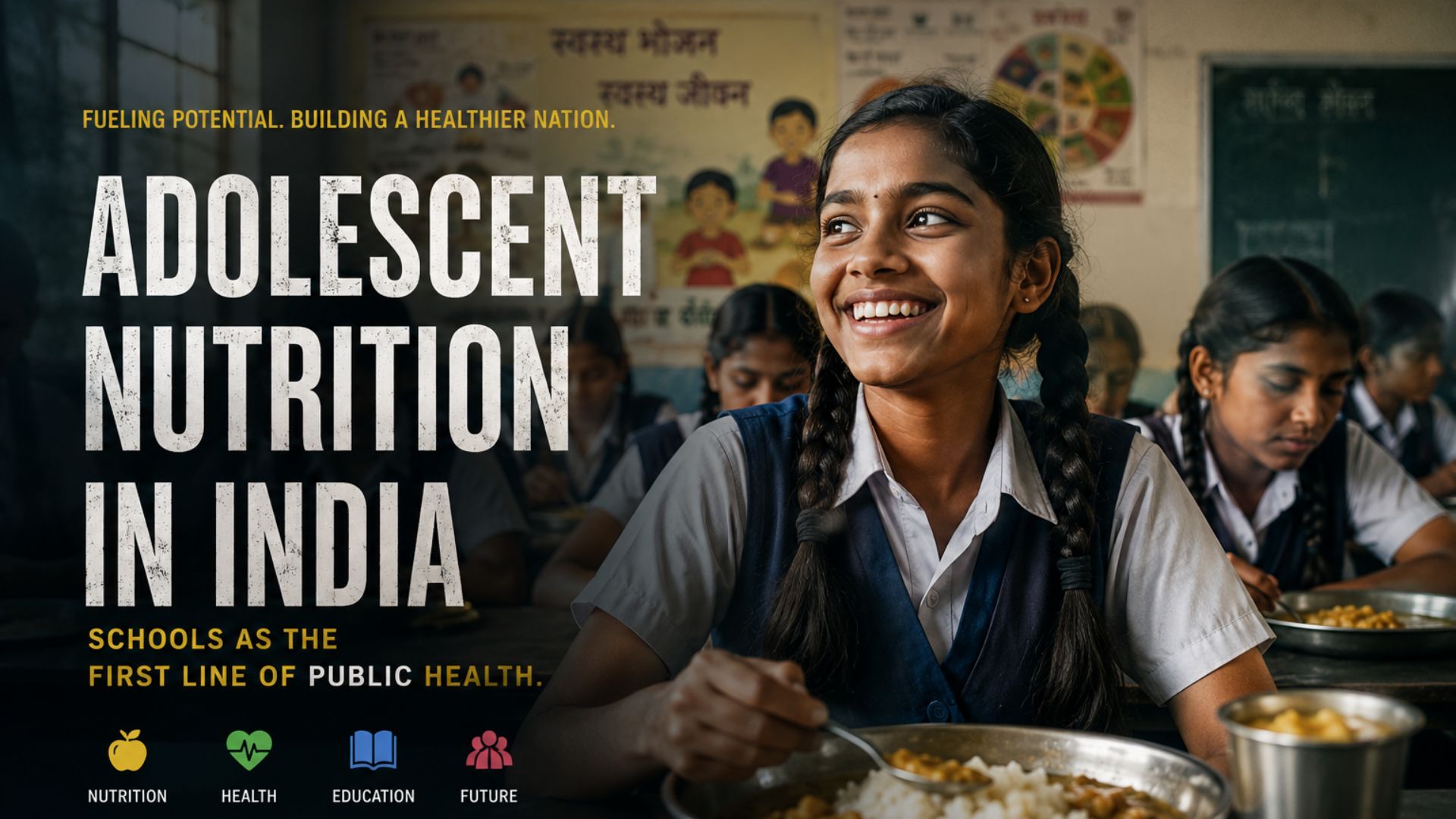
Adolescent Nutrition in India: Schools as the First Line of Public Health

"Healthy children today are the foundation of a healthy nation tomorrow."
India is facing a double burden of malnutrition—persistent undernutrition among children alongside rising obesity and lifestyle diseases among adolescents and adults. The NFHS-6 (2023-24) findings reveal that unhealthy dietary habits and physical inactivity are no longer confined to urban areas but are rapidly spreading to rural India. Since the roots of many non-communicable diseases (NCDs) lie in adolescence, schools have emerged as the most effective setting for preventive action.
Why is adolescent nutrition a growing concern?
The latest health indicators point to a worrying trend.
| NFHS-6 (2023-24) Findings | Status |
|---|---|
| Obesity among women (15–49 years) | Increased from 24% to 30.7% |
| Obesity among men (15–49 years) | Increased from 22.9% to 27.3% |
| High blood sugar among men (15+) | Increased from 15.6% to 20.9% |
| High blood sugar among women (15+) | Increased from 13.5% to 17.8% |
These trends indicate a growing burden of diabetes, cardiovascular diseases and stroke, with their origins beginning much earlier in life.
Understanding the "double burden" of malnutrition
India simultaneously faces:
- Persistent undernutrition among children.
- Rising overweight and obesity among adolescents and adults.
- Increasing prevalence of the "thin-fat phenotype"—children who appear lean but carry high metabolic risks.
According to the Comprehensive National Nutrition Survey (CNNS, 2019):
- 27.4% of Indian adolescents are stunted.
- Nearly 35% of children under five are stunted while exhibiting adult-level triglycerides, increasing future risks of diabetes and heart disease.
Poor Childhood Nutrition
           ↓
Thin-Fat Phenotype
           ↓
Metabolic Disorders
           ↓
Type-2 Diabetes & Heart Disease
           ↓
Higher Healthcare Burden
Why are unhealthy diets becoming common?
Studies among school adolescents reveal diets dominated by cereals with inadequate intake of:
- Milk and dairy products.
- Green leafy vegetables.
- Fruits.
- Protein-rich foods.
The Dietary Guidelines for Indians (2024) recommend that half the plate should consist of fruits and vegetables, yet sedentary lifestyles and excessive screen time reduce their consumption.
Schools can improve dietary habits through:
- Nutritious Mid-Day Meals.
- Healthy school canteens.
- Food demonstrations.
- School gardens.
- Seasonal fruit breaks.
The growing threat of sugar and Ultra-Processed Foods (UPFs)
Traditional diets are increasingly being replaced by:
- Sugary beverages.
- High Fat, Sugar and Salt (HFSS) foods.
- Ultra-Processed Foods (UPFs).
A WHO study reports that UPF consumption in India is increasing by over 13.7% annually.
"The excess sugar consumed today becomes tomorrow's metabolic disease."
Schools should therefore:
- Restrict sugary beverages.
- Display sugar-content information.
- Promote sustained nutrition awareness rather than one-time campaigns.
HFSS Foods & UPFs
         ↓
Obesity
         ↓
Early-Onset Diabetes
         ↓
Hypertension
         ↓
Cardiovascular Diseases
Why is physical activity equally important?
Physical inactivity has become a nationwide concern.
Major risk factors for NCDs among adolescents include:
- Poor dietary habits.
- Sedentary lifestyles.
- Excessive screen time.
- Lack of regular sports and exercise.
Schools should treat physical education and sports as essential components of learning rather than optional activities.
Schools as public health institutions
Schools can become centres of lifelong healthy behaviour by promoting:
- Balanced nutrition.
- Food label reading.
- Portion size awareness.
- Basic cooking skills.
- Understanding food marketing strategies.
- Digital nutrition literacy.
The Let's Fix Our Food (LFOF) initiative led by ICMR-NIN provides a comprehensive model by advocating:
- Regulation of HFSS food advertising.
- Taxation of unhealthy beverages.
- School nutrition curriculum.
- Food label reading toolkits.
- Youth nutrition literacy.
A Lancet (2025) projection estimates that by 2050, India may have 21.8 crore overweight men and 23.1 crore overweight women, with the sharpest rise among 15–24-year-olds, highlighting the urgency of school-based interventions.
Way Forward
- Strengthen nutrition education through practical, skill-based learning.
- Ensure healthy Mid-Day Meals and regulate school canteens.
- Promote UPF-free and HFSS-free school environments.
- Integrate compulsory daily physical activity into school curricula.
- Expand school gardens and seasonal fruit programmes.
- Scale up initiatives like Let's Fix Our Food (LFOF) across all States.
- Strengthen collaboration among schools, families and public health institutions.
Conclusion
Adolescent nutrition is not merely an educational issue but a public health priority. Preventing obesity, diabetes and cardiovascular diseases must begin in classrooms rather than hospitals. By creating healthier school food environments, encouraging physical activity and empowering students with nutrition literacy, India can reduce future disease burdens and build a healthier, more productive generation.
Attribution
Original content sources and authors

Syllabus classification
How this article maps to GS papers
Main syllabus
GS2HealthcareAlso covers
Quick Q&A
What is the double burden of malnutrition among Indian adolescents, and why has it become a major public health concern in recent years?
Why are schools considered the most effective institutions for preventing adolescent obesity and promoting long-term public health outcomes in India?
How are changing food consumption patterns, ultra-processed foods and sedentary lifestyles contributing to the rise of adolescent obesity and non-communicable diseases in India?
Critically analyse India's policy response towards adolescent nutrition and obesity, highlighting existing initiatives, institutional gaps and future policy priorities.
How does the Let’s Fix Our Food initiative provide a model case study for promoting nutrition literacy, preventive healthcare and healthy food environments among Indian adolescents?
Practice questions
1 question for mains preparation