GS2 Healthcare

Strengthening TB Elimination Through Targeted Vaccination and Early Intervention

Innovative Strategies Needed to Eliminate Tuberculosis in India

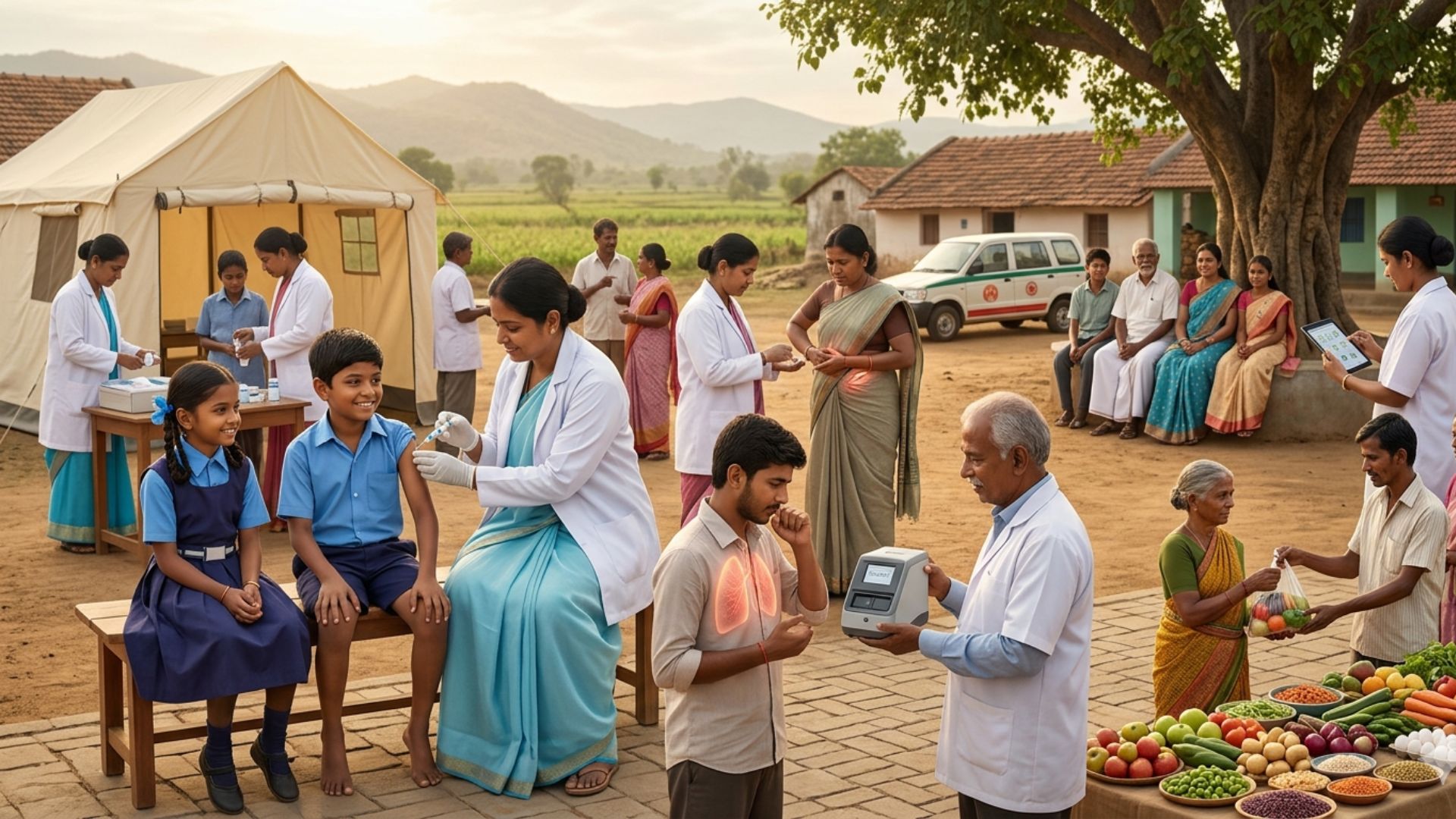
New vaccine trials show promise against extrapulmonary TB, highlighting crucial public health strategies to combat the disease.
Gopi Gopi
4 mins read

β€œWaiting for a perfect vaccine may delay progress indefinitely, while effective tools available today can save lives.”

More than a century after the introduction of the BCG vaccine, Tuberculosis (TB) remains the world's deadliest infectious disease, causing more annual deaths than even COVID-19 at its peak. Despite decades of research, there is still no highly effective vaccine for adolescents and adults.

Understanding the Complexity of TB

TB does not follow a single disease pathway.

StageCharacteristics
Latent InfectionInfected but asymptomatic for years
Subclinical TBMinimal or no symptoms but infection persists
Active Pulmonary TB (PTB)Infectious form driving transmission
Extrapulmonary TB (EPTB)Affects organs beyond lungs; difficult to diagnose and often severe

Because TB manifests differently across individuals, expecting a single vaccine to prevent all forms of disease may be unrealistic.

TB Exposure
      ↓
Latent Infection
      ↓
Subclinical Disease
      ↓
Active TB
 β”Œβ”€β”€β”€β”€β”€β”€β”€β”€β”€β”€β”€β”€β”€β”¬β”€β”€β”€β”€β”€β”€β”€β”€β”€β”€β”€β”€β”€β”
 β”‚ Pulmonary   β”‚ Extrapulmonary β”‚
 β”‚ TB (PTB)    β”‚ TB (EPTB)      β”‚
 β””β”€β”€β”€β”€β”€β”€β”€β”€β”€β”€β”€β”€β”€β”΄β”€β”€β”€β”€β”€β”€β”€β”€β”€β”€β”€β”€β”€β”˜

Why TB Elimination Remains Difficult

Many low- and middle-income countries report TB incidence rates of 200–300 cases per 100,000 population.

For elimination, incidence must decline to:

10–20 cases per 100,000 population

For India, which carries one of the world's largest TB burdens, achieving this target requires systemic interventions rather than reliance on a single breakthrough.

The Three Pillars of a Smarter TB Strategy

1. Early Detection

  • Improved diagnostic technologies.
  • Detection of subclinical TB.
  • Earlier identification of high-risk individuals.

2. Preventive Therapy

  • Treatment of latent TB infection.
  • Prevention of progression to active disease.

3. Vaccination

  • Critical where access to diagnostics and preventive therapy remains uneven.
  • Can provide population-level protection at scale.

The PreVenTB Trial: A Significant Development

The PreVenTB trial, published in BMJ and conducted by the Indian Council of Medical Research (ICMR), evaluated two indigenous vaccine candidates:

  • VPM1002 (developed by SIIPL)
  • Immuvac (developed by Cadila)

Key Features

ParameterDetails
Study Sites18 locations across India
ParticipantsMore than 12,700
PopulationHousehold contacts of TB patients
Age Group6 years and above
ConditionsIncluded comorbidities and varied infection status

The study closely reflected real-world conditions.

Major Findings

OutcomeEfficacy
VPM1002 against EPTB50.4%
VPM1002 in children (6–14 years) against all TB64.6%
Immuvac against EPTB in children (6–10 years)>60%
Protection against progression from latent infection>60%
Overall VPM1002 efficacy against all TB21.4%

These findings are significant because no previous TB vaccine trial has specifically evaluated efficacy against Extrapulmonary TB.

Why Extrapulmonary TB Matters

EPTB represents the hidden burden of TB.

  • Difficult to diagnose.
  • Frequently missed.
  • Associated with severe morbidity.
  • Can be fatal.

A reduction of over 50% in EPTB cases could:

  • Reduce healthcare costs.
  • Lower disability burden.
  • Improve quality of life.

Importance of Vaccination in Children

The trial demonstrated efficacy exceeding 60% among school-age children and adolescents.

Potential implications:

  • Booster vaccination beyond infancy.
  • New prevention strategy for older children.
  • Filling a major gap in India's current TB vaccination policy.
Current Strategy
BCG at Birth
      ↓
No Structured Booster

Potential Future Strategy
BCG at Birth
      ↓
TB Booster in School-age Children

Nutrition: An Overlooked Determinant

The study found reduced vaccine effectiveness among individuals with low Body Mass Index (BMI).

This highlights the need for:

  • Nutritional supplementation.
  • Better food security.
  • Integration of nutrition with TB control programmes.

Operational Advantages of VPM1002

  • Single-dose vaccine.
  • Modified BCG platform.
  • Easier logistics.
  • Large-scale manufacturing potential.
  • Cost-effective deployment.

For a country as large as India, operational simplicity is a major advantage.

Lessons from Previous Public Health Decisions

India has previously adopted indigenous innovations before global endorsement.

β€’ TrueNat molecular TB test adopted before WHO prequalification.

β€’ Covaxin approved in clinical trial mode during COVID-19.

β€’ Indigenous rotavirus vaccines introduced despite modest efficacy and later contributed to reduced child mortality.

These examples demonstrate that public health decisions often balance urgency with available evidence rather than waiting for perfection.

Way Forward

  • Integrate VPM1002 and Immuvac into targeted TB control strategies.
  • Prioritize household contacts and high-risk populations.
  • Introduce vaccination strategies for school-age children.
  • Strengthen diagnostics for subclinical and latent TB.
  • Expand preventive therapy coverage.
  • Link TB vaccination with nutrition programmes.
  • Continue monitoring long-term vaccine effectiveness through surveillance.

Conclusion

TB elimination is unlikely to be achieved through a single intervention. A comprehensive approach combining early diagnosis, preventive treatment, targeted vaccination, nutritional support, and sustained public health investment is essential. The PreVenTB trial offers encouraging evidence that moderately effective vaccines can significantly reduce disease burden, particularly extrapulmonary TB. Rather than waiting indefinitely for a perfect vaccine, India may achieve greater progress by strategically deploying effective tools that are already available today.

Attribution

Original content sources and authors

Soumya Swaminathan Author Soumya Swaminathan The Hindu Source The Hindu

Syllabus classification

How this article maps to GS papers

Main syllabus

GS2Healthcare

Quick Q&A

What is the nature of the tuberculosis burden in India and why is a multidimensional strategy essential for its elimination?
Tuberculosis (TB) is a bacterial infectious disease caused by Mycobacterium tuberculosis and remains the world's deadliest infectious disease, claiming more lives annually than COVID-19 at its peak. India accounts for one of the highest TB burdens globally, with many low- and middle-income countries reporting incidence rates of 200-300 cases per 100,000 population, whereas elimination requires reducing incidence to around 10-20 cases per 100,000 population. TB manifests in different stages, including latent infection, subclinical disease, pulmonary tuberculosis (PTB), and extrapulmonary tuberculosis (EPTB). Pulmonary TB drives transmission, while EPTB affects organs beyond the lungs and is often difficult to diagnose and associated with high morbidity. Historically, Bacillus Calmette-GuΓ©rin (BCG), introduced over a century ago, has provided limited protection beyond infancy, creating a major challenge in adult and adolescent vaccination. Therefore, expecting a single vaccine to solve all forms of TB has proven unrealistic. India's National TB Elimination Programme (NTEP) aims at TB elimination through a layered strategy involving early diagnosis, preventive therapy, targeted vaccination, nutritional support, and effective case management. Advances in diagnostics for subclinical TB and preventive treatment for latent infections are increasingly important. For UPSC GS-II (Health) and GS-III (Science and Technology), TB illustrates the intersection of public health, socio-economic inequalities, nutrition, and healthcare infrastructure. The issue also highlights Sustainable Development Goal 3, which seeks to end epidemics by 2030. Thus, TB elimination requires sustained investment, policy innovation, and a comprehensive rather than disease-specific approach.
Why are the findings of the ICMR-led PreVenTB trial considered significant for India's tuberculosis control strategy and policy framework?
The PreVenTB trial, published in BMJ and conducted by the Indian Council of Medical Research (ICMR), represents a landmark development in TB vaccine research. Conducted across 18 sites involving more than 12,700 household contacts of TB patients aged six years and above, it evaluated VPM1002 and Immuvac under real-world conditions. Unlike previous vaccine studies that concentrated mainly on pulmonary tuberculosis (PTB), this trial uniquely assessed efficacy against extrapulmonary tuberculosis (EPTB), which has traditionally remained neglected. The findings are noteworthy. VPM1002 demonstrated 50.4% efficacy against EPTB and 64.6% efficacy among children aged 6-14 years against all forms of TB. Immuvac showed over 60% efficacy against EPTB among children aged 6-10 years and against disease progression among newly infected individuals. Overall efficacy of VPM1002 against all TB forms stood at 21.4%. These findings are significant because EPTB is difficult to diagnose, often underreported, and associated with severe disability and mortality. Reducing EPTB cases can decrease healthcare costs and improve quality of life. From a policy perspective, the trial supports the possibility of targeted vaccination among household contacts and school-age children. It also reinforces India's tradition of evidence-based indigenous innovation, similar to TrueNat diagnostics and Covaxin deployment during COVID-19. For UPSC GS-II, this trial highlights themes of healthcare governance, public policy, indigenous research, and health security. It demonstrates how moderate efficacy, when combined with operational feasibility and large-scale deployment, can yield substantial public health benefits.
How can India integrate diagnostics, preventive therapy, vaccination and nutrition into a smarter tuberculosis elimination framework?
India's TB elimination strategy requires integration of multiple interventions rather than dependence on a single breakthrough technology. Experts advocate a layered approach involving early detection, preventive treatment, vaccination, nutritional support, and sustained healthcare investments. The first component is improved diagnostics. Advances in molecular technologies and tools capable of identifying subclinical TB enable early detection before disease progression. India's adoption of indigenous technologies such as TrueNat demonstrates the importance of innovation in diagnosis. The second component is preventive therapy. Individuals with latent infection can receive treatment before developing active TB, thereby reducing transmission and disease burden. The third component is vaccination. The PreVenTB trial suggests that vaccines such as VPM1002 and Immuvac can be strategically deployed among household contacts and school-age children. Such targeted vaccination could complement existing BCG coverage and provide broader protection. Nutrition represents another crucial pillar. The study observed reduced vaccine efficacy among individuals with low Body Mass Index (BMI), indicating that undernutrition compromises immune responses. Nutritional supplementation and schemes like Nikshay Poshan Yojana therefore become essential components of TB control. Case-based clinical management and public health surveillance further strengthen outcomes. Together, these interventions align with the National TB Elimination Programme and WHO recommendations. For UPSC GS-II and GS-III, this approach demonstrates the importance of convergence between healthcare, nutrition, technology, and governance. It also reflects the broader principle that public health challenges require multisectoral solutions involving social determinants rather than purely biomedical interventions.
What are the major debates and critical perspectives surrounding the deployment of moderately effective tuberculosis vaccines in India?
One of the major policy debates in tuberculosis control concerns whether governments should wait for highly effective vaccines or deploy moderately effective vaccines that are currently available. Traditional thinking has often emphasized the search for a 'silver bullet' vaccine capable of preventing all forms of TB. However, decades of research have shown that TB has diverse pathways involving latent infection, subclinical disease, pulmonary TB, and extrapulmonary TB, making a universal solution difficult. Supporters of early deployment argue that vaccines such as VPM1002 and Immuvac provide meaningful protection, especially against extrapulmonary TB. Even moderate efficacy can translate into significant reductions in morbidity, mortality, and healthcare expenditure when applied across millions of people. Critics, however, point to concerns regarding long-term effectiveness, cost-effectiveness, and the need for additional evidence. There are also concerns about resource allocation and the possibility that vaccination may divert attention from diagnostics and preventive therapy. Historical experience offers important lessons. India approved TrueNat before WHO prequalification and introduced Covaxin during the COVID-19 pandemic under 'clinical trial mode.' Indigenous rotavirus vaccines, despite modest efficacy, have contributed to reductions in severe diarrhoeal disease and child mortality. Therefore, the debate revolves around urgency versus perfection. Public health experts increasingly argue that delaying action until ideal solutions emerge could cost lives. For UPSC interviews, this issue relates to GS-II themes of evidence-based policymaking and GS-IV ethics, particularly balancing uncertainty with the imperative to protect vulnerable populations. It demonstrates how policy decisions often involve trade-offs rather than perfect choices.
What lessons can be drawn from India's previous public health interventions for the future implementation of tuberculosis vaccines?
India's experience with previous public health interventions offers valuable lessons for the implementation of new TB vaccines. Several examples demonstrate that pragmatic and evidence-based decisions can produce substantial long-term benefits even when initial data are incomplete. One important example is TrueNat, an indigenous molecular diagnostic platform. India adopted it under the National TB Elimination Programme before it received WHO prequalification. Subsequently, it gained international recognition, validating India's emphasis on self-reliance and innovation. During the COVID-19 pandemic, Bharat Biotech's Covaxin was approved in clinical trial mode to ensure timely access while additional evidence accumulated. Although the decision generated debate, it accelerated vaccination and enhanced pandemic preparedness. Similarly, indigenous rotavirus vaccines were introduced despite modest efficacy and broad confidence intervals. Studies published in The Lancet in 2014 later showed that these vaccines significantly reduced severe diarrhoeal disease and child mortality, leading to their inclusion in the Universal Immunisation Programme. These experiences suggest that public health policy should prioritize risk reduction rather than wait for perfect interventions. Moderate efficacy, combined with scalability and affordability, can generate substantial societal benefits. The PreVenTB findings indicate that VPM1002 and Immuvac possess operational advantages, including single-dose administration and cost-effective manufacturing. Such characteristics are particularly important in a country with India's population size and healthcare diversity. For UPSC GS-II, these examples illustrate principles of healthcare governance, Atmanirbhar Bharat, and evidence-based policy. They also underline the importance of balancing scientific caution with the urgency of addressing pressing public health challenges.
What are the socio-economic and nutritional factors that influence tuberculosis outcomes and vaccine effectiveness in India?
Tuberculosis is not merely a medical problem but a disease deeply influenced by socio-economic determinants. Poverty, overcrowding, malnutrition, inadequate sanitation, and limited access to healthcare significantly increase susceptibility to infection and worsen outcomes. Consequently, TB is often described as both a disease and a development challenge. A key finding of the PreVenTB trial was the reduced efficacy of vaccines among individuals with low Body Mass Index (BMI). This finding highlights the strong relationship between nutrition and immunity. Undernourished individuals have weakened immune responses, increasing the risk of progression from latent infection to active disease and reducing vaccine effectiveness. India faces a double burden of malnutrition, with undernutrition still prevalent among vulnerable populations. Nutritional support mechanisms such as the Nikshay Poshan Yojana seek to address this issue by providing financial assistance to TB patients. However, broader improvements in food security, sanitation, and living conditions are equally important. Social stigma and delayed diagnosis also contribute to continued transmission. Migrant workers, economically disadvantaged populations, and people with comorbidities often face barriers in accessing timely treatment. These factors demonstrate that TB elimination cannot rely solely on medicines and vaccines. It requires addressing social determinants of health through intersectoral coordination involving nutrition, education, sanitation, and poverty alleviation programmes. For UPSC GS-II, GS-III, and Essay papers, TB serves as an example of how health outcomes are closely linked with socio-economic development. It reinforces the concept that public health interventions must adopt a holistic approach encompassing medical, nutritional, and social dimensions to achieve sustainable results.

Practice questions

1 question for mains preparation

Tuberculosis control requires addressing not only the pathogen but also the social determinants of health. In the light of recent advances in TB vaccine development, examine the need for a multi-pronged strategy involving vaccination, nutrition, early detection, and preventive care to achieve TB elimination in India.

15 marks Β· 250 words Β· 8 mins
