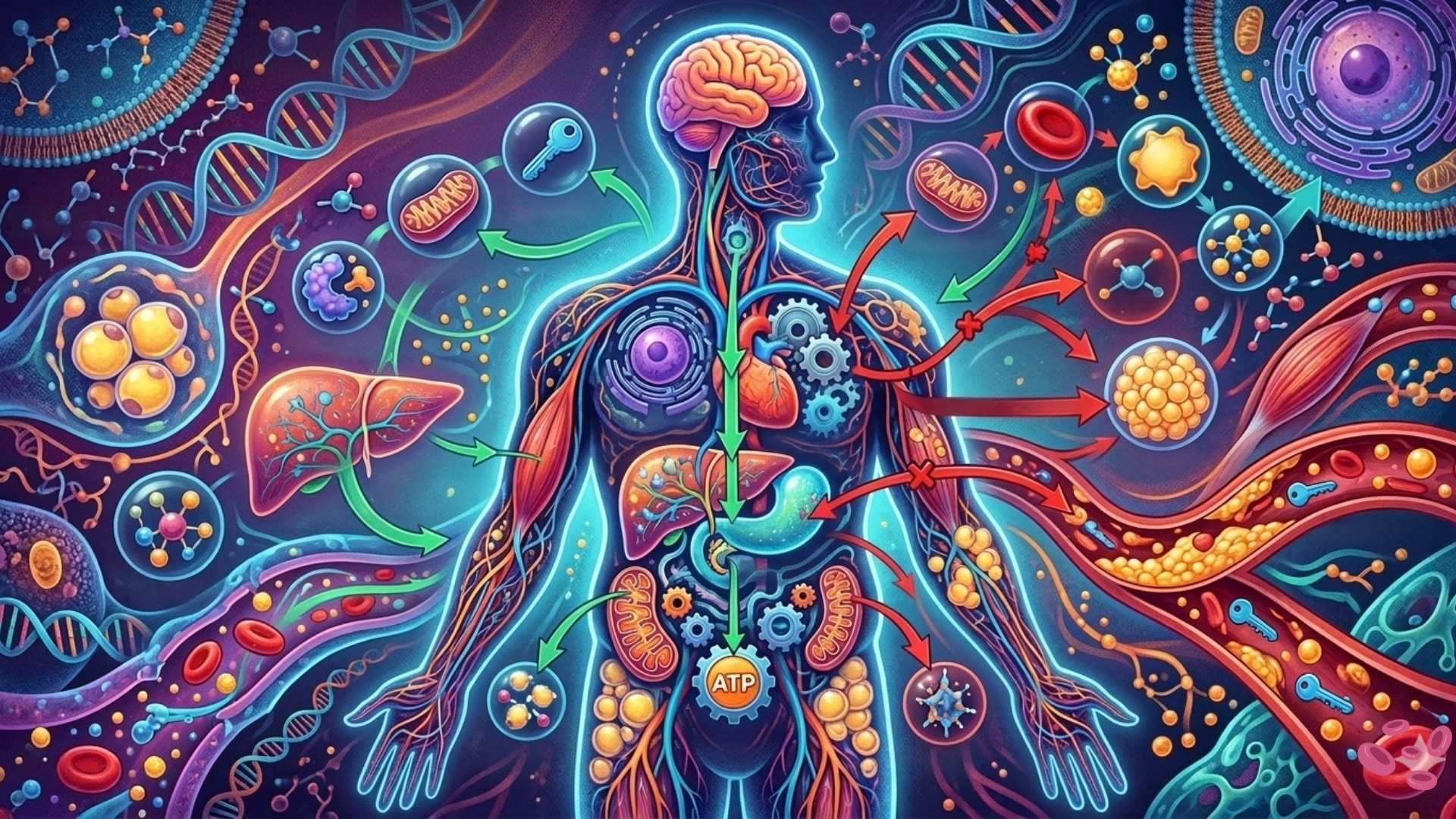
Metabolic Diseases Burden in India and China: A Critical Analysis
What are Metabolic Diseases?
-
Metabolic diseases occur when the body’s normal process of breaking down, storing, or using energy from food is disrupted.
-
They are often linked to lifestyle factors, diet, genetics, and environmental influences.
-
Major metabolic conditions studied in the Global Burden of Disease (GBD) Study (1990–2023) include:
- Type 2 Diabetes Mellitus
- High Systolic Blood Pressure
- High Body Mass Index (BMI)
- High LDL (“bad”) Cholesterol
- Metabolic Dysfunction-Associated Steatotic Liver Disease (MASLD)
These diseases significantly affect mortality and quality of life, making them a major public health challenge globally.
Global Burden of Disease (GBD) Study
- The GBD Study is a large international research initiative that measures health loss due to diseases, injuries, and risk factors across countries.
- The analysis discussed here focuses on Asia-Pacific trends from 1990–2023, with projections up to 2030.
- The study was published in the peer-reviewed journal Metabolism by Huang Zhang et al.
A key metric used in the study is Disability-Adjusted Life Years (DALYs).
Understanding DALYs
-
DALY (Disability-Adjusted Life Year) measures the overall disease burden.
-
It combines:
- Years of life lost due to premature death, and
- Years lived with disability or illness.
Thus, DALYs provide a comprehensive indicator of the health impact of diseases, beyond just mortality.
India’s Metabolic Disease Burden
India and China have the highest absolute metabolic disease burden in the Asia-Pacific region and globally.
Key statistics for India in 2023:
-
Type 2 Diabetes
- Around 21 million DALYs
- Approximately 5.8 lakh deaths
-
High Systolic Blood Pressure
- About 3.8 crore DALYs
- Around 15.7 lakh deaths
-
Rising Risk Factors
- High BMI increasing at 2.7–2.9% annually
- Rising LDL cholesterol levels
- Increasing prevalence of MASLD (fatty liver disease)
These trends indicate that lifestyle-related metabolic disorders are rapidly expanding in India.
India vs China: Regional Comparison
-
China and India dominate the regional burden of metabolic diseases.
-
In 1990, China had the highest DALYs in the region.
-
By 2023, India overtook China to become the highest in DALYs for metabolic diseases.
-
In other parameters (BMI, LDL cholesterol, MASLD, high blood pressure), China still ranks first, but:
- India is consistently second, and
- The gap between the two countries is steadily shrinking.
This indicates rapid growth of metabolic risk factors in India.
Projected Trends till 2030
-
Most metabolic risks are expected to continue rising across the Asia-Pacific region.
-
Key drivers include:
- Urbanisation
- Sedentary lifestyles
- Increased consumption of ultra-processed foods
- Ageing populations
Without intervention, the healthcare and economic burden will increase significantly.
Policy Measures Recommended
Experts emphasise urgent integrated prevention strategies.
Improving Diet and Food Regulation
- Regulate ultra-processed foods
- Introduce front-of-pack nutrition labelling
- Reduce excess sugar, salt, and unhealthy fats in commonly consumed foods
- Ensure uniform implementation across states
Promoting Physical Activity
-
Redesign cities to encourage daily movement:
- Safe walking spaces
- Cycling tracks
- Parks and open spaces
-
Promote exercise programs in schools and workplaces
However, urban infrastructure changes remain a major challenge, especially in rapidly expanding Indian cities.
Strengthening Early Detection
-
Integrate large-scale screening into primary healthcare for:
- Obesity
- Diabetes
- Hypertension
- Fatty liver disease
-
Identify high-risk individuals early and begin treatment promptly.
Although the Union Health Ministry and some states have initiated screening programmes, these efforts require greater coordination and expansion.
Significance for Public Health
The study highlights that metabolic diseases are becoming one of the biggest health challenges in India.
Key concerns include:
- Rapid increase in lifestyle diseases
- High healthcare costs
- Reduced workforce productivity
- Greater long-term strain on public health systems
Addressing these risks requires coordinated action involving health policy, urban planning, food regulation, and public awareness.
Attribution
Original content sources and authors
Syllabus classification
How this article maps to GS papers
Main syllabus
GS2HealthcareQuick Q&A
What are metabolic diseases, and how are they measured using indicators such as Disability-Adjusted Life Years (DALYs) in public health studies?
Public health researchers measure the impact of such diseases using the concept of Disability-Adjusted Life Years (DALYs). DALYs represent the total burden of disease by combining two components:
- Years of Life Lost (YLL) due to premature mortality.
- Years Lived with Disability (YLD) caused by illness or disability.
For example, according to the Global Burden of Disease (GBD) Study, India recorded nearly 21 million DALYs due to Type 2 diabetes in 2023. Similarly, high systolic blood pressure accounted for approximately 3.8 crore DALYs, indicating an enormous health and economic burden. These metrics provide governments and international organizations with a comprehensive view of disease prevalence and the long-term impact on productivity, healthcare expenditure, and social wellbeing.
Understanding metabolic diseases through DALYs allows policymakers to prioritise preventive strategies such as promoting healthier lifestyles, strengthening primary healthcare systems, and investing in early diagnosis. Thus, DALYs serve as a critical tool in global health policy, enabling evidence-based interventions to reduce disease burden and improve population health outcomes.
Why does India have one of the highest metabolic disease burdens in the Asia-Pacific region, and what factors explain this trend?
Another important factor is India’s demographic transition. As life expectancy increases, a larger proportion of the population lives longer and becomes more susceptible to chronic non-communicable diseases (NCDs). Additionally, genetic predisposition plays a role. Many studies suggest that South Asians are particularly vulnerable to insulin resistance and central obesity, even at relatively lower BMI levels. This phenomenon, often referred to as the “Asian Indian phenotype,” makes populations more prone to metabolic disorders.
Socio-economic disparities further exacerbate the issue. Access to preventive healthcare, regular screening, and lifestyle counselling remains uneven across rural and urban regions. For instance, while urban areas face lifestyle-related risk factors, rural areas often suffer from limited healthcare infrastructure and late diagnosis. As a result, metabolic diseases frequently remain undetected until complications arise.
The scale of the challenge is evident in recent data: India recorded 5.8 lakh deaths due to Type 2 diabetes in 2023, and the prevalence of high BMI is rising at an annual rate of nearly 2.7–2.9%. These trends highlight the urgent need for integrated public health strategies combining prevention, early detection, and lifestyle modification. Without timely intervention, the burden of metabolic diseases could significantly strain India’s healthcare system and hinder economic productivity.
How can public health policies and urban planning help reduce the burden of metabolic diseases in India?
Urban planning also plays a crucial role in shaping health outcomes. Modern cities often discourage physical activity due to traffic congestion, lack of pedestrian infrastructure, and limited public spaces. Designing cities with safe walking paths, cycling tracks, green parks, and active transport systems can significantly increase daily physical activity among residents. For example, cities such as Copenhagen and Amsterdam have successfully reduced lifestyle diseases by prioritising cycling-friendly infrastructure.
Schools and workplaces can further support prevention through structured wellness programmes. Initiatives such as mandatory physical education in schools, workplace fitness initiatives, and awareness campaigns can help inculcate long-term healthy habits. In India, programs like the Fit India Movement and Ayushman Bharat Health and Wellness Centres represent steps toward promoting preventive healthcare.
Finally, effective implementation is essential. Even well-designed policies can fail without coordination between ministries of health, urban development, education, and food regulation. A comprehensive approach that integrates policy reforms, urban design, and behavioural interventions can substantially reduce the incidence of metabolic diseases and improve overall public health outcomes.
What are the major risk factors contributing to metabolic diseases, and why are they expected to increase in India by 2030?
One of the primary drivers of rising metabolic risk is the nutrition transition. As economies develop, dietary patterns shift from traditional foods toward processed and calorie-dense products. In India, the rapid expansion of fast-food outlets and packaged food industries has increased the consumption of sugar-sweetened beverages, refined carbohydrates, and trans fats. These dietary changes contribute directly to obesity and metabolic syndrome.
Urbanisation and technological change further exacerbate the problem. Increased reliance on automobiles, desk-based jobs, and digital entertainment has drastically reduced physical activity levels. Additionally, stress associated with urban living, irregular work schedules, and sleep deprivation can worsen metabolic health. According to the Global Burden of Disease study, high BMI in India is increasing at nearly 3% annually, indicating a worrying trend.
Unless effective interventions are implemented, these risk factors are projected to rise steadily until 2030. Addressing them requires both individual behavioural changes and structural reforms, including improved urban infrastructure, stronger food regulations, and widespread health education campaigns.
Critically analyse the policy measures required to address metabolic diseases in India. What are the key challenges in implementing them?
- Regulation of ultra-processed foods through taxation, labelling, and marketing restrictions.
- Strengthening primary healthcare systems to enable early diagnosis of diabetes, hypertension, and obesity.
- Promoting physical activity through urban planning and public health campaigns.
- Integrating large-scale screening programs within national health missions.
India has already initiated several programmes in this direction. The National Programme for Prevention and Control of Cancer, Diabetes, Cardiovascular Diseases and Stroke (NPCDCS) aims to detect and manage NCDs at an early stage. Similarly, Health and Wellness Centres under Ayushman Bharat provide community-based screening and preventive services.
However, several challenges limit the effectiveness of these policies. First, implementation gaps persist due to inadequate infrastructure and shortage of healthcare workers in rural areas. Second, powerful commercial interests within the food industry often resist strict regulation of processed foods. Third, behavioural change among citizens is difficult to achieve, as lifestyle habits are deeply influenced by socio-cultural norms and economic constraints.
A critical evaluation suggests that policy success depends on sustained political commitment and cross-sectoral collaboration. Without addressing structural determinants such as urban planning, food systems, and education, medical interventions alone cannot effectively reduce the burden of metabolic diseases.
Using India as a case study, discuss how early screening and primary healthcare interventions can help manage metabolic diseases.
To address this challenge, the Indian government has expanded screening programs under initiatives such as the National Health Mission (NHM) and Ayushman Bharat Health and Wellness Centres. These centres aim to provide community-level screening for high blood pressure, diabetes, obesity, and certain cancers. By identifying high-risk individuals early, healthcare providers can initiate lifestyle counselling and medical treatment before complications arise.
Several states have implemented innovative programs. For example, Tamil Nadu and Kerala have introduced state-wide NCD screening initiatives that use digital health records and community health workers to track patient outcomes. These models demonstrate how decentralised healthcare delivery can improve disease surveillance and treatment adherence.
However, for such programs to succeed nationally, they must be supported by adequate funding, trained healthcare personnel, and public awareness campaigns. Strengthening primary healthcare not only reduces the long-term burden on tertiary hospitals but also improves health outcomes by emphasising prevention rather than cure. India’s experience highlights the importance of integrating screening, awareness, and lifestyle interventions within a robust public health system.
Practice questions
1 question for mains preparation