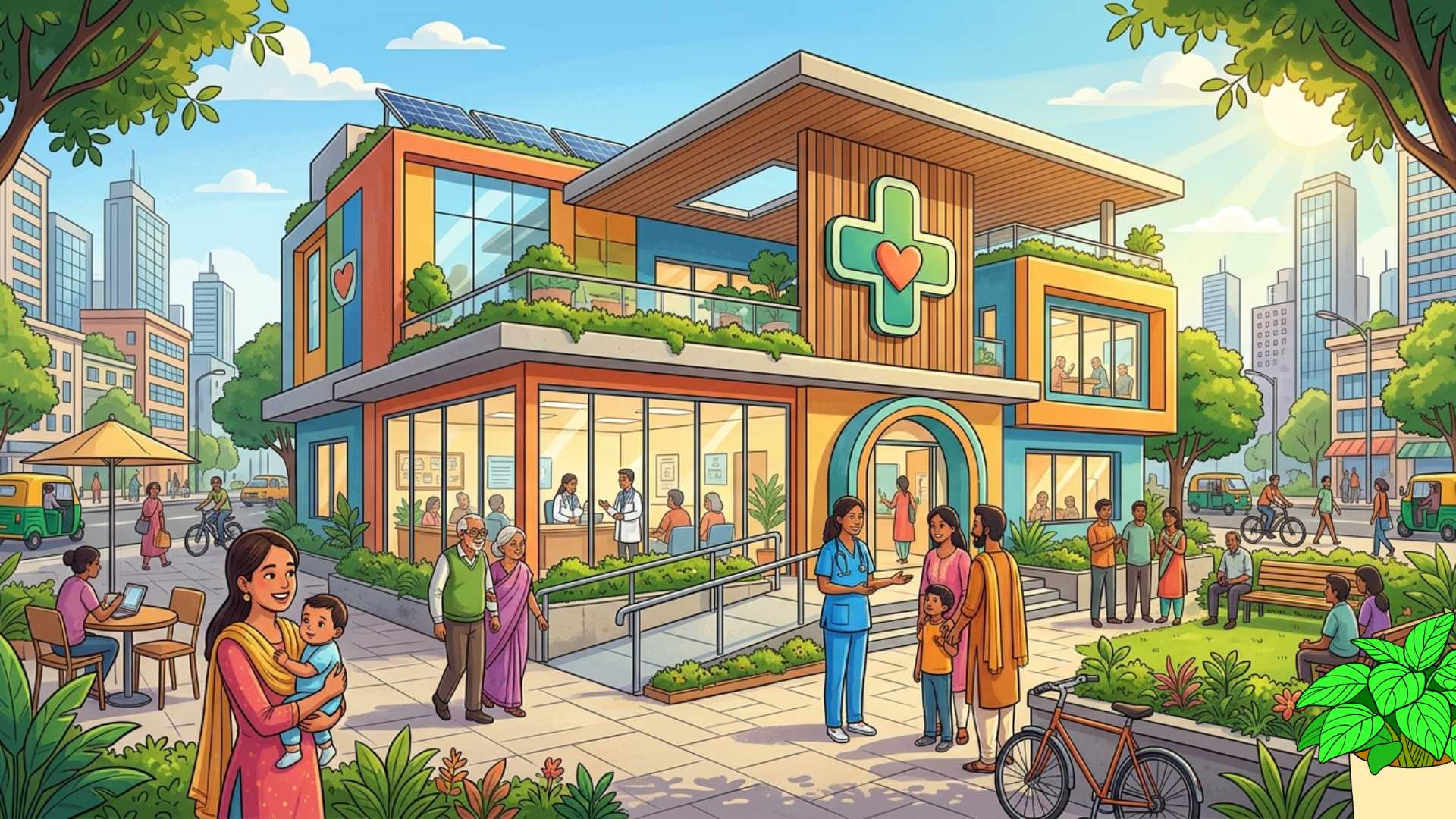
Neighbourhood Clinics: A Lifeline for Hyderabad's Healthcare
Introduction
Rapid urbanisation has increased the demand for accessible and affordable healthcare in cities. Primary healthcare systems such as Urban Primary Health Centres (UPHCs) are crucial for addressing the health needs of growing urban populations.
Key Statistics on Urbanisation and Healthcare Access
| Indicator | Global | India |
|---|---|---|
| Urban population share | ~56% of world population lives in urban areas (WHO) | ~35% of population lives in urban areas |
| Projected urban population (2050) | ~68% of global population will live in cities | Urban population expected to exceed 50% by 2050 |
| Urban poor population | Nearly 1 billion people live in urban slums globally (UN-Habitat) | ~65 million people live in urban slums |
| Role of primary healthcare | Foundation of Universal Health Coverage (UHC) | Delivered through Urban Primary Health Centres (UPHCs) under NUHM |
Background: Urban Healthcare in India
Urban healthcare systems must address:
- High population density
- Informal settlements and slums
- Health inequalities between rich and poor
- Rising burden of non-communicable diseases
To address these challenges, the Government of India launched the National Urban Health Mission (NUHM) in 2013 under the National Health Mission.
Key objective: Improve access to primary healthcare for the urban poor.
Urban Primary Health Centres (UPHCs)
UPHCs are neighbourhood healthcare facilities designed to provide basic preventive and curative services in urban areas.
Key Features of UPHCs
| Feature | Description |
|---|---|
| Target population | Urban poor, slum dwellers |
| Service level | Primary healthcare |
| Coverage | Urban settlements and municipal areas |
| Services | OPD care, maternal health, immunisation, disease screening |
| Staffing | Medical officer, nurses, ANMs, lab technician, pharmacist |
UPHCs function as the first tier of urban public healthcare.
Example: UPHC Network in Telangana
In cities such as Hyderabad, UPHCs play a crucial role in providing affordable healthcare.
| Indicator | Data |
|---|---|
| Total UPHCs in Telangana | ~249 |
| UPHCs in Hyderabad district | ~85 |
| Target population | Urban poor and slum residents |
These centres provide free consultations, medicines, and vaccination services.
Role of Basti Dawakhanas
Telangana introduced Basti Dawakhanas, smaller neighbourhood clinics that complement UPHCs.
| Feature | UPHC | Basti Dawakhana |
|---|---|---|
| Size | Larger facility | Smaller clinic |
| Services | Comprehensive primary care | Basic outpatient services |
| Staffing | Medical officers and full team | Contract doctors |
| Function | Referral and supervision | First-level consultation |
Together they create a two-tier neighbourhood healthcare system.
Key Health Services Provided
UPHCs provide several essential healthcare services:
- Maternal and child healthcare (antenatal care, immunisation)
- Treatment for common illnesses
- Screening for non-communicable diseases (diabetes, hypertension)
- Family planning services
- Public health outreach programmes
These services are implemented with the support of community health workers such as:
- Accredited Social Health Activist (ASHA)
- Auxiliary Nurse Midwives (ANMs)
Importance of UPHCs in Urban Health Governance
1. Accessibility
UPHCs bring healthcare closer to neighbourhoods, reducing travel time and costs for urban poor populations.
2. Preventive Healthcare
Regular screenings and immunisation programmes help reduce disease burden.
3. Financial Protection
Free medicines and consultations reduce out-of-pocket healthcare expenditure, which accounts for a large share of health spending in India.
4. Community Outreach
ASHAs and health volunteers connect the healthcare system with local communities.
Challenges in the Urban Primary Healthcare System
| Challenge | Explanation |
|---|---|
| Ageing infrastructure | Many centres operate in old buildings |
| Limited staff | Shortage of doctors and health workers |
| Growing patient load | Urban population growth increases demand |
| Limited working hours | Some centres operate only part-time |
| Pressure on ASHAs | Community health workers face heavy workloads |
Delayed salary payments and insufficient support can also affect the motivation of frontline workers.
Case Study: Community Dependence on Public Clinics
For many urban residents, especially low-income families:
- Private hospitals are expensive
- UPHCs provide free vaccines, medicines, and maternal care
- These facilities serve as the first point of entry into the healthcare system
Thus, UPHCs act as the foundation of urban primary healthcare delivery.
Policy Measures to Strengthen Urban Healthcare
Infrastructure Upgradation
Modernise facilities and expand clinic networks in growing cities.
Expand UPHC Coverage
Increase the number of centres proportional to urban population growth.
Strengthen Human Resources
Provide adequate training, salaries, and support to ASHAs and healthcare staff.
Digital Health Integration
Use telemedicine and digital health records for improved service delivery.
Integrated Urban Health Planning
Better coordination between municipal authorities and health departments.
Expert Insight
Public health scholar Julio Frenk emphasised:
“Primary healthcare is the cornerstone of an equitable and efficient health system.”
Conclusion
Urban Primary Health Centres play a crucial role in strengthening accessible and equitable healthcare in rapidly growing cities. By serving as the first point of contact for millions of urban residents, they reduce healthcare inequalities and improve preventive health outcomes. However, expanding infrastructure, improving workforce support, and strengthening community outreach are essential to ensure that urban primary healthcare systems keep pace with India’s rapid urbanisation.
Attribution
Original content sources and authors
Syllabus classification
How this article maps to GS papers
Main syllabus
GS2HealthcareQuick Q&A
What are Urban Primary Health Centres (UPHCs), and how do they function within India’s urban public healthcare system under the National Urban Health Mission (NUHM)?
A typical UPHC offers a range of primary healthcare services, including outpatient consultations, antenatal and postnatal care, immunisation, screening for non-communicable diseases such as diabetes and hypertension, and distribution of essential medicines. These centres usually function with a small but structured medical team consisting of a Medical Officer, staff nurses, Auxiliary Nurse Midwives (ANMs), a pharmacist, and laboratory technicians. Community health workers such as Accredited Social Health Activists (ASHAs) support outreach activities like awareness campaigns, vaccination drives, and maternal health monitoring.
The article highlights the UPHC at Darulshifa in Hyderabad as a practical example of this system. Despite operating in an ageing building with infrastructure constraints, the centre continues to provide essential services such as antenatal check-ups and immunisation programmes. This reflects the broader role of UPHCs in cities like Hyderabad, where around 85 centres serve lakhs of residents, demonstrating how decentralised primary healthcare can reduce pressure on tertiary hospitals while ensuring community-level health access.
Why is decentralised primary healthcare through facilities such as UPHCs and Basti Dawakhanas crucial for rapidly urbanising cities like Hyderabad?
One key advantage of decentralised healthcare is improved accessibility and early intervention. When primary care facilities are located within neighbourhoods, residents can easily seek medical attention for common illnesses, maternal care, and preventive health services. For instance, the article describes how pregnant women like Asma Fatima rely on the nearby UPHC in Darulshifa for antenatal check-ups. Early monitoring of pregnancies and timely immunisation of children significantly reduce maternal and infant mortality rates.
Furthermore, decentralised systems help decongest tertiary hospitals by filtering routine cases at the primary level. Large corporate hospitals in Hyderabad often focus on specialised treatments and medical tourism, whereas UPHCs manage everyday health needs such as vaccinations, screenings, and outpatient consultations. By strengthening primary care infrastructure, governments can create a more efficient and equitable healthcare system where advanced hospitals are reserved for complex cases while neighbourhood clinics handle preventive and basic healthcare services.
How do UPHCs, Basti Dawakhanas, and community health workers collectively strengthen urban healthcare delivery at the grassroots level?
Basti Dawakhanas primarily provide basic outpatient consultations and first-level treatment within densely populated neighbourhoods. Patients who require further diagnostic tests or specialised care are referred to the nearby UPHC. This creates a structured referral chain where simple medical cases are treated locally while more complex conditions are escalated to higher facilities. The article mentions that the UPHC in Darulshifa supervises nearby Basti Dawakhanas and conducts outreach programmes, illustrating how these facilities operate as interconnected components of the urban healthcare network.
Community health workers form the bridge between healthcare institutions and the population. ASHAs, for example, visit households, mobilise residents for vaccination drives, encourage pregnant women to attend antenatal check-ups, and spread awareness about public health programmes. Their grassroots engagement helps ensure that government initiatives actually reach the intended beneficiaries. Thus, the combined functioning of UPHCs (service hubs), Basti Dawakhanas (local access points), and community workers (outreach agents) strengthens preventive care, improves health awareness, and enhances the overall efficiency of the urban public health system.
What structural and administrative challenges limit the effectiveness of Urban Primary Health Centres in many Indian cities?
Another significant challenge is the shortage of medical personnel and limited operational hours. Some centres struggle with insufficient doctors, nurses, and technicians, which leads to restricted outpatient hours and longer waiting times. In densely populated cities where thousands depend on these centres, such limitations reduce the accessibility and reliability of primary healthcare services. Additionally, urban population growth often outpaces the expansion of the UPHC network, resulting in increased patient load on existing facilities.
Administrative and workforce issues further complicate the situation. Frontline workers such as ASHAs frequently manage multiple responsibilities, ranging from community mobilisation to programme implementation. Delays in salary payments, as mentioned in the article, can affect morale and productivity. Addressing these challenges requires infrastructure upgrades, increased staffing, better financial support for frontline workers, and expansion of the UPHC network so that primary healthcare remains accessible and effective in rapidly urbanising regions.
How do Urban Primary Health Centres contribute to maternal and child healthcare in urban communities? Illustrate with examples.
UPHCs typically organise scheduled antenatal clinics and immunisation days to streamline healthcare delivery. For example, the Darulshifa UPHC in Hyderabad conducts antenatal check-ups every Monday and Friday, while immunisation sessions are held on Wednesdays and Saturdays. This structured scheduling allows healthcare staff to efficiently manage patient flow while ensuring consistent monitoring of pregnant women and infants in the community.
The article also highlights real-life beneficiaries such as Asma Fatima, a pregnant woman who regularly visits the UPHC for antenatal check-ups, and Syeda Begum, who brings her child for routine vaccinations. Such examples demonstrate how neighbourhood health centres provide essential services free of cost, which is especially valuable for low-income families. By offering accessible maternal care, vaccination programmes, and essential medicines, UPHCs play a crucial role in strengthening urban public health outcomes.
Critically analyse the role of primary healthcare facilities in balancing India’s healthcare system, which increasingly focuses on tertiary and corporate medical institutions.
Primary healthcare facilities such as UPHCs play a balancing role by addressing routine health needs and preventive care at the community level. They handle common illnesses, maternal and child health services, vaccination programmes, and screening for chronic diseases. By managing these basic healthcare requirements, UPHCs prevent overcrowding in tertiary hospitals and allow specialised institutions to focus on complex medical cases.
However, challenges such as limited infrastructure, inadequate staffing, and insufficient expansion of the UPHC network reduce their effectiveness. While corporate hospitals attract attention due to technological advancement and economic value, the long-term sustainability of a healthcare system depends on strong primary care foundations. Strengthening UPHCs through better infrastructure, workforce support, and integration with digital health systems can create a more balanced model where preventive care, community health, and specialised treatment coexist efficiently.
Using Hyderabad as a case study, discuss how urban population growth influences the demand for primary healthcare infrastructure.
According to the article, around 85 Urban Primary Health Centres operate in Hyderabad district, serving lakhs of residents. These centres cater to routine healthcare needs such as outpatient consultations, maternal care, immunisation, and screening for chronic diseases. However, healthcare experts note that the number of UPHCs has not increased proportionately with the city’s population growth, which leads to overcrowding and limited service hours in some facilities.
The Hyderabad experience demonstrates that urban healthcare planning must evolve alongside demographic changes. Rapidly growing cities require expansion of neighbourhood clinics, improved infrastructure, and better support for frontline workers. Strengthening primary healthcare not only improves access for vulnerable populations but also enhances public health resilience during crises such as epidemics. Thus, Hyderabad highlights the broader policy lesson that urban governance must prioritise accessible, decentralised healthcare systems as cities continue to expand.
Practice questions
1 question for mains preparation