GS2 Healthcare

Prescription Rule Aims to Restore Trust

Prescription-Only Cough Syrups: A Step Towards Safer Drug Use or a Partial Solution?

Regulatory reforms in India’s pharmaceutical sector to enhance safety and trust in medicine quality.
Dhinesh Balasubramanian Dhinesh Balasubramanian
4 mins read

“Drug safety depends not only on who consumes a medicine, but also on how it is manufactured, tested and regulated.”

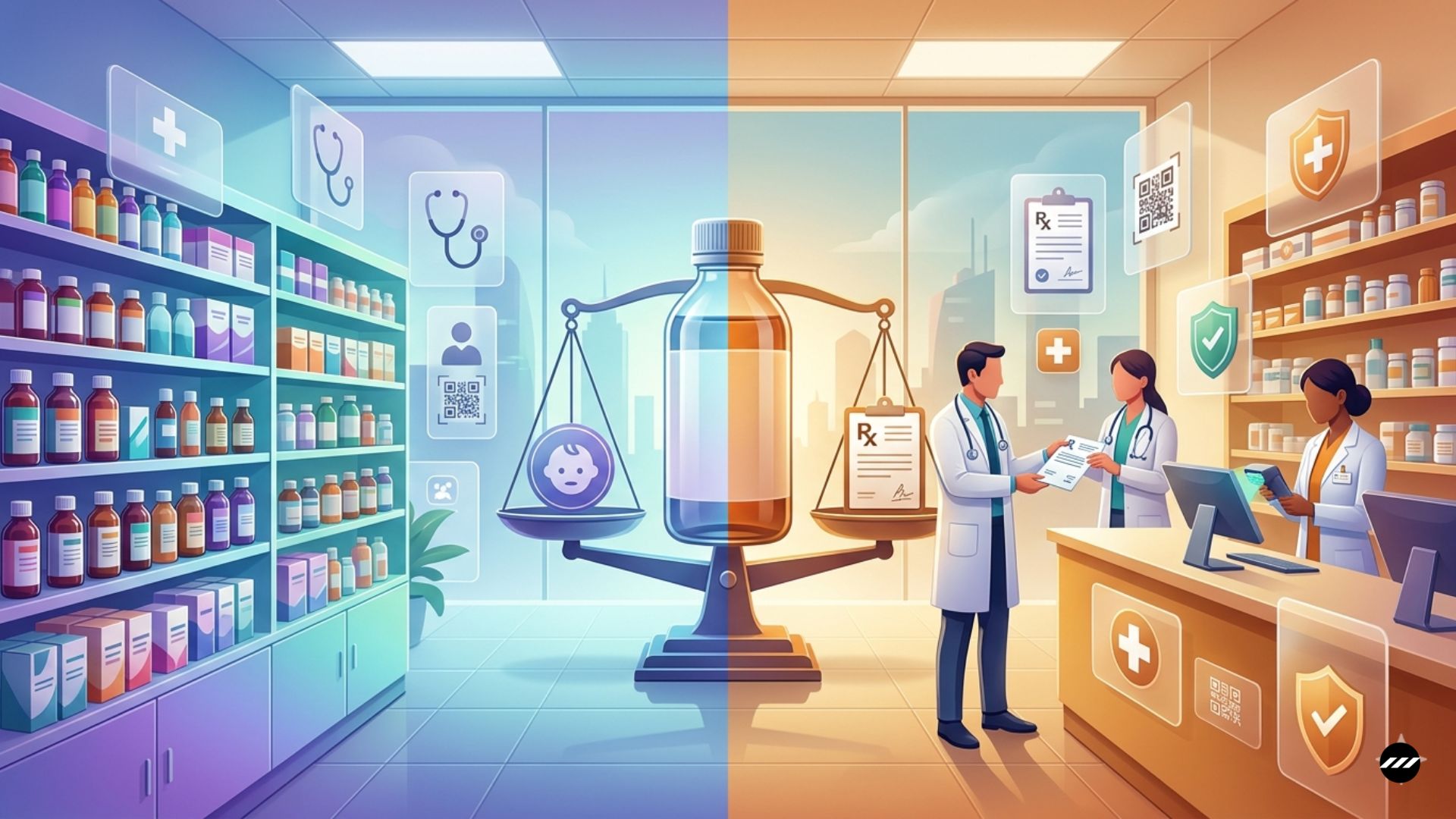
In an effort to restore confidence in India's pharmaceutical supply chain following a series of international drug safety incidents, the Union Health Ministry has made syrup-based medicines prescription-only. While the move may reduce misuse and self-medication, it does not directly address the deeper concerns of manufacturing quality and regulatory enforcement that triggered the crisis.

What Has Changed?

The government has removed the term "syrup" from Schedule K of the Drugs Rules, 1945.

Implication

EarlierPresent
Certain syrups could be sold without prescriptionSyrup-based medicines now require a doctor's prescription
Easier OTC accessSale only through licensed pharmacies

The change follows a draft notification issued in December 2025.

Why Were Cough Syrups Targeted?

The decision follows serious contamination incidents involving India-manufactured cough syrups.

Since 2022:
• Ethylene Glycol (EG) contamination detected
• Diethylene Glycol (DEG) contamination detected
• More than 300 child deaths reported across multiple countries
• WHO issued safety alerts in 2022 and 2023

These incidents damaged India's image as a major pharmaceutical exporter and raised questions about the effectiveness of quality-control systems.

Concerns Beyond Contamination

Medical experts have long expressed concerns regarding the widespread use of over-the-counter cough syrups.

Common Ingredients

Many cough syrups contain combinations of:

  • Bronchodilators
  • Antihistamines
  • Decongestants

Potential Risks

Ingredient EffectsHealth Concerns
BronchodilatorsTremors, palpitations
AntihistaminesExcessive sedation
Certain combinationsAgitation in infants
DecongestantsBlood pressure effects

The American Academy of Pediatrics has observed that cough suppressants are often ineffective in children below six years and may even conceal serious illnesses such as:

  • Pneumonia
  • Asthma

India's OTC Culture

India's healthcare reality differs from many developed countries.

Ground-Level Situation

  • Pharmacists often serve as first points of healthcare contact.
  • Rural and semi-urban populations frequently rely on pharmacies for medical advice.
  • Self-medication remains common.

Thus, prescription requirements may reduce inappropriate use but could also face implementation challenges.

The Real Issue: Manufacturing and Regulatory Failures

The contamination crisis was not primarily caused by consumer misuse.

Root Causes

Drug Contamination
         ↓
Poor Raw Material Testing
         ↓
Manufacturing Quality Failures
         ↓
Weak Batch Verification
         ↓
Regulatory Oversight Gaps

The deaths were linked to failures in:

  • Manufacturing quality control.
  • Testing of raw materials.
  • Batch verification.
  • Regulatory enforcement.

Therefore, restricting access alone cannot prevent contaminated medicines from entering the market.

Challenges in Quality Regulation

Industry Resistance

Some pharmaceutical manufacturers argue that:

  • Advanced testing requirements increase costs.
  • Smaller manufacturers may struggle financially.

However, critics argue that compromising quality standards can have severe public health consequences.

Updated Testing Standards

Following the contamination incidents:

  • Indian Pharmacopoeia updated testing methods.
  • Pharmacopoeia Internationalis revised analytical protocols.

The aim was to improve detection of:

  • Ethylene Glycol (EG)
  • Diethylene Glycol (DEG)

Yet implementation gaps remain.

Regulatory Capacity Constraints

India's drug regulation system faces manpower shortages.

Key Concern

Regulatory IssueImpact
Understaffed State Drug ControllersWeak monitoring
Limited inspectorate strengthPoor enforcement
Rural oversight gapsGreater non-compliance risks

India has roughly three dozen State drug controllers, but many offices lack adequate inspection personnel.

Without stronger enforcement, prescription requirements may remain ineffective in many areas.

Why It Matters Globally

India is often referred to as the "pharmacy of the world" due to its large pharmaceutical exports.

In a globalised economy:

  • Drug quality failures in one country affect multiple nations.
  • Safety concerns undermine export credibility.
  • Public trust in medicines can erode rapidly.

“A strong pharmaceutical industry requires strong regulation, not merely wider production.”

Way Forward

  • Strengthen Good Manufacturing Practice (GMP) compliance.
  • Mandate rigorous testing of raw materials and finished batches.
  • Expand the drug inspector workforce.
  • Improve surveillance of pharmaceutical supply chains.
  • Ensure strict implementation of updated pharmacopoeial standards.
  • Enhance accountability of manufacturers violating quality norms.
  • Increase public awareness regarding rational medicine use.
  • Promote prescription-based dispensing while improving healthcare accessibility.

Conclusion

Making cough syrups prescription-only may help curb misuse and reduce self-medication, but it addresses only the symptoms of a larger problem. The contamination crisis exposed weaknesses in manufacturing standards, testing protocols and regulatory oversight. For India to retain its position as a trusted global pharmaceutical supplier, reforms must move beyond access control and focus on building a robust, transparent and well-enforced drug quality assurance system.

Attribution

Original content sources and authors

Author Dhinesh Balasubramanian
The Hindu Source The Hindu

Syllabus classification

How this article maps to GS papers

Main syllabus

GS2Healthcare

Quick Q&A

What is the significance of making syrup-based medicines prescription-only in India and how does it relate to pharmaceutical regulation?
The Union Health Ministry's decision to remove the term 'syrup' from Schedule K of the Drugs Rules, 1945, represents an important regulatory intervention aimed at improving the safety and accountability of medicine distribution. Schedule K previously allowed certain drugs to be sold without strict prescription requirements. Following the amendment, cough syrups and other syrup-based formulations can now be dispensed only through licensed pharmacies on the basis of a doctor's prescription. The move came after the contamination of India-manufactured cough syrups with ethylene glycol (EG) and diethylene glycol (DEG), which reportedly caused the deaths of more than 300 children across countries such as The Gambia, Uzbekistan and Indonesia since 2022. WHO alerts issued in 2022 and 2023 further highlighted deficiencies in India's pharmaceutical quality assurance mechanisms. From a public health perspective, prescription-only access can reduce self-medication and irrational drug use. Doctors have long warned that many over-the-counter cough formulations are combinations of antihistamines, bronchodilators and decongestants that may produce adverse effects such as sedation, tremors, hypertension and cardiac complications, especially in children. The issue is relevant to GS Paper II (Health and Governance), GS Paper III (Science and Technology), and ethics-related discussions concerning regulatory responsibility. Historically, India's pharmaceutical industry earned the reputation of being the 'pharmacy of the world', supplying affordable medicines globally. Therefore, restoring confidence in drug safety is essential not only for public health but also for India's economic and diplomatic credibility.
Why do experts argue that restricting consumer access alone cannot address the root causes of contaminated medicines in India?
Public health experts argue that restricting access to syrup-based medicines addresses only the demand side of the problem, whereas the fundamental causes of contamination lie within manufacturing processes and regulatory failures. The deaths linked to ethylene glycol (EG) and diethylene glycol (DEG) contamination were not caused by self-medication or overuse but by failures in quality control, inadequate testing of raw materials, and weak enforcement mechanisms. The tragedy exposed shortcomings in the pharmaceutical supply chain. Contaminated products passed through manufacturing facilities and entered both domestic and export markets. This raised concerns about batch testing, inspection standards and regulatory oversight. Although the Indian Pharmacopoeia and the Pharmacopoeia Internationalis subsequently updated analytical methods to detect EG and DEG contamination, implementation and enforcement continue to remain inconsistent. The issue highlights a classic policy debate between preventive and corrective regulation. Restricting access through prescriptions may discourage irrational use, but it does not guarantee that medicines available in the market are safe. Thus, experts describe the measure as defensive rather than transformative. The topic has relevance for GS Paper II concerning governance and health infrastructure and GS Paper III regarding industry regulation. It also reflects broader concerns regarding state capacity. Similar debates have emerged globally following food contamination and medical device failures, where stronger regulatory institutions rather than consumer restrictions proved decisive. Therefore, the central challenge lies in strengthening manufacturing standards, ensuring independent inspections, improving laboratory capacity and enforcing accountability. Without these systemic reforms, regulatory notifications alone may have limited impact on preventing future tragedies.
How have quality control failures and weaknesses in regulatory oversight affected India's reputation as the pharmacy of the world?
India is one of the largest producers and exporters of generic medicines and vaccines, earning the title 'pharmacy of the world'. Its pharmaceutical industry supplies affordable medicines to developing countries and plays an important role in global healthcare. However, recent incidents involving contaminated cough syrups have adversely affected this reputation. The contamination with ethylene glycol and diethylene glycol resulted in the deaths of more than 300 children in several countries since 2022. The World Health Organization issued multiple alerts during 2022 and 2023, questioning assumptions regarding the robustness and independence of India's export quality controls. These incidents generated concerns among importing countries and international regulators. The crisis revealed deficiencies in manufacturing quality control, batch testing and regulatory supervision. Despite updates to analytical methods by pharmacopoeia authorities, enforcement mechanisms remain weak. India has around three dozen State drug controllers, but many agencies are understaffed and lack sufficient inspectors and testing infrastructure. This issue has implications for GS Paper II (Health), GS Paper III (Economic Development and Science and Technology), and international relations. Pharmaceutical exports contribute significantly to India's soft power and economic diplomacy. Loss of credibility could affect trade relationships and market access. From a comparative perspective, countries such as the United States and members of the European Union maintain stringent inspection and surveillance mechanisms. Therefore, India's challenge is not merely to remain a low-cost producer but to evolve into a globally trusted producer. Strong regulation, transparency and institutional capacity are essential to preserving India's leadership in the pharmaceutical sector.
Critically analyse the challenges posed by India's over-the-counter medicine culture and its implications for public health governance.
India's over-the-counter (OTC) medicine culture has evolved due to inadequate access to healthcare facilities, shortage of doctors, and the widespread presence of pharmacies even in remote areas. In many rural and semi-urban regions, pharmacists effectively function as primary healthcare providers. This arrangement offers convenience and affordability but also creates significant public health risks. Supporters of OTC availability argue that it improves access to treatment, reduces pressure on hospitals and lowers healthcare costs. For economically vulnerable populations, pharmacists often represent the first point of contact for medical advice. Such accessibility has historically compensated for deficiencies in India's healthcare infrastructure. However, critics emphasize that unrestricted access encourages self-medication and irrational drug use. Many cough syrups contain combinations of antihistamines, bronchodilators and decongestants that can cause sedation, tremors, blood pressure fluctuations and cardiac side effects. According to the American Academy of Pediatrics, cough suppressants are largely ineffective for children below six years and may conceal serious conditions such as asthma or pneumonia. The debate raises important governance issues under GS Paper II. Excessive restrictions could reduce accessibility, whereas inadequate regulation may compromise safety. Balancing accessibility with patient protection remains a challenge. The issue also highlights broader concerns regarding health literacy and institutional capacity. Strengthening primary healthcare, expanding telemedicine, improving awareness campaigns and enforcing prescription norms can gradually reduce dependence on self-medication. Therefore, OTC culture represents both a symptom of healthcare deficiencies and a challenge requiring comprehensive public health reforms rather than isolated regulatory measures.
What are the major reasons behind persistent weaknesses in pharmaceutical quality control and enforcement mechanisms in India?
Persistent weaknesses in pharmaceutical regulation stem from a combination of institutional, economic and administrative factors. One major challenge is the fragmented nature of regulatory responsibilities. Drug regulation is implemented largely through State drug controllers, and India has around three dozen such authorities. However, these agencies are often understaffed and lack adequate inspection personnel and laboratory facilities. Another important factor is the influence of the pharmaceutical industry. Sections of the industry argue that stringent testing requirements and advanced quality-control mechanisms would increase costs and adversely affect smaller manufacturers. Consequently, reforms aimed at strengthening oversight are sometimes diluted or delayed. The contamination incidents involving ethylene glycol and diethylene glycol exposed weaknesses in raw material testing, batch verification and supply chain monitoring. Although scientific methods for detecting these contaminants have been upgraded by the Indian Pharmacopoeia and international standards bodies, enforcement remains inconsistent. Economic considerations also play a role. India hosts thousands of pharmaceutical manufacturers, making comprehensive inspections difficult. Resource constraints and shortage of trained inspectors further aggravate the problem. In many rural areas, weak enforcement means that regulations are often ignored without significant consequences. The issue is highly relevant to GS Paper II (Governance and Health), GS Paper III (Industrial Regulation), and ethics concerning accountability. Similar challenges have been observed in food safety and environmental regulation, where inadequate state capacity undermines policy implementation. Ultimately, the problem is not the absence of rules but the inability to ensure compliance. Stronger institutions, increased manpower, technological monitoring and independent regulatory mechanisms are essential to building a reliable pharmaceutical ecosystem.
What lessons can be drawn from the cough syrup contamination incidents for strengthening India's health governance framework?
The cough syrup contamination incidents that emerged from 2022 onwards constitute a significant case study in regulatory governance and public health. The deaths of over 300 children in countries including The Gambia, Uzbekistan and Indonesia brought international attention to weaknesses in India's pharmaceutical supply chain. Subsequent WHO alerts further intensified scrutiny of India's quality-control mechanisms. One major lesson is that preventive regulation is more effective than reactive measures. The tragedy demonstrated that failures in raw material testing and manufacturing quality can have devastating consequences. Therefore, strengthening quality assurance systems is indispensable. A second lesson concerns the importance of institutional capacity. Regulations are ineffective without adequate inspectors, laboratories and enforcement agencies. India's understaffed State drug controllers highlight the need for greater investment in regulatory infrastructure. Third, the incident underlines the interconnected nature of global health governance. In an era of globalization, deficiencies in one country's regulatory system can endanger populations worldwide. This has implications for international cooperation and adherence to WHO standards. Fourth, transparency and accountability are essential. Public trust in medicines depends on credible institutions capable of detecting and penalizing violations. Strong regulatory frameworks in countries such as the United States and the European Union demonstrate the importance of independent oversight. For UPSC aspirants, the case links GS Paper II, GS Paper III, and ethics. It illustrates themes such as state capacity, regulatory governance, public accountability and global interdependence. The broader lesson is that India's aspiration to remain the world's pharmacy requires not only production capacity but also uncompromising standards of safety and quality.
What policy measures and institutional reforms are necessary to strengthen India's pharmaceutical safety ecosystem in the future?
Strengthening India's pharmaceutical safety ecosystem requires a multidimensional approach involving regulatory reforms, institutional strengthening and technological modernization. The recent contamination incidents have demonstrated that piecemeal measures alone are insufficient. First, the government must significantly expand the inspectorate and strengthen State drug control authorities. Adequate staffing and training are essential for effective inspections and enforcement. Investment in advanced laboratories and digital tracking systems can improve surveillance across the supply chain. Second, mandatory batch testing and stricter raw material verification procedures should be institutionalized. Modern analytical techniques capable of detecting ethylene glycol and diethylene glycol contamination need to be universally adopted. Regulatory compliance should be monitored through risk-based audits and periodic assessments. Third, the influence of commercial considerations should not compromise safety standards. While smaller manufacturers may face financial constraints, public health must remain the paramount consideration. Targeted support and technological assistance can help firms upgrade without lowering standards. Fourth, awareness regarding rational drug use must be strengthened. Prescription requirements, telemedicine services and improved primary healthcare infrastructure can reduce dependence on self-medication. Pharmacists should be integrated into broader public health strategies through training and monitoring. These reforms are relevant to GS Paper II, GS Paper III and ethical governance. They also contribute to Sustainable Development Goal 3 concerning good health and well-being. Countries such as the United States, Japan and Germany have shown that strong regulatory institutions are fundamental to maintaining public trust. Ultimately, India's ambition to remain the world's pharmacy must be supported by a world-class regulatory ecosystem that prioritizes quality, accountability and patient safety.

Practice questions

1 question for mains preparation

Effective public health outcomes depend as much on robust regulatory institutions as on access to healthcare products and services. Examine in the context of pharmaceutical regulation in India.

10 marks · 150 words · 8 mins