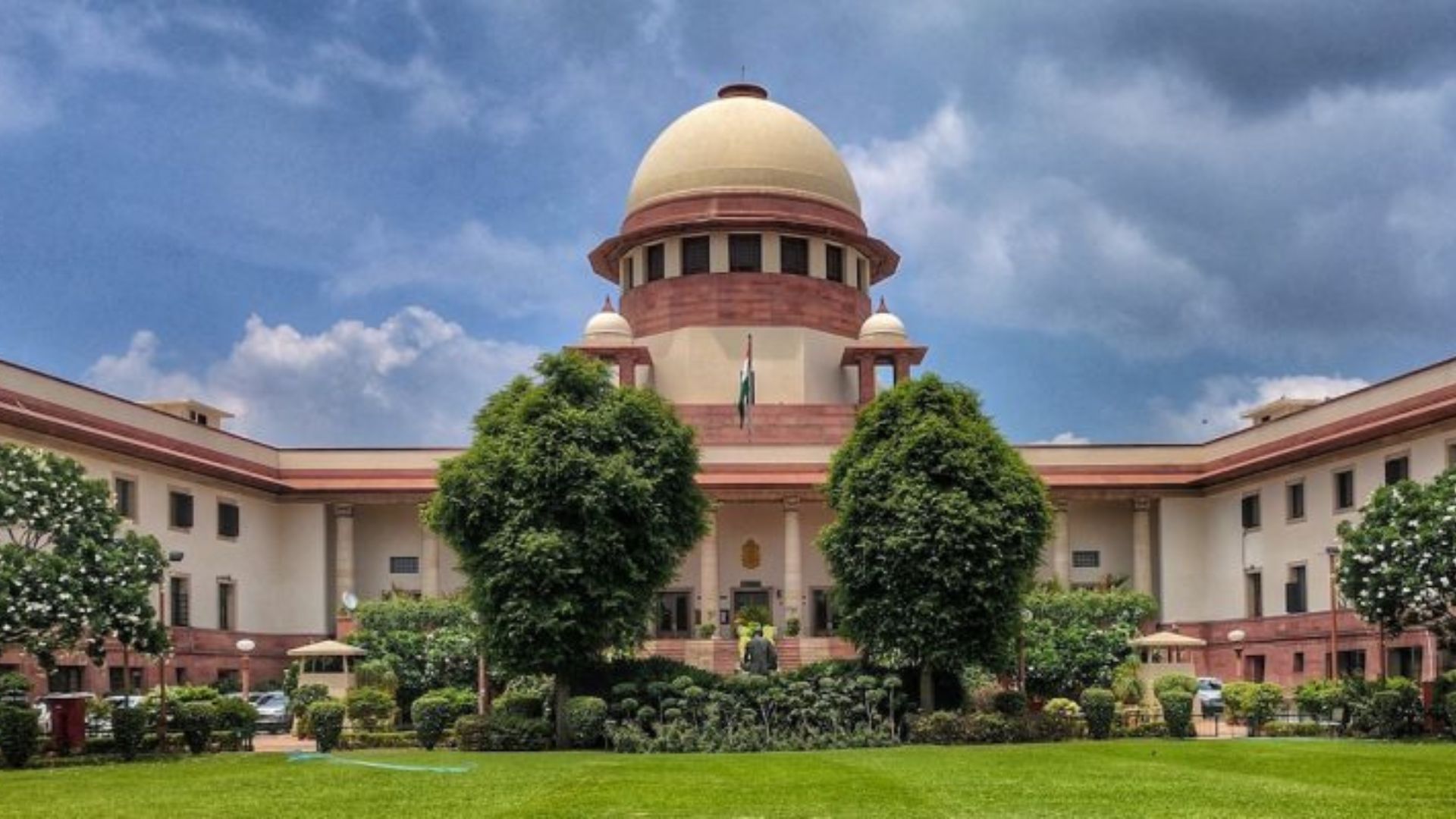
Supreme Court Allows Trials in Sedition Cases to Proceed

Background: A Colonial Law in Constitutional Crosshairs
Few provisions in Indian law have generated as much controversy as Section 124A of the Indian Penal Code — the sedition law inherited from British colonial administration. For over a century, it criminalised speech or acts that incite "disaffection" against the government, carrying a punishment of up to life imprisonment.
In May 2022, the Supreme Court took an extraordinary step — it suspended all trials and appeals involving sedition charges across the country, directing the Union government to complete a promised exercise of re-examining the provision. Courts were also expected to refrain from registering fresh FIRs or taking coercive action under Section 124A during this period.
Three years later, the picture has grown significantly more complex.
The 2026 Clarification: Trials Can Resume
On May 21, 2026, a Supreme Court Bench led by Chief Justice Surya Kant partially lifted the 2022 freeze. The court clarified:
"Wherever the accused has no objection to the continuation of the trial, appeal or any other proceeding in which he has been charge-sheeted under Section 124A IPC, there shall be no impediment for courts to decide such matters on merits and in accordance with law."
The immediate trigger was a petition from an individual who has spent 17 years in incarceration — convicted in 2017 on charges including sedition, promoting enmity, UAPA offences, and Arms Act violations, and lodged in a central jail in Bhopal. His appeal had remained frozen under the 2022 order despite his willingness to face trial.
The Bench directed the Madhya Pradesh High Court to immediately take up his appeal and decide it on merits.
The 2022 Order: What the Court Had Said
The 2022 interim order by a Bench headed by then CJI N.V. Ramana had reflected a careful balancing act:
- Acknowledged the state's security interests and territorial integrity
- Simultaneously foregrounded civil liberties of citizens
- Held that both sets of considerations required to be balanced
- Directed the Centre to complete its reconsideration before trials resumed
The government had promised to review Section 124A. That review, however, did not result in repeal — it resulted in replacement.
The BNS Complication: Old Wine, New Bottle?
When the Bharatiya Nyaya Sanhita (BNS), 2023 replaced the IPC, Section 124A was formally dropped. But critics argue the substance was quietly preserved — and arguably expanded — under Section 152 of the BNS, which criminalises acts endangering the sovereignty, unity, and integrity of India.
Sedition: IPC vs BNS
──────────────────────────────────────────────────────────
Section 124A (IPC)        |  Section 152 (BNS)
──────────────────────────────────────────────────────────
"Disaffection against     |  "Subversive activity"
 the Government"          |  "Encouragement of
                          |   separatist feelings"
Narrower scope            |  "Acts endangering unity
                          |   or integrity of India"
Colonial-era origin       |  Broader, vaguer language
──────────────────────────────────────────────────────────
Petitioners challenging Section 152 before the Supreme Court argued it was a "repackaged" sedition law — that "though the language is altered, its substantive content... remains the same or is even more expansive."
In February 2026, Chief Justice Kant made a significant oral observation: the executive's decision to review sedition cannot bind Parliament, which functions independently and is free to reintroduce equivalent provisions through legislation.
The Core Tension
The sedition saga exposes a structural problem in Indian constitutional governance:
- Judicial scrutiny can suspend a law's operation but cannot prevent legislative repackaging
- A person can spend 17 years in jail under a provision the state itself acknowledged needed reconsideration
- The transition from IPC to BNS raises the question of whether form was changed while substance was retained — a legislative sleight of hand that courts must now confront
Way Forward
- Supreme Court must conclusively rule on Section 152 of the BNS — the oral observations on legislative independence must translate into a substantive constitutional test
- Proportionality standard must be applied: vague categories like "subversive activity" or "encouragement of separatist feelings" must meet the threshold established in Shreya Singhal v. Union of India (2015) for restrictions on free speech
- Bail and undertrial reform — cases like the 17-year incarceration underscore the need for mandatory periodic review of undertrial detention, especially under special laws like UAPA
- Legislative precision — if Parliament chooses to retain provisions protecting national integrity, the language must be specific, the offence clearly defined, and the safeguards robust
Conclusion
The sedition story is far from over. Section 124A may have been formally buried, but its constitutional questions have migrated into Section 152 of the BNS — with broader language and the same potential for misuse. The Supreme Court's 2026 clarification resolves a procedural bottleneck for willing accused persons, but leaves the deeper question untouched: whether India's legal framework adequately protects free speech from the chilling effect of vaguely worded national security provisions. That question will define the next chapter of this debate.
Attribution
Original content sources and authors


Syllabus classification
How this article maps to GS papers
Main syllabus
GS2Indian ConstitutionQuick Q&A
What is the offence of sedition under Section 124A of the IPC, and why has it become constitutionally controversial in India?
The constitutional controversy arises because of its potential conflict with Article 19(1)(a) of the Constitution, which guarantees freedom of speech and expression. Critics argue that the language of sedition is excessively vague and broad, allowing governments to misuse it against journalists, activists, students and political opponents. Although the Supreme Court in Kedar Nath Singh v. State of Bihar (1962) upheld the constitutional validity of sedition, it limited its application only to acts involving incitement to violence or public disorder. However, in practice, FIRs have often been registered even in cases involving peaceful criticism of the government.
The debate has intensified in recent years due to concerns regarding democratic freedoms and misuse of criminal law. The Supreme Court’s 2022 interim order pausing sedition trials reflected judicial concern over balancing national security with civil liberties. The recent controversy surrounding Section 152 of the Bharatiya Nyaya Sanhita (BNS), which many critics describe as a “repackaged sedition law,” further demonstrates that the issue remains highly relevant in India’s constitutional and political discourse.
Why did the Supreme Court suspend sedition proceedings in 2022, and what constitutional principles guided its decision?
The constitutional principles guiding the Court included balancing liberty and security. On one side lies the legitimate concern of protecting the sovereignty and integrity of the State; on the other side lies the citizen’s right to dissent and express criticism against the government. The Court acknowledged that democracy requires tolerance of criticism and political disagreement. Excessive criminalisation of speech may create a “chilling effect,” discouraging free expression and weakening democratic accountability.
The Court’s approach also reflected the doctrine of proportionality and constitutional morality. A restriction on speech can only be justified if it is reasonable, necessary and proportionate to the threat posed. By temporarily pausing sedition prosecutions, the judiciary attempted to prevent arbitrary arrests while the executive reconsidered the law. The present clarification allowing proceedings where the accused has no objection demonstrates judicial pragmatism, particularly in cases where prolonged delays may violate the right to speedy justice under Article 21.
Critically analyse whether laws like sedition are necessary in a modern democratic state such as India.
However, critics contend that sedition laws are fundamentally incompatible with democratic values. The broad wording of terms such as “disaffection,” “subversive activity,” or “encouragement of separatist feelings” creates scope for misuse. In several instances, sedition charges have been invoked against journalists, students, comedians and activists for peaceful expression. This undermines freedom of speech and creates fear among citizens. Democratic governance requires governments to tolerate criticism, satire and dissent unless such speech directly incites violence.
A balanced approach is therefore essential. The Supreme Court in Kedar Nath Singh attempted to limit sedition only to incitement of violence, but implementation has remained problematic. Instead of vague sedition laws, India may rely on narrowly tailored national security laws that clearly define criminal intent and violent conduct. Judicial safeguards, police accountability and periodic review of such laws are also necessary. Ultimately, the strength of a democracy lies not merely in preserving order but in protecting constitutional freedoms while addressing genuine security threats.
How does the Bharatiya Nyaya Sanhita (BNS) attempt to address offences against the State, and why has Section 152 generated controversy?
However, critics argue that Section 152 is substantively similar to the old sedition provision. Petitioners before the Supreme Court have pointed out that expressions such as “subversive activities” and “encouragement of separatist feelings” remain vague and susceptible to misuse. They argue that changing terminology without narrowing the scope of criminal liability does not resolve constitutional concerns. In fact, some legal experts believe the new wording may be broader than Section 124A itself.
The controversy highlights the larger debate about the relationship between security and liberty. While the State has a legitimate interest in preventing violent separatism and threats to national unity, criminal laws must also respect constitutional freedoms. The judiciary will likely examine whether Section 152 satisfies the tests of reasonableness, clarity and proportionality under Articles 19 and 21. The outcome of these challenges could significantly shape the future of free speech jurisprudence in India.
A journalist publishes a strongly critical article accusing the government of policy failures and corruption. Protests follow, but there is no direct call for violence. Should such speech attract sedition-related charges? Analyse from a constitutional perspective.
The Supreme Court’s judgment in Kedar Nath Singh v. State of Bihar (1962) established that sedition can only apply when speech has the tendency or intention to incite violence or create public disorder. In the given case, although protests followed the article, there was no direct call for armed rebellion or violence. Therefore, invoking sedition would likely violate constitutional protections and create a chilling effect on journalistic freedom.
At the same time, the State may intervene if protests become violent or public order is genuinely threatened. However, the response must remain proportionate and targeted at unlawful acts rather than suppressing free expression itself. Democracies must distinguish between dissent and destabilisation. If criticism of the government is criminalised, it risks weakening democratic institutions and undermining public trust. Thus, constitutional morality requires tolerance of peaceful criticism while addressing actual threats through narrowly tailored legal measures.
What are the broader implications of prolonged incarceration and delayed trials in cases involving sedition and national security laws?
National security laws often involve stringent bail provisions and complex investigations, which can prolong detention. While the State has a legitimate duty to protect public order and national integrity, indefinite delays can erode civil liberties. Individuals accused under sedition or anti-terror laws may suffer social stigma, economic hardship and psychological trauma even if eventually acquitted. This raises concerns about procedural fairness and misuse of criminal law as a tool of harassment.
The issue also highlights the need for institutional reforms. Fast-track courts, periodic judicial review of detention, stricter scrutiny before filing charges and improved investigation standards are essential. The Supreme Court’s recent clarification allowing willing accused persons to proceed with appeals demonstrates recognition of the importance of timely justice. Ultimately, national security cannot become a justification for indefinite suspension of constitutional guarantees, as the rule of law depends upon both security and fairness.
Practice questions
3 questions for mains preparation