GS2 International Relations

EU leaders signal hope for Balkans enlargement

EU Enlargement Revisited: Why the Western Balkans Matter Again
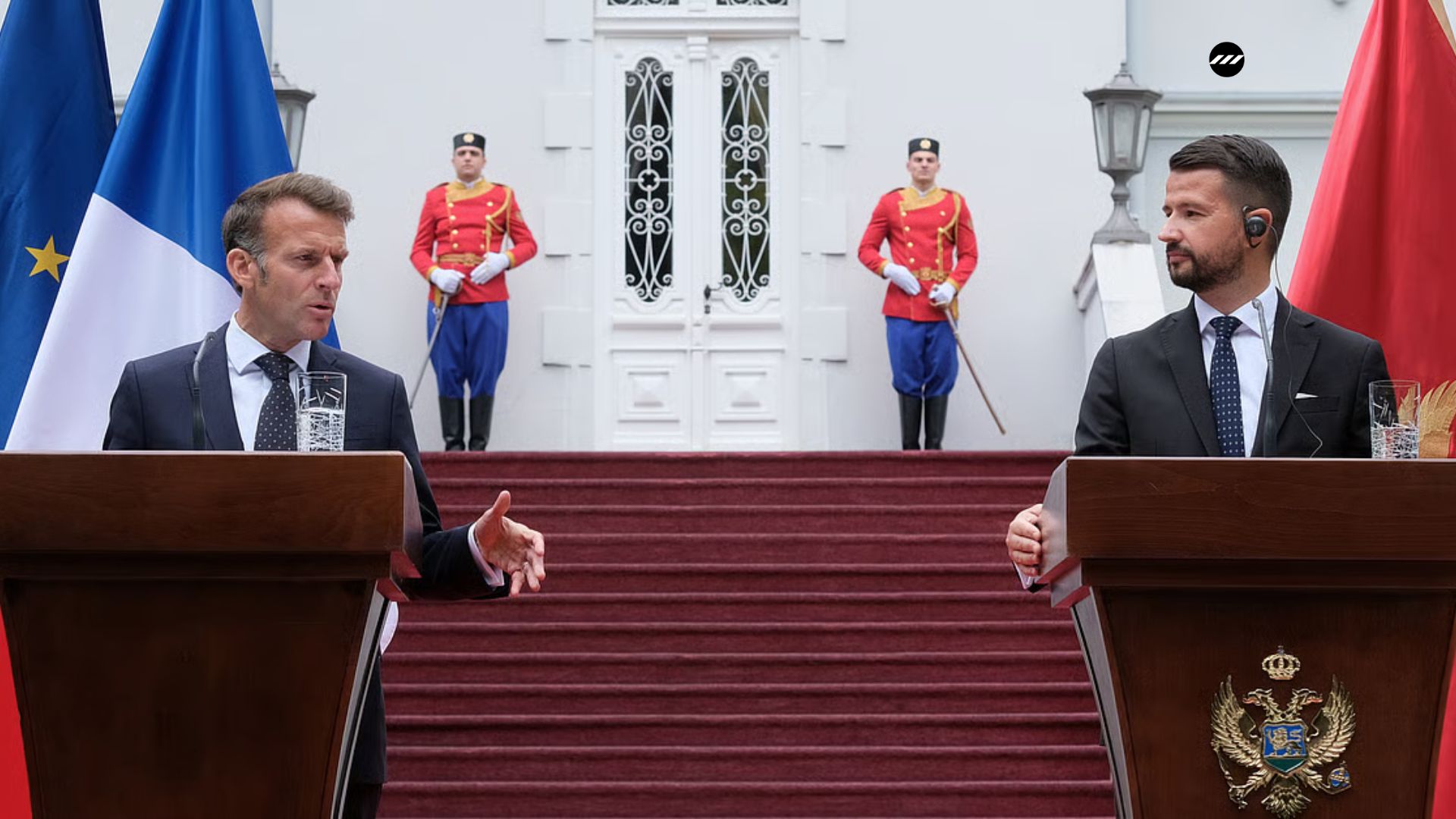
Macron, Merz, and von der Leyen meet in Montenegro to discuss deeper EU integration for six Balkan nations.
Dhinesh Balasubramanian Dhinesh Balasubramanian
4 mins read

"The commitment of the European Union to the Western Balkans is real. As real as the opportunity for enlargement." — António Costa, President of the European Council

The European Union (EU) has renewed its focus on integrating the six Western Balkan countries, signaling that enlargement is no longer merely a bureaucratic process but a strategic geopolitical necessity. At the recent summit in Tivat, Montenegro, European leaders emphasized deeper economic integration and a credible pathway to EU membership.

Why is EU Enlargement Back on the Agenda?

The Russia-Ukraine conflict has fundamentally altered Europe's strategic outlook.

Earlier, EU enlargement followed a gradual principle:

Reforms → Alignment with EU values → Membership

Today, geopolitical considerations have become equally important:

Security concerns + Geopolitical competition + Stability
            ↓
      Faster enlargement process

According to António Costa, enlargement is:

  • A geostrategic interest for Europe.
  • An investment in peace and stability.
  • A response to growing Russian and Chinese influence in the Balkans.

The Western Balkans and Their Membership Status

CountryCurrent Position
MontenegroMost advanced candidate; aims to join by 2028
AlbaniaConsidered next likely entrant
SerbiaProgress slowed due to Russia-related issues
North MacedoniaFacing political disputes
Bosnia & HerzegovinaInternal political challenges
KosovoRecognition and political hurdles

Why Montenegro is Important

Montenegro has moved far enough in negotiations that the EU has begun drafting accession treaty arrangements.

This indicates:

  • Enlargement is no longer theoretical.
  • Concrete institutional preparations have started.
  • The next EU accession may occur sooner than expected.

Ukraine's Impact on Enlargement Policy

The war in Ukraine accelerated EU thinking on enlargement.

Key Development

Hungary recently withdrew its veto, enabling:

  • Ukraine and Moldova to advance accession negotiations.

  • Opening of chapters dealing with:

    • Rule of Law
    • Democratic Standards
    • Governance Reforms

Ukraine received candidate status within months of Russia's invasion, demonstrating unprecedented urgency.

As researcher Faruk Bašić notes:

"The war in Ukraine has singlehandedly reframed what European enlargement is meant to be and what it is for."

Emerging Debate: Associate Membership

Germany has proposed an intermediate arrangement for Ukraine.

Features of Associate Membership

  • Representation in EU institutions.
  • Participation in EU processes.
  • No voting rights initially.
  • Transitional step before full membership.
AdvantagesConcerns
Faster integrationMay delay full membership
Political inclusionCreates a second-tier status
Institutional participationReduces incentive for full accession

Several EU members and Ukraine itself remain skeptical of the proposal.

Challenges Facing Enlargement

Despite political support, significant obstacles remain.

Internal EU Concerns

  • Decision-making efficiency in a larger EU.
  • Financial burden of new members.
  • Governance standards.
  • Rule-of-law compliance.

Proposed Safeguards

Some EU states are considering:

New Member State
        ↓
Temporary Restrictions
        ↓
No veto powers for initial years

The objective is to avoid future policy blockages similar to those experienced during disputes involving Hungary.

Beyond Membership: Gradual Integration

The EU is increasingly adopting a "membership before membership" approach.

Key Measures

1. Roam Like at Home

The EU plans to eliminate mobile roaming charges with Western Balkan countries.

Benefits:

  • Cheaper communication.
  • Greater mobility.
  • Visible benefits for citizens.

2. Integration into the Single Market

Western Balkan countries are being linked with:

  • EU trade mechanisms.
  • Financial systems.
  • Regulatory frameworks.

3. Single Euro Payments Area (SEPA)

Several Balkan countries have joined SEPA.

This enables:

  • Faster euro transactions.
  • Reduced payment costs.
  • Easier cross-border business.
Economic Integration
        ↓
Regulatory Alignment
        ↓
Single Market Access
        ↓
Full Membership Readiness

Why the Balkans Matter Geopolitically

The Western Balkans sit at a strategic crossroads connecting Europe, the Mediterranean, and Eurasia.

The region has become a zone of competition among:

  • European Union
  • Russia
  • China

For the EU, successful enlargement would:

  • Strengthen continental security.
  • Reduce external influence.
  • Promote democratic governance.
  • Enhance regional stability.

Way Forward

  • Accelerate accession negotiations for reforming candidates.
  • Balance geopolitical urgency with institutional readiness.
  • Expand economic integration before formal membership.
  • Resolve bilateral and ethnic disputes through EU mediation.
  • Develop flexible accession models without undermining full membership prospects.

Conclusion

EU enlargement is evolving from a technical process into a strategic instrument of European security. While Ukraine's candidacy has accelerated discussions, the Western Balkans remain central to the EU's long-term vision. Through gradual integration, institutional reforms, and credible membership pathways, the EU seeks to transform a historically fragile region into a pillar of stability, prosperity, and geopolitical resilience.

Attribution

Original content sources and authors

Author Dhinesh Balasubramanian
The Guardian Source The Guardian

Syllabus classification

How this article maps to GS papers

Main syllabus

GS2International Relations

Quick Q&A

What is the significance of the European Union's renewed enlargement strategy towards the Western Balkans and Eastern Europe in the contemporary geopolitical context?
The European Union's enlargement strategy refers to the process through which eligible European countries gradually integrate with the EU and eventually become full members after meeting political, economic, and legal requirements known as the Copenhagen Criteria. In 2026, the EU renewed its focus on enlargement, particularly towards the six Western Balkan countries and Eastern European states such as Ukraine and Moldova. The summit held in Tivat, Montenegro, involving leaders like Emmanuel Macron, Friedrich Merz, Giorgia Meloni, Ursula von der Leyen, and European Council President António Costa, highlighted the strategic importance of enlargement. Costa described expansion as a 'geostrategic investment' aimed at promoting peace, stability, and security. The process has gained urgency following Russia's invasion of Ukraine in 2022 and the increasing influence of Russia and China in the Balkans. Ukraine and Moldova were granted candidate status in 2022, illustrating how geopolitical developments can accelerate accession. Montenegro is considered the most advanced among Western Balkan candidates and aims to become the EU's 28th member by 2028. Albania is also making progress, while Serbia, Bosnia and Herzegovina, Kosovo, and North Macedonia face political and institutional obstacles. From a UPSC perspective, this issue is relevant to GS Paper II (International Relations) and GS Paper III (Security). It demonstrates how regional organizations use economic integration and institutional expansion as instruments of strategic influence. It also reflects the growing importance of geopolitics in shaping multilateral institutions and European security architecture.
Why has the Russia-Ukraine conflict transformed the European Union's approach towards enlargement and regional integration policies?
The Russia-Ukraine conflict, which escalated into a full-scale invasion in February 2022, fundamentally altered the European Union's understanding of enlargement. Traditionally, accession was a lengthy and largely technical process based on gradual alignment with EU laws, democratic values, and economic standards. However, the war introduced a strong geopolitical dimension to the enlargement process. According to analysts such as Faruk Bašić of the Brussels Institute for Geopolitics, the conflict reframed enlargement from a purely normative project into a strategic necessity. Ukraine's candidacy was approved within four months in 2022, demonstrating unprecedented urgency. Moldova also received candidate status under similar circumstances. The EU now views expansion as a means to counter Russian and Chinese influence in Europe. Integrating neighbouring countries strengthens Europe's security architecture, prevents geopolitical vacuums, and reinforces democratic institutions. At the same time, the conflict has generated debates among member states regarding the pace and structure of accession. Germany proposed associate membership for Ukraine, granting representation without voting rights, whereas some countries fear that such arrangements could delay full membership. The issue has broader implications for the Western Balkans, which fear being sidelined despite decades of reforms. Consequently, EU institutions are trying to reassure countries like Montenegro and Albania that they remain integral to Europe's future. For UPSC aspirants, this development is relevant to GS Paper II under International Relations. It highlights how geopolitical crises can reshape institutional priorities and demonstrates the link between security concerns and regional economic integration.
How does the European Union gradually integrate candidate countries into its institutions and single market before granting full membership?
The European Union follows a phased and conditional approach to enlargement. Candidate countries must adopt the EU's legal framework, known as the acquis communautaire, which covers areas such as democracy, human rights, the rule of law, competition policy, and economic governance. Integration does not occur overnight. Instead, countries progressively participate in various EU mechanisms before attaining full membership. This approach is evident in the Western Balkans. Montenegro, which aims to join the EU by 2028, has begun technical work on its accession treaty. Albania is also moving steadily through negotiations. The EU is increasingly emphasizing economic integration before political accession. Initiatives such as extending the 'Roam Like at Home' policy to the Western Balkans aim to eliminate mobile roaming charges, thereby improving connectivity and people-to-people interactions. Several Balkan states have also joined the Single Euro Payments Area (SEPA), allowing seamless electronic transactions in euros. Germany's proposal for associate membership for Ukraine represents another example of gradual integration. Under this arrangement, countries could participate in EU institutions without immediate voting rights. Such incremental integration provides tangible benefits to citizens while ensuring that candidate countries implement necessary reforms. It also reduces risks associated with rapid expansion. For UPSC candidates, this process is relevant to GS Paper II, particularly regional organizations and international institutions. It also provides insights into how economic cooperation can act as a stepping stone to political integration. The EU model represents one of the most sophisticated examples of functional regionalism and supranational governance in the world.
What are the major challenges and criticisms associated with the European Union's current enlargement policy and accession framework?
Although the European Union presents enlargement as a strategic necessity, the process faces numerous challenges and criticisms. One major issue is the lack of consensus among existing member states regarding the pace and structure of expansion. Countries such as France have expressed reservations regarding Ukraine's rapid accession, while Germany has proposed an intermediate form of associate membership. Critics argue that associate membership without voting rights may create a second-tier category of states and reduce incentives for full integration. Some diplomats have even described such proposals as substitutes that could make eventual membership more difficult. Another concern involves governance standards among candidate countries. Albania faces criticism over organized crime, while Serbia under President Aleksandar Vučić has been accused of democratic backsliding and maintaining close ties with Russia. Bosnia and Herzegovina, Kosovo, and North Macedonia continue to face internal political disputes. There are also institutional concerns within the EU itself. The experience with Hungary under Viktor Orbán has prompted discussions about restricting veto powers for new members for several years after accession. Supporters view this as a safeguard against obstructionism, while critics see it as inconsistent with the principle of equality among member states. Furthermore, rapid enlargement raises questions regarding budgetary burdens, migration management, and decision-making efficiency within the bloc. From a UPSC perspective, this debate illustrates the tension between geopolitical imperatives and institutional cohesion. It is relevant to GS Paper II and provides an example of how international organizations balance expansion with effectiveness. The issue also demonstrates that regional integration is often accompanied by political, economic, and constitutional challenges.
What does Montenegro's accession process reveal about the opportunities and complexities of European Union enlargement?
Montenegro provides an important case study regarding the opportunities and challenges associated with European Union enlargement. Since gaining independence in 2006, Montenegro has consistently pursued integration with Euro-Atlantic institutions and has emerged as the most advanced candidate among the six Western Balkan countries. By 2026, Montenegro had initiated technical preparations for drafting its accession treaty, and the country hopes to become the European Union's 28th member by 2028. European officials have described these developments as highly significant because they indicate that enlargement is not merely a political promise but a tangible process. Montenegro's experience highlights the benefits of sustained reforms. Progress in governance, economic liberalization, and institutional modernization has enabled the country to move ahead of other regional candidates. The process also demonstrates how smaller states can leverage regional organizations to enhance security and economic opportunities. However, Montenegro's case has also generated debates within the EU. Concerns arising from Hungary's obstructionist policies under Viktor Orbán have prompted discussions about limiting veto rights for newly admitted members. Such proposals illustrate how previous experiences influence institutional reforms. Montenegro's accession is taking place against the backdrop of intensified geopolitical competition involving Russia and China. Therefore, its membership has strategic implications extending beyond economics. For UPSC aspirants, this case study is relevant to GS Paper II under International Relations and regional organizations. It demonstrates how accession processes require political commitment, institutional reforms, and geopolitical calculations. It also shows that regional integration is a gradual process shaped by both domestic transformations and international strategic considerations.
What practical examples demonstrate the European Union's strategy of integrating the Western Balkans before granting full membership?
The European Union has increasingly adopted a strategy of gradual integration, providing practical benefits to candidate countries even before they attain full membership. This approach aims to demonstrate the tangible advantages of European integration while encouraging reforms. One notable example is the extension of the 'Roam Like at Home' initiative to the Western Balkans. Under this scheme, citizens travelling between EU member states and Balkan countries would be able to make calls, send messages, and use mobile data without incurring additional charges. The policy has already been one of the EU's most visible successes and symbolizes deeper social and economic integration. Another example is the inclusion of several Balkan countries in the Single Euro Payments Area (SEPA). This system facilitates seamless electronic transactions and allows individuals and businesses to use a single account for euro payments across participating countries. Such measures improve financial connectivity and support trade and investment. The European Union is also integrating these countries into the single market through regulatory harmonization and sectoral cooperation. Candidate countries are encouraged to align their laws with EU standards in areas ranging from competition policy to digital governance. Germany's proposal for associate membership for Ukraine represents another attempt to provide institutional participation before full accession. These examples illustrate the concept of functional integration, where economic cooperation precedes political union. For UPSC candidates, such developments are relevant to GS Paper II and offer valuable comparisons with regional initiatives elsewhere, including SAARC, BIMSTEC, ASEAN, and the African Union. They demonstrate how incremental cooperation can strengthen regional stability and prosperity.

Practice questions

1 question for mains preparation

The Russia–Ukraine conflict has transformed European Union enlargement from a norm-based integration project into a geopolitical strategy. In this context, examine the significance of the Western Balkans in the EU's quest for regional stability and strategic autonomy.

10 marks · 150 words · 8 mins