GS2 International Relations

Putin backs India ties, rejects Western pressure

Putin: Pressure on Modi Will Undermine Global Stability
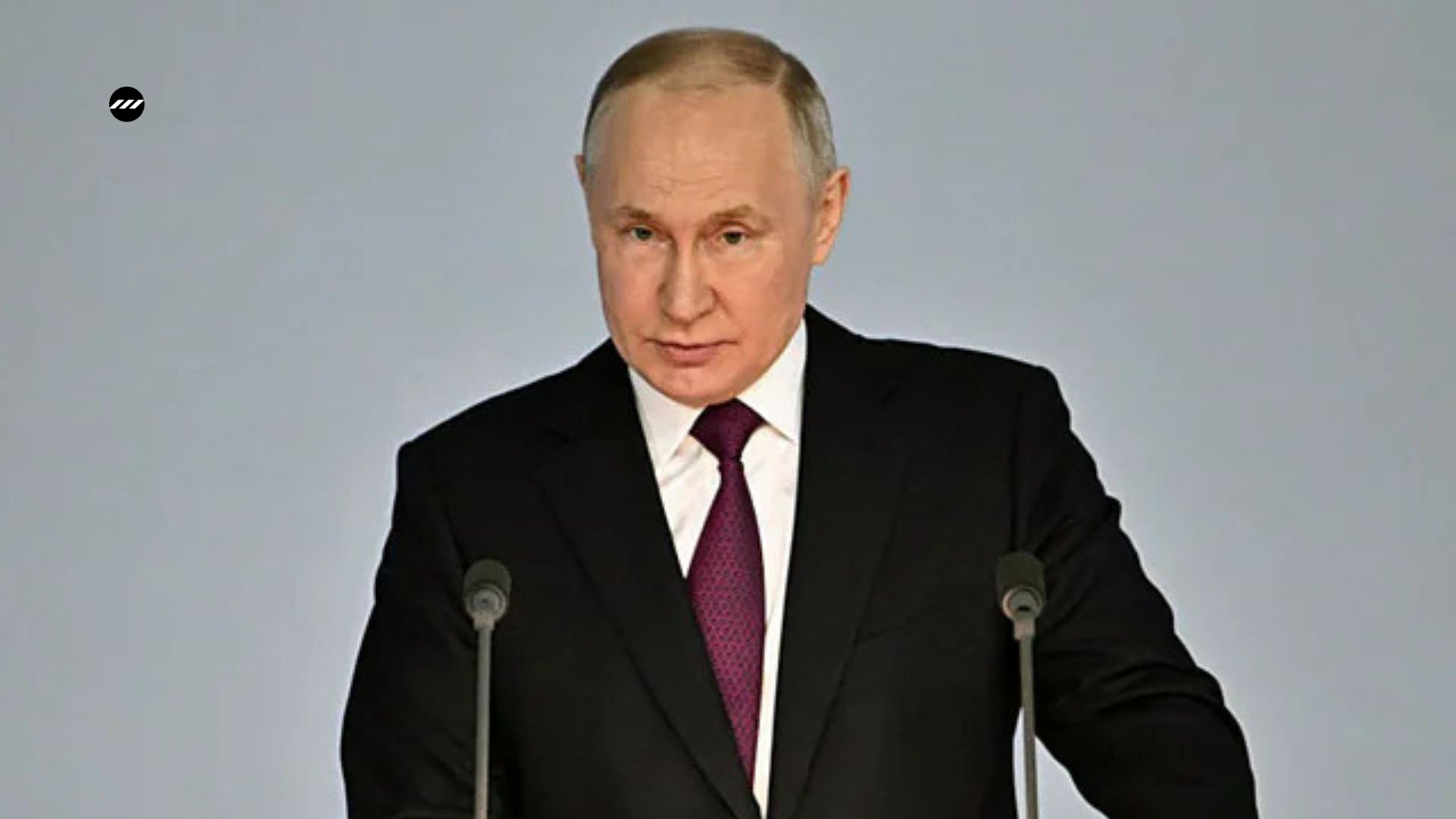
Vladimir Putin emphasizes that India must prioritize its national interests over Western pressure regarding Russia relations, amid debates on India-China ties.
Dhinesh Balasubramanian Dhinesh Balasubramanian
4 mins read

“Putting pressure on India is detrimental for international relations.” — Vladimir Putin

Recent remarks by Russian President Vladimir Putin have once again highlighted the evolving nature of India-Russia relations amid growing geopolitical competition. The comments come at a time when Western countries are urging India to reduce engagement with Russia, particularly in energy and strategic sectors following the Ukraine conflict.

Why the Issue Matters

The Ukraine war has intensified geopolitical polarization.

Many Western countries have:

  • Imposed sanctions on Russia.
  • Sought to isolate Moscow diplomatically.
  • Pressured countries to reduce economic engagement with Russia.

India, however, has maintained a policy guided by national interest and strategic autonomy.

Ukraine Conflict
        ↓
Western Sanctions on Russia
        ↓
Pressure on India
        ↓
India pursues Strategic Autonomy

Putin's Message on India

President Putin described India as:

  • A reliable strategic partner.
  • A major global economy.
  • The world's largest democracy.
  • An independent actor pursuing its own interests.

According to Putin:

“India’s growth has not come out of the blue but is the result of hard work under Prime Minister Narendra Modi’s leadership.”

He argued that external pressure on India would:

  • Harm bilateral relations.
  • Undermine international stability.
  • Fail to alter India's national priorities.

India-Russia Relations: Key Areas

SectorSignificance
EnergyRussian crude oil and LNG supplies
DefenceLong-standing military cooperation
Nuclear EnergyCivil nuclear collaboration
Multilateral ForumsBRICS, SCO, G20
TradeExpanding bilateral commerce

Russia has reiterated its commitment to:

  • Continue energy supplies to India.
  • Expand oil and LNG exports.
  • Strengthen long-term economic cooperation.

India's Balancing Strategy

A key issue raised during the press conference was whether India's growing ties with the United States create friction with Russia.

Putin rejected this assumption.

Russian Position

  • India can maintain relations with multiple powers.
  • Cooperation with Washington does not automatically weaken ties with Moscow.
  • Strategic partnerships need not be zero-sum.
India's Foreign Policy

      USA
       ↑
       │
Russia ← India → Europe
       │
       ↓
    Indo-Pacific Partners

This reflects India's broader approach of multi-alignment rather than alliance politics.

The India-China-Russia Dimension

Putin also addressed relations among India, China, and Russia.

Key Observations

  • Russia views both India and China as important partners.
  • Moscow does not wish to interfere in India-China relations.
  • Border issues should be resolved through bilateral dialogue.

“President Xi and Prime Minister Modi are trying to resolve all issues of mutual interest, including the border issue.”

Russia's Strategic Equilibrium

Putin emphasized:

  • Russia-India ties do not threaten China.
  • Russia-China ties do not threaten India.
  • Relations have evolved naturally over time.

This reflects Moscow's effort to maintain balance among major Asian powers.

India-Pakistan Context

Putin briefly referred to India-Pakistan relations.

Russian Position

  • Russia understands the complexities of bilateral disputes.
  • Moscow remains cautious regarding regional sensitivities.
  • Putin stated that Pakistan should not be viewed simply as being under Chinese control.

This indicates Russia's preference for a balanced regional approach.

Defence Cooperation: The Su-57 Offer

A major announcement concerned Russia's fifth-generation fighter aircraft, the Su-57.

Russian Proposal

AspectProposal
AircraftSu-57 Stealth Fighter
ModelJoint development and production
LocationPotential manufacturing in India
Technology CooperationNo major restrictions indicated

Putin stated that Russia had previously offered India an opportunity to jointly develop the aircraft.

“In principle, this could have been our product. We are ready to work and develop together.”

Strategic Importance

Potential benefits for India include:

  • Advanced aerospace technology.
  • Indigenous manufacturing capabilities.
  • Defence industrial development.
  • Support for Make in India initiatives.
Russia Technology
        +
Indian Manufacturing
        +
Joint Development
        =
Strategic Defence Partnership

Way Forward

  • Preserve strategic autonomy while engaging all major powers.
  • Deepen energy security cooperation with diverse partners.
  • Expand defence co-development rather than simple procurement.
  • Utilize BRICS and SCO platforms for multipolar cooperation.
  • Continue dialogue with both Russia and Western countries without entering bloc politics.

Conclusion

The recent statements by President Putin underscore the enduring relevance of India-Russia relations in an increasingly multipolar world. As global rivalries intensify, India continues to pursue a balanced foreign policy rooted in strategic autonomy, national interest, and diversified partnerships. The challenge ahead lies not in choosing between competing powers, but in leveraging multiple relationships to advance India's economic growth, security, and global influence.

Attribution

Original content sources and authors
PTI Author PTI The Hindu Source The Hindu

Syllabus classification

How this article maps to GS papers

Main syllabus

GS2International Relations

Also covers

GS2Bilateral Relations

Quick Q&A

What is the strategic significance of India-Russia relations in the evolving multipolar international order?
India-Russia relations constitute one of the most enduring strategic partnerships in contemporary international politics. Originating during the Cold War era with the Indo-Soviet Treaty of Peace, Friendship and Cooperation signed in 1971, the relationship has evolved into a Special and Privileged Strategic Partnership encompassing defence, energy, space, nuclear cooperation, and multilateral diplomacy. Russian President Vladimir Putin's remarks in 2026 reaffirmed Moscow's perception of India as a reliable and trusted partner. The strategic significance of this relationship lies in its contribution to India's pursuit of strategic autonomy. Despite increasing ties with the United States, Europe, and Indo-Pacific partners, India has maintained robust engagement with Russia, particularly in energy imports and defence procurement. Russia remains a major supplier of military equipment, with platforms such as the S-400 missile system, BrahMos missile collaboration, and proposals regarding the Su-57 stealth fighter. The Ukraine conflict and Western sanctions have elevated the importance of India-Russia ties. India has continued purchasing discounted Russian crude oil to safeguard energy security and domestic economic interests. Russia, in turn, views India as a key partner in building a multipolar world order. From a UPSC perspective, the issue is relevant to GS Paper II under International Relations and GS Paper III concerning energy security and defence. It demonstrates how middle powers navigate competing geopolitical pressures while safeguarding national interests. The relationship also exemplifies the principle of multi-alignment, wherein India simultaneously engages with Russia, the United States, Europe, and Indo-Pacific partners without entering exclusive alliances.
Why has India continued to maintain close relations with Russia despite Western pressure arising from the Ukraine conflict?
India's decision to maintain close relations with Russia despite pressure from Western countries reflects its long-standing doctrine of strategic autonomy and national interest-based foreign policy. Since the outbreak of the Russia-Ukraine conflict in 2022, the United States and several European countries have expressed concerns regarding India's continued import of Russian crude oil and defence cooperation. Nevertheless, New Delhi has consistently emphasized that its foreign policy decisions are guided by national priorities rather than external pressures. One important factor is energy security. Russia emerged as one of India's major suppliers of crude oil following Western sanctions, enabling India to access discounted energy resources and contain inflationary pressures. Secondly, Russia remains a critical defence partner, supplying a significant proportion of India's military inventory, including advanced systems such as the S-400. Historically, Russia has supported India on several strategic issues, including during the Cold War period and in multilateral forums. Moreover, India values a multipolar world order where no single power dominates global affairs. Russian President Vladimir Putin's remarks in 2026 emphasized that external pressure on India would be detrimental to international relations. He acknowledged India's growing ties with the United States while asserting that such engagement does not undermine Russia-India cooperation. For UPSC aspirants, this issue is relevant to GS Paper II under India's bilateral relations and foreign policy. It illustrates the principle of multi-alignment and highlights the balance India seeks between its partnerships with Russia, the United States, Europe, and other major powers. It also reflects India's emphasis on sovereignty and independent decision-making in global affairs.
How does India's policy of strategic autonomy enable it to balance relations with Russia, the United States, and China simultaneously?
Strategic autonomy refers to India's ability to make independent foreign policy decisions without aligning exclusively with any major power bloc. Rooted in the legacy of non-alignment and adapted to twenty-first-century realities, this approach has evolved into a policy of multi-alignment. It allows India to engage with competing powers while preserving flexibility and safeguarding national interests. India's relationship with Russia remains strong in defence, energy, and multilateral platforms such as BRICS and the Shanghai Cooperation Organisation (SCO). Simultaneously, India has expanded strategic cooperation with the United States through initiatives such as QUAD, defence agreements, and technology partnerships. Despite unresolved border disputes, India also maintains diplomatic and economic engagement with China. Russian President Vladimir Putin characterized India-China relations as delicate and stressed that Moscow does not interfere in bilateral issues. He further stated that Russia's close relationship with China does not come at the expense of India, and vice versa. This balancing strategy enables India to maximize economic opportunities, diversify defence partnerships, and avoid overdependence on any single country. However, maintaining equilibrium amid intensifying US-China rivalry and the Russia-West confrontation presents considerable diplomatic challenges. From a UPSC perspective, this issue is relevant to GS Paper II and demonstrates the transition from traditional non-alignment to pragmatic multi-alignment. It also illustrates how emerging powers navigate an increasingly multipolar world. India's approach is often cited as a model of strategic flexibility, enabling it to engage with diverse stakeholders while preserving sovereignty and policy independence.
What are the opportunities and challenges associated with India's continuing strategic partnership with Russia in the present geopolitical environment?
India's strategic partnership with Russia presents both significant opportunities and complex challenges. On the positive side, Russia remains an indispensable defence and energy partner. Cooperation in areas such as nuclear energy, hydrocarbons, space technology, and advanced weapons systems has strengthened India's strategic capabilities. Russia's willingness to jointly develop military technologies, including the Su-57 fifth-generation fighter aircraft, aligns with India's objective of promoting indigenous defence manufacturing under the 'Make in India' initiative. Furthermore, Russia's support for a multipolar world order complements India's vision of strategic autonomy. Institutions such as BRICS and the Shanghai Cooperation Organisation provide platforms for both countries to coordinate positions on global governance. However, several challenges exist. Russia's growing strategic proximity to China has generated concerns in Indian strategic circles, especially in light of ongoing India-China border tensions. Additionally, Western sanctions against Russia and pressure from the United States create diplomatic complexities for New Delhi. Critics argue that excessive dependence on Russian defence equipment could hinder diversification and expose India to supply-chain vulnerabilities. Others contend that maintaining relations with Russia is necessary because abrupt disengagement could weaken India's security interests. Another challenge arises from technological competition and changing geopolitical alignments. The global order is increasingly characterized by rival blocs, making strategic balancing more difficult. For UPSC candidates, this debate is relevant to GS Paper II and GS Paper III. It demonstrates the importance of balancing principles with pragmatism in foreign policy. A nuanced understanding requires recognizing both the strategic benefits and the constraints associated with India's engagement with Russia in an increasingly polarized international environment.
How does the proposal for joint development of the Su-57 fighter aircraft illustrate the evolution of India-Russia defence cooperation?
The Russian proposal for joint development and possible production of the Su-57 fifth-generation stealth fighter aircraft in India represents an important case study in the evolution of India-Russia defence relations. Traditionally, defence ties between the two countries were based primarily on buyer-seller arrangements. Over time, however, the partnership has gradually shifted towards joint research, development, and technology transfer. President Vladimir Putin's remarks in 2026 indicated Russia's willingness to cooperate with India without imposing restrictions. He suggested that the Su-57 could potentially become a joint India-Russia product. Such a proposal aligns with India's emphasis on defence indigenization and the 'Atmanirbhar Bharat' initiative. The history of bilateral defence cooperation includes landmark projects such as the BrahMos supersonic cruise missile, licensed production of Sukhoi aircraft, and procurement of the S-400 air defence system. These examples demonstrate increasing technological collaboration rather than mere import dependence. However, the Su-57 proposal also raises strategic and financial questions. Analysts debate whether India should continue relying on Russian platforms or diversify towards Western technologies. Concerns regarding costs, technology transfer, interoperability, and operational requirements remain central to the discussion. From a UPSC perspective, this case study is relevant to GS Paper III concerning defence technology and internal security, as well as GS Paper II relating to international relations. It highlights how defence cooperation can strengthen strategic partnerships while contributing to domestic manufacturing capabilities. The proposal also reflects the broader trend of co-development and self-reliance in India's defence sector.
What examples demonstrate the functioning of India's multi-alignment strategy in contemporary international relations?
India's foreign policy in the twenty-first century is increasingly characterized by multi-alignment rather than traditional non-alignment. Multi-alignment refers to engaging simultaneously with different powers and institutions to maximize national interests without becoming part of exclusive blocs. One major example is India's continued strategic partnership with Russia alongside expanding relations with the United States. While India participates in the QUAD with the US, Japan, and Australia to promote a free and open Indo-Pacific, it also remains an active member of BRICS and the Shanghai Cooperation Organisation, where Russia and China are influential actors. Another example is India's energy policy. Despite Western sanctions following the Ukraine conflict, India significantly increased imports of discounted Russian crude oil to ensure energy security and economic stability. Simultaneously, India continues to strengthen trade and technological cooperation with Europe and North America. India's relations with China provide another illustration. Despite border disputes and strategic rivalry, both countries cooperate within BRICS and maintain diplomatic channels. President Putin's observation that Russia's ties with India do not disturb China, and vice versa, reflects the complexity of these relationships. India's engagement with West Asian countries, ASEAN, and African nations further demonstrates its diversified diplomatic outreach. Such a strategy enables India to avoid overdependence and preserve flexibility in a changing international system. For UPSC aspirants, these examples are highly relevant to GS Paper II. They showcase how India seeks to navigate an emerging multipolar order through pragmatic diplomacy, strategic autonomy, and issue-based partnerships. Multi-alignment has become one of the defining features of India's contemporary foreign policy.

Practice questions

1 question for mains preparation

In an increasingly multipolar world, India's strategic autonomy is reflected in its ability to maintain strong relations with competing power centres. Examine this statement in the context of India’s relations with Russia, the United States, and China.

10 marks · 150 words · 8 mins
