Introduction
India’s reservation system seeks to correct historical social inequalities by ensuring representation for disadvantaged communities. Within this framework, the concept of the “creamy layer” was introduced to exclude relatively advanced members of the Other Backward Classes (OBCs) from reservation benefits so that the most disadvantaged sections receive support.
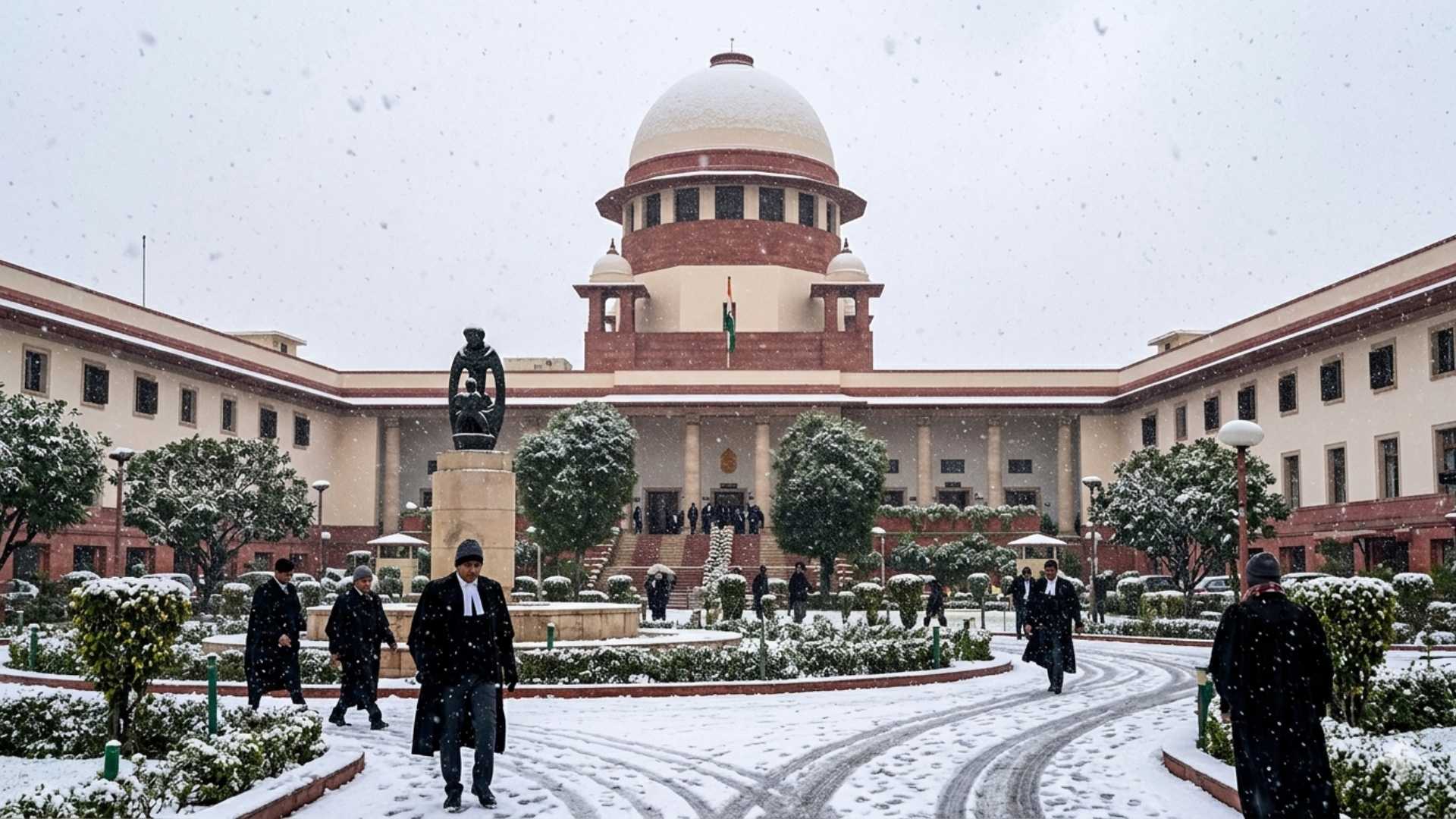
Recently, the **Supreme Court of India clarified a long-standing issue regarding the calculation of income for determining creamy layer status. The Court ruled that parental salary income alone cannot determine whether an OBC candidate belongs to the creamy layer, emphasising that the principle is fundamentally status-based rather than purely income-based.
This judgment is significant because it could expand access to reservation benefits for children of employees in public sector undertakings and other salaried occupations.
As jurist Justice B.P. Jeevan Reddy observed in the landmark Indra Sawhney v. Union of India:
“Reservation should benefit the truly backward sections and not the advanced among them.”
Origin of the Creamy Layer Concept
The creamy layer principle emerged from judicial and policy efforts to ensure fairness within the reservation system.
| Year | Development |
|---|---|
| 1992 | Supreme Court introduces creamy layer concept in Indra Sawhney case |
| 1993 | Government issues guidelines to identify creamy layer families |
| Subsequent years | Periodic revisions of income threshold |
The purpose was to ensure that reservation benefits reach socially and educationally backward groups, rather than economically advanced individuals within the same community.
Meaning of Creamy Layer
The creamy layer refers to socially advanced members of OBC communities who are excluded from reservation benefits because their families have achieved a certain level of economic or social advancement.
Key Criteria Used for Identification
| Category | Basis of Exclusion |
|---|---|
| Constitutional posts | Governors, judges, senior officials |
| Senior government officers | Group A and some Group B posts |
| Armed forces officers | High-ranking positions |
| Property owners | Significant land or wealth holdings |
| Income threshold | Annual parental income limit |
The current income limit for creamy layer classification is ₹8 lakh per year.
The Issue Before the Supreme Court
A key ambiguity existed regarding whether parental salary income should be counted when determining the creamy layer status of OBC candidates, particularly when parents work in public sector undertakings (PSUs) or public sector banks (PSBs).
The dispute arose because government guidelines applied the income test differently to various occupational groups.
| Category | Earlier Interpretation |
|---|---|
| Government officers | Status of post considered |
| PSU employees | Salary income counted for creamy layer |
| Private employees | Salary income counted |
This created a situation where children of PSU employees could be excluded from reservation based solely on parental income, even if their parents did not hold high-status positions.
Supreme Court’s Ruling
The Court clarified that creamy layer identification must primarily consider social status rather than just income levels.
| Principle | Explanation |
|---|---|
| Status-based evaluation | Social position of parents is key |
| Salary income | Should not be the sole criterion |
| Equal treatment | Similar occupations must be treated equally |
The Court observed that excluding candidates only on the basis of parental salary income could lead to discrimination between similarly placed individuals.
Why Salary Alone Is Not a Reliable Indicator
The Court highlighted that income levels may fluctuate and do not necessarily reflect long-term social advancement.
Example
| Parent’s Occupation | Salary | Social Status |
|---|---|---|
| PSU mid-level engineer | Above ₹8 lakh | Moderate |
| Senior bureaucrat (Group A) | Similar salary | High institutional status |
Although the income may be similar, the social influence and structural advantages differ significantly.
Thus, the creamy layer principle emphasises social mobility and status rather than temporary income levels.
Impact of the Judgment
The ruling is expected to affect OBC candidates whose parents are employed in public sector enterprises and similar salaried occupations.
| Area | Possible Impact |
|---|---|
| Civil services recruitment | More OBC candidates may qualify as non-creamy layer |
| Reservation pool | Likely expansion of eligible candidates |
| Administrative clarity | Uniform application of creamy layer rules |
This decision resolves a long-standing policy ambiguity regarding income versus status in reservation eligibility.
Comparison: Income-Based vs Status-Based Criteria
| Approach | Characteristics |
|---|---|
| Income-based | Focus on family income level |
| Status-based | Focus on social position and occupational hierarchy |
India’s reservation policy follows a hybrid model, but the Court reaffirmed that status remains the primary consideration.
Broader Debate on the Creamy Layer Concept
The creamy layer policy has generated ongoing debates in Indian public policy.
| Argument | Perspective |
|---|---|
| Supporters | Prevent benefits from being captured by advanced OBC groups |
| Critics | Income limits may exclude deserving candidates |
Balancing equity within OBC groups while ensuring effective social justice policies remains a key challenge.
Constitutional Context
Reservation policies derive their legitimacy from the Indian Constitution, particularly provisions aimed at promoting social equality.
| Constitutional Provision | Purpose |
|---|---|
| Article 15(4) | Special provisions for socially and educationally backward classes |
| Article 16(4) | Reservation in public employment |
| Article 46 | Promotion of educational and economic interests of weaker sections |
These provisions aim to reduce structural inequalities in Indian society.
Conclusion
The Supreme Court’s clarification reinforces the foundational principle behind the creamy layer concept: reservation should benefit those who remain socially disadvantaged within OBC communities.
By emphasising that parental salary alone cannot determine creamy layer status, the judgment restores the focus on social status and structural advantage, ensuring a more equitable application of reservation policies.
As Dr. B.R. Ambedkar noted:
“Equality may be a fiction, but nonetheless one must accept it as a governing principle.”
The challenge for policymakers remains to ensure that reservation policies continue to promote genuine social justice while maintaining fairness within beneficiary groups.
Attribution
Original content sources and authors
Syllabus classification
How this article maps to GS papers
Main syllabus
GS2JudiciaryQuick Q&A
What is the ‘creamy layer’ concept in OBC reservations, and how does it function within India’s affirmative action framework?
The idea emerged after the implementation of the Mandal Commission recommendations in the early 1990s. In 1993, the Government of India issued guidelines through the Department of Personnel and Training (DoPT) specifying categories of families that would be considered part of the creamy layer. These included children of individuals holding constitutional posts, high-ranking government officials, senior military officers, and those possessing substantial wealth or professional status. Additionally, an income and wealth test was introduced, currently fixed at ₹8 lakh annual family income, to determine eligibility for non-creamy layer status.
The creamy layer principle serves several important objectives:
- Ensuring equitable distribution of reservation benefits among disadvantaged groups.
- Preventing elite capture of affirmative action policies.
- Preserving the social justice objective of reservations.
However, determining creamy layer status has often generated controversy, particularly regarding which sources of income should be considered. The recent Supreme Court judgment clarifies that parental salary and agricultural income should not be the sole basis for determining creamy layer status, reinforcing that the principle is fundamentally status-based rather than purely income-based. This interpretation seeks to ensure that candidates from similar social backgrounds are treated equally within the reservation framework.
Why did the Supreme Court rule that parental salary alone cannot determine creamy layer status for OBC candidates?
In the case before the Court, the issue arose because certain OBC candidates whose parents worked in public sector undertakings (PSUs) and public sector banks (PSBs) were excluded from reservation benefits solely because their parental salaries exceeded the ₹8 lakh income threshold. This interpretation was based on a 2004 clarificatory letter that allowed authorities to count salaries when determining creamy layer status for PSU employees. As a result, several candidates who had qualified for civil services examinations were retrospectively classified as belonging to the creamy layer.
The Court held that this approach created unfair discrimination because:
- Government employees are classified by hierarchical status (Group A, B, C, D), whereas PSU employees were being judged only by income.
- Salary levels fluctuate and may not accurately reflect social advancement.
- Similar social backgrounds were being treated unequally, violating the constitutional principle of equality.
By emphasising that the creamy layer exclusion must consider social status, occupation, and structural privilege, the Court sought to restore the original purpose of the policy. The judgment ensures that OBC candidates are not unfairly excluded simply because their parents earn relatively higher salaries without necessarily enjoying equivalent social mobility or privilege.
How does the income/wealth test for determining the creamy layer operate in practice?
However, the application of this test is not uniform across all categories of employment and occupations. According to the original guidelines issued in 1993 by the Department of Personnel and Training (DoPT), certain high-status occupations automatically place families in the creamy layer regardless of income levels. These include children of individuals holding constitutional posts, senior civil servants, high-ranking military officers, and certain professional elites.
In addition to occupational criteria, the income test considers various sources of family income such as:
- Income from business or professional activities.
- Income from investments, assets, and property.
- Other forms of wealth accumulation.
However, the Supreme Court has clarified that income from salaries and agricultural land should generally be excluded while applying the income test for creamy layer determination. The rationale is that salaried employment does not necessarily reflect accumulated social privilege or long-term economic advantage.
Thus, the creamy layer framework combines status-based criteria and economic indicators. This hybrid approach aims to capture both social advancement and economic privilege, ensuring that reservation benefits remain targeted toward those who continue to face structural disadvantages.
Critically analyse the implications of the Supreme Court’s ruling on creamy layer determination for India’s reservation policy.
One important implication is the potential expansion of the reservation pool. Children of employees in public sector undertakings and similar salaried professions may now qualify as non-creamy layer candidates if their social status does not correspond to the privileged categories identified in the original guidelines. This could allow more candidates from OBC communities to access opportunities in higher education and public employment.
The judgment also raises several broader policy debates:
- Need for revisiting the ₹8 lakh income threshold, which has remained unchanged for several years.
- Challenges in balancing economic criteria with social indicators.
- Concerns about expanding reservation benefits without periodic review.
Critics argue that excluding salary income may allow relatively well-off families to continue accessing reservation benefits, potentially undermining the goal of targeting the most disadvantaged groups. Supporters, however, contend that the creamy layer concept was always meant to capture structural social privilege rather than short-term income levels.
Overall, the judgment reinforces the principle that reservation policies must be implemented carefully to maintain both social justice and constitutional equality. It also highlights the need for periodic review and refinement of affirmative action frameworks to ensure they remain aligned with changing socio-economic realities.
What factors led to the confusion and litigation surrounding creamy layer determination for OBC candidates?
One major source of confusion was the 2004 clarificatory letter issued by the Department of Personnel and Training. This letter suggested that parental salary could be counted separately when determining the creamy layer status of candidates whose parents worked in public sector undertakings or private employment. As a result, authorities began applying the income test differently for PSU employees compared to government officials.
This inconsistent approach created several problems:
- Unequal treatment of candidates from similar social backgrounds.
- Lack of clarity regarding which income sources should be included.
- Retrospective disqualification of candidates who had already been selected through competitive examinations.
The issue became particularly contentious in the context of civil services examinations, where several OBC candidates who had been selected were later declared ineligible due to revised interpretations of creamy layer rules. These disputes eventually reached the judiciary, leading to multiple cases being filed in different courts.
The Supreme Court’s recent judgment attempts to resolve this confusion by reaffirming the original principle that creamy layer determination must focus primarily on social status and structural privilege rather than purely income-based metrics.
Consider a scenario where an OBC candidate’s parent works in a public sector undertaking with a high salary but without high administrative status. How should creamy layer status be determined according to the Supreme Court’s ruling?
If a candidate’s parent works in a public sector undertaking but does not hold a position equivalent to senior government administrative posts (such as Group A or high-ranking Group B positions), the candidate cannot automatically be classified as belonging to the creamy layer simply because the parent earns a high salary. The Court emphasised that such an approach would result in hostile discrimination by treating similarly placed individuals differently.
The determination should therefore consider:
- The occupational status of the parent.
- Whether the family belongs to categories explicitly excluded under creamy layer rules.
- The broader indicators of social advancement and privilege.
For example, if the parent is a mid-level employee in a PSU whose salary exceeds ₹8 lakh but who does not belong to a socially privileged occupational category, the candidate may still qualify as non-creamy layer. This ensures that reservation benefits remain accessible to individuals who may have moderate incomes but do not possess the structural advantages associated with elite positions.
The case highlights the importance of a nuanced approach in implementing affirmative action policies, ensuring that economic indicators are interpreted within the broader context of social justice and equality.
Practice questions
2 questions for mains preparation