GS2 Neighbourhood Relations

Padma Barrage Rekindles India–Bangladesh Water Sharing Debate

Bangladesh's Padma Barrage: Water Security, Environmental Risks and Regional Geopolitics

The new Padma barrage in Bangladesh aims to mitigate water scarcity and alter regional waterscape amid ongoing India-Bangladesh water disputes.
Gopi Gopi
4 mins read

“The more we try to tame rivers, the more we encounter unintended consequences.”

Bangladesh's approval of the Padma Barrage marks a significant development in South Asia's transboundary water politics. While the project seeks to address seasonal water scarcity and improve water security, it also raises concerns regarding environmental sustainability, India-Bangladesh relations, and the growing geopolitical role of China in the region.

What is the Padma Barrage?

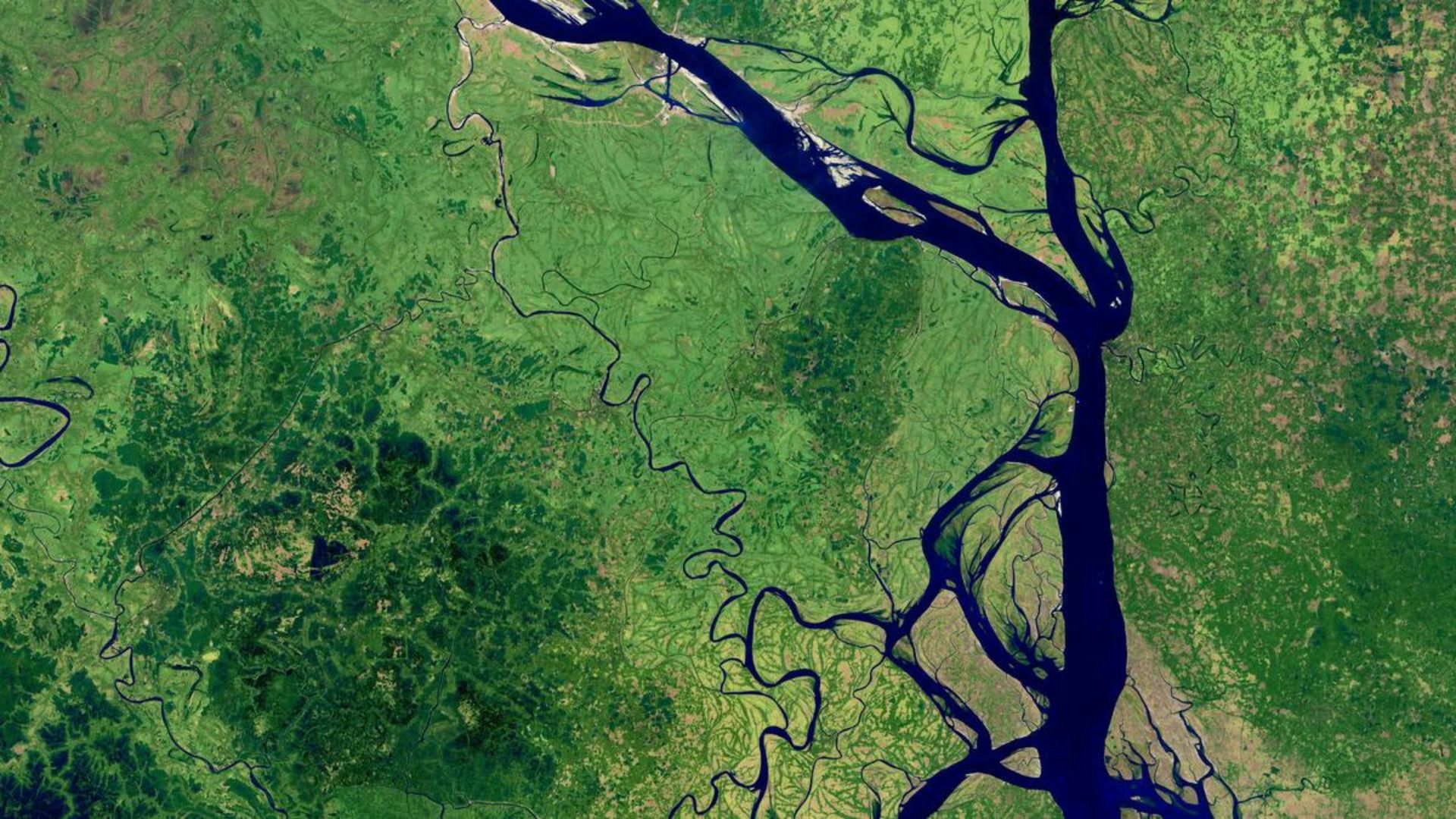
The Padma is the name of the Ganga after it enters Bangladesh.

Key Features

FeatureDetails
Length2.1 km
Water Storage Capacity2,900 million cubic metres
Beneficiaries6.5 crore people
Estimated CostTk 50,443 crore (≈ ₹39,170 crore)
Construction Period7 years
Location180 km downstream of Farakka Barrage

The project aims to reduce seasonal water shortages in southwestern and northern Bangladesh.

Padma Barrage:
• Located on the Padma (Ganga) River
• Intended to improve water availability
• Expected to provide greater control over river flows

The Farakka Barrage Connection

The proposed barrage cannot be understood without examining the Farakka Barrage in India.

Purpose of Farakka

  • Built on the Ganga in West Bengal.
  • Diverts water to the Bhagirathi-Hooghly system.
  • Helps flush sediment from Kolkata Port.

Ganges Water Treaty, 1996

ProvisionArrangement
Flow below 70,000 cusecsEqual sharing between India and Bangladesh
Dry Season (March–May)Each country guaranteed 35,000 cusecs in alternating periods

However, studies have recorded repeated low-flow years after the treaty, including 1997, 2008, 2010 and 2016.

Experts argue that the treaty was not designed to handle increasing climate variability and unpredictable river flows.

The treaty is due to expire in December 2026, with renewal negotiations currently underway.

Why is Bangladesh Concerned?

Bangladesh argues that Farakka has altered the hydrology of the Ganga basin.

Reported Impacts

  • Reduced freshwater flows.
  • Drying of distributary rivers.
  • Falling groundwater levels.
  • Increased salinity intrusion.
  • Riverbank erosion.
  • Reduced navigability.
Reduced Flow from Farakka
           ↓
 Lower Sediment Transport
           ↓
 Sediment Accumulation
           ↓
 Increased Flood Risk During Monsoon

Since nearly one-third of Bangladesh depends on the Ganga basin, these impacts have significant agricultural and economic consequences.

Environmental Concerns

Bangladesh is already highly vulnerable to drought and climate change.

Major Risks

Environmental ChallengeImpact
Drought vulnerabilityWater stress
Sea-level riseCoastal inundation
Groundwater dependenceResource depletion
Reduced sediment flowEcosystem degradation

Researchers estimate that future sea-level rise could submerge large parts of Bangladesh and displace millions of people.

Threat to the Sundarbans

The Sundarbans depend on freshwater and sediment from:

  • Ganga
  • Brahmaputra
  • Meghna

Reduced freshwater inflow may:

  • Increase salinity levels.
  • Alter mangrove ecosystems.
  • Reduce fish populations.
  • Affect fisherfolk livelihoods.

“The ecosystem requires brackish water, not excessively saline water.”

South Asia's Dam-Building Trend

The Padma Barrage reflects a broader regional trend.

South Asia:
• 160+ hydropower projects under construction
• 700+ planned hydropower projects in the Indus-Ganga-Brahmaputra basin

China:
• Building the world's largest dam on the upper Brahmaputra

India:
• Large hydropower expansion in the Northeast

However, climate change is challenging assumptions about the long-term viability of large dams and barrages.

Criticism of Large Barrages

  • Alter natural river flows.
  • Reduce groundwater recharge.
  • Require extensive concrete infrastructure.
  • Disrupt ecosystems.
  • May fail to manage complex river systems effectively.

Some experts describe the region's preference for mega-projects as a "colonial hangover."

Alternative Solutions

Experts propose:

  • Multiple small check-dams.
  • Watershed management.
  • Groundwater recharge measures.
  • Integrated river basin planning.

Advantages

  • Less ecological disruption.
  • Better sediment movement.
  • Improved local water retention.

Limitation

  • Requires continuous cross-border coordination and maintenance.

Geopolitical Dimensions

Water-sharing remains a sensitive political issue.

Key Factors

  • Renewal of the 1996 Ganges Water Treaty.
  • Unresolved Teesta River agreement.
  • India's suspension of the Indus Water Treaty with Pakistan after the 2025 Pahalgam attack.
  • Growing Chinese involvement in regional infrastructure.

Many analysts believe China may provide technical support for the project despite Bangladesh financing it domestically.

This could strengthen China's influence in South Asia while raising strategic concerns for India.

Way Forward

  • Renew the Ganges Water Treaty with climate-responsive provisions.
  • Strengthen India-Bangladesh river basin cooperation.
  • Prioritise ecological flow requirements.
  • Conduct comprehensive environmental impact assessments.
  • Promote basin-wide water governance instead of isolated infrastructure projects.
  • Encourage sustainable alternatives such as check-dams and groundwater recharge systems.
  • Increase transparency in transboundary water negotiations.

Conclusion

The Padma Barrage represents more than a water infrastructure project. It lies at the intersection of water security, environmental sustainability and regional geopolitics. While Bangladesh seeks greater control over its water resources, the long-term success of the project will depend on balancing developmental needs with ecological resilience and cooperative transboundary river management.

Attribution

Original content sources and authors

Sonikka Loganathan Author Sonikka Loganathan The Hindu Source The Hindu

Syllabus classification

How this article maps to GS papers

Main syllabus

GS2Neighbourhood Relations

Also covers

GS1Geography

Quick Q&A

What is the significance of the Padma Barrage project and how does it relate to India-Bangladesh transboundary water management?
The Padma Barrage project is a major water infrastructure initiative approved by Bangladesh to regulate the Padma River, which is the name of the Ganga after it enters Bangladesh. The proposed 2.1-km-long barrage is designed to store approximately 2,900 million cubic metres of water and provide irrigation and water security benefits to nearly 6.5 crore people in southwestern and northern Bangladesh. The project is estimated to cost Tk 50,443 crore and will be completed over seven years. Its significance extends beyond domestic water management and enters the realm of transboundary river governance. Located merely 180 km downstream of India's Farakka Barrage in West Bengal, the project reflects Bangladesh's attempt to gain greater control over seasonal water shortages. Under the 1996 Ganges Water Treaty, India and Bangladesh share water flows from the Ganga, but fluctuations in dry-season flows have generated repeated tensions. The project highlights broader issues of lower riparian rights, water security and climate resilience. It also illustrates the increasing importance of hydro-politics in South Asia. Bangladesh argues that reduced flows caused by Farakka have affected agriculture, navigation, groundwater recharge and ecosystems such as the Sundarbans. For UPSC aspirants, the issue is relevant to GS Paper II (India and its neighbourhood), GS Paper III (Environment, Water Resources and Disaster Management), and international relations. It also raises questions regarding sustainable development, cooperative federalism and equitable sharing of transboundary natural resources. The Padma Barrage thus represents not merely an engineering project but a strategic, ecological and diplomatic issue.
Why are river water-sharing agreements between India and Bangladesh strategically important for regional stability and diplomacy?
River water-sharing agreements are strategically important because India and Bangladesh share 54 transboundary rivers whose management directly affects agriculture, ecology, livelihoods and bilateral relations. Water is not merely a natural resource but an instrument of diplomacy, economic security and regional cooperation. The 1996 Ganges Water Treaty represents a landmark example of successful bilateral diplomacy. It established mechanisms for sharing Ganga waters through the Farakka Barrage and prevented major disputes between the two countries for nearly three decades. However, changing rainfall patterns, climate variability and reduced dry-season flows have exposed the limitations of the treaty. Studies conducted in 2019 by international experts found repeated instances of low flows during years such as 1997, 2008, 2010 and 2016. Water-sharing issues have implications beyond hydrology. The unresolved Teesta River Agreement continues to be a source of friction. Moreover, developments such as India's suspension of the Indus Waters Treaty with Pakistan after the Pahalgam attack in 2025 may influence perceptions in Bangladesh regarding the reliability of long-term agreements. These agreements are also linked to broader geopolitical competition. China's growing presence in South Asian infrastructure projects, including possible involvement in the Padma Barrage, adds a strategic dimension to water diplomacy. From a UPSC perspective, this issue is highly relevant to GS Paper II dealing with international relations and neighbourhood policy. It demonstrates how natural resources shape diplomacy and highlights the importance of cooperative mechanisms, confidence-building measures and sustainable resource governance. Effective river-sharing agreements are therefore essential for maintaining trust, regional stability and economic development in South Asia.
How has the Farakka Barrage influenced the hydrology, ecology and socio-economic conditions of Bangladesh over time?
The Farakka Barrage, commissioned by India primarily to divert water towards the Bhagirathi-Hooghly River and maintain the Kolkata Port, has had significant downstream consequences for Bangladesh. Although it provides economic benefits to India, Bangladesh has consistently expressed concerns regarding reduced dry-season flows and ecological degradation. Hydrologically, lower water discharge has altered the natural behaviour of the Padma River. Reduced flow has decreased the river's capacity to transport sediment, causing silt accumulation on the riverbed. Consequently, during monsoon periods, excess water overflows rapidly, increasing flood risks. Ecologically, diminished freshwater inflows have contributed to salinity intrusion, particularly in the Sundarbans. The world's largest mangrove ecosystem depends on a delicate balance of brackish water. Excess salinity threatens biodiversity, fisheries and the livelihoods of local communities. Reduced freshwater flow has also led to declining groundwater levels, riverbank erosion and loss of navigability. Economically, nearly one-third of Bangladesh depends on the Ganga basin for irrigation. Lower water availability affects agricultural productivity and food security. Fisherfolk and rural communities experience reduced incomes due to declining fish populations and environmental degradation. Bangladesh is already highly vulnerable to climate change and ranks third in the World Resources Institute's Aqueduct drought-risk ranking. Studies published in 2022 warned that sea-level rise could submerge significant areas and create millions of climate refugees. For UPSC aspirants, this case illustrates the interconnectedness of geography, ecology and international relations. It is relevant to GS Paper I (Geography), GS Paper III (Environment), and GS Paper II (India's neighbourhood relations), emphasizing the importance of integrated river basin management.
What is the critical analysis of South Asia's growing dependence on large dams and barrages for water management?
South Asia is currently witnessing an unprecedented expansion of water infrastructure, with more than 160 hydropower projects under construction and over 700 planned projects in the Indus-Ganga-Brahmaputra basin. Governments often view large dams and barrages as symbols of development and instruments for controlling floods, generating power and ensuring water security. However, experts increasingly question the sustainability of this approach. Supporters argue that such projects contribute to irrigation, electricity generation and economic growth. Large dams have historically played a major role in India's Green Revolution and infrastructure development. However, critics describe this obsession with mega-projects as a colonial legacy that prioritizes engineering solutions over ecological realities. Ecosystems are dynamic and complex, making it difficult for rigid structures to manage water efficiently over long periods. Climate change has further increased uncertainty regarding rainfall patterns and extreme weather events, reducing the reliability of traditional dam designs. Large barrages can interrupt sediment flow, reduce groundwater recharge and alter river ecosystems. Excessive dependence on concrete infrastructure may worsen environmental degradation and increase vulnerability to floods and droughts. Experts such as Omair Ahmad and S. Janakarajan advocate smaller check dams and decentralized water management systems as more sustainable alternatives. Nevertheless, smaller structures require coordinated planning and cross-border cooperation, which can be politically challenging. From a UPSC perspective, this debate is relevant to GS Paper III under Environment, Infrastructure and Disaster Management. It also relates to ethical questions concerning sustainable development and intergenerational equity. A balanced approach combining engineering solutions with ecosystem-based management is increasingly considered necessary for long-term water security.
What are the major environmental and climate-related concerns associated with the construction of the Padma Barrage and similar projects?
The construction of large barrages such as the Padma Barrage raises several environmental and climate-related concerns. While these structures are intended to improve water security, they often produce unintended ecological consequences that affect both present and future generations. One major concern is the disruption of natural sediment transport. Rivers naturally carry sediments that replenish floodplains and sustain aquatic ecosystems. Reduced sediment flow can increase riverbed siltation, leading to more frequent flooding and reduced fertility of agricultural lands. Another issue is groundwater recharge. According to experts, excessive dependence on concrete infrastructure restricts natural infiltration of water into surrounding areas, thereby lowering groundwater levels. This is particularly significant in Bangladesh, where dependence on groundwater resources is already high. Salinity intrusion is another challenge. Freshwater inflows are essential for maintaining the ecological balance of the Sundarbans. Reduced freshwater and sediment supply may increase salinity levels, affecting mangrove forests, fisheries and biodiversity. The livelihoods of fisherfolk and coastal communities are consequently threatened. Climate change further intensifies these risks. Dams are generally designed to function for around a century, but changing rainfall patterns and extreme weather events undermine their predictability. Heavy rainfall events may necessitate sudden releases of water, increasing downstream flood risks. Sea-level rise presents an additional challenge. Scientific studies published in 2022 projected that around 17% of Bangladesh's territory could disappear over the next 150 years, potentially displacing nearly 20 million people. This topic is highly relevant for GS Paper III and highlights the need for balancing developmental objectives with ecological sustainability, climate adaptation and disaster risk reduction.
How does the Padma Barrage issue illustrate the broader geopolitical competition and hydro-politics emerging in South Asia?
The Padma Barrage controversy serves as an important case study in understanding hydro-politics and strategic competition in South Asia. Water resources have increasingly become instruments of diplomacy and geopolitical influence, especially in regions where rivers cross national boundaries. The project is unfolding against the backdrop of the impending expiry of the 1996 Ganges Water Treaty in December 2026. While negotiations for renewal are underway, Bangladesh's concerns over dry-season water shortages and unresolved agreements such as the Teesta Treaty have created uncertainties. China's growing involvement adds another layer of complexity. Although Bangladesh has stated that it will finance the Padma Barrage independently, experts suggest that Chinese technical expertise may play an important role. China is already constructing the world's largest dam on the upper Brahmaputra and has expanded infrastructure cooperation across South Asia under the Belt and Road Initiative. Scholars argue that China increasingly projects itself as a dominant water manager in Asia, similar to its influence over the Mekong region. This development poses strategic challenges for India, which traditionally regarded South Asia as its sphere of influence. The issue also demonstrates how domestic politics and foreign policy intersect. Water-sharing arrangements often become politically sensitive because governments seek to satisfy domestic constituencies while maintaining bilateral relations. For UPSC aspirants, the Padma Barrage offers a multidimensional case study linking GS Paper II (International Relations), GS Paper III (Environment and Resource Management), and strategic affairs. It underlines the importance of cooperative diplomacy, regional institutions and integrated river basin management in maintaining peace and stability in South Asia.
What alternative approaches and policy measures can ensure sustainable and cooperative transboundary water management in South Asia?
Sustainable transboundary water management requires moving beyond purely engineering-based approaches and adopting integrated, ecosystem-centric and cooperative frameworks. Several alternative strategies have been suggested by experts and international institutions. One approach is the construction of smaller check dams instead of massive barrages. Such structures help conserve water without drastically altering river flows or disrupting ecosystems. Experts like Omair Ahmad and S. Janakarajan argue that decentralized systems are often more environmentally sustainable. Integrated River Basin Management (IRBM) represents another important framework. It emphasizes coordination among countries sharing river systems and promotes data sharing, joint monitoring and ecosystem protection. The Mekong River Commission and the Indus Waters Treaty provide examples of institutional mechanisms, despite their limitations. Climate-resilient water governance has become increasingly important because climate change introduces greater uncertainty into river flows. Early warning systems, watershed management and groundwater recharge programmes can strengthen resilience. Technological innovations such as satellite-based monitoring, efficient irrigation systems and digital hydrological databases can improve transparency and reduce disputes. Public participation and involvement of local communities are equally essential for ensuring sustainable outcomes. From a diplomatic perspective, confidence-building measures and regular dialogue are crucial. Water should be viewed as a shared resource rather than a zero-sum strategic asset. Regional cooperation through SAARC, BIMSTEC and bilateral mechanisms can promote mutual trust. For UPSC preparation, these solutions are relevant to GS Paper II and GS Paper III. They also illustrate broader themes of cooperative federalism, sustainable development and environmental governance. Ultimately, long-term water security in South Asia depends more on collaboration and ecological wisdom than on the construction of ever-larger infrastructure projects.

Practice questions

1 question for mains preparation

Transboundary rivers are not merely hydrological systems but also strategic and ecological assets that shape relations between neighbouring countries. Examine in the context of India-Bangladesh water sharing and the proposed Padma Barrage.

15 marks · 250 words · 8 mins
