GS2 Neighbourhood Relations

India-China Ties See Progress, but Trust Deficit and Full Normalisation Remain Challenges

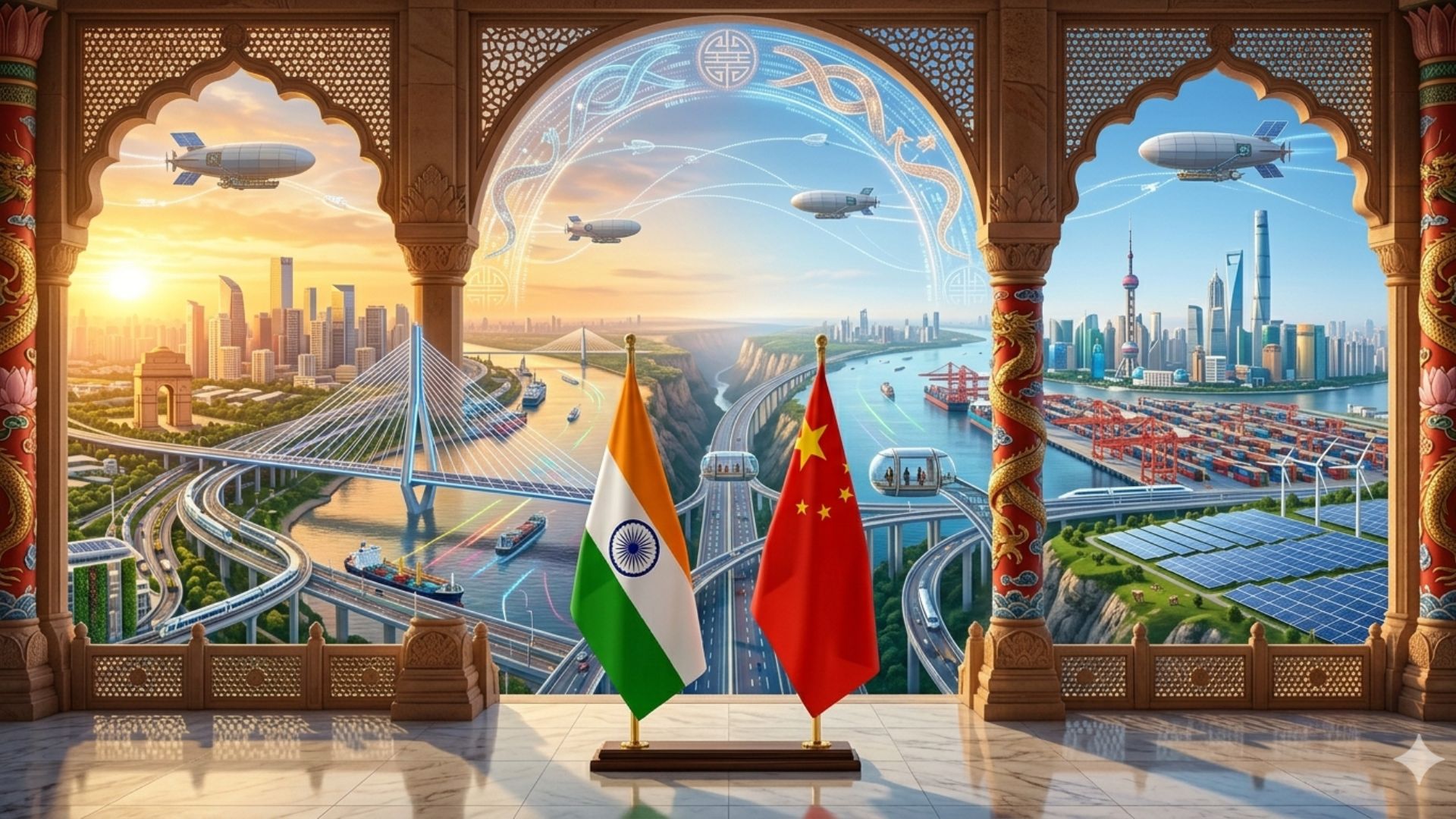
India-China Relations: From Fresh Start to New Heights

Chinese Ambassador Xu Feihong discusses recent improvements and the path toward full normalization of bilateral relations with India.
Gopi Gopi
4 mins read

“The full normalisation of our ties still calls for joint and continuous efforts from our two countries.” — Chinese Ambassador Xu Feihong

India-China relations have witnessed gradual improvement over the past year, moving from what China describes as a “reset and fresh start” to a “new level of development”. However, despite recent progress, both countries acknowledge that full normalisation remains a work in progress, particularly due to unresolved border issues and a persistent trust deficit.

A New Phase in Bilateral Relations

According to Chinese Ambassador Xu Feihong:

  • President Xi Jinping and Prime Minister Narendra Modi have provided strategic direction.
  • Diplomatic teams are actively implementing understandings reached by the two leaders.
  • Bilateral engagement is expanding across multiple sectors.

“Both President Xi and Prime Minister Modi attach great importance to bilateral ties and view relations from a strategic and long-term perspective.”

Recent Areas of Progress

Several confidence-building measures have been undertaken.

AreaRecent Development
PilgrimageResumption of Kailash-Mansarovar Yatra
ConnectivityEfforts toward restoring direct flights
Economic RelationsGradual easing of restrictions on Chinese investments
DiplomacyIncreased high-level communication
Border DialogueContinued consultations and coordination
Leader-Level Understanding
            ↓
Diplomatic Engagement
            ↓
Economic & Cultural Exchanges
            ↓
Gradual Normalisation

Economic Engagement and Investment

One notable development has been the gradual easing of restrictions imposed on Chinese investments.

Background

  • India introduced restrictions through Press Note 3 in 2020.
  • The move followed security concerns and heightened tensions after the Galwan incident.

Chinese View

  • China welcomes India's easing of investment restrictions.
  • Beijing believes the process remains incomplete.
  • Greater economic engagement is viewed as beneficial for both sides.

The Persistent Trust Deficit

Despite progress, Ambassador Xu highlighted a major challenge:

“The deficit of trust remains serious.”

Areas of Concern

  • Limited people-to-people exchanges.
  • Suspended institutional dialogues.
  • Reduced academic and cultural interactions.
  • Lingering security concerns after Galwan.

Existing Mechanisms

China and India possess nearly:

~50 Government-to-Government
Dialogue Mechanisms

However, many remain inactive or underutilized.

China has expressed willingness to resume exchanges at:

  • Political level.
  • Economic level.
  • Cultural level.
  • Academic level.

Border Issue: Stability but Not Settlement

The boundary question remains the most sensitive issue in bilateral relations.

Recent Developments

Both countries recently held:

  • The 35th meeting of the Working Mechanism for Consultation and Coordination (WMCC).

  • Discussions on:

    • Border delimitation.
    • Border management.
    • Confidence-building mechanisms.
    • Cross-border cooperation.

Chinese Assessment

According to Ambassador Xu:

“Currently the border situation is generally stable and peaceful.”

However, he acknowledged that the dispute remains:

  • Complex.
  • Sensitive.
  • Historically rooted.
Border Stability
        ≠
Final Boundary Settlement

China argues that dialogue and consultation remain the preferred route for achieving a mutually acceptable solution.

Strategic Significance of India-China Relations

China views India-China ties as extending beyond bilateral interests.

Why the Relationship Matters

DimensionImportance
EconomicTwo major emerging economies
RegionalStability in Asia
GlobalInfluence in multipolar governance
StrategicImpact on international institutions

The relationship carries implications for:

  • Global supply chains.
  • Trade flows.
  • Climate governance.
  • Multilateral institutions.

China on India-Pakistan Relations

Questions were raised regarding China's ties with Pakistan, particularly after concerns in India about Chinese assistance to Pakistan during Operation Sindoor.

Chinese Position

China stated that:

  • India and Pakistan should resolve differences through dialogue.
  • Peaceful coexistence benefits both countries.
  • Regional stability is essential for development and prosperity.

“Good relations will benefit the two countries, two peoples and will be conducive to maintain peace, development and prosperity of this region.”

BRICS and Future Engagement

China has reiterated support for India's hosting of the upcoming BRICS Summit.

Expected Significance

  • Participation of major leaders.
  • Strengthening South-South cooperation.
  • Advancing multipolar global governance.

While Ambassador Xu did not confirm President Xi Jinping's visit to India, he indicated that preparations are underway and discussions remain ongoing.

Way Forward

  • Restore suspended dialogue mechanisms.
  • Expand people-to-people and academic exchanges.
  • Increase economic cooperation while addressing security concerns.
  • Strengthen confidence-building measures along the border.
  • Utilize platforms such as BRICS and SCO for strategic engagement.
  • Maintain sustained diplomatic communication at all levels.

Conclusion

India-China relations have entered a phase of cautious improvement marked by renewed dialogue, economic engagement, and diplomatic outreach. Yet, unresolved boundary issues and a significant trust deficit continue to limit full normalisation. Moving forward, sustained political guidance, institutional engagement, and confidence-building efforts will be essential to transform the current reset into a stable and durable partnership between Asia's two largest nations.

Attribution

Original content sources and authors

Ananth Krishnan Author Ananth Krishnan The Hindu Source The Hindu

Syllabus classification

How this article maps to GS papers

Main syllabus

GS2Neighbourhood Relations

Quick Q&A

What is the current trajectory of India-China relations and why is it described as a gradual reset with incomplete normalisation?
India-China relations currently reflect a cautious and uneven process of stabilisation following the severe downturn after the 2020 Galwan Valley clashes. The trajectory has been described as moving from a ‘reset and fresh start’ towards a ‘new level of development’, but still short of full normalisation. This phase is characterised by selective cooperation alongside persistent strategic distrust. On the positive side, recent developments include the resumption of the Kailash-Mansarovar Yatra for Indian pilgrims, easing of certain restrictions on Chinese investments in India, and partial restoration of direct flights between select cities. These steps indicate incremental confidence-building measures. Diplomatic engagements through mechanisms like the Working Mechanism for Consultation and Coordination (WMCC) on border affairs have also resumed dialogue on border management and stabilisation. However, the relationship remains constrained by unresolved boundary disputes, legacy of the 2020 standoff, and limited restoration of broader political trust. Chinese leadership has emphasised that while ‘tangible progress’ has been made, full normalisation requires sustained efforts from both sides. From an international relations perspective, this trajectory reflects a classic post-conflict stabilisation model where economic pragmatism coexists with strategic competition. India continues to balance engagement with China while strengthening partnerships with other major powers, whereas China views India as a key regional actor in Asia. For UPSC aspirants, this evolving trajectory is significant as it impacts GS2 topics such as bilateral relations, border management, and India’s foreign policy strategy in a multipolar world. It also influences economic diplomacy, regional security architecture, and India’s role in groupings like BRICS and SCO. Thus, the relationship is best understood as a managed competition rather than full reconciliation.
Why are India-China relations critically important for India’s foreign policy and UPSC Mains analytical framework?
India-China relations are among the most consequential bilateral relationships for India due to their combined demographic, economic, and geopolitical weight in Asia and globally. China is India’s largest neighbour and a major trading partner, while also being a strategic competitor in the Indo-Pacific region. The importance lies first in border security, as the unresolved boundary dispute spanning the Line of Actual Control (LAC) has repeatedly led to military stand-offs, including the 2020 Galwan clashes that significantly altered trust levels. Second, the economic dimension is critical, as India depends on China for imports of electronics, pharmaceuticals intermediates, and industrial inputs, even as it seeks to reduce overdependence through diversification and investment screening measures like Press Note 3. Third, the relationship shapes regional stability, especially in South Asia where China’s ties with Pakistan add complexity to India’s security environment. Additionally, both countries are influential members of multilateral platforms like BRICS and the Shanghai Cooperation Organisation, where coordination and competition coexist. Recent diplomatic signals, such as calls for easing restrictions, resumption of pilgrimages like Kailash-Mansarovar Yatra, and discussions on restarting dialogue mechanisms, reflect attempts to stabilise ties. However, the ‘deficit of trust’ remains a key challenge. For UPSC aspirants, this topic is crucial under GS2 International Relations and GS3 Economic Security. It also connects to current affairs, such as supply chain resilience, Indo-Pacific strategy, and multipolar world order debates. The relationship is important not only bilaterally but also because it influences India’s strategic autonomy, defence preparedness, and global positioning in an evolving geopolitical landscape marked by US-China rivalry and shifting alliances.
How do bilateral mechanisms like WMCC and dialogue platforms function in managing India-China border tensions?
The Working Mechanism for Consultation and Coordination on India-China Border Affairs (WMCC) is a key institutional framework designed to manage tensions along the Line of Actual Control (LAC) through structured dialogue. It operates below the level of Special Representatives and focuses on day-to-day border management, communication, and de-escalation measures. The WMCC facilitates regular meetings between diplomatic and military officials of both countries, enabling discussion on troop deployment issues, patrolling patterns, confidence-building measures (CBMs), and implementation of agreements. In addition, it helps prepare agendas for higher-level talks such as the Special Representatives dialogue on boundary resolution. Recent meetings, including the 35th WMCC session in Beijing, have addressed issues like border delimitation principles, management protocols, and cross-border cooperation. Such mechanisms are crucial in preventing localised incidents from escalating into wider conflicts, especially in sensitive areas like Ladakh and Arunachal Pradesh sectors. Alongside WMCC, other channels such as military commander-level talks and diplomatic consultations also contribute to crisis management. However, their effectiveness depends on political trust and adherence to agreements on both sides. While these mechanisms have succeeded in stabilising the border situation to a ‘generally peaceful’ state, they have not resolved underlying disputes. For UPSC Mains, this illustrates the importance of institutional diplomacy in conflict management and aligns with GS2 themes of bilateral agreements, international mechanisms, and security governance. It also highlights how modern diplomacy relies not only on treaties but continuous engagement frameworks to manage complex and protracted territorial disputes in geopolitically sensitive regions.
What is the critical analysis of India-China relations being described as improved yet still constrained by a serious deficit of trust?
The characterization of India-China relations as improved but constrained by a ‘serious deficit of trust’ reflects a dual-track reality of contemporary diplomacy. On one hand, there is visible progress in selective areas such as resumption of pilgrimages like Kailash-Mansarovar Yatra, partial easing of investment restrictions, restoration of limited air connectivity, and revival of dialogue mechanisms. These indicate pragmatic recognition by both sides that complete disengagement is economically and strategically costly. On the other hand, the underlying strategic mistrust persists due to the unresolved boundary dispute, the 2020 Galwan Valley clash, and divergent regional ambitions. China’s expanding footprint in South Asia and its close ties with Pakistan further complicate India’s threat perception. From a critical perspective, this situation represents ‘managed competition’ rather than genuine reconciliation. While both countries emphasise ancient civilisational ties and mutual benefit, structural contradictions in security and geopolitics remain unresolved. The trust deficit also limits the depth of institutional engagement, as many of the nearly 50 bilateral dialogue mechanisms remain stalled or inactive. Moreover, economic engagement is increasingly shaped by security considerations, with India adopting stricter scrutiny of Chinese investments. For UPSC aspirants, this scenario is important for understanding realism in international relations, where national interest and power dynamics often override rhetorical cooperation. It also highlights the importance of incremental confidence-building measures without overestimating short-term diplomatic gains. Ultimately, India-China relations illustrate that normalization in international politics is not linear but cyclical, shaped by both cooperation and competition, requiring sustained diplomatic balancing and strategic caution.
What are the key reasons behind persistent trust deficit and periodic tensions in India-China relations since 2020?
The persistent trust deficit in India-China relations stems from a combination of historical, strategic, and geopolitical factors. The foremost reason is the unresolved boundary dispute along the Line of Actual Control (LAC), which lacks a mutually agreed demarcation and continues to generate periodic standoffs. The 2020 Galwan Valley clash marked a major inflection point, significantly eroding mutual trust and leading to military and economic recalibrations. Secondly, China’s growing strategic alignment with Pakistan, including defence cooperation and infrastructure support, is viewed by India as a direct security concern, especially in the context of cross-border terrorism and regional stability. Thirdly, asymmetries in economic dependence create vulnerabilities, as India relies heavily on Chinese imports for critical sectors such as electronics and pharmaceuticals intermediates, while China has greater control over supply chains. Fourth, differing perceptions of regional order in Asia contribute to competition, particularly in the Indo-Pacific where India supports a rules-based order and China promotes alternative frameworks. Additionally, lack of consistent communication and suspension of multiple dialogue mechanisms after 2020 has further deepened mistrust. Domestic political narratives in both countries also influence public perception, making diplomatic flexibility more constrained. For UPSC Mains, this issue is significant under GS2 International Relations as it demonstrates how structural geopolitical factors, rather than isolated incidents, shape bilateral tensions. It also highlights the importance of crisis management, border diplomacy, and strategic autonomy in India’s foreign policy approach.
What do recent confidence-building measures such as Kailash-Mansarovar Yatra, flight resumption, and investment easing indicate in India-China relations?
Recent initiatives such as the resumption of the Kailash-Mansarovar Yatra, partial restoration of direct flights, and easing of restrictions on Chinese investments in India represent important confidence-building measures (CBMs) in India-China relations. The Kailash-Mansarovar pilgrimage holds deep cultural and religious significance for Indian citizens and its resumption signals willingness to restore people-to-people connectivity, which is a critical component of soft diplomacy. Similarly, the gradual resumption of direct air links between selected cities indicates an effort to normalise travel, business, and academic exchanges, which had been disrupted after 2020. On the economic front, India’s calibrated easing of restrictions on Chinese investments suggests pragmatic recognition of global supply chain interdependence, while still maintaining security screening mechanisms under frameworks like Press Note 3. These steps collectively indicate that both countries are attempting to stabilise relations without resolving core political disputes. However, they also highlight the selective nature of engagement, where cooperation is compartmentalised and does not necessarily extend to strategic or military trust. From a case-study perspective, these measures reflect classical CBM strategies used in international relations to reduce friction, build limited trust, and prevent escalation while larger disputes remain unresolved. For UPSC aspirants, this is important as it illustrates how diplomacy operates in layered stages, combining cultural, economic, and political tools. It also shows how India balances engagement with caution, ensuring that economic openness does not compromise national security interests, especially in a sensitive geopolitical environment.

Practice questions

1 question for mains preparation

Mutual trust is the foundation of stable interstate relations. In the context of India–China relations after the Galwan crisis, examine the challenges posed by the trust deficit and discuss how dialogue, economic engagement, and border management can contribute to the normalization of bilateral ties.

15 marks · 250 words · 8 mins
