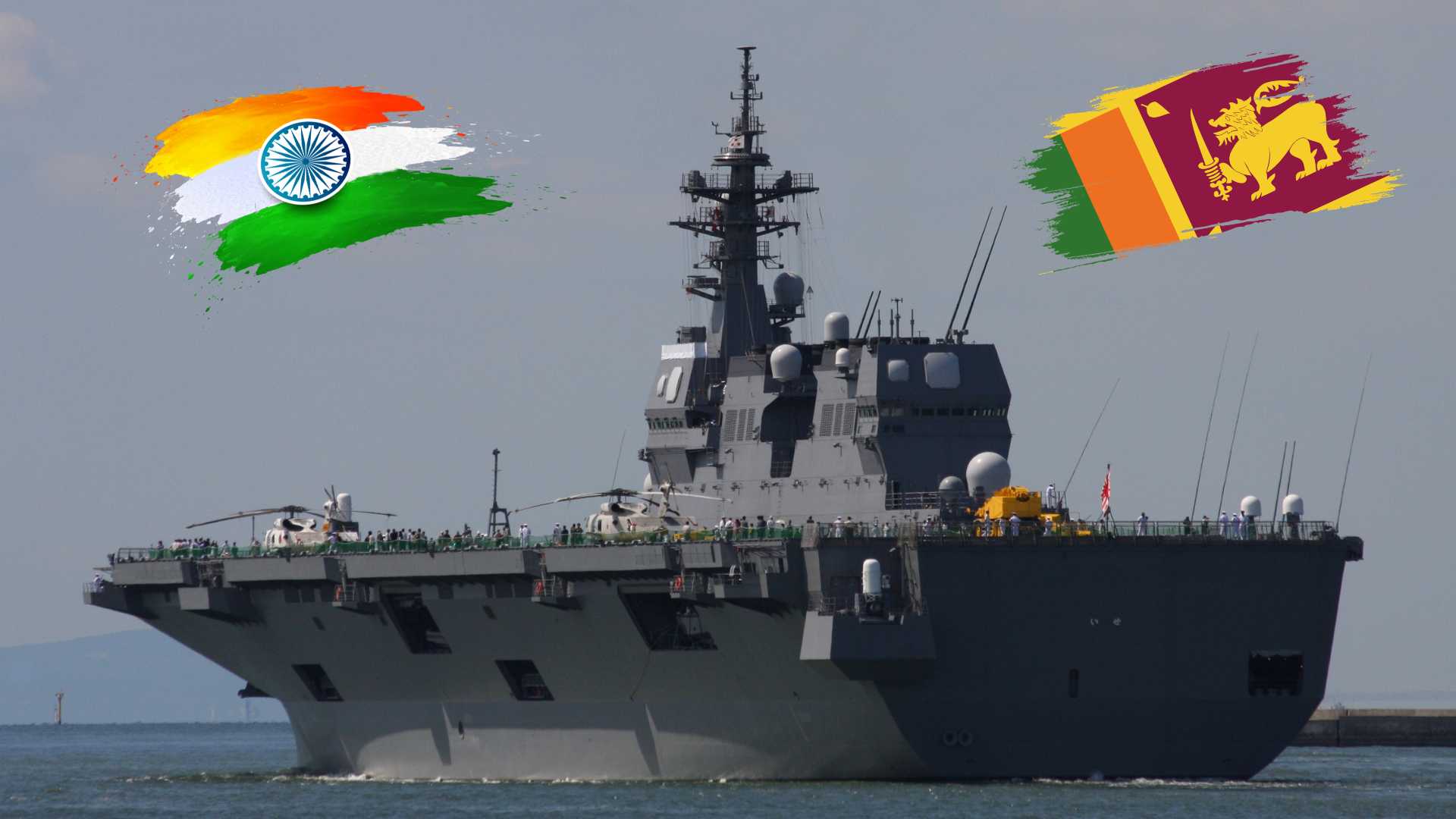
Strengthening India-Sri Lanka Maritime Ties Through IN-SLN DIVEX 2026

"Security in the Indian Ocean Region is a shared responsibility, not a unilateral privilege."
The fourth edition of IN–SLN DIVEX 2026 (April 21–28, Colombo) reflects India's deepening maritime security architecture with its immediate neighbourhood — combining military interoperability, humanitarian outreach, and strategic signalling in a single bilateral exercise.
| Parameter | Detail |
|---|---|
| Exercise edition | 4th bilateral diving exercise |
| Location | Colombo, Sri Lanka |
| Indian asset deployed | INS Nireekshak (Diving Support & Submarine Rescue Vessel) |
| Dive depth achieved | Beyond 55 metres |
| Historic dive sites | SS Worcester & SS Perseus (WWII-era wrecks) |
| Humanitarian component | 2 BHISM cubes under Aarogya Maitri initiative |
| Strategic framework | MAHASAGAR vision |
Background & Context
India–Sri Lanka share a 65 km Palk Strait maritime boundary — one of the world's narrowest international sea lanes. The Indian Ocean Region (IOR) has emerged as a primary theatre of great power competition, with China's expanding naval presence through port investments (Hambantota, 2017) directly impinging on India's strategic depth. In this context, defence exercises with immediate neighbours are instruments of strategic reassurance as much as operational training.
Key Concepts & Frameworks
MAHASAGAR Vision: India's neighbourhood-first maritime doctrine — Mutual and Holistic Advancement for Security and Growth Across Regions — frames bilateral exercises not as isolated military events but as nodes in a broader regional security architecture centred on Indian leadership in the IOR.
Aarogya Maitri Initiative: India's humanitarian diplomacy tool — deploying BHISM (Bharat Health Initiative for Sahyog, Hita and Maitri) cubes as portable hospital units to partner nations. Combines soft power with disaster response capacity building.
IPKF Memorial Wreath-laying: The Commanding Officer's homage at the Indian Peace Keeping Force Memorial carries deliberate diplomatic symbolism — acknowledging a complex shared history while signalling that bilateral ties have matured beyond it.
Strategic Significance
| Dimension | Significance |
|---|---|
| Interoperability | Joint deep-sea diving builds real operational coordination for submarine rescue, salvage, and search missions |
| IOR presence | Demonstrates India's ability to project credible underwater capability beyond its own waters |
| China counter-balance | Deepens Sri Lanka's defence alignment with India amid Chinese port and BRI footprint on the island |
| Humanitarian diplomacy | BHISM cubes extend India's goodwill beyond military-to-military ties into civilian preparedness |
| Historical reconciliation | IPKF wreath-laying signals mature, forward-looking bilateral relationship |
India–Sri Lanka Relations: Broader Context
The exercise must be read alongside other pillars of the bilateral relationship:
- Economic: India is Sri Lanka's largest trade partner; Indian credit lines were critical during Sri Lanka's 2022 economic crisis
- Energy: India–Sri Lanka power grid connectivity and petroleum pipeline proposals under active discussion
- People-to-people: Tamil community ties, Buddhist heritage connections, and a large Sri Lankan Tamil diaspora in India
- Security concern: Sri Lanka's strategic location astride key shipping lanes connecting the Persian Gulf to the Strait of Malacca makes its alignment a direct Indian security interest
Challenges
- Sri Lanka's debt diplomacy exposure to China (Hambantota port on 99-year lease) limits the degree of exclusive strategic alignment with India
- Fishermen disputes in Palk Strait remain an unresolved irritant in bilateral ties
- Domestic political volatility in Sri Lanka can cause abrupt foreign policy recalibrations
Conclusion
IN–SLN DIVEX 2026 is small in scale but large in strategic logic. It operationalises India's Neighbourhood First policy and MAHASAGAR vision at the tactical military level — building habits of cooperation that outlast any single government or crisis. The inclusion of humanitarian BHISM cubes alongside combat diving drills reflects India's emerging template: security cooperation and development diplomacy delivered together, positioning India as the IOR's preferred security partner rather than merely its largest navy.
Attribution
Original content sources and authors


Syllabus classification
How this article maps to GS papers
Main syllabus
GS2Neighbourhood RelationsQuick Q&A
What is IN–SLN DIVEX 2026, and how does it contribute to India-Sri Lanka maritime cooperation?
The exercise focused on advanced deep-sea diving techniques, including mixed gas diving and operations beyond 55 metres depth. Such drills are crucial for underwater search and rescue, salvage missions, and submarine rescue operations. By conducting both harbour and open-sea dives, the navies improved their ability to operate jointly under varied maritime conditions.
From a strategic perspective, IN–SLN DIVEX reinforces trust and professional synergy between the two countries. It complements broader regional initiatives like India’s MAHASAGAR vision, which promotes collective security and growth in the Indian Ocean Region (IOR). Similar exercises, such as the India-Maldives or India-Seychelles naval engagements, highlight India’s consistent efforts to build maritime partnerships and ensure regional stability.
Why is maritime cooperation between India and Sri Lanka strategically important in the Indian Ocean Region (IOR)?
This cooperation helps address non-traditional security threats such as piracy, illegal fishing, maritime terrorism, and natural disasters. Joint exercises like DIVEX enhance readiness for humanitarian assistance and disaster relief (HADR) operations, which are increasingly relevant given climate-induced maritime challenges.
Geopolitically, such collaboration also acts as a counterbalance to increasing external influence in the region, particularly from China’s expanding maritime footprint. By strengthening ties with Sri Lanka, India promotes its vision of SAGAR (Security and Growth for All in the Region) and MAHASAGAR. For example, India’s assistance in Sri Lanka’s economic crisis and capacity-building initiatives reflects a comprehensive partnership that extends beyond defense into diplomacy and development.
How do joint naval exercises like IN–SLN DIVEX enhance interoperability and operational capabilities?
In DIVEX 2026, divers from both navies engaged in mixed gas diving and deep-sea operations, including dives beyond 55 metres. Such activities require precise coordination, technical expertise, and mutual understanding of safety protocols. By training together, personnel develop shared operational frameworks that are critical during real-life missions like submarine rescue or underwater salvage.
Additionally, these exercises foster knowledge exchange and capacity building. For instance, the Indian Navy’s advanced capabilities in submarine rescue provide valuable learning opportunities for Sri Lankan divers. Similar benefits are seen in exercises like MALABAR (with the US and Japan), where interoperability has significantly improved joint maritime operations. Ultimately, such exercises enhance collective maritime security and rapid response capabilities in the region.
Critically analyze the role of defence diplomacy in strengthening India’s regional influence through exercises like DIVEX.
On the positive side, such initiatives build trust, enhance military capabilities of partner nations, and promote stability in the IOR. They also demonstrate India’s commitment to being a net security provider in the region. The inclusion of humanitarian elements, such as the handover of BHISM medical units, further reinforces India’s image as a responsible and benevolent partner.
However, there are challenges:
- Smaller nations may seek to balance relations with multiple powers, limiting India’s influence.
- Resource constraints may affect the sustainability of such engagements.
- Perceptions of strategic competition, especially with China, could complicate regional dynamics.
Despite these challenges, defence diplomacy remains a vital instrument. For example, India’s naval engagements with ASEAN countries and the QUAD framework highlight its proactive regional strategy. Thus, exercises like DIVEX are not just military drills but strategic tools for shaping regional order and fostering long-term partnerships.
How does the inclusion of humanitarian initiatives like BHISM cubes reflect India's comprehensive approach to maritime partnerships?
This approach goes beyond traditional military cooperation by integrating humanitarian assistance and capacity building. It aligns with India’s broader vision of ‘Vasudhaiva Kutumbakam’ and reinforces its role as a first responder in the IOR. For instance, India’s rapid deployment of medical aid during the COVID-19 pandemic and disaster relief operations in countries like Mozambique and Nepal demonstrate this commitment.
Strategically, such initiatives build goodwill and strengthen diplomatic ties. They also enhance the resilience of partner nations, making them better equipped to handle crises. By combining defence exercises with humanitarian support, India projects a balanced image of strength and compassion, which is crucial for sustainable regional leadership.
Examine IN–SLN DIVEX 2026 as a case study of India’s MAHASAGAR vision in action.
The exercise demonstrated multiple dimensions of this vision:
- Security cooperation: Joint diving operations enhanced maritime safety and preparedness.
- Capacity building: Training and knowledge sharing improved Sri Lanka’s naval capabilities.
- Humanitarian support: BHISM cubes strengthened disaster response mechanisms.
Additionally, symbolic gestures like paying homage at the IPKF Memorial highlight the historical and emotional ties underpinning the partnership. Such actions foster deeper trust and mutual respect between the two nations.
In a broader context, MAHASAGAR reflects India’s effort to create an inclusive and cooperative regional order. Similar initiatives, such as coastal surveillance radar systems in Indian Ocean countries, reinforce this approach. Thus, DIVEX 2026 illustrates how India integrates defence, diplomacy, and development to achieve its strategic objectives in the IOR.
Practice questions
3 questions for mains preparation