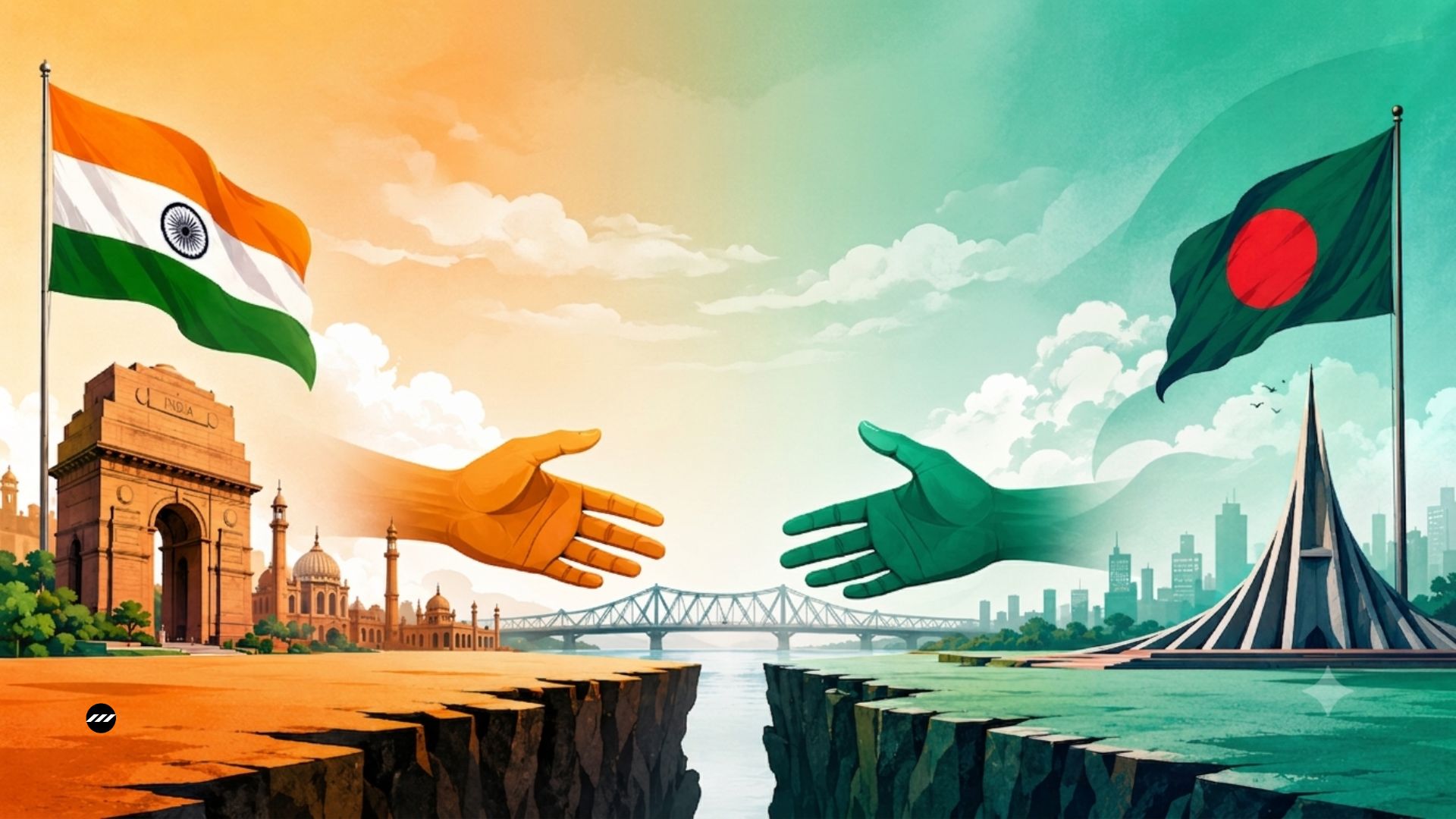
Understanding the Trust Deficit in India-Bangladesh Relations

“Geography has made us neighbours. History has made us friends. Economics has made us partners.” — Sheikh Mujibur Rahman
More than 100 days after the formation of the Tarique Rahman-led government in Bangladesh, expectations of a rapid improvement in India-Bangladesh relations have not materialised. Despite diplomatic outreach from both sides, bilateral ties continue to reflect many of the tensions that emerged during the interim government period following the political upheaval of 2024.
Initial Diplomatic Engagements
India made early attempts to engage the new government.
| Initiative | Details |
|---|---|
| Visit of External Affairs Minister S. Jaishankar | Condolence visit after the death of Khaleda Zia |
| Visit of Foreign Secretary Vikram Misri | Delivered PM Modi's invitation |
| Participation of Lok Sabha Speaker Om Birla | Attended Tarique Rahman's swearing-in ceremony |
These gestures were intended to signal India's willingness to work with the new leadership.
Why Expectations Remained Unfulfilled
Many within the ruling Bangladesh Nationalist Party (BNP) argue that symbolic diplomacy should have been accompanied by concrete policy measures.
Measures Expected by Dhaka
- Restoration of trans-shipment facilities.
- Full resumption of visa services.
- Restoration of business and medical visas.
- Removal of restrictions affecting Bangladeshi exports.
According to BNP circles, none of these measures have been substantially reversed since the interim government period.
Dhaka's Expectation
        ↓
Confidence-Building Measures
        ↓
Improved Bilateral Relations

Perceived Gap:
Symbolic Outreach ≠ Policy Concessions
Sheikh Hasina Issue and Political Sensitivities
A notable shift under Tarique Rahman has been a softer approach toward the issue of former Prime Minister Sheikh Hasina's presence in India.
BNP's Position
- Avoid making Hasina's stay in India a central obstacle.
- Promote public acceptance of normal engagement with India.
- Move away from the hardline position adopted by the interim government.
However, Bangladesh feels that this moderation has not received adequate reciprocity from India.
Illegal Immigration and Diplomatic Friction
One of the major irritants has been the renewed emphasis on illegal immigration in political and official discourse in India.
Bangladesh's concerns include:
- Frequent references during election campaigns in West Bengal and Assam.
- Statements perceived as targeting Bangladesh.
- Growing disconnect between diplomatic assurances and political rhetoric.
Dhaka expected greater focus on:
- Visa restoration.
- Trade facilitation.
- Water-sharing cooperation.
Instead, immigration-related discourse has generated what some officials describe as a "sense of betrayal."
The Ganga Water Treaty: A Critical Issue
The 1996 Ganga Water Treaty is due for renewal before December 31, 2026.
Why It Matters
| Sector | Importance |
|---|---|
| Agriculture | Irrigation support |
| Food Security | Crop production stability |
| Rural Economy | Livelihood protection |
| Water Management | Predictable river flow |
Experts warn that delays could affect the Ganges-Kobadak irrigation project, impacting large parts of western and central Bangladesh.
Ganga Treaty Renewal
        ↓
Water Availability
        ↓
Agricultural Production
        ↓
Economic Stability
For Bangladesh, the treaty is not merely a diplomatic issue but an economic necessity.
Bangladesh's Internal Challenges
The foreign policy environment is increasingly shaped by domestic pressures.
Key Challenges
- Energy shortages linked to global geopolitical tensions.
- Economic vulnerabilities.
- Public health concerns.
- Law and order issues.
Particularly concerning are:
- A severe measles outbreak reportedly causing over 600 infant deaths.
- Rising incidents of sexual violence.
- Continuing political instability following the 2024 protests.
These issues have increased pressure on the Tarique Rahman government.
Growing China Factor
Amid the slow pace of improvement with India, Bangladesh is reportedly considering higher-level engagement with other partners.
Possible Diplomatic Outreach
- Malaysia
- China
However, closer engagement with China does not eliminate Bangladesh's dependence on cooperation with India, especially on:
- Water-sharing arrangements.
- Border management.
- Trade and connectivity.
- Regional stability.
Why Stable Relations Matter
For India:
- Stability in Bangladesh is vital for security in eastern and northeastern regions.
- Economic and connectivity projects depend on cooperative relations.
- A stable Bangladesh supports India's Indo-Pacific and neighbourhood policies.
For Bangladesh:
- Access to water resources remains critical.
- Trade and transit links are economically important.
- Regional stability supports domestic development.
Way Forward
- Accelerate dialogue on renewal of the Ganga Water Treaty.
- Restore confidence through practical measures on trade and visas.
- Separate domestic electoral rhetoric from bilateral diplomacy.
- Expand cooperation in health, energy and connectivity.
- Strengthen institutional mechanisms for dispute resolution.
- Promote people-to-people exchanges and economic interdependence.
Conclusion
India and Bangladesh remain bound by geography, history and shared developmental interests. While political transitions and unresolved grievances have slowed the restoration of trust under the Tarique Rahman government, both countries have strong incentives to pursue pragmatic engagement. Timely action on water-sharing, trade facilitation and confidence-building measures will be essential to prevent instability and preserve one of South Asia's most important bilateral relationships.
Attribution
Original content sources and authors

Syllabus classification
How this article maps to GS papers
Main syllabus
GS2Neighbourhood RelationsQuick Q&A
What are the major factors contributing to the trust deficit and stagnation in contemporary India-Bangladesh relations after the political changes in Bangladesh?
Why are stable and cooperative India-Bangladesh relations strategically important for India and South Asia in the present geopolitical environment?
How does the Ganga Water Treaty influence bilateral relations and economic stability in Bangladesh and India?
What are the reasons behind Bangladesh exploring closer engagement with China and other external powers amid difficulties with India?
What is a critical analysis of the role of domestic politics and political narratives in shaping India-Bangladesh relations?
What lessons does the current India-Bangladesh situation provide as a case study for neighbourhood diplomacy and regional stability?
Practice questions
1 question for mains preparation