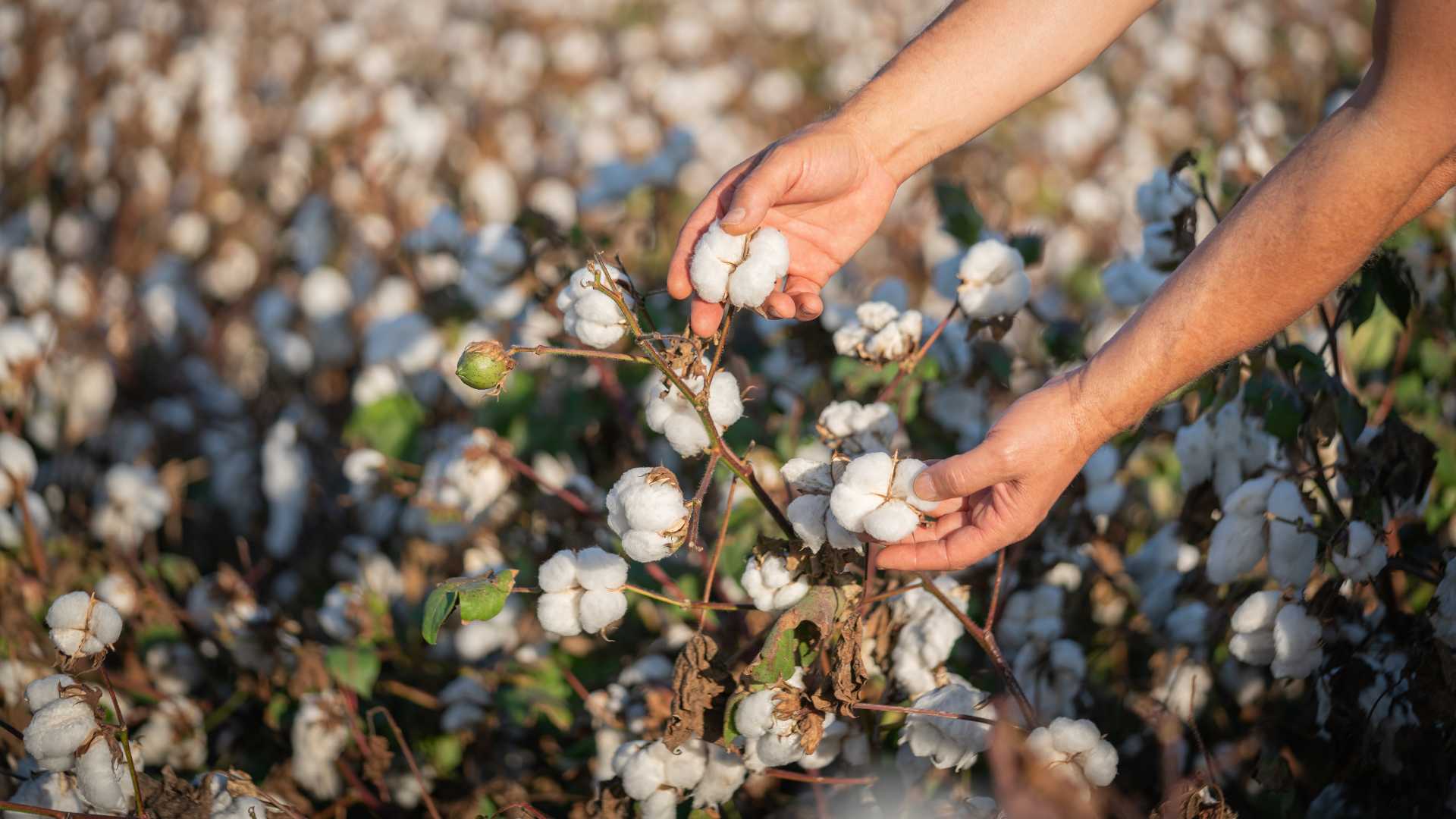
Cotton Farmers Protest Against Goyal’s Import Remarks
1. Context: Zero Reciprocal Tariff Proposal and Farmer Protests
The Union Commerce Minister stated that if India imports raw cotton from the United States, processes it domestically into cloth, and exports finished products back to the U.S., India could avail a zero reciprocal tariff, similar to a facility reportedly extended to Bangladesh. The government argued that claims of differential treatment were misleading.
However, several farmer organisations have opposed the statement, interpreting it as a signal that agriculture may be indirectly included in trade negotiations with the U.S. Farmers fear that increased imports of raw cotton could depress domestic prices and undermine their livelihoods.
The issue highlights the tension between trade liberalisation and domestic agricultural protection. While export-oriented manufacturing may benefit from lower input costs, primary producers may face price volatility and competitive pressures.
"Just as Bangladesh has a facility that if raw material is purchased from America, processed into cloth and exported, it will be available at zero reciprocal tariff, India also has the same facility and will get it." — Piyush Goyal
Trade policy decisions affect multiple stakeholders differently. If supply-side gains for manufacturing are prioritised without price safeguards for farmers, rural distress may intensify, creating socio-economic instability.
2. Concerns of Cotton Farmers and Agrarian Distress
Cotton farmers, particularly from Punjab and Gujarat, argue that importing raw cotton at zero tariffs could reduce domestic demand for locally grown cotton. Regions such as Fazilka in Punjab—once known as the “Manchester of Punjab”—have already witnessed declining production due to low prices.
Farmer bodies contend that price realisation has not kept pace with production costs. They cite inadequacy of Minimum Support Price (MSP) and increasing competition from subsidised foreign producers.
Key Data:
- Cotton imports from the U.S. increased by 95.5%, from 377.90 million (Jan–Nov 2025).
- MSP fixed for cotton: ₹7,710 per quintal
- Claimed MSP (as per M.S. Swaminathan formula): ₹10,075 per quintal
The demand for resignation of the Commerce Minister by organisations such as SKM and AIKS reflects broader anxieties about the impact of Free Trade Agreements (FTAs) on Indian agriculture.
When domestic MSP is perceived as inadequate and imports rise sharply, farmers view trade openness as a threat rather than an opportunity. Ignoring such perceptions can weaken trust in policy institutions and aggravate rural distress.
3. Trade Liberalisation vs. Agricultural Protection
The debate underscores a classic policy dilemma: balancing global competitiveness with domestic protection. India’s cotton production for 2025–26 is estimated at 29.22 million bales, significantly higher than U.S. production of 14.41 million bales (2024–25). However, U.S. cotton farming benefits from advanced mechanisation and state support.
Farmers argue that exposure to unrestricted global competition, especially from heavily subsidised producers, could depress domestic prices. This may result in:
Impacts:
- Reduction in farmgate prices
- Rising indebtedness among small and marginal farmers
- Potential increase in agrarian distress and farmer suicides
- Shift away from cotton cultivation
At the same time, textile manufacturers may benefit from cheaper raw materials, enhancing export competitiveness and value addition in the textile sector—an important contributor to employment and foreign exchange.
Trade reforms without calibrated safeguards can create asymmetrical gains—benefiting downstream industries while harming primary producers. Sustainable policy must internalise distributional consequences.
4. Federal and Political Economy Dimensions
The issue also raises federal and political economy questions. Agriculture is a State subject (Entry 14, State List), while international trade falls under the Union List. Consequently, trade decisions taken at the Centre can have direct consequences for State-level agrarian economies.
Farmer bodies allege that agriculture was claimed to be outside the ambit of U.S. trade negotiations, and the current statement contradicts that assurance. Such perceptions can lead to distrust between the Union government and farming communities.
The controversy reflects broader debates around:
- FTAs and sovereignty concerns
- Self-reliance vs. global integration
- Centre–State coordination in agricultural trade
If trade negotiations are not accompanied by transparent consultation and compensatory mechanisms, they may trigger political resistance and social mobilisation, affecting long-term reform credibility.
5. Policy Balancing: Competitiveness with Safeguards
India’s textile sector is globally competitive and labour-intensive, making trade concessions attractive from an export perspective. However, cotton cultivation supports millions of farmers and rural households.
Policy must therefore reconcile:
Objectives:
- Enhancing textile exports
- Protecting farmer incomes
- Ensuring price stability
- Maintaining food and fibre security
Possible balancing measures (within article’s scope):
- Ensuring remunerative MSP procurement mechanisms
- Monitoring import surges
- Protecting vulnerable farmers from price crashes
- Transparent communication on trade terms
This aligns with the broader developmental goal of inclusive growth, where integration into global markets does not undermine domestic livelihoods.
Inclusive trade policy requires synchronising agricultural price support with export-oriented industrial growth. Ignoring either side risks either rural instability or loss of global competitiveness.
Conclusion
The cotton import controversy illustrates the complex interplay between trade liberalisation, farmer welfare, and industrial competitiveness. As India deepens global integration, policy design must internalise distributional effects across sectors and regions.
A calibrated approach—combining export ambition with agrarian safeguards—will be essential to ensure that trade agreements strengthen both economic growth and rural stability in the long run.
GS Linkages:
- GS2: Government policies, federal relations, trade negotiations
- GS3: Agriculture, MSP, subsidies, international trade, textile industry
- Essay: “Globalisation and Self-Reliance”, “Balancing Growth with Equity”
Attribution
Original content sources and authors
Syllabus classification
How this article maps to GS papers
Main syllabus
GS3AgricultureQuick Q&A
What are the economic and policy implications of allowing zero-tariff imports of U.S. raw cotton for re-export under a reciprocal trade arrangement?
However, the policy has significant domestic implications. India is one of the world’s largest cotton producers, with estimated production of 29.22 million bales in 2025–26—double that of the U.S. If imported cotton is cheaper due to subsidies and mechanization in the U.S., domestic prices may fall, adversely affecting farmer incomes. Therefore, while the arrangement may benefit textile exporters, it creates a distributive conflict between industrial growth and agrarian welfare, raising questions about policy prioritisation.
Why are cotton farmers apprehensive about the impact of rising imports on Minimum Support Price (MSP) and rural livelihoods?
The broader implications involve rural distress and indebtedness. In regions such as Punjab’s Fazilka district, once known as the “Manchester of Punjab,” cotton cultivation has already declined due to poor price realization. Historical evidence from agrarian crises in Vidarbha demonstrates how falling commodity prices can exacerbate indebtedness and farmer suicides. Thus, import liberalisation without adequate safeguards risks deepening socio-economic vulnerabilities in cotton-growing regions.
How does this controversy reflect the structural tension between industrial policy and agricultural protection in India?
Conversely, agriculture remains the livelihood base for millions of small and marginal farmers who lack the scale, subsidies, and technological advantages of U.S. producers. Exposure to heavily subsidised global competition without parallel domestic reforms can distort markets. Similar tensions were observed during discussions on India’s withdrawal from RCEP, where fears of import surges influenced policy decisions. Thus, the controversy underscores the need for calibrated trade policy that balances sectoral interests.
Critically assess the argument that such trade measures amount to a compromise of economic sovereignty or ‘economic colonisation’.
However, sovereignty concerns must be examined in context. Trade agreements inherently involve mutual concessions, and strategic integration can enhance long-term economic strength. The real issue lies in whether adequate safeguards—such as tariff-rate quotas, anti-dumping duties, or enhanced MSP support—are incorporated. Without these, perceptions of surrender may intensify. Therefore, the debate is less about trade per se and more about the balance between global integration and domestic policy autonomy.
Can global examples of agricultural trade liberalisation provide lessons for India in managing cotton imports?
For India, the lesson is to adopt phased and conditional liberalisation. If cotton imports are allowed for re-export purposes, mechanisms must ensure that domestic cotton prices are insulated from volatility. Investment in productivity enhancement, crop insurance, and direct income support can cushion farmers from adverse shocks. Thus, global experiences highlight the necessity of sequencing reforms carefully.
As a policymaker, how would you design a balanced approach that supports textile exports while protecting cotton farmers’ interests?
Additionally, improving domestic cotton productivity through better seed varieties, irrigation support, and technology adoption can enhance competitiveness. Encouraging Farmer Producer Organisations (FPOs) to directly link with textile manufacturers may create shared value chains. By integrating industrial and agricultural policies, India can pursue export growth without exacerbating agrarian distress, ensuring inclusive and sustainable development.
Practice questions
2 questions for mains preparation