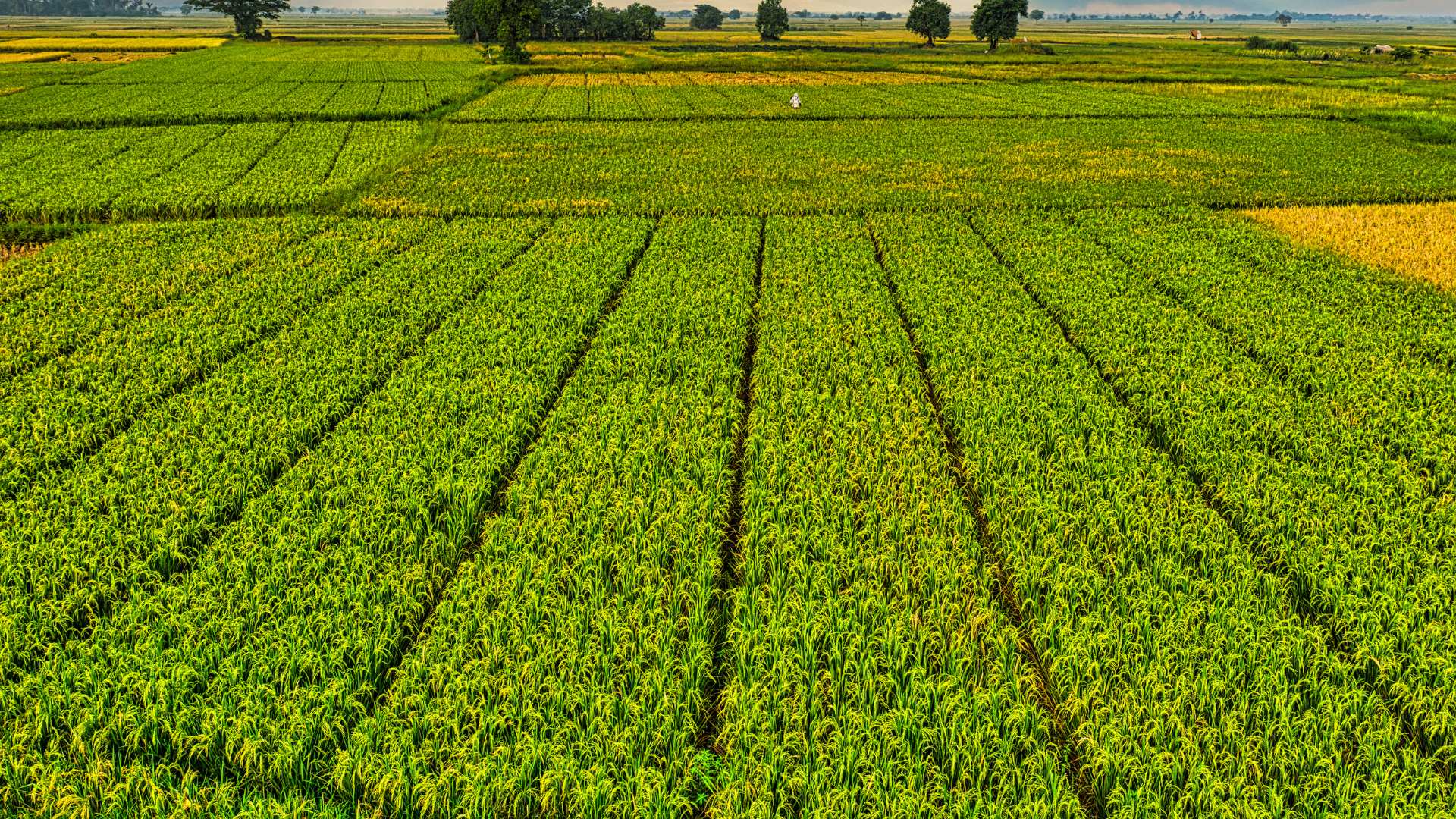
Empowering Farmers for Global Agri-Product Competitiveness
Making Indian Agriculture Export-Oriented and Globally Competitive
Context
Prime Minister Narendra Modi emphasised the need to transform Indian agriculture into an export-oriented and globally competitive sector while addressing a post-Budget webinar on Agriculture and Rural Transformation. The focus is on leveraging India’s diverse agro-climatic conditions, high-value crops, natural farming, and technology integration to strengthen rural incomes and increase India’s presence in global agricultural markets.
Why India Has Strong Potential for Agricultural Exports
India possesses several structural advantages that can help it expand its share in global agricultural trade.
- Diverse Agro-Climatic Zones: India has multiple climate zones enabling cultivation of a wide variety of crops throughout the year.
- Large Agricultural Base: A large farming community and extensive arable land support large-scale production.
- Rising Global Demand: Global markets are increasingly demanding organic, healthy, and natural food products.
- Growing Processing Sector: Value addition through food processing can significantly increase export value.
- Strategic Importance: Agriculture remains a key pillar for rural employment and national economic growth.
These factors provide India an opportunity to shift from subsistence farming to export-driven agricultural production.
Focus on High-Value Agriculture
The Union Budget 2026–27 has prioritised high-value agriculture, which generally offers higher income per hectare and stronger export potential.
Key crops identified include:
- Cashew
- Cocoa
- Sandalwood
- Agarwood (North-East India)
- Temperate nut crops in Himalayan states
Promoting such crops can diversify farmer income while aligning production with international market demand.
Key Government Initiatives Supporting Agricultural Transformation
Several schemes and policy initiatives are being used to strengthen the agriculture sector.
1. PM-Kisan Samman Nidhi
- Around 10 crore farmers have received direct income support.
- More than ₹4 lakh crore has been transferred to farmers.
2. National Mission on Edible Oils
- Focuses on reducing import dependence on edible oils.
- Encourages domestic oilseed production.
3. National Mission on Pulses
- Aims to improve pulse production and self-sufficiency.
4. National Mission on Natural Farming
- Encourages chemical-free farming practices.
- Aligns with growing global demand for organic and natural foods.
These initiatives collectively strengthen productivity, sustainability, and farmer income.
Importance of Natural and Chemical-Free Farming
There is a growing global shift toward health-conscious consumption and organic food.
Natural farming provides several advantages:
- Reduces dependency on chemical fertilisers and pesticides.
- Improves soil health and sustainability.
- Enhances export opportunities due to rising global demand for organic products.
- Helps Indian farmers access premium international markets.
Thus, natural farming is seen as a pathway to both environmental sustainability and export growth.
Role of Technology in Agriculture
Technology integration is essential for improving productivity and market connectivity.
Key areas of technological application include:
- Precision agriculture
- Digital crop monitoring
- Agri-fintech services
- Supply chain management
- Market information systems
However, technology adoption becomes effective only when institutions, entrepreneurs, and farmers collaborate to integrate innovation with traditional agricultural practices.
Fisheries and the Blue Economy
India’s fisheries sector is emerging as an important contributor to rural livelihoods and exports.
Key points:
- India is the second-largest fish producer in the world.
- Around 4.5 lakh tonnes of fish are produced in reservoirs and ponds.
- There is potential for an additional 20 lakh tonnes of production.
To fully utilise this potential, investments are required in:
- Hatcheries
- Fish feed production
- Cold storage and logistics
- Export infrastructure
This can transform fisheries into a high-value export sector within the Blue Economy.
Need for Crop Diversification
Crop diversification helps address several structural issues in Indian agriculture.
Benefits include:
- Reduces dependence on a few crops.
- Mitigates climate and market risks.
- Improves soil health.
- Enhances farmers’ income stability.
Diversification also aligns agricultural production with global market demand.
Promoting Rural Entrepreneurship
The government is also focusing on rural entrepreneurship and women-led development.
Lakhpati Didi Initiative
- Aims to create women entrepreneurs earning ₹1 lakh or more annually.
- Target: 3 crore additional Lakhpati Didis by 2029.
This initiative promotes:
- Self-help groups (SHGs)
- Rural micro-enterprises
- Women-led economic participation.
Strengthening Rural Infrastructure
Entrepreneurs have been encouraged to invest in:
- Agricultural storage facilities
- Cold chains
- Supply chain logistics
- Agri-fintech innovations
Improving these systems reduces post-harvest losses and strengthens market access for farmers.
Conclusion
Transforming Indian agriculture into an export-oriented and globally competitive sector requires coordinated action involving farmers, industry, technology providers, and policymakers. By focusing on high-value crops, natural farming, technological integration, fisheries expansion, and rural entrepreneurship, India can enhance agricultural productivity, boost exports, and ensure sustainable rural development.
Attribution
Original content sources and authors
Syllabus classification
How this article maps to GS papers
Main syllabus
GS3AgricultureQuick Q&A
What is meant by export-oriented agriculture, and how can India's diverse agro-climatic zones support this strategy?
India has a unique advantage because of its diverse agro-climatic zones, ranging from tropical to temperate climates. This allows the country to grow a wide variety of crops throughout the year. For instance, tropical regions support crops like spices, coconut, and cocoa, while temperate regions in the Himalayan states enable the cultivation of apples, walnuts, and temperate nuts. Similarly, the North-East region provides ideal conditions for agarwood cultivation and organic farming. Such diversity allows India to produce niche and high-value agricultural commodities that are in demand globally.
If properly leveraged, this diversity can transform India into a major global supplier of high-value agricultural commodities. By aligning production with international quality standards, branding Indian products, and strengthening cold storage and logistics infrastructure, India can significantly increase agricultural exports. This would not only enhance farmers' incomes but also generate rural employment through processing, packaging, and export-related services.
Why is scaling up high-value agriculture important for India's agricultural transformation and rural prosperity?
Shifting toward high-value crops can significantly increase farmers' income and economic resilience. For instance, crops like sandalwood, cocoa, and cashew have strong export demand and provide higher margins. Similarly, fisheries and aquaculture offer high-value opportunities for coastal and inland communities. The Union Budget 2026–27 has emphasized such crops to diversify agriculture and make it more profitable for farmers.
Another important benefit is the generation of rural employment. High-value agriculture requires processing, grading, packaging, cold-chain logistics, and marketing infrastructure. These activities create jobs in rural areas and promote agro-based industries. Countries like Thailand and Vietnam have successfully transformed their agricultural sectors by focusing on high-value exports such as fruits, seafood, and spices. India can replicate similar success by integrating farmers with global value chains while maintaining quality and sustainability standards.
How can natural farming and chemical-free agriculture enhance India's competitiveness in global agricultural markets?
India can benefit from this trend by promoting natural farming as a niche export segment. For example, several Indian states such as Sikkim have successfully adopted organic agriculture, which has enhanced the export potential of products like spices, tea, and fruits. Similarly, natural farming initiatives in Andhra Pradesh have demonstrated that farmers can reduce production costs while maintaining soil health and sustainability. These practices improve long-term agricultural productivity while protecting biodiversity.
From a strategic perspective, promoting natural farming can also strengthen India's global branding in agriculture. International markets increasingly value traceability, eco-friendly production, and sustainable supply chains. If India can establish strong certification mechanisms, quality control, and export branding for chemical-free products, it can capture premium markets in Europe, North America, and East Asia. Thus, natural farming not only supports environmental sustainability but also enhances India's export competitiveness.
Critically analyse the role of technology integration in agriculture for improving productivity and market access in India.
Another major benefit of technology is its role in improving supply chains and market access. Digital platforms such as e-NAM (National Agriculture Market) allow farmers to access wider markets and obtain better price discovery. Similarly, agri-fintech solutions provide farmers with easier access to credit, crop insurance, and digital payments. Innovations in cold-chain logistics and storage infrastructure also reduce post-harvest losses, which are a major challenge in India.
However, technology adoption faces several challenges. These include digital literacy gaps, infrastructure constraints, and high initial costs. Many small and marginal farmers lack access to reliable internet connectivity or training to effectively use digital tools. Therefore, institutional support, capacity building, and public-private partnerships are essential. If properly implemented, technology integration can bridge the gap between traditional farming systems and modern market-oriented agriculture.
Provide examples of how sectors like fisheries and the Blue Economy can contribute to India's agricultural exports and rural development.
Fisheries already contribute significantly to India's export basket, particularly through shrimp exports to markets such as the United States, Japan, and the European Union. Inland fisheries, supported by reservoirs, ponds, and aquaculture farms, also have substantial growth potential. According to government estimates, India can increase fish production by an additional 20 lakh tonnes through improved hatcheries, better feed technology, and efficient logistics systems.
Investment in modern hatcheries, cold storage facilities, and export-oriented processing units can greatly enhance the sector's value chain. States like Andhra Pradesh have demonstrated how integrated aquaculture systems can create employment and boost exports. By strengthening fisheries infrastructure and promoting sustainable aquaculture practices, the Blue Economy can become a high-impact sector for rural prosperity and export growth.
Consider a scenario where a state government wants to transform its agriculture into an export-driven model. What policy measures should it adopt based on current national priorities?
The second important policy measure is strengthening value addition and supply chains. This includes establishing food processing units, cold storage networks, grading and packaging facilities, and efficient transport logistics. Partnerships with private investors and agri-startups can help build these ecosystems. Additionally, ensuring compliance with international standards such as sanitary and phytosanitary (SPS) regulations is essential for accessing global markets.
Finally, the state should promote institutional support and farmer empowerment. This could involve training farmers in modern agricultural practices, encouraging farmer-producer organisations (FPOs), promoting natural farming, and expanding access to agri-fintech services. Successful examples include Maharashtra's grape export clusters and Kerala's spice export networks. Such models demonstrate that with coordinated policies and infrastructure investment, states can significantly enhance agricultural exports while improving farmers' incomes.
Practice questions
3 questions for mains preparation