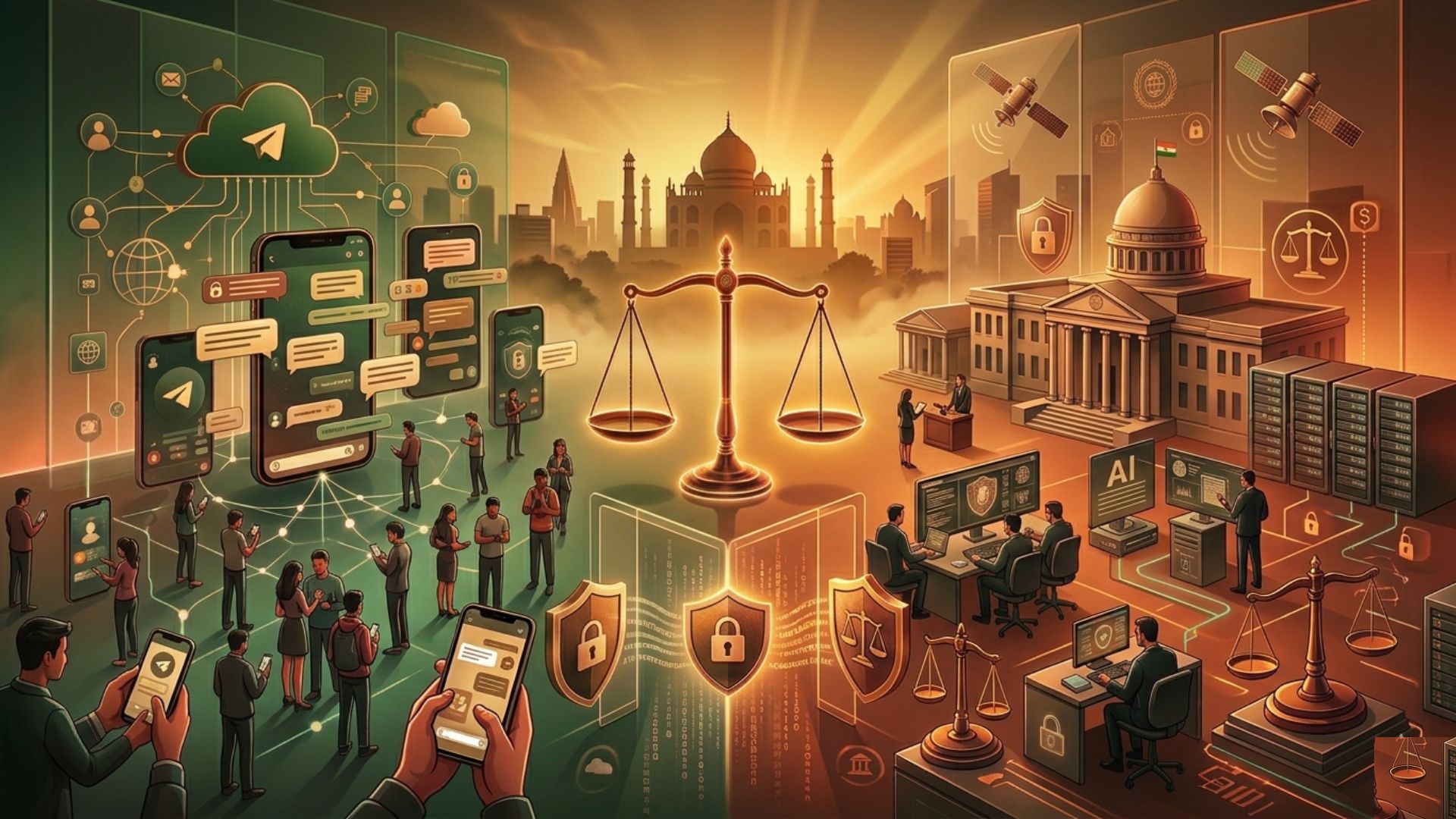
Section 69A of the IT Act: Balancing National Security and Digital Rights

“Liberty and security are not opposing goals; democratic governance lies in balancing both through due process.”
The Centre's temporary blocking of Telegram ahead of the NEET-UG retest has reignited debate over Section 69A of the Information Technology Act, 2000. While the government justified the move as necessary to prevent another examination paper leak, the case raises larger questions about free speech, livelihood rights, intermediary liability, and the limits of state power in the digital age.
Why Was Telegram Blocked?
The platform was allegedly used for:
- Dissemination of NEET examination papers.
- Coordination of paper leak networks.
- Spread of misinformation campaigns.
NEET-UG Controversy:
• Telegram channels allegedly circulated leaked question papers.
• Government imposed a temporary ban until June 22.
• Telegram challenged the order before the Delhi High Court.
• Judgment has been reserved.
The incident highlights the growing challenge of regulating digital platforms during sensitive national events.
Understanding Section 69A of the IT Act
Section 69A empowers the Union Government to direct intermediaries to block public access to online information.
Grounds for Blocking
| Permissible Grounds | Purpose |
|---|---|
| Sovereignty and Integrity of India | Protect national unity |
| Defence of India | Safeguard national security |
| Security of the State | Prevent threats to public safety |
| Friendly Relations with Foreign States | Maintain diplomatic interests |
| Public Order | Prevent disturbances and unrest |
| Prevention of Cognizable Offences | Stop unlawful activities |
The provision applies to any information that is:
- Generated
- Transmitted
- Received
- Stored
- Hosted through a computer resource
Thus, websites, applications and online platforms can all be subjected to blocking orders.
Constitutional Concerns
While Section 69A serves legitimate state interests, its exercise can affect fundamental rights.
Impact on Article 19(1)(a)
Article 19(1)(a) guarantees:
- Freedom of speech.
- Freedom of expression.
Blocking access to a platform may:
- Restrict communication.
- Limit dissemination of information.
- Reduce public access to digital spaces.
Therefore, such restrictions must comply with the safeguards provided under the:
Information Technology (Procedure and Safeguards for Blocking Access to Information by the Public) Rules, 2009
Supreme Court's View: Anuradha Bhasin Case
A significant judicial benchmark emerged in:
Anuradha Bhasin v. Union of India (2020)

Issue:
Indefinite internet shutdown in Jammu & Kashmir.

Key Observations:
• Freedom of speech online is constitutionally protected.
• Online trade and business are protected under Article 19(1)(g).
• Restrictions must satisfy proportionality.
• Orders must remain open to judicial review.
Proportionality Test
Any restriction must:
- Serve a legitimate purpose.
- Be necessary.
- Use the least restrictive measure available.
- Be subject to judicial scrutiny.
This ensures that executive power does not become arbitrary.
Impact on Livelihoods and Digital Economy
Article 19(1)(g) guarantees the right to practice any profession, occupation, trade or business.
A platform-wide ban affects:
- Educators running learning channels.
- Content creators.
- Entrepreneurs.
- Small businesses.
- Community administrators.
Telegram in India:
• Approximately 150 million users.
• Thousands of educators and creators operate subscription-based channels.
• Temporary bans disrupt communication and revenue streams.
For many users, digital platforms are no longer merely communication tools but important sources of income and employment.
Role of Intermediary Safe Harbour
Section 79 of the IT Act provides protection to intermediaries.
Safe Harbour Principle
Platforms are generally not liable for third-party content if they:
- Exercise due diligence.
- Comply with Intermediary Guidelines Rules, 2021.
- Remove unlawful content upon receiving actual knowledge.
| Provision | Objective |
|---|---|
| Section 69A | Enables blocking of harmful content |
| Section 79 | Protects intermediaries acting responsibly |
The challenge lies in balancing platform accountability with intermediary protection.
Way Forward
- Prefer targeted removal of unlawful content over blanket platform bans.
- Ensure strict adherence to the proportionality principle.
- Increase transparency in blocking orders.
- Strengthen judicial oversight and review mechanisms.
- Enhance cooperation between government agencies and intermediaries.
- Improve cyber investigation capacities to identify specific offenders.
- Protect legitimate educational, commercial and communicative activities during enforcement actions.
Conclusion
Section 69A remains an important tool for safeguarding national security and public order in the digital era. However, its use must remain proportionate, transparent and constitutionally compliant. As digital platforms increasingly become spaces for expression, education and livelihood, the challenge for India is not merely controlling misuse but ensuring that security measures do not unduly compromise fundamental rights and democratic freedoms.
Attribution
Original content sources and authors

Syllabus classification
How this article maps to GS papers
Main syllabus
GS3Cyber SecurityQuick Q&A
What is Section 69A of the Information Technology Act, 2000, and why is it significant in regulating digital platforms in India?
Why does the exercise of powers under Section 69A generate concerns regarding freedom of speech and constitutional rights?
How has the Supreme Court interpreted internet access and digital freedoms through important constitutional judgments in India?
Critically analyse whether temporary platform-wide bans are proportionate tools for addressing misinformation and examination-related malpractices.
What are the reasons behind granting intermediary safe harbour protections under Section 79 of the Information Technology Act?
What constitutional and governance lessons emerge from the Telegram ban controversy and the NEET-UG paper leak episode?
Practice questions
1 question for mains preparation