GS3 Environment & Bio-diversity
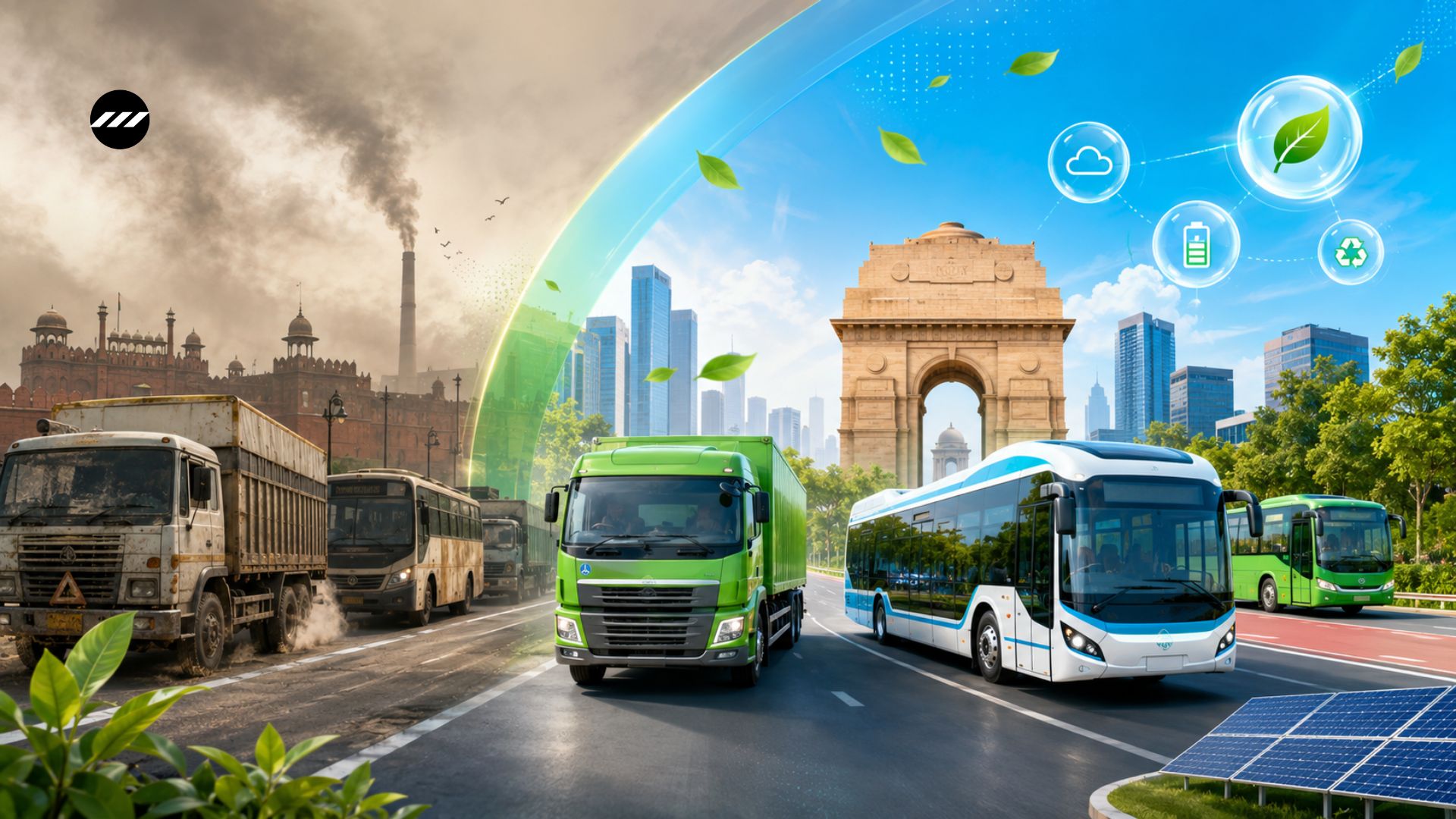
A ₹9,585-crore push aims to tackle one of Delhi’s biggest sources of winter smog: old trucks and buses.

Phasing Out Polluting Vehicles: Delhi-NCR's Push for Cleaner Transport and Better Air Quality

Cabinet clears two-year scheme to phase out BS-IV and older commercial vehicles, offering incentives for BS-VI and electric replacements to curb worsening air pollution.
Surya Surya
3 mins read

Why in News?

The Union Cabinet has approved a two-year vehicle replacement scheme with an outlay of ₹9,585 crore to reduce air pollution in the Delhi-NCR region by replacing older buses and trucks with cleaner vehicles.

The initiative seeks to accelerate the transition towards BS-VI-compliant and electric vehicles, targeting one of the largest contributors to air pollution in the region.

"Clean mobility is not merely a transport issue; it is a public health imperative."


What Has Been Approved?

Key Features of the Scheme

ComponentDetails
Total Outlay₹9,585 crore
Central Government Contribution₹5,041 crore
State Tax Concessions₹1,601 crore (estimated)
Duration2 Years
Implementing AgencyNCR Planning Board (NCRPB)
Partner StatesDelhi, Haryana, Rajasthan, Uttar Pradesh

The scheme will be jointly implemented by:

  • Ministry of Road Transport and Highways
  • Ministry of Petroleum and Natural Gas
  • NCR State Governments

Who Will Benefit?

The government estimates benefits for approximately 2.07 lakh vehicle owners.

Beneficiary Categories

Vehicle TypeApproximate Number
Trucks1.91 lakh
Buses16,000+
Total2.07 lakh

The focus is on replacing older commercial vehicles that contribute disproportionately to air pollution.


Why Target Trucks and Buses?

According to studies by ARAI and TERI, the transport sector remains a major source of pollution in Delhi-NCR.

Contribution to Air Pollution

PollutantShare from Transport Sector
PM2.514%
Carbon Monoxide40%
Nitrogen Oxides (NOx)63%

Heavy Vehicles Matter More

Although trucks and buses constitute only 3% of the vehicle fleet, they account for:

  • 36% of PM2.5 emissions.
Vehicle Share in Fleet:
3%

Contribution to PM2.5:
36%

A small number of vehicles generate a
disproportionately large pollution burden.

Why Replace Older Vehicles?

Older vehicles emit significantly higher levels of pollutants.

Pollution Comparison

Vehicle CategoryRelative Emissions
Pre-BS VehicleEquivalent to 14 BS-VI vehicles
BS-IV Vehicle2.7 times more than BS-VI

The replacement strategy therefore focuses on achieving maximum emission reduction through fleet modernisation.


What Will Happen to Old Vehicles?

BS-III and Older Vehicles

  • Mandatory scrapping.
  • To be dismantled at registered vehicle scrapping facilities.

BS-IV Vehicles

Owners can:

  • Scrap the vehicle, or
  • Sell it outside NCR in non-NCAP cities and towns.

Eligibility Condition

Benefits will be available only if owners purchase and register:

  • BS-VI vehicles, or
  • Electric vehicles (EVs)

within the NCR region.


Financial Incentives Offered

To encourage participation, the government has introduced multiple incentives.

Incentive Package

IncentiveBenefit
Interest Subvention5% on vehicle loans for 5 years
Fuel VouchersUp to ₹4,800 per month
EV IncentivesLump-sum financial support
Certificate TradingBenefits through certificate-of-deposit mechanism

These measures aim to reduce the cost burden of vehicle replacement.


Understanding BS-VI Standards

What is BS-VI?

Bharat Stage VI (BS-VI) emission standards are India's most stringent vehicle emission norms.

Implemented nationwide in:

  • April 2020

They replaced:

  • BS-IV standards that were operational from 2017.

Major Improvements

ParameterBS-IVBS-VI
Sulphur Content in Fuel50 ppm10 ppm
EmissionsHigherSignificantly Lower

BS-VI vehicles emit lower levels of:

  • Nitrogen Oxides (NOx)
  • Particulate Matter (PM)
  • Hydrocarbons
  • Sulphur compounds

Technologies Behind BS-VI Vehicles

To comply with stricter norms, manufacturers introduced advanced emission-control systems.

Key Technologies

  • Diesel Particulate Filters (DPF)
  • Selective Catalytic Reduction (SCR)
  • Onboard Diagnostic Systems (OBD)
Cleaner Fuel +
Advanced Filters +
Emission Monitoring
=
Lower Vehicle Pollution

These technologies help reduce harmful emissions while improving environmental performance.


Way Forward

  • Accelerate transition towards electric mobility.
  • Strengthen public transport infrastructure.
  • Expand vehicle scrappage ecosystems.
  • Improve last-mile connectivity to reduce private vehicle dependence.
  • Promote cleaner fuels and alternative energy sources.
  • Strengthen regional coordination among NCR states.
  • Integrate transport planning with air-quality management strategies.

Conclusion

The Delhi-NCR vehicle replacement scheme represents a targeted effort to address one of the region's major sources of air pollution. By phasing out highly polluting vehicles, incentivising cleaner technologies, and promoting BS-VI and electric mobility, the initiative seeks to improve air quality, public health, and environmental sustainability. Its success, however, will depend on effective implementation, widespread participation, and continued investment in clean transportation systems.

Attribution

Original content sources and authors

Anjaly Raj Author Anjaly Raj Business Standard Source Business Standard

Syllabus classification

How this article maps to GS papers

Main syllabus

GS3Environment & Bio-diversity

Also covers

GS1Urbanisation

Quick Q&A

What is the vehicle replacement scheme for Delhi-NCR and what is its significance in addressing air pollution?
The Union Cabinet-approved vehicle replacement scheme of 2026 is a two-year initiative with an outlay of ₹9,585 crore aimed at reducing vehicular pollution in the Delhi-NCR region. The programme seeks to incentivise owners of BS-IV and older commercial vehicles to transition to cleaner BS-VI-compliant or electric vehicles. It is being implemented through the National Capital Region Planning Board (NCRPB) in coordination with the Ministry of Road Transport and Highways, the Ministry of Petroleum and Natural Gas, and the governments of Delhi, Haryana, Rajasthan, and Uttar Pradesh. The significance of the scheme lies in its targeted approach toward one of the major sources of air pollution in the region. According to studies conducted by the Automotive Research Association of India (ARAI) and The Energy and Resources Institute (TERI), the transport sector contributes about 14% of PM2.5 emissions, 40% of carbon monoxide emissions, and 63% of nitrogen oxide emissions in Delhi-NCR. Although trucks and buses constitute only about 3% of the total vehicle fleet, they contribute nearly 36% of PM2.5 emissions. The scheme is expected to benefit approximately 2.07 lakh vehicle owners. It combines mandatory scrapping, financial incentives, interest subventions, and support for electric mobility. The initiative represents a shift from merely imposing restrictions to encouraging technological upgrades. From the UPSC perspective, the issue is relevant to GS Paper III (Environment and Pollution), GS Paper II (Governance), and Sustainable Development Goals, particularly SDG 3, SDG 11, and SDG 13. It demonstrates the integration of environmental regulation, fiscal incentives, and cooperative federalism.
Why is vehicular pollution considered a critical challenge for Delhi-NCR and why are heavy commercial vehicles receiving special policy attention?
Vehicular pollution is one of the principal contributors to deteriorating air quality in Delhi-NCR, particularly during the winter months when meteorological conditions trap pollutants close to the ground. The region frequently records PM2.5 and PM10 levels far exceeding the standards prescribed by the World Health Organization and the National Ambient Air Quality Standards. Heavy commercial vehicles have received special policy attention because of their disproportionately high contribution to pollution. According to the ARAI-TERI study, trucks and buses account for nearly 36% of PM2.5 emissions despite representing only 3% of the vehicle fleet. The transport sector contributes around 14% of PM2.5 emissions, 40% of carbon monoxide emissions, and 63% of nitrogen oxide emissions in the region. Older vehicles are particularly problematic. A single pre-BS heavy-duty vehicle emits pollution equivalent to fourteen BS-VI vehicles, while a BS-IV vehicle emits approximately 2.7 times more pollutants than its BS-VI counterpart. These emissions contribute to respiratory diseases, cardiovascular disorders, and reduced life expectancy. The issue also has economic consequences. According to studies by the World Bank and The Lancet, air pollution imposes substantial healthcare costs and productivity losses. Moreover, poor air quality affects tourism, investment, and quality of life. For UPSC aspirants, the topic is important for GS Paper III (Environment), GS Paper II (Public Policy), and GS Paper III (Science and Technology). It also relates to climate change mitigation, public health, and sustainable urbanisation. Therefore, controlling vehicular emissions has become both an environmental necessity and a developmental imperative.
How do Bharat Stage VI emission norms function and in what ways are they superior to BS-IV standards?
Bharat Stage (BS) emission standards are regulatory norms introduced by the Government of India to limit vehicular emissions and improve air quality. BS-VI norms, implemented nationwide in April 2020, represent India's most stringent emission standards and replaced BS-IV norms, which had been in force since 2017. The primary objective of BS-VI standards is to significantly reduce emissions of particulate matter (PM), nitrogen oxides (NOx), hydrocarbons, and sulphur compounds. One major improvement concerns fuel quality. BS-VI fuel contains only 10 parts per million (ppm) sulphur, compared to 50 ppm under BS-IV standards. Lower sulphur content enables advanced pollution-control technologies to function effectively. Automobiles complying with BS-VI standards incorporate sophisticated technologies such as Diesel Particulate Filters (DPFs), Selective Catalytic Reduction (SCR) systems, and Onboard Diagnostic Systems (OBD). These systems continuously monitor emissions and improve fuel efficiency. According to government estimates, a BS-IV vehicle emits nearly 2.7 times more pollutants than a BS-VI vehicle, while older heavy-duty vehicles emit pollution equivalent to multiple BS-VI vehicles. The adoption of BS-VI standards also aligns India with international practices comparable to Euro VI norms. It contributes to reducing urban air pollution and supports India's climate commitments under the Paris Agreement. From a UPSC perspective, BS-VI norms are relevant to GS Paper III under Science and Technology, Environment, and Sustainable Development. They highlight how technological innovation, regulatory mechanisms, and cleaner fuels can collectively address environmental challenges while promoting public health and sustainable mobility.
What are the major reasons behind the government's emphasis on scrapping old vehicles and promoting cleaner alternatives in Delhi-NCR?
The government's emphasis on scrapping old vehicles arises from scientific evidence linking older vehicles with disproportionately high levels of emissions. Vehicular pollution has emerged as one of the leading contributors to deteriorating air quality in Delhi-NCR, necessitating structural interventions beyond temporary restrictions. One major reason is the high emission intensity of older vehicles. According to official estimates, a single pre-BS heavy-duty vehicle emits as much pollution as fourteen BS-VI vehicles. Similarly, BS-IV vehicles emit approximately 2.7 times more pollutants than BS-VI vehicles. Consequently, replacing ageing fleets offers substantial environmental benefits. Another reason is public health. Exposure to PM2.5 and nitrogen oxides has been associated with asthma, chronic respiratory diseases, cardiovascular disorders, and premature mortality. Studies published in journals such as The Lancet have highlighted India's significant disease burden arising from air pollution. Climate change considerations also play a role. Cleaner technologies and electric vehicles contribute to reducing greenhouse gas emissions and support India's commitments under the Paris Agreement and the Panchamrit goals announced at COP26. Economic considerations are equally important. Cleaner vehicles reduce fuel consumption and maintenance costs while stimulating investment in automobile manufacturing, electric mobility, and registered vehicle scrapping facilities. The scheme is expected to benefit around 2.07 lakh vehicle owners. For UPSC candidates, the topic connects with GS Paper III topics relating to environment, climate change, infrastructure, and science and technology. It also illustrates how fiscal incentives, regulatory interventions, and technological advancement can work together to address complex environmental problems.
What is a critical analysis of the government's vehicle replacement strategy as a tool for combating air pollution in Delhi-NCR?
The vehicle replacement strategy adopted by the Union Government represents a proactive attempt to tackle one of the major contributors to air pollution in Delhi-NCR. Supporters argue that targeting older commercial vehicles is a scientifically justified measure because these vehicles generate a disproportionate share of particulate matter and nitrogen oxide emissions. The scheme's combination of financial incentives, interest subventions, fuel vouchers, and electric vehicle support makes the transition economically attractive. Another strength of the strategy is its reliance on cooperative federalism. The Centre, along with Delhi, Haryana, Rajasthan, and Uttar Pradesh, is jointly implementing the programme through the NCR Planning Board. Such coordination is essential because air pollution transcends administrative boundaries. However, critics point out certain limitations. Vehicular emissions account for only a part of Delhi's pollution burden. Stubble burning, construction dust, industrial emissions, and meteorological factors also significantly influence air quality. Therefore, focusing exclusively on vehicles may not yield comprehensive results. Concerns have also been raised regarding the financial burden on small transport operators and the adequacy of charging infrastructure for electric vehicles. Moreover, ensuring the availability of registered vehicle scrapping facilities and preventing illegal resale of old vehicles remain administrative challenges. Some experts advocate a broader approach involving public transport expansion, congestion pricing, non-motorised mobility, and stricter industrial regulations. From the UPSC perspective, this debate is relevant to GS Paper III and Ethics. It demonstrates the importance of balancing environmental objectives with economic realities and social equity. Ultimately, long-term success will depend upon adopting an integrated and multi-sectoral approach to air quality management.
How does the Delhi-NCR vehicle replacement initiative serve as a case study of cooperative federalism and sustainable urban governance?
The Delhi-NCR vehicle replacement initiative provides an important case study of cooperative federalism and sustainable urban governance in India. Air pollution is a transboundary problem that cannot be addressed by a single state or institution. Recognising this reality, the Union Government designed a coordinated framework involving multiple stakeholders. The scheme is being implemented through the National Capital Region Planning Board with active participation from the Ministry of Road Transport and Highways, the Ministry of Petroleum and Natural Gas, and the state governments of Delhi, Haryana, Rajasthan, and Uttar Pradesh. The total outlay of ₹9,585 crore includes ₹5,041 crore from the Centre and approximately ₹1,601 crore in tax concessions provided by participating states. The programme illustrates the principle of shared responsibility. States are contributing fiscal incentives, while the Centre is providing financial support and policy direction. Such collaboration reflects the spirit of cooperative federalism envisaged by institutions like NITI Aayog. The initiative also demonstrates the integration of environmental sustainability with economic incentives. Instead of relying solely on punitive measures, the government has adopted behavioural incentives such as interest subventions, fuel vouchers, and support for electric vehicles. Globally, cities such as London and Beijing have employed similar approaches involving cleaner fuels and low-emission zones. Delhi-NCR's experience could serve as a model for other polluted urban agglomerations in India. For UPSC preparation, the case study is relevant to GS Paper II (Federalism and Governance), GS Paper III (Environment and Infrastructure), and Ethics. It highlights the role of intergovernmental cooperation, policy innovation, and sustainable development in addressing complex urban challenges.

Practice questions

1 question for mains preparation

Vehicular emissions have emerged as a major challenge to sustainable urban development in India. Discuss the role of cleaner fuel and emission standards in addressing urban air pollution.

10 marks · 150 words · 8 mins