GS3 Environment & Bio-diversity
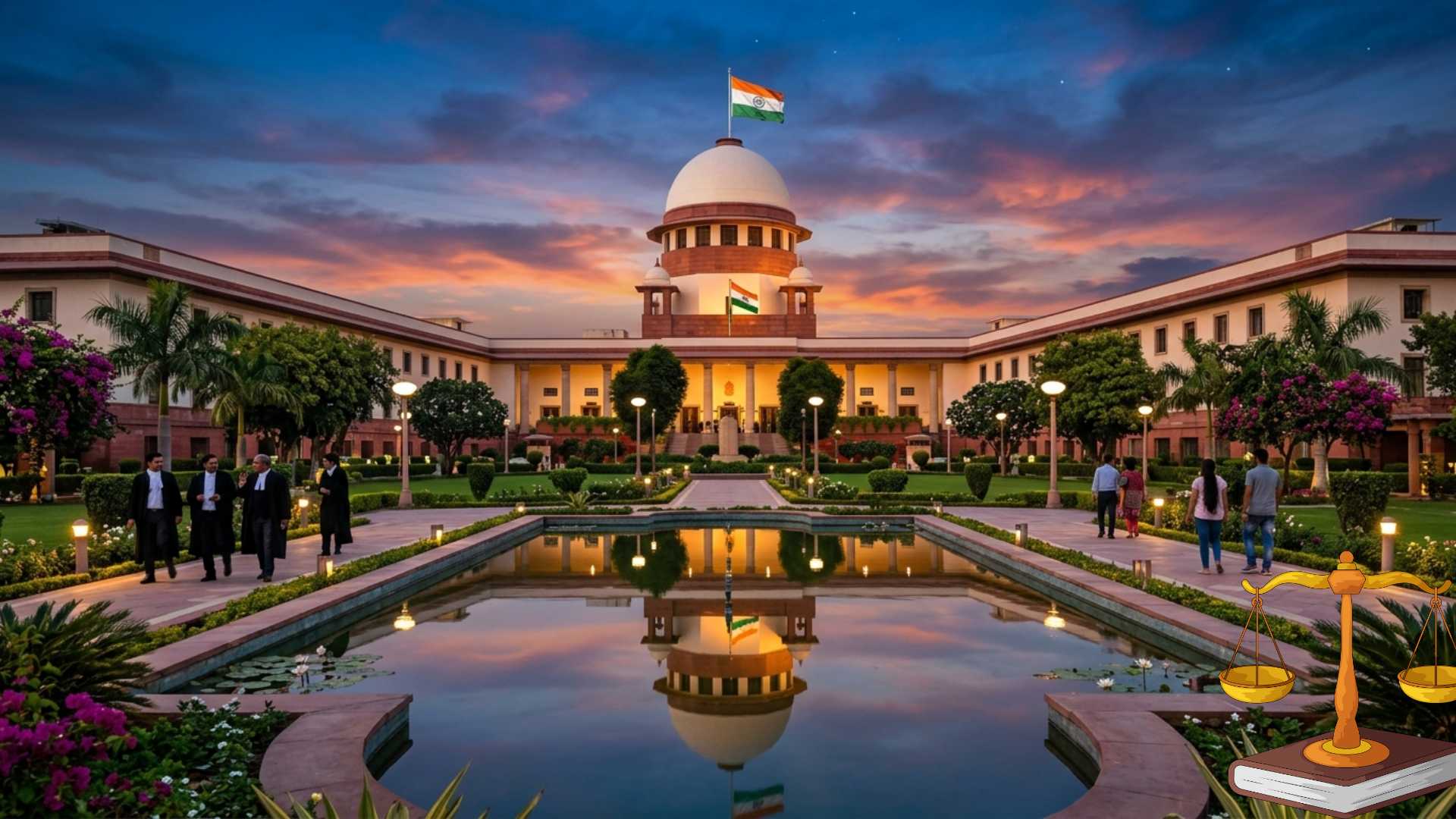
Supreme Court's Strong Warning on Chambal Sand Mining

Introduction
India loses an estimated $2.3 billion annually to illegal sand mining — the world's most extracted solid material, with global demand exceeding 50 billion tonnes per year (UNEP). The Chambal River basin, one of India's last relatively undisturbed river ecosystems and home to the critically endangered gharial (Gavialis gangeticus), faces existential threat from organised sand mafias operating with near-total impunity across three states.
"The continued degradation of natural resources and fragile ecosystems for short-term gains and greed, coupled with administrative indifference, cannot be countenanced in a system governed by the rule of law." — Supreme Court of India, April 17, 2026
| Indicator | Data |
|---|---|
| Global sand extraction demand | ~50 billion tonnes/year (UNEP) |
| Gharial global population (wild) | ~650–900 individuals |
| IUCN Status of Gharial | Critically Endangered |
| Chambal Sanctuary stretch | ~435 km (MP, UP, Rajasthan) |
| NH-44 bridge pit depth (reported) | 30–50 feet near foundation pillars |
| Forest guards killed (2025–26) | 2 (Morena, MP & Dholpur, Rajasthan) |
Background & Context
The National Chambal Gharial Wildlife Sanctuary was established in 1978 across the tri-junction of Madhya Pradesh, Rajasthan, and Uttar Pradesh. The Chambal river remains one of the few rivers in India that sustains populations of gharials, gangetic dolphins, and red-crowned roof turtles — all endangered or threatened species.
Sand mining along riverbanks is a chronic governance failure in India. While the Sustainable Sand Mining Management Guidelines (2016) and Environment Protection Act, 1986 regulate extraction, enforcement has remained weak due to political-criminal nexus, inadequate equipment for forest departments, and fragmented inter-state coordination.
The Supreme Court took suo motu cognisance on April 17, 2026, issuing a 28-page order through a bench of Justices Vikram Nath and Sandeep Mehta — signalling judicial alarm over what it described as state "abdication of statutory and constitutional responsibilities."
Key Issues & Analytical Dimensions
1. Institutional Failure & Administrative Apathy
The Court explicitly noted that the states' explanations "reeked of apathy, tacit connivance and even a sense of helplessness." Forest officials in MP admitted to lacking adequate weaponry against miners armed with superior firepower. This reveals a structural asymmetry: the state machinery is under-resourced relative to organised criminal networks profiting from illegal extraction.
2. Violence Against Environmental Defenders
Two forest guards were killed in identical fashion (crushed by mining trucks) within months:
- Harikesh Gurjar — Morena, MP (April 8, 2026)
- Jitendra Singh Shekhawat — Dholpur, Rajasthan (January 2026)
India has consistently ranked among the top countries for killings of environmental defenders (Global Witness reports). The impunity enjoyed by sand mafias directly endangers frontline officials.
3. Infrastructure & Public Safety Risk
A critical bridge on National Highway 44 — connecting MP and Rajasthan — faces structural collapse risk due to mining pits (30–50 feet deep) around its foundational pillars. This illustrates the convergence of ecological and public safety hazards.
4. Ecological Significance of the Chambal
The Chambal is one of India's least-polluted major rivers and a critical biodiversity corridor. Sand bars along the river serve as nesting sites for gharials and nesting beaches for turtles. Mining destroys these micro-habitats irreversibly. The loss of riverbed structure also accelerates bank erosion, reducing water-holding capacity and affecting downstream agriculture.
5. Inter-State Coordination Deficit
The sanctuary spans three states with no uniform enforcement framework. This jurisdictional fragmentation has historically been exploited by sand mafias who operate fluidly across state borders. The Court's direction to create a joint Standard Operating Procedure (SOP) across MP, Rajasthan, and UP is a direct response to this gap.
Supreme Court Directions (April 17, 2026)
| Direction | Details |
|---|---|
| CCTV Installation | High-resolution, Wi-Fi enabled cameras; live feed to DGP and DFO offices |
| GPS Tracking | Pilot in Morena (MP) and Dholpur (Rajasthan) on mining vehicles |
| Joint Patrol Teams | Constitution of inter-district teams around the sanctuary |
| SOP Development | Uniform, time-bound protocol for violent/armed resistance situations |
| Control Rooms | Feasibility report on dedicated district control rooms |
| Seizure & Prosecution | Immediate seizure of vehicles/machinery; no delay in prosecution |
| Deadline | Concrete measures by May 11, 2026 or paramilitary deployment |
| Penalty Threat | Complete ban on sand mining + heavy penalties on defaulting states |
Relevant Legal & Policy Framework
- Wildlife Protection Act, 1972 — Sanctuary protection provisions
- Environment Protection Act, 1986 — Regulation of ecologically sensitive activities
- Mines and Minerals (Development and Regulation) Act, 1957 (amended 2021) — Governs sand mining leases
- Sustainable Sand Mining Management Guidelines, 2016 (MoEF&CC) — District-level Sand Mining Plans
- National Green Tribunal — Has passed multiple orders on riverbed mining
- Article 21, Constitution — Right to a clean environment (MC Mehta jurisprudence)
Implications & Way Forward
Short-term: Immediate deployment of technology surveillance (GPS, CCTV), joint patrols, and wildlife crime registrations can deter organised mining. Arming forest guards adequately and providing legal protection comparable to police personnel is essential.
Medium-term: District-level Environment Impact Assessments (EIAs) with community consultation must precede any regulated mining permit. Riverbed replenishment timelines must guide extraction limits.
Long-term: Shifting to manufactured sand (M-Sand) as an alternative building material can structurally reduce demand pressure on natural river sand. States like Tamil Nadu and Karnataka have promoted M-Sand policies, offering a replicable model.
The judiciary's threat to deploy paramilitary forces, while extraordinary, reflects the collapse of executive will — a governance deficit that technology and SOPs alone cannot fix. Political will and institutional accountability remain irreplaceable.
Conclusion
The Chambal crisis is not merely an environmental issue — it is a test of federalism, rule of law, and the state's capacity to protect public goods against organised criminal interest. The Supreme Court's intervention highlights the recurring paradox in Indian governance: environmental regulations exist on paper but collapse in enforcement. Protecting the Chambal ecosystem requires convergence of judicial oversight, inter-state cooperation, technological surveillance, and a fundamental shift in treating ecological assets as non-negotiable public goods — not resources to be mined for short-term revenue.
Attribution
Original content sources and authors


Syllabus classification
How this article maps to GS papers
Main syllabus
GS3Environment & Bio-diversityQuick Q&A
What is the significance of the Supreme Court’s intervention in illegal sand mining in the National Chambal Gharial Sanctuary?
Rule of law and constitutional mandate: The Court’s observations highlight violations of Article 21 (Right to Life), which includes the right to a clean environment, and the Public Trust Doctrine, under which the State is a trustee of natural resources. By warning States of penalties and even a complete ban, the Court reinforces accountability mechanisms in environmental governance.
Broader implications: This case underscores systemic issues such as administrative apathy, nexus between illegal miners and local authorities, and weak enforcement capacity. The Court’s readiness to deploy paramilitary forces indicates the seriousness of the issue, transforming it from a mere regulatory failure into a matter of internal security and governance crisis. It sets a precedent for stricter judicial oversight in similar ecological conflicts across India.
Why is illegal sand mining considered a major environmental and governance challenge in India?
Governance and law enforcement failure: Illegal sand mining is often linked to organised crime networks or ‘sand mafias’ that operate with impunity. The article highlights instances where forest guards were killed, indicating the violent and organised nature of such activities. Weak enforcement, lack of equipment, and alleged collusion with officials exacerbate the problem.
Economic and infrastructural impacts: Unregulated mining threatens public infrastructure, such as bridges and highways. The example of the NH-44 bridge at risk due to deep mining pits illustrates how short-term economic gains can lead to long-term public losses. Addressing this issue requires balancing development needs with sustainability, strengthening regulatory frameworks, and ensuring inter-state coordination.
How can technology and institutional reforms help curb illegal sand mining effectively?
Institutional coordination: Illegal sand mining often spans multiple jurisdictions, necessitating inter-state cooperation. The directive to formulate a uniform Standard Operating Procedure (SOP) and establish joint patrol teams ensures coordinated action. Dedicated control rooms can act as nodal points for surveillance and rapid response.
Capacity building and accountability: Beyond technology, strengthening institutional capacity is crucial. This includes equipping forest and police personnel with adequate resources, ensuring swift prosecution of offenders, and implementing strict penalties. For instance, states like Maharashtra have experimented with e-auction systems and digital tracking to regulate sand mining. A combination of technology, transparency, and accountability can significantly reduce illegal operations.
Critically analyse the effectiveness and limitations of judicial interventions in tackling environmental crimes like illegal sand mining.
Limitations and challenges: However, judicial orders alone cannot ensure sustained change. Implementation depends on the executive machinery, which may lack capacity or political will. Over-reliance on courts can also blur the separation of powers, leading to concerns about judicial overreach. Additionally, enforcement in remote areas with strong criminal networks remains a significant challenge.
Way forward: A balanced approach is needed where judicial oversight complements, rather than substitutes, executive action. Strengthening local governance, empowering communities, and improving transparency in mining practices are essential. For example, community-led monitoring initiatives in some states have shown promise. Ultimately, sustainable solutions require systemic reforms beyond court directives.
Examine the Chambal Sanctuary case as an example of the conflict between development needs and environmental conservation.
Impacts on biodiversity and society: The sanctuary is home to endangered species such as the gharial, and its degradation threatens biodiversity conservation efforts. Simultaneously, illegal mining has led to lawlessness, including violent attacks on enforcement officials. The risk posed to infrastructure like the NH-44 bridge further illustrates how environmental neglect can have cascading socio-economic consequences.
Lessons and policy implications: This case underscores the need for sustainable resource management. Policies must integrate environmental impact assessments, regulated mining zones, and alternative construction materials. The involvement of local communities in conservation and monitoring can also help bridge the gap between development and sustainability. The Chambal case serves as a critical lesson in aligning economic growth with ecological responsibility.
What are the underlying reasons for the persistence of illegal sand mining despite strict laws and regulations?
Weak enforcement and institutional gaps: The article highlights the lack of adequate equipment and preparedness among forest officials. In many cases, enforcement agencies are understaffed and under-resourced, making it difficult to tackle well-armed illegal miners. Allegations of corruption and collusion further weaken the system, allowing illegal activities to continue unchecked.
Socio-political factors: Local dependence on sand mining for livelihoods and political patronage networks also contribute to the persistence of the problem. In some regions, illegal mining becomes embedded in the local economy, making enforcement socially and politically challenging. Addressing these root causes requires a multi-pronged strategy, including alternative livelihood generation, stricter accountability, and enhanced transparency in resource governance.
Practice questions
1 question for mains preparation