The Crucial Role of Indian Ocean Straits in Global Trade

Maritime Chokepoints: The Achilles' Heel of Global Trade
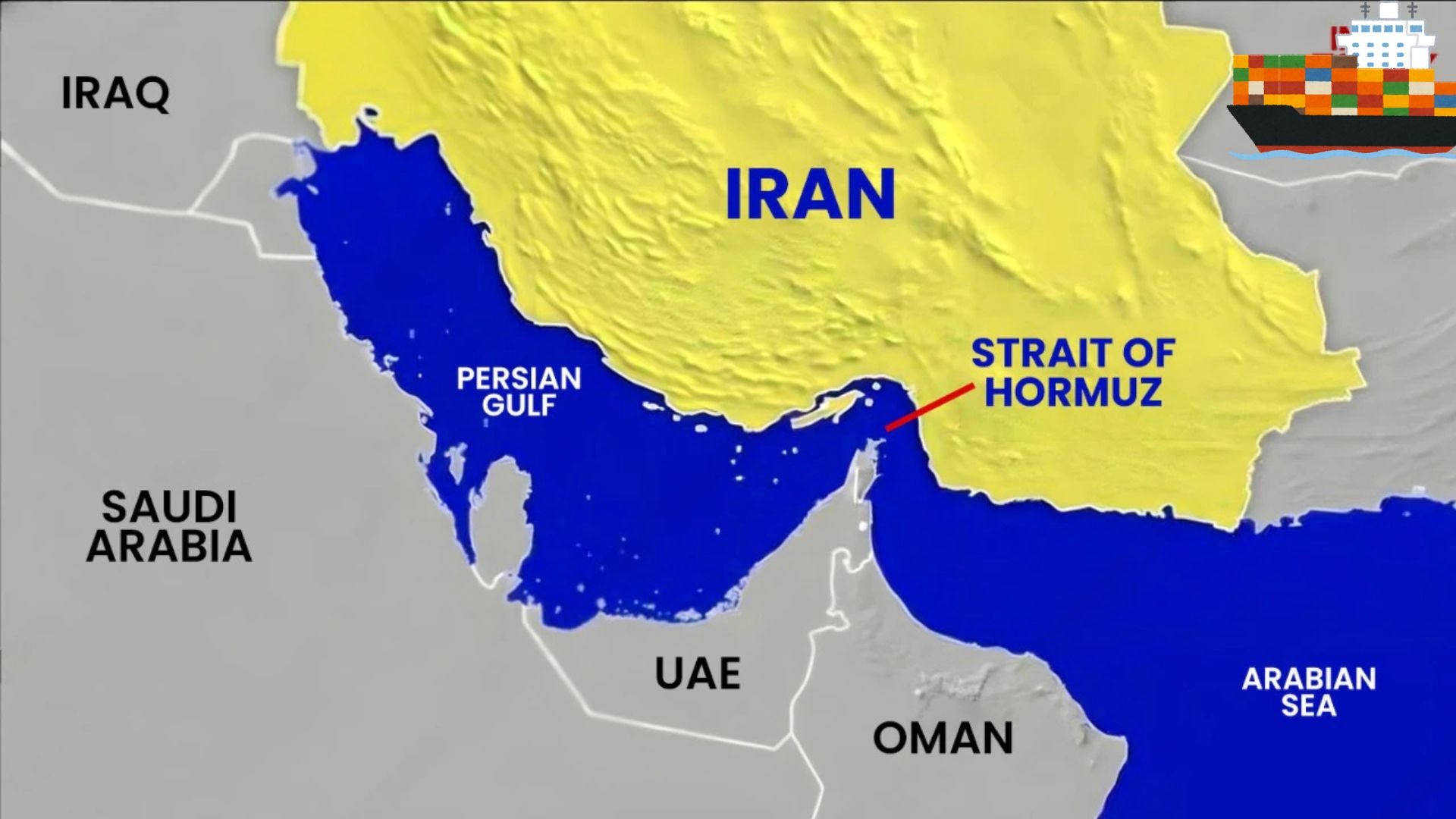
When Iran announced a formal mechanism to manage vessel traffic through the Strait of Hormuz in May 2026 — backed by a newly created Persian Gulf Strait Authority — it effectively formalised a toll system over a waterway carrying one-fifth of global oil and LNG supplies. The move exposed what experts have long warned about: global trade rests on a handful of narrow maritime chokepoints, and their vulnerability is structurally irreducible.
Why the Indian Ocean Is Different
As Professor C. Raja Mohan (National University of Singapore) explains:
"Unlike the Atlantic and Pacific oceans, the Indian Ocean is closed — a few straits control its access. This makes these straits immensely important for international trade."
The scale of what passes through these waters annually:
Indian Ocean — Annual Trade Statistics
────────────────────────────────────────────────────
Ships transiting            ~1,00,000
Global container traffic    ~30%
World's sea-borne oil trade ~80%
Total cargo                 ~9.84 billion tonnes
────────────────────────────────────────────────────
Three straits form the critical access architecture of this ocean:
- Hormuz — gateway to the Persian Gulf
- Bab-el-Mandeb — western gateway linking Red Sea to Gulf of Aden
- Malacca — eastern gateway linking Indian Ocean to South China Sea
Bab-el-Mandeb: The Gate of Tears
- Located between the Arabian Peninsula and the Horn of Africa
- Connects the Red Sea and Suez Canal to the Gulf of Aden
- Just 26 km wide at its narrowest; roughly 50 km in length
- Name literally means "Gate of Tears" — reflecting the navigational dangers it presents
Its economic weight:
- 9.3% of global crude oil and petroleum liquids shipments (USEIA, 2023)
- 8.7% of global sea-borne trade by volume (UNCTAD, 2023)
- Third busiest maritime chokepoint in global energy trade
The security dimension is equally sharp:
- In 2023, Houthi militants (Yemen) attacked vessels through the strait in response to the Israeli offensive on Gaza
- In April 2026, Houthi Deputy Foreign Minister Hussein al-Ezzi threatened to block the strait if Trump did not cease hostilities against Iran
- Though attacks subsided by late 2025, traffic had recovered only marginally by 2026
The only alternative — routing via the Cape of Good Hope — adds 10–14 days and approximately $2 million in additional costs per voyage.
Strait of Malacca: The Gooseberry Strait
- Named after the Malay word for the Indian Gooseberry tree
- Stretches roughly 900 km; narrows to just 2.8 km at its tightest point
- Littoral states: Indonesia, Singapore, Malaysia
Its traffic profile is staggering:
Strait of Malacca — Annual Trade Share (2023)
──────────────────────────────────────────────
Global maritime trade        24%
Global oil shipments         45%
Internationally traded cars  26%
Dry bulk cargo               23%
──────────────────────────────────────────────
China's oil needs via Malacca: 75%
- In 2003, Chinese President Hu Jintao coined the term "Malacca Dilemma" — describing China's dangerous strategic exposure through dependence on a single strait it does not control
- In April 2026, Indonesia's Finance Minister floated the idea of imposing a levy on transiting ships — backtracked within 24 hours after the Foreign Minister reaffirmed commitment to freedom of navigation
- The strait hosts the world's second-busiest container port, the busiest transshipment hub, and the largest ship refuelling hub — all in Singapore
- Alternatives like the Lombok and Sunda Straits add 1,000–1,500 nautical miles — three to five extra days — with no equivalent port infrastructure
No Real Alternatives
What makes these chokepoints irreplaceable is not merely geography — it is the concentration of port infrastructure, refuelling capacity, and logistics networks built around them over decades. As Raja Mohan summarises:
"The scale of commerce that goes through these chokepoints is unprecedented. From stoves in our houses to world economies, everything depends on these chokepoints."
Way Forward
- India's maritime strategy must treat chokepoint security as a core national interest — not merely a regional one. The Indian Navy's presence in the Indian Ocean Region (IOR) must be calibrated to protect trade lanes, not just territorial waters
- Diversification of energy routing — accelerating domestic renewable capacity reduces the strategic exposure created by Hormuz and Malacca dependence
- Multilateral frameworks for chokepoint governance — akin to the UN Convention on the Law of the Sea (UNCLOS) — need stronger enforcement mechanisms, particularly against non-state actors like the Houthis
- IMEC (India-Middle East-Europe Economic Corridor) gains strategic urgency as an overland alternative that bypasses both Hormuz and Bab-el-Mandeb
- Regional dialogue with Indonesia, Malaysia, and Singapore on Malacca governance must be deepened — Indonesia's levy proposal, even if retracted, signals latent tensions
Conclusion
The formalisation of Iranian control over Hormuz is not an isolated provocation — it is a symptom of a deeper structural vulnerability in globalisation. The world's trade arteries run through a handful of narrow passages, each susceptible to geopolitical disruption, non-state violence, or unilateral assertion. For India — a nation whose energy security, export competitiveness, and maritime ambitions all converge on these waters — chokepoint stability is not foreign policy abstraction. It is economic survival.
Attribution
Original content sources and authors


Syllabus classification
How this article maps to GS papers
Main syllabus
GS3Indian-EconomyQuick Q&A
What are maritime chokepoints, and why are the Strait of Hormuz, Bab-el-Mandeb, and Malacca considered strategically critical to global trade?
The Strait of Hormuz acts as the sole maritime gateway to the Persian Gulf, through which nearly one-fifth of global oil and LNG supplies move. The Bab-el-Mandeb links the Red Sea and the Suez Canal to the Indian Ocean, facilitating trade between Asia and Europe. The Strait of Malacca connects the Indian Ocean to the Pacific and carries nearly one-fourth of global maritime trade. These routes are indispensable due to their location and capacity to handle large-scale cargo movement.
Strategic significance:
- Control over these chokepoints can influence global energy security.
- Disruption can trigger inflation, fuel shortages, and economic slowdown.
- They have military significance due to naval deployments and geopolitical rivalry.
Why is the Indian Ocean described as a 'closed ocean', and what implications does this have for global commerce?
The Indian Ocean carries nearly 80% of global seaborne oil trade and around 30% of container traffic. Since most of this trade depends on chokepoints like Hormuz, Malacca, and Bab-el-Mandeb, any disruption in these passages creates cascading effects across international markets. This concentration creates both economic efficiency and systemic risk.
Implications:
- States controlling chokepoints gain geopolitical leverage.
- Piracy, war, or sanctions can affect global commodity prices.
- Insurance costs and freight charges rise sharply during crises.
How does control over the Strait of Hormuz affect international energy security and geopolitics?
This affects countries dependent on Gulf energy exports, especially India, China, Japan, and Europe. Even the perception of instability raises crude prices because traders factor geopolitical risk into energy markets. The strait is therefore not merely a trade route but a strategic bargaining tool in regional power politics.
Broader effects:
- Increases strategic competition between Iran, the U.S., and Gulf states.
- Can be used as leverage during sanctions or military confrontation.
- Triggers diversification of energy routes and strategic reserves.
Critically analyse the strategic importance of the Strait of Malacca for Asian economies, especially China and India.
China’s dependence is particularly significant, as nearly 75% of its oil imports transit this route. This led to the concept of the Malacca Dilemma, referring to China’s vulnerability to blockade or disruption. India, due to its strategic position in the Andaman Sea, has indirect leverage over the eastern approach to the strait.
Critical analysis:
- Advantage: Efficient and cost-effective route for trade.
- Risk: Overdependence creates strategic vulnerability.
- Challenge: Alternatives like Lombok are longer and costlier.
Why are alternatives to major maritime chokepoints often considered impractical despite existing routes?
For example, bypassing Malacca through the Lombok or Sunda Straits adds 1,000-1,500 nautical miles, increasing voyage duration and fuel costs. Similarly, avoiding Bab-el-Mandeb via the Cape of Good Hope adds 10-14 days and nearly $2 million per trip for large vessels. These costs affect final consumer prices globally.
Reasons for impracticality:
- Longer routes reduce supply chain efficiency.
- Limited depth or capacity restricts large cargo vessels.
- Loss of integrated infrastructure such as Singapore port facilities.
How do recent events in Bab-el-Mandeb illustrate the connection between regional conflict and global economic stability?
The attacks reduced shipping confidence, increased insurance premiums, and forced rerouting. Although the attacks declined by late 2025, shipping recovery remained partial, showing that even temporary instability creates long-term logistical disruptions. This illustrates the fragility of globalisation when concentrated through narrow sea lanes.
Lessons:
- Regional conflicts have global economic consequences.
- Non-state actors can challenge international maritime security.
- Trade resilience requires naval cooperation and alternative logistics.
Practice questions
1 question for mains preparation