Why India Embraces Fast Breeder Nuclear Reactors
Introduction
"The unleashed power of the atom has changed everything save our modes of thinking, and we thus drift toward unparalleled catastrophe." — Albert Einstein
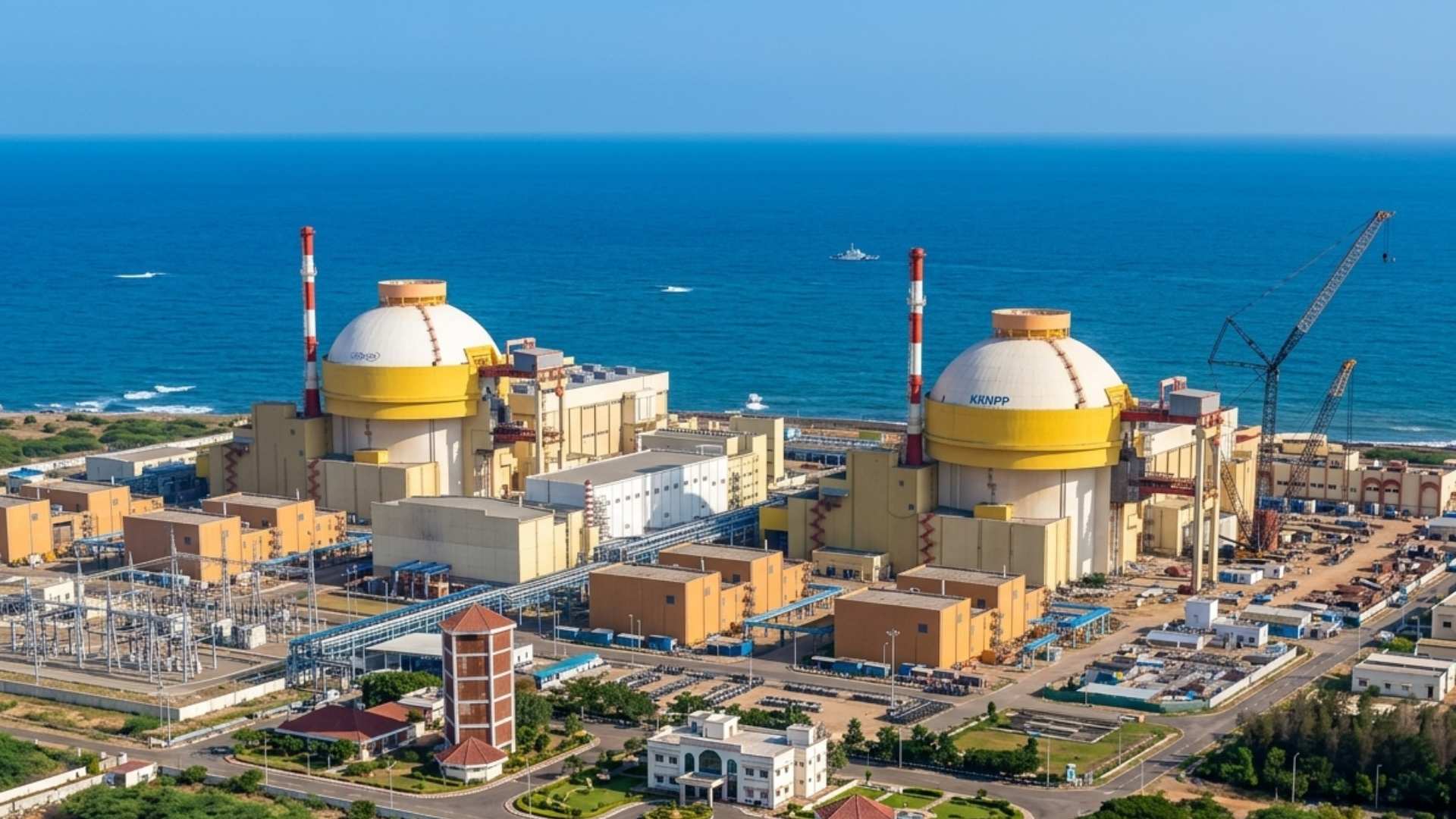
The achievement of first criticality at the Prototype Fast Breeder Reactor (PFBR), Kalpakkam on April 6, 2026 is a landmark in India's long-pursued three-stage nuclear programme. But criticality is not the finish line — it is merely the starting pistol. Understanding what criticality means, how fast breeder reactors actually work, and why they matter for India's energy future is essential for any serious UPSC aspirant.
| Parameter | Data |
|---|---|
| PFBR location | Kalpakkam, Tamil Nadu |
| Date of first criticality | April 6, 2026 |
| Designer | Indira Gandhi Centre for Atomic Research (IGCAR) |
| Builder | Bharatiya Nabhikiya Vidyut Nigam Ltd. (BHAVINI) |
| Original sanctioned cost | ₹3,500 crore |
| Cost in 2019 | ₹6,800 crore |
| Final cost (Parliamentary Committee) | ₹8,181 crore |
| Fuel use efficiency — PHWR | ~1% |
| Fuel use efficiency — FBR | ~10% or more |
What is Criticality?
A nuclear reactor achieves criticality when its chain reaction becomes self-sustaining — each fission event releases neutrons that trigger at least one more fission reaction.
Key controls for achieving criticality:
- Fuel composition
- Neutron accessibility to nuclei
- Reactor temperature
Critical misconception: Criticality ≠ Commercial operation. After criticality, the reactor runs at low power for months while engineers verify operating parameters are within design limits. Commercial operation comes much later after regulatory clearance from AERB.
Stages after criticality:
- Low power operation — parameter verification
- Incremental power raising — safety protocol refinement
- AERB approval — commercial mode operation
- Full rated capacity — electricity supply to grid
How Do PHWRs Work? (Stage 1 Recap)
India's currently operating reactors are Pressurised Heavy Water Reactors (PHWRs).
| Feature | Detail |
|---|---|
| Fuel | Natural uranium (99.3% U-238 + 0.7% U-235) |
| Moderator | Heavy water — slows neutrons to trigger U-235 fission |
| Output | Electricity + small amount of plutonium + depleted uranium |
| Fuel efficiency | ~1% (only U-235 undergoes fission) |
| Limitation | Produces spent fuel with large unused U-238 |
PHWRs are fuel-inefficient — the vast majority of uranium goes unused, becoming depleted uranium waste. This spent fuel becomes the feedstock for Stage 2 FBRs.
How Does the PFBR (FBR) Work?
| Feature | Detail |
|---|---|
| Primary fuel | Plutonium (from PHWR spent fuel reprocessing) |
| Neutron type | Fast neutrons (no moderator needed) |
| Coolant | Liquid sodium |
| Blanket material | Depleted uranium surrounding reactor core |
| Key reaction | Fast neutrons bombard U-238 blanket → transmuted to plutonium |
| Fuel efficiency | ~10% or more |
The "Breeding" Mechanism:
- Plutonium fuel undergoes fission → releases fast neutrons + heat + electricity
- Fast neutrons bombard depleted uranium blanket → uranium nuclei transmute to plutonium
- New plutonium is reprocessed as fresh fuel
- Net result: reactor produces more fuel than it consumes — hence "breeder"
Why liquid sodium as coolant?
| Advantage | Disadvantage |
|---|---|
| Becomes liquid at higher temperature — efficient heat transfer | Reacts violently with air and water |
| Does not require pressurisation | Requires perfectly sealed pumps, pipes, tanks |
| Better thermal efficiency | Stringent leak detection protocols needed |
| — | Higher operational complexity and cost vs. water-cooled reactors |
India's Three-Stage Nuclear Programme
Conceived by Dr. Homi J. Bhabha — built around India's abundant thorium reserves and modest uranium reserves.
| Stage | Reactor | Fuel Input | Output | Status |
|---|---|---|---|---|
| Stage 1 | PHWR | Natural uranium | Electricity + Plutonium + Depleted uranium | Operational (22 reactors) |
| Stage 2 | FBR | Plutonium + Depleted uranium | Electricity + More plutonium + U-233 | PFBR — criticality achieved |
| Stage 3 | AHWR | Plutonium + Thorium | Electricity + thorium-based self-sufficiency | Future |
Strategic logic: India has the world's second-largest thorium reserves but limited uranium. The three-stage programme is designed to eventually run almost entirely on indigenous thorium — achieving complete nuclear fuel self-sufficiency.
FBR as bridge: Stage 2 FBRs generate the plutonium needed to fuel Stage 3 thorium reactors. Without a successful FBR programme, Stage 3 — and true energy independence — remains unreachable.
Why Are FBRs Technically Challenging?
Engineering complexity:
- Liquid sodium coolant demands perfect sealing — any leak risks violent reaction with air/water
- No moderator means reactor design is fundamentally different from PHWRs
- Fuel reprocessing infrastructure (separating plutonium from spent fuel) requires separate, costly facilities
- New fuel assembly fabrication requires dedicated regulatory frameworks
Global experience — cautionary lessons:
| Country | Reactor | Outcome |
|---|---|---|
| Japan | Monju Nuclear Power Plant | Sodium leak and fire (1995) → long shutdown → decommissioned |
| France | Superphénix | World's largest breeder reactor → shut down due to technical issues, high costs, political opposition |
| Russia | BN-600, BN-800 | Operational — only country maintaining a working FBR fleet |
| India | PFBR, Kalpakkam | Criticality achieved April 2026 — commissioning ongoing |
Key takeaway: FBRs are technically feasible but not yet economically feasible globally. They also lack broad public acceptance due to complexity and cost.
Governance Concerns
- DAE reports directly to the Prime Minister's Office — insulated from ruling establishment politics
- This insulation enabled long-term programme continuity across electoral cycles
- But it also reduced accountability — limited transparency on timelines and budgets
- Cost escalated from ₹3,500 crore → ₹8,181 crore (133% overrun)
- Multiple deadline extensions — commercialisation promised by October 2022, still pending
- Promoter-regulator conflict: AERB and DAE both report to Atomic Energy Commission — same body promotes and regulates nuclear energy
What Next for PFBR?
- Low power testing — verify operating parameters across conditions
- Data collection — inform power-raising decisions and safety protocol refinement
- AERB approval — for commercial mode operation
- Commercial operation — sustained electricity generation at rated capacity
- Parallel development — fuel reprocessing facilities + planning for FBR1 and FBR2
The broader question of whether India's closed fuel cycle vision is achievable will only become clear once these milestones are progressively met with transparency and rigour.
Conclusion
The PFBR's criticality is a genuine technological milestone — but one that must be seen in clear-eyed perspective. India has demonstrated that fast breeder reactor technology is achievable indigenously. The harder challenge now is demonstrating that it is economically viable, operationally safe, and institutionally accountable. Russia's sustained FBR fleet offers a model; Japan's Monju and France's Superphénix offer warnings. India's three-stage programme remains strategically sound — thorium self-sufficiency is a compelling long-term goal. But the path from criticality to commercial operation to a closed fuel cycle will demand engineering excellence, regulatory independence, and the transparency that has so far been missing.
Attribution
Original content sources and authors
Syllabus classification
How this article maps to GS papers
Main syllabus
GS3InfrastructureQuick Q&A
What is meant by ‘criticality’ in a nuclear reactor, and why is it often misunderstood?
A common misconception is that criticality represents the end goal of reactor development. In reality, it is only the first milestone in a long process. After achieving criticality, the reactor must undergo extensive testing at low power levels to ensure that all operational parameters remain within safe design limits. Only after months or even years of validation can it be scaled up for commercial electricity generation.
For example, India’s Prototype Fast Breeder Reactor (PFBR) at Kalpakkam achieving criticality in April 2026 marks a significant scientific achievement, but it does not mean the reactor is immediately ready to supply power to the grid. This distinction is crucial in understanding nuclear energy development as a phased and highly regulated process.
How do Fast Breeder Reactors (FBRs) work, and how are they different from conventional PHWRs?
A key feature of FBRs is the presence of a ‘blanket’ of depleted uranium surrounding the core. When fast neutrons bombard this blanket, uranium-238 is transmuted into plutonium-239, which can then be reprocessed and reused as fuel. This makes FBRs significantly more efficient, with fuel utilization rates of around 10% or more, compared to roughly 1% in PHWRs.
For example, India’s PFBR uses liquid sodium as a coolant and plutonium as fuel, enabling it to both generate electricity and produce additional fuel. This dual function makes FBRs central to achieving a closed nuclear fuel cycle. However, the complexity of handling fast neutrons and sodium coolant also introduces engineering and safety challenges, distinguishing FBRs as both technologically advanced and operationally demanding.
Why are Fast Breeder Reactors considered crucial for India’s three-stage nuclear programme?
The importance of FBRs lies in their ability to ‘breed’ more fuel than they consume. By converting depleted uranium into plutonium, they expand the available fuel base and reduce dependence on imported uranium. This makes them essential for transitioning to the third stage, where thorium-based reactors will dominate, ensuring a sustainable and indigenous energy cycle.
For instance, without FBRs, India would struggle to move beyond the limitations of uranium-based reactors. Thus, FBRs act as a bridge technology, enabling the country to leverage its thorium reserves in the future. Their success will determine whether India can achieve its vision of a closed fuel cycle and long-term self-reliance in nuclear energy.
Critically analyse the challenges associated with Fast Breeder Reactors in terms of technology, economics, and public acceptance.
Economically, FBRs are yet to prove their viability. High capital costs, complex fuel reprocessing requirements, and long gestation periods make them less attractive compared to conventional reactors or renewable energy sources. For example, India’s PFBR saw its cost escalate from Rs 3,500 crore to Rs 6,800 crore, along with multiple delays. Similar experiences in France’s Superphénix project, which was eventually shut down, underscore the financial uncertainties.
From a public acceptance perspective, concerns about safety, transparency, and environmental risks remain significant. The relative insulation of India’s nuclear sector from public scrutiny can reduce accountability, further complicating acceptance. Thus, while FBRs are strategically important, their widespread adoption depends on overcoming these multi-dimensional challenges through innovation, regulatory strengthening, and public engagement.
Examine the PFBR at Kalpakkam as a case study in India’s nuclear energy development.
However, the PFBR also highlights systemic challenges. The project experienced significant delays and cost overruns, with costs nearly doubling and deadlines repeatedly extended. These issues reflect broader concerns about project management, accountability, and transparency within India’s nuclear establishment. The insulation of the Department of Atomic Energy from external scrutiny has enabled continuity but also limited performance pressure.
At the same time, the PFBR underscores India’s commitment to long-term energy security. Its successful operation could pave the way for a fleet of breeder reactors and the eventual realization of a closed fuel cycle. Thus, the PFBR is both a technological achievement and a governance lesson, illustrating the opportunities and constraints of large-scale public sector innovation.
What are the next steps after achieving criticality for the PFBR, and what determines its transition to commercial operation?
The transition to commercial operation depends on obtaining approval from the Atomic Energy Regulatory Board (AERB). This requires demonstrating that the reactor can operate safely and reliably at or near its rated capacity. Standard operating procedures must be established, and emergency response mechanisms must be validated. Only then can the reactor supply electricity to the grid on a sustained basis.
In parallel, supporting infrastructure such as fuel reprocessing facilities must be developed to sustain the breeder cycle. The PFBR’s success will thus depend not just on reactor performance but also on the broader ecosystem. Its eventual commercialization will mark the shift from an experimental project to a functional component of India’s energy mix, shaping future nuclear policy decisions.
Practice questions
1 question for mains preparation