GS3 Infrastructure

India Charts a Sustainable Course in Ship Recycling

Ship Recycling Credit Note Scheme: Bridging India's Strength in Recycling with its Shipbuilding Ambitions

The issuance of the ship recycling credit note aims to enhance India's competitiveness in ship recycling and attracts fresh investments.
Gopi Gopi
4 mins read

"The circular economy is not only about waste management; it is about creating value from resources throughout their lifecycle."

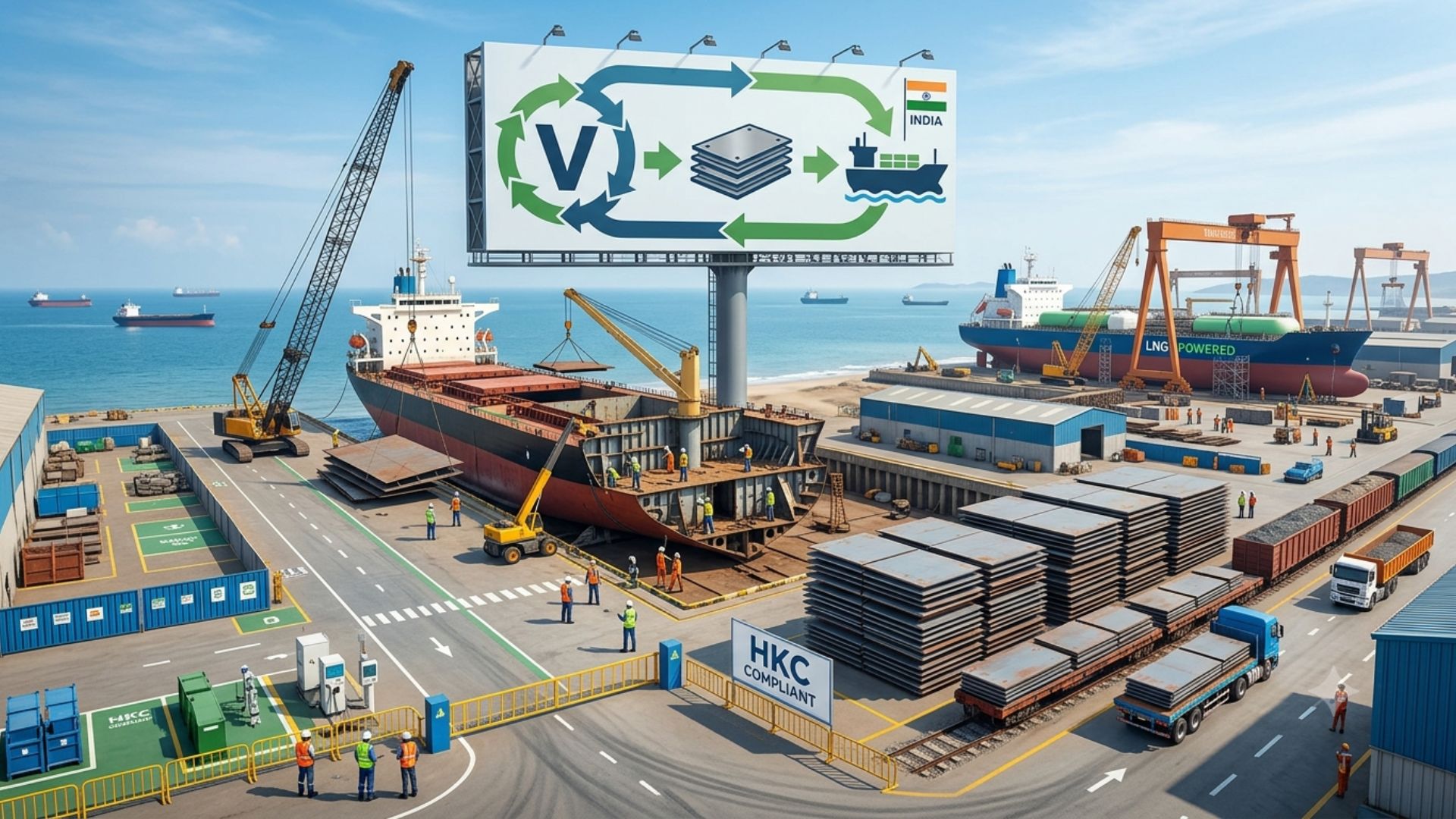
India has taken a significant step toward strengthening its maritime sector with the issuance of the country's first Ship Recycling Credit Note. The initiative seeks to connect India's global leadership in ship recycling with its long-term ambition of becoming a major shipbuilding nation.

Why the Scheme Matters

India currently handles around 30% of the world's ship recycling activities, making it one of the largest recycling hubs globally.

The newly launched credit note scheme aims to:

  • Promote safe and sustainable ship recycling.
  • Encourage shipbuilding in India.
  • Support the circular economy.
  • Attract investment into maritime infrastructure.
  • Improve the competitiveness of Indian shipyards.

"The scheme demonstrates the government's intent to position India as a hub for ship recycling and shipbuilding." — Deepak Shetty, Former Director General of Shipping

How the Credit Note Scheme Works

FeatureProvision
EligibilityShips recycled in certified Indian facilities
BenefitCredit note equal to 40% of scrap value
Validity3 years
UtilisationUp to 5% discount on fair price of a new vessel built in India
ModeDigital credit note through unified portal

The mechanism creates a financial incentive for shipowners to both recycle and build ships in India.

A ship owner recycling a vessel at a certified
Indian yard receives a credit note worth
40% of the vessel's scrap value.

The credit can later reduce the cost of
purchasing a new ship built in India.

Alignment with the Hong Kong Convention

The scheme complements the implementation of the Hong Kong International Convention for Safe and Environmentally Sound Recycling of Ships (HKC).

Key Objectives of HKC

  • Environmentally sound recycling practices.
  • Protection of worker health and safety.
  • Proper handling of hazardous materials.
  • Prevention of marine and land pollution.

Compliance Requirements for Recycling Yards

RequirementPurpose
Occupational safety measuresWorker protection
Environmental protection systemsPollution control
Hazardous waste managementSafe disposal
Worker training programmesSkill enhancement
Emergency preparedness plansRisk management
Environmental monitoringContinuous compliance

India currently has 111 HKC-compliant ship recycling yards, all located at Alang, Gujarat, representing one of the world's largest concentrations of compliant facilities.

India's Current Position

Ship Recycling Performance

IndicatorStatus
Global recycling share~30%
HKC-compliant yards111
Ships recycled in FY 2026119
Recyclable material processed1.08 million Light Displacement Tons (LDT)

The Directorate General of Shipping conducts inspections, audits and certification activities to ensure compliance.

Early Signs of Success

The scheme has generated encouraging interest.

Initial Progress

  • 41 ship owners registered.
  • 6 applications received.
  • First credit note worth ₹29 crore issued.

The first beneficiary was Bella Shipping Inc., which recycled the vessel Kosta at the Inducto Steel Limited yard in Alang.

The vessel "Kosta", owned by Bella Shipping Inc.,
became the first ship to receive benefits under
India's Ship Recycling Credit Note Scheme.

A unified digital portal now enables:

  • Online applications.
  • Processing and approvals.
  • Tracking of applications.
  • Issuance of digitally signed credit notes.

The Major Challenge: Recycling vs Shipbuilding

While India leads in recycling, its shipbuilding sector remains relatively small.

CountryShare in Global Shipbuilding
China~60%
IndiaLess than 1%

This highlights the central challenge: converting recycling leadership into shipbuilding strength.

The effectiveness of the credit note scheme will depend on:

  • Timely delivery by Indian shipyards.
  • Competitive pricing.
  • Alignment of credit note validity with ship acquisition cycles.

Government Support for Maritime Growth

In 2025, the government announced a ₹70,000 crore maritime package aimed at strengthening shipbuilding and maritime infrastructure.

Positive Developments

  • HD Hyundai signed an MoU for a greenfield shipyard in Tamil Nadu.
  • Cochin Shipyard secured an order from CMA CGM for six LNG-powered vessels.
  • Increased private-sector interest in maritime manufacturing.

Suggestions for Further Improvement

Experts have proposed additional measures.

Key Recommendations

  • Extend credit note validity from 3 years to 4-6 years.
  • Introduce pre-approval mechanisms for shipowners.
  • Provide completion guarantees for shipyards.
  • Develop vendor clusters around shipbuilding hubs.
  • Offer training support and milestone-linked grants.
  • Strengthen workforce availability.
Many skilled Indian shipbuilding workers are
currently employed overseas. Targeted incentives
could encourage their return and strengthen
domestic shipyard capabilities.

Way Forward

  • Expand shipbuilding capacity alongside recycling infrastructure.
  • Improve project execution and delivery timelines.
  • Encourage technology transfer and foreign investment.
  • Strengthen workforce development programmes.
  • Promote digitalisation and ease of doing business.
  • Align incentives with long-term investment cycles.

Conclusion

The Ship Recycling Credit Note Scheme represents an innovative attempt to integrate sustainability, circular economy principles and industrial development. While India has already established itself as a global leader in ship recycling, the next challenge lies in transforming this advantage into a competitive shipbuilding ecosystem capable of supporting the country's broader maritime ambitions.

Attribution

Original content sources and authors

Aneesh Phadnis Author Aneesh Phadnis The Hindu Source The Hindu

Syllabus classification

How this article maps to GS papers

Main syllabus

GS3Infrastructure

Also covers

GS3Environment & Bio-diversity

Quick Q&A

What is the Ship Recycling Credit Note Scheme and how does it contribute to India's maritime ambitions?
The Ship Recycling Credit Note Scheme is an incentive mechanism introduced by the Government of India to promote environmentally sustainable ship recycling and strengthen domestic shipbuilding. Implemented by the Directorate General of Shipping, the scheme provides ship owners with a credit note equivalent to 40% of the scrap value of a vessel recycled at certified Indian facilities. The credit note remains valid for three years and can be redeemed up to 5% of the fair price of a new vessel built in an Indian shipyard. The first credit note, worth approximately ₹29 crore, was issued on May 28, 2026, to Bella Shipping Inc. for recycling the vessel Kosta at Inducto Steel Limited in Alang, Gujarat. This initiative forms part of the ₹70,000 crore maritime development package announced by the Government of India in 2025. India currently accounts for nearly 30% of the global ship recycling industry and possesses 111 Hong Kong Convention-compliant yards concentrated in Alang. The scheme seeks to integrate ship recycling with shipbuilding, thereby promoting circular economy principles and attracting investment. For UPSC aspirants, the issue is relevant to GS-III topics such as infrastructure, industrial development, environmental sustainability and blue economy. It also connects with economic growth and employment generation. By incentivizing responsible recycling and encouraging vessel construction in India, the scheme aims to transform the country from a global dismantling hub into a comprehensive maritime manufacturing ecosystem. However, its long-term success depends on improving shipyard capabilities and ensuring timely vessel delivery.
Why is the ship recycling sector strategically important for India's economic growth and maritime development?
The ship recycling sector occupies a strategic position in India's maritime economy due to its contribution to resource efficiency, employment generation, foreign exchange earnings and industrial development. India handles nearly 30% of the world's dismantled ships, making it one of the leading players in this sector. Alang in Gujarat has emerged as one of the largest clusters of ship recycling facilities globally. Ship recycling supports the circular economy by recovering valuable materials such as steel, copper and aluminum. These materials reduce dependence on imports and lower the environmental costs associated with mining and raw material extraction. The sector also creates employment opportunities for thousands of workers and stimulates ancillary industries including logistics, transportation and metal processing. Strategically, the sector complements India's larger vision of becoming a maritime power under initiatives such as Sagarmala and Maritime India Vision 2030. The government has also announced a ₹70,000 crore package aimed at boosting shipbuilding and associated activities. From an international perspective, India's compliance with the Hong Kong International Convention strengthens its reputation as a responsible maritime nation. This enhances investor confidence and encourages global shipping firms to recycle vessels in India. For UPSC preparation, this topic is relevant to GS-III infrastructure, economy and environment. It also touches upon India's Blue Economy strategy and sustainable development goals. However, experts argue that India's dominance in recycling has not translated into leadership in shipbuilding, where China controls nearly 60% of the global market while India's share remains below 1%. Therefore, the sector's importance extends beyond recycling and encompasses broader industrial transformation.
How does the Hong Kong International Convention ensure environmentally sound and safe ship recycling practices?
The Hong Kong International Convention for Safe and Environmentally Sound Recycling of Ships is a legally binding global treaty that seeks to regulate ship dismantling activities while minimizing environmental pollution and occupational hazards. The Convention entered into force in June 2025 and represents a major milestone in international maritime governance. Under the Convention, ship recycling facilities must implement robust occupational health and safety measures, maintain systems for handling hazardous substances and establish mechanisms for waste management. Yards are required to conduct environmental monitoring, ensure emergency preparedness and provide regular training to workers. These provisions aim to reduce accidents and protect ecosystems from contamination by toxic materials such as asbestos, heavy metals and oil residues. India has emerged as a leader in implementing these standards. According to the Directorate General of Shipping, 111 recycling yards in Alang, Gujarat, are compliant with the Convention, making it one of the largest concentrations of certified facilities worldwide. Regular inspections, audits and certification processes are conducted in coordination with state authorities and recognized organizations. The Convention is significant for GS-III topics including environment, infrastructure and international organizations. It also demonstrates the principle of sustainable development by balancing economic activity with environmental protection. Critics, however, point out that compliance requires substantial investment and higher operating costs. Nonetheless, supporters argue that these standards enhance worker welfare, improve India's global image and ensure long-term sustainability. The Convention therefore represents an example of how international regulations can shape domestic industrial practices and promote responsible economic development.
Critically analyse the opportunities and challenges associated with India's attempt to integrate ship recycling with shipbuilding.
India's attempt to integrate ship recycling with shipbuilding reflects a strategic effort to create a complete maritime value chain. The Ship Recycling Credit Note Scheme is designed to encourage ship owners not only to recycle vessels in India but also to place orders with Indian shipyards. This integration can strengthen manufacturing, promote technology transfer and support the vision of Atmanirbhar Bharat. Several opportunities exist. India possesses a skilled workforce, abundant recyclable material and globally recognized recycling facilities. Investments are beginning to materialize, as evidenced by HD Hyundai's memorandum of understanding for a greenfield shipyard in Tamil Nadu and Cochin Shipyard's contract with CMA CGM for six LNG-powered vessels. However, significant challenges remain. India accounts for less than 1% of global shipbuilding, whereas China controls around 60% of the market. Domestic shipyards face issues such as delays in project execution, limited technological capabilities and fragmented supplier ecosystems. Experts also argue that the three-year validity period of credit notes may be insufficient because shipbuilding decisions often involve longer timelines. Another challenge concerns the migration of skilled Indian workers to foreign shipyards due to better career opportunities. Addressing this issue requires incentives, training support and employment security. For UPSC aspirants, the topic is relevant to GS-III infrastructure, industrial policy and economic development. It also reflects themes of competitiveness and globalization. A balanced assessment suggests that while the scheme has the potential to transform India into a maritime manufacturing hub, its success will ultimately depend on execution, technological modernization and institutional support rather than incentives alone.
What does the development of Alang ship recycling cluster illustrate about India's approach to sustainable industrialization?
The Alang ship recycling cluster in Gujarat serves as an important case study in sustainable industrialization and maritime development. Established in the 1980s, Alang has evolved into one of the world's largest ship recycling hubs and represents India's comparative advantage in the sector. Today, it hosts 111 yards compliant with the Hong Kong International Convention, reflecting the transition from traditional dismantling practices to environmentally responsible operations. According to industry data, India recycled 119 ships during FY 2026, amounting to 1.08 million light displacement tons. These activities generate significant quantities of reusable steel and other materials, thereby promoting resource efficiency and supporting the circular economy. Alang's transformation demonstrates how regulatory reforms, technological upgrades and international standards can improve environmental performance. Periodic inspections, worker training programmes and waste management systems have strengthened safety and reduced ecological risks. The cluster also highlights broader developmental themes. It generates employment, supports ancillary industries and attracts international shipping companies. The recent issuance of a ₹29 crore credit note for recycling the vessel Kosta illustrates how policy incentives are being used to deepen this ecosystem. For UPSC preparation, Alang is relevant to GS-III topics such as infrastructure, environment and industrial development. It also provides a practical example of balancing economic growth with ecological sustainability. Nevertheless, concerns regarding labour welfare, hazardous waste disposal and global competition continue to persist. Therefore, Alang represents both the achievements and the unfinished agenda of India's efforts toward sustainable and inclusive industrialization.
What policy measures can further strengthen India's shipbuilding ecosystem and enhance the effectiveness of maritime reforms?
Several policy measures can strengthen India's shipbuilding ecosystem and improve the effectiveness of recent maritime reforms. While the Ship Recycling Credit Note Scheme is a significant step, experts believe that additional interventions are necessary to transform India into a global maritime manufacturing hub. First, extending the validity period of credit notes from three years to four or six years could make the scheme more attractive to global ship owners, since vessel acquisition decisions typically involve long planning cycles. A pre-approval mechanism would also provide greater certainty regarding eligibility and expected benefits. Second, the government should support domestic shipyards through completion guarantees, milestone-linked grants and the development of vendor clusters. Such measures would reduce project delays and improve competitiveness. Strengthening digital platforms and ease-of-doing-business initiatives can further attract investment. Third, human resource development is essential. Many skilled Indian workers have migrated to overseas shipyards for better opportunities. Targeted policies involving relocation assistance, skill recognition and long-term employment incentives can help bring this experienced workforce back to India. Fourth, technological modernization and green shipbuilding should be promoted. The contract secured by Cochin Shipyard to build six LNG-powered vessels for CMA CGM demonstrates the potential for India to participate in sustainable shipping. For UPSC aspirants, these recommendations are relevant to GS-III infrastructure, industrial policy and employment. They also connect with themes such as Atmanirbhar Bharat, Make in India and the Blue Economy. Ultimately, successful maritime reforms require not only financial incentives but also institutional capacity, skilled manpower and timely execution to compete effectively with established players such as China, South Korea and Japan.

Practice questions

1 question for mains preparation

Sustainable industrial development requires balancing economic growth with environmental protection. Examine how circular economy practices, including ship recycling and shipbuilding, can contribute to resource efficiency, industrial growth and long-term economic competitiveness in India.

10 marks · 150 words · 8 mins
