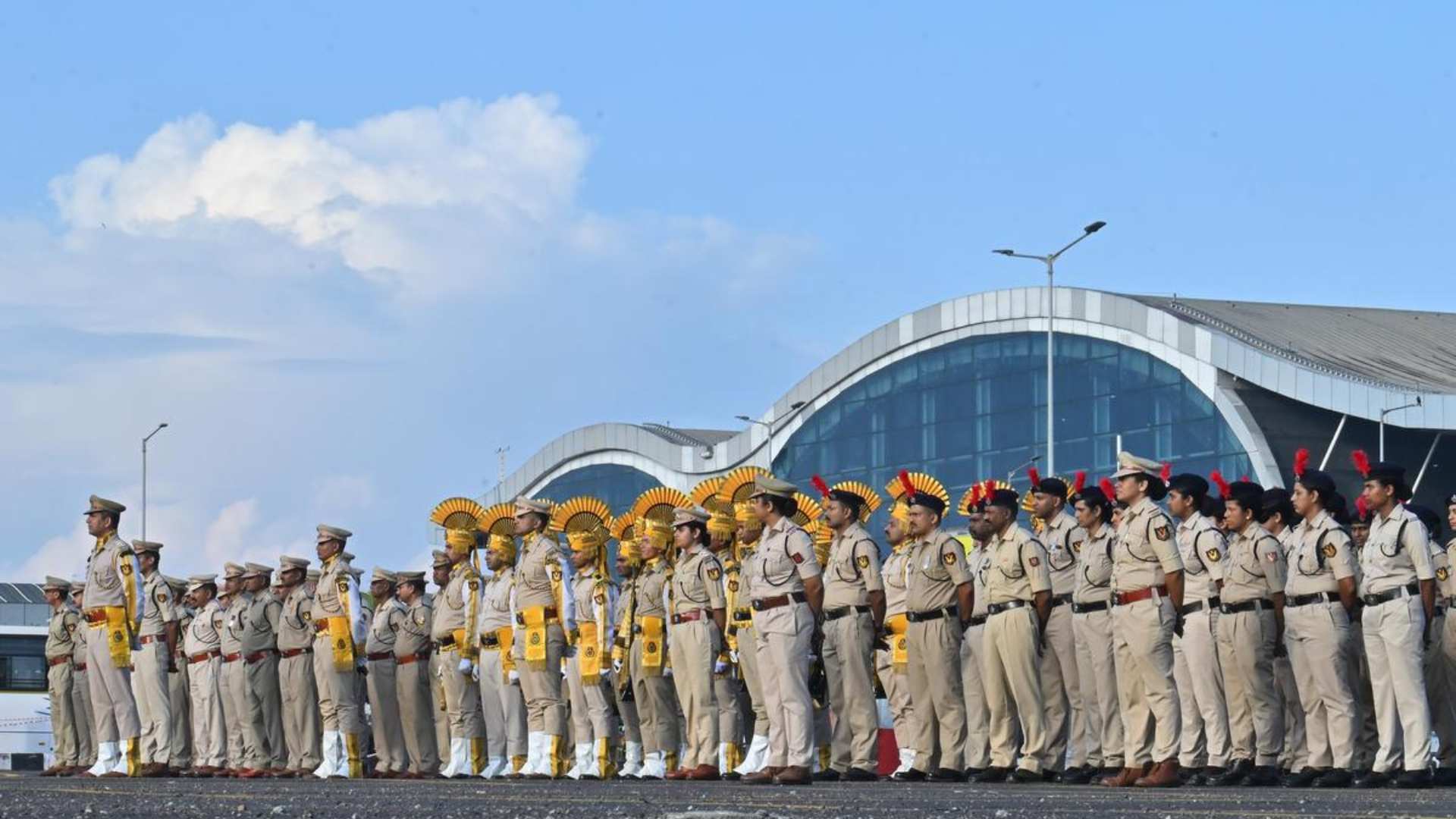
Strengthening the Role of IPS Officers in CAPFs

Introduction
India's Central Armed Police Forces — comprising nearly 10 lakh personnel across five forces — form the backbone of the country's internal security architecture. The question of who commands them has long been a flashpoint between CAPF cadre officers and the Indian Police Service. The Central Armed Police Forces (General Administration) Bill, 2026, introduced in the Rajya Sabha on March 25, seeks to codify IPS dominance at senior levels — and directly challenges a Supreme Court direction issued just months earlier.
| Key Detail | Fact |
|---|---|
| Bill introduced in | Rajya Sabha, March 25, 2026 |
| Forces covered | CRPF, BSF, CISF, ITBP, SSB |
| IG posts filled by IPS deputation | 50% |
| ADG posts filled by IPS deputation | Minimum 67% |
| SDG and DG posts | 100% IPS deputation |
| Supreme Court direction challenged | Sanjay Prakash & Others vs UOI (May 2025) |
"The IPS was envisaged by Sardar Patel as a unifying link between the Union and the States — officers who have lived up to that constitutional mandate for decades."
Background and Context
The CAPFs were historically commanded by IPS officers on deputation, with cadre officers (Group A General Duty Officers — GAGDO) rising only up to certain ranks. Over time, CAPF cadre officers demanded recognition as Organised Group A Services (OGAS) and reduction of deputation posts, arguing it created a permanent glass ceiling on their career progression.
In Sanjay Prakash & Others vs Union of India (May 2025), the Supreme Court ruled in their favour on two counts — directing a time-bound cadre review and mandating progressive reduction of IPS deputation posts up to the Inspector General (SAG) level within two years.
The 2026 Bill is widely seen as a legislative response to effectively overturn this judicial direction by codifying IPS deputation quotas in statute.
Key Provisions of the Bill
Deputation Structure:
| Rank | IPS Deputation Quota |
|---|---|
| Director General (DG) | 100% |
| Special Director General (SDG) | 100% |
| Additional Director General (ADG) | Minimum 67% |
| Inspector General (IG) | 50% |
| DIG and below | Governed by prevailing rules |
Other provisions:
- Financial benefits already granted to GAGDO officers are protected.
- Applies uniformly to all five CAPFs: CRPF, BSF, CISF, ITBP, and SSB.
- Institutionalises IPS presence at senior operational and administrative levels through legislation rather than executive orders.
Arguments in Favour of IPS Deputation
1. Federal coordination role: Most senior operational posts in states are held by ADG/SDG rank officers. IPS officers' training, selection process, and field experience in state forces give them an inherent advantage in coordinating with state police — the primary role of CAPFs.
2. Sardar Patel's vision: The IPS was constitutionally conceived as a unifying link between the Union and states. Senior IPS presence in CAPFs operationalises this federal vision.
3. Broader strategic vision: IPS officers bring inter-state and national security perspectives that pure CAPF cadre officers may lack given their force-specific exposure.
4. MHA empanelment reform: A January 2026 MHA notification already made a minimum two-year central stint mandatory for IPS empanelment at the IG rank — further cementing inter-institutional familiarity.
Arguments Against and Concerns Raised
1. Overriding judicial direction: The Bill is a direct legislative response to the Supreme Court's May 2025 ruling — raising questions about the legislature using its law-making power to nullify judicial directions on policy matters.
2. Career stagnation of CAPF cadre: GAGDO officers spend entire careers in these forces without ever reaching the apex posts. Codifying IPS dominance at senior levels institutionalises a permanent ceiling on their aspirations.
3. Separation of powers: The Court directed cadre review and reduction of deputation posts as a matter of service justice. Legislating against this direction tests the boundary between legitimate policy-making and circumvention of judicial authority.
4. Morale and operational impact: Permanently subordinating experienced CAPF cadre officers to IPS deputation appointees may affect institutional morale and long-term force cohesion.
Constitutional and Legal Dimensions
The Bill raises important questions across three constitutional domains:
Separation of Powers: The Supreme Court, in Sanjay Prakash, directed reduction of deputation posts as a service justice measure. The government's legislative response tests whether Parliament can use its plenary power to effectively nullify judicial directions on policy matters — a question at the heart of the doctrine of separation of powers.
Judicial Review vs. Policy Domain: The Court itself has held that "the wisdom and advisability of policies are ordinarily not amenable to judicial review unless contrary to statutory or constitutional provisions or arbitrary." The government invokes this principle to argue the Court overstepped by directing reduction of deputation — a pure policy matter.
Service Law: In Gazula Dasaratha Rama Rao vs State of Andhra Pradesh (1960), the Supreme Court held that service provisions do not enshrine fundamental rights — they relate to recruitment conditions and tenure. This precedent supports the government's position that CAPF cadre officers have no fundamental right to apex posts.
Conclusion
The CAPF (General Administration) Bill, 2026, encapsulates a deeper tension in Indian governance — between the career aspirations of specialised force officers, the federal coordination imperative that justifies IPS dominance, and the constitutional boundaries of judicial and legislative power. While the government's position on IPS as a unifying national service has historical and functional merit, the manner of legislating against a recent Supreme Court direction raises legitimate concerns about institutional comity. The long-term solution lies not in a zero-sum contest between IPS and CAPF cadres, but in meaningful cadre reviews, transparent promotion pathways, and a governance architecture that rewards both specialisation and inter-institutional coordination.
Attribution
Original content sources and authors

Syllabus classification
How this article maps to GS papers
Main syllabus
GS3Internal SecurityQuick Q&A
What are the key provisions of the Central Armed Police Forces (General Administration) Bill, 2026, and how does it seek to regulate CAPFs?
Key provisions include:
- Reservation of 50% of Inspector General (IG) posts and at least 67% of Additional Director General (ADG) posts for IPS officers on deputation
- All Special Director General (SDG) and Director General (DG) posts to be filled by IPS officers
- Continuation of existing deputation rules for ranks below Deputy Inspector General (DIG)
- Protection of financial benefits already granted to CAPF cadre officers
The Bill seeks to codify an existing administrative practice, providing legal clarity and reducing ambiguity in appointments. It also attempts to address coordination challenges between CAPFs and State police forces by ensuring leadership continuity through IPS officers.
However, the Bill has generated debate as it is perceived to counter the Supreme Court’s 2025 directive in the Sanjay Prakash case, which recommended reducing deputation posts. Thus, while the Bill strengthens administrative uniformity, it also raises questions about cadre autonomy and institutional balance.
Why is the deputation of IPS officers to CAPFs considered important for internal security management?
Key reasons for their importance include:
- Inter-agency coordination: IPS officers bring experience in state-level policing, facilitating smoother coordination with local authorities
- Leadership and training: Their rigorous selection, training, and field exposure provide them with a broader administrative and operational perspective
- National integration: As envisioned by Sardar Vallabhbhai Patel, IPS acts as a unifying administrative link across states and the Centre
For example, during counter-insurgency operations in Jammu & Kashmir or Left-Wing Extremism areas, CAPFs must work closely with State police. IPS officers, having served in both domains, help bridge operational gaps.
Additionally, recent policy changes such as mandatory central deputation for empanelment at IG rank further reinforce this integration. Thus, deputation is not merely an administrative arrangement but a strategic necessity for cohesive internal security management.
How does the Bill address the balance between cadre officers of CAPFs and deputation from the IPS?
Mechanisms for balance include:
- Retention of deputation quotas mainly at higher ranks (IG and above), leaving lower ranks open to cadre progression
- Protection of financial benefits and service conditions of existing CAPF officers
- Continuation of existing recruitment and promotion rules for non-deputation posts
For instance, a CAPF officer can still rise through the ranks up to certain levels, ensuring career progression within the force. At the same time, IPS officers bring external expertise at senior levels, which is seen as beneficial for strategic decision-making.
However, concerns remain among CAPF officers regarding limited upward mobility and perceived inequities. Addressing these concerns requires regular cadre reviews, transparent promotion policies, and capacity-building measures.
Thus, while the Bill institutionalises a dual structure, its success depends on maintaining a fair and motivating environment for both cadre and deputation officers.
What are the reasons behind the Supreme Court’s intervention in CAPF service matters, and how does the Bill respond to it?
Key reasons for judicial intervention included:
- Administrative delays: Pending cadre reviews affecting promotions
- Service grievances: Perceived stagnation among CAPF officers
- Equity concerns: Balancing opportunities between cadre and deputation officers
The Corporate Laws (Amendment) Bill responds by codifying deputation policies, asserting that such decisions fall within the domain of the executive and legislature. It emphasizes that the presence of IPS officers is a policy choice essential for operational effectiveness.
The Bill also indirectly challenges the Court’s directive by maintaining or even strengthening deputation provisions, thereby reasserting executive authority in policy matters.
This reflects a broader constitutional debate on separation of powers, where the judiciary interprets laws but does not ordinarily dictate policy unless it violates constitutional principles. The Bill thus represents an attempt to restore clarity and authority in administrative decision-making.
Critically analyze the implications of institutionalising IPS deputation in CAPFs on federalism and administrative efficiency.
Advantages include:
- Enhanced coordination: Seamless integration between CAPFs and State police forces
- Uniform standards: Consistency in leadership and operational practices
- Strategic oversight: Experienced officers handling complex security challenges
However, there are concerns regarding federal balance and cadre autonomy. CAPF officers may feel marginalized due to limited opportunities for top leadership roles, which could affect morale and efficiency. Additionally, over-centralisation of leadership may dilute the unique operational identity of individual forces.
From a federal perspective, while IPS officers act as a unifying link, excessive central control could be perceived as undermining the autonomy of forces that operate across diverse regional contexts.
Thus, the policy must ensure inclusive career progression, transparent governance, and respect for institutional diversity. A balanced approach can harness the benefits of integration while addressing concerns of equity and autonomy.
How does coordination between CAPFs and State police forces illustrate the need for IPS leadership? Provide examples.
For example, in Left-Wing Extremism (LWE)-affected areas, CAPFs like CRPF work closely with State police forces for intelligence sharing, area domination, and joint operations. IPS officers facilitate this coordination by understanding local dynamics and administrative structures.
Similarly, during border management and counter-terrorism operations in regions like Jammu & Kashmir, CAPFs such as BSF and ITBP must align their strategies with State police and other agencies. IPS officers help streamline command structures and communication channels.
Key contributions of IPS leadership include:
- Bridging institutional gaps between central and state agencies
- Ensuring uniform operational protocols
- Enhancing crisis response through integrated command
These examples highlight that IPS leadership is not merely administrative but operationally significant, ensuring cohesive and effective security management across jurisdictions.
Consider a scenario where CAPFs are deployed in a State facing internal security challenges. How would the provisions of the Bill impact command structure and operational efficiency?
With IPS officers at the helm, there would be greater alignment between CAPF operations and State police strategies. Their prior experience in state administration enables better coordination, faster decision-making, and effective resource utilisation. For instance, an IPS officer leading a CAPF unit in a conflict zone can integrate intelligence inputs from local police with central directives.
Operational benefits include:
- Unified command and control mechanisms
- Improved inter-agency communication
- Enhanced adaptability to local conditions
However, challenges may arise if CAPF cadre officers perceive limited leadership opportunities, potentially affecting morale. Additionally, over-reliance on deputation could lead to discontinuity if officers frequently rotate.
Thus, while the Bill can improve operational efficiency and coordination, its success depends on balancing leadership integration with cadre development, ensuring both effectiveness and institutional harmony.
The CAPF Bill, 2026 highlights the tension between IPS dominance and CAPF cadre aspirations, challenging judicial directions and testing separation of powers.
Practice questions
2 questions for mains preparation