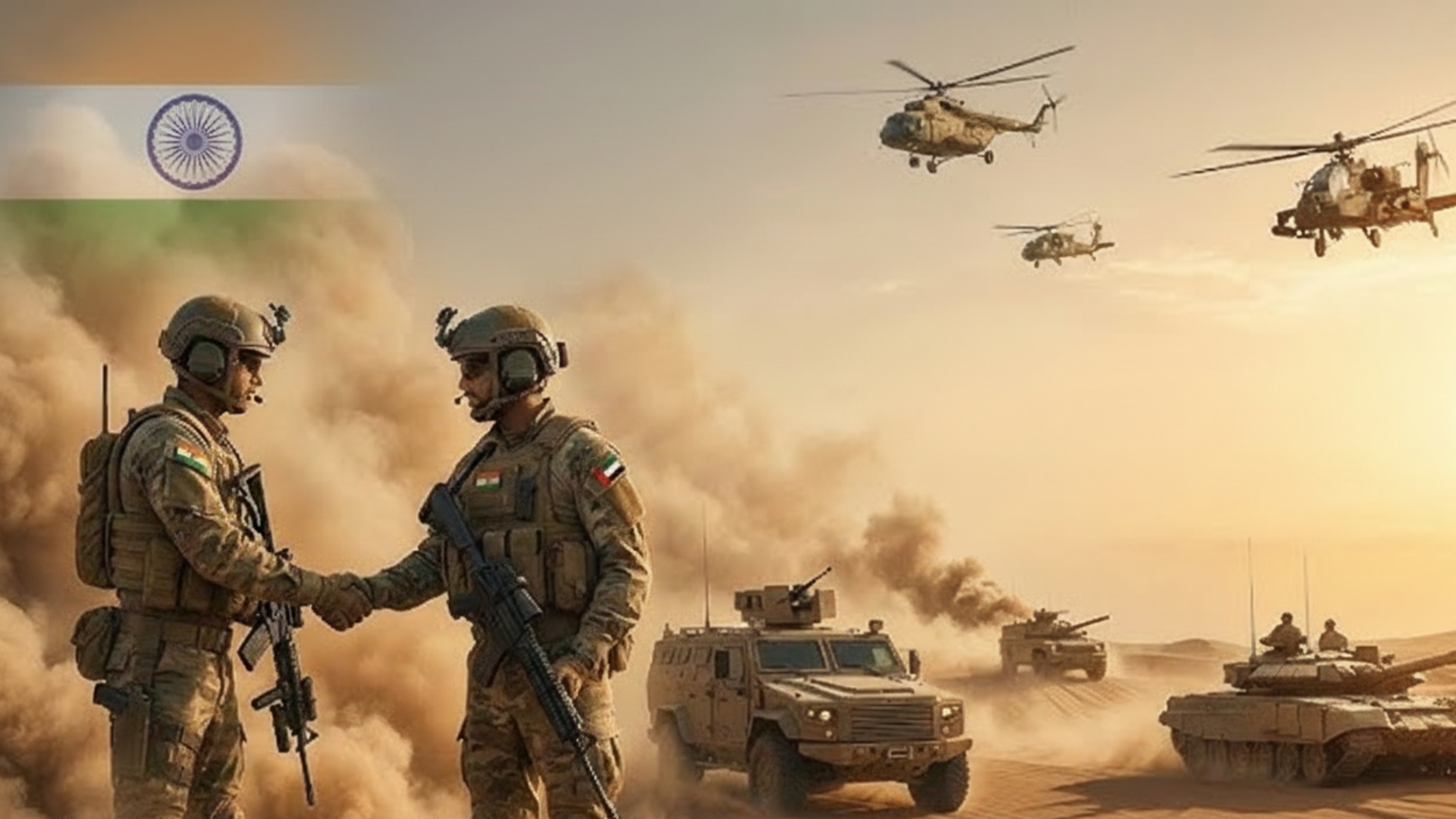
India-UAE Joint Exercise DESERT CYCLONE–II Concludes, Showcasing Urban Combat Synergy
 Surya
Surya
1. Context of Exercise DESERT CYCLONE–II
Exercise DESERT CYCLONE–II was conducted between the Indian Army and the UAE Land Forces from 18–30 December 2025 at Abu Dhabi, concluding at Al-Hamra Training City. It marked the second edition of the India–UAE Joint Military Exercise, aimed at strengthening bilateral defence cooperation. The exercise reflects the growing strategic partnership between India and the UAE, contributing to regional stability and security in West Asia.
Joint military exercises like this serve as a platform for mutual learning, capacity building, and interoperability enhancement, particularly in complex operational environments such as urban areas. For governance and policy, such exercises signal India’s proactive engagement in defence diplomacy, ensuring preparedness for regional contingencies while fostering international trust. Ignoring such collaborations can limit operational readiness and weaken strategic influence in geopolitically sensitive regions.
Effective defence cooperation reinforces a nation’s credibility in international security forums; lack of engagement can lead to strategic isolation and reduced capacity for joint operations.
2. Objectives and Operational Focus
The primary aim of DESERT CYCLONE–II was to enhance interoperability, operational synergy, and mutual trust between the two armies, with a focus on urban and sub-conventional operations under a United Nations mandate. The exercise combined classroom instruction with field-based practical drills, enabling troops to apply theoretical knowledge in real-life simulated scenarios.
Key operational areas included urban combat fundamentals, building clearance, IED awareness, casualty evacuation, first aid, and mission planning. Emphasizing UN-mandated sub-conventional operations prepares forces for peacekeeping or multinational deployments, aligning with India’s broader strategic interests in regional stability.
Integrating theory with practical drills ensures that troops are mission-ready and capable of operating seamlessly in combined operations; neglecting such preparation could compromise efficiency during actual deployments.
3. Practical Drills and Skill Enhancement
Practical drills in DESERT CYCLONE–II involved progressive exercises in built-up areas, such as room intervention, building clearance, heliborne operations, air assault missions, and platoon-level joint assaults. Both armies shared standardized tactics, techniques, and procedures, which are critical for interoperability during joint missions.
-
Impacts:
- Reinforces coordinated operational readiness for complex urban combat scenarios.
- Enhances capability in high-risk operations such as IED mitigation and casualty evacuation.
- Promotes mutual confidence and standardisation of procedures, essential for future multinational operations.
Practical skill integration reduces operational friction in combined missions; without such drills, joint operations could face miscoordination and operational inefficiency.
4. Composition and Institutional Collaboration
The Indian contingent included 45 personnel primarily from a battalion of The Mechanised Infantry Regiment, while the UAE was represented by the 53 Mechanised Infantry Battalion. The scale and composition of participants demonstrate focused collaboration rather than ceremonial display, emphasizing quality over quantity in joint preparedness.
-
Impacts:
- Encourages professional bonds between personnel, leading to smoother collaboration in operational theaters.
- Facilitates knowledge exchange on urban warfare and mechanised infantry tactics.
- Strengthens institutional frameworks for future bilateral and multinational exercises.
Strategically, involving key operational units ensures meaningful training outcomes; symbolic participation without operational relevance limits learning and interoperability.
5. Strategic Implications and Regional Significance
Exercise DESERT CYCLONE–II reinforces India–UAE defence ties and contributes to regional peace, security, and stability. It positions India as a reliable security partner in West Asia, complementing its broader foreign policy and strategic objectives.
-
Impacts:
- Enhances defence diplomacy and mutual strategic trust.
- Prepares forces for multinational peacekeeping and counter-terror operations.
- Signals India’s commitment to cooperative regional security frameworks, enhancing influence in geopolitical dialogues.
Strengthening military partnerships underlines a nation’s soft and hard power; failing to maintain such engagement may reduce influence over regional security narratives.
6. Conclusion and Way Forward
DESERT CYCLONE–II demonstrates the importance of joint exercises in operational readiness, bilateral trust, and regional security architecture. Continued iterations of such exercises will institutionalize interoperability, support India’s UN-mandated missions, and enhance preparedness for urban and sub-conventional warfare. Future exercises can expand scope to include multinational contingents, cyber operations, and hybrid threat scenarios, aligning with evolving defence and governance challenges.
Regular, structured military collaborations translate into stronger defence preparedness and strategic influence; sustained neglect could undermine operational efficacy and diplomatic leverage.
Attribution
Original content sources and authors

Syllabus classification
How this article maps to GS papers
Main syllabus
GS3Science & TechnologyQuick Q&A
What is the strategic significance of Exercise DESERT CYCLONE–II for India–UAE relations?
What were the key training components and operational focus of the exercise?
Why is DESERT CYCLONE–II relevant for India’s defence preparedness?
Practice questions
1 question for mains preparation