GS3 Science & Technology

SIPRI 2026: India Expands Nuclear Arsenal and Advances Strategic Modernisation

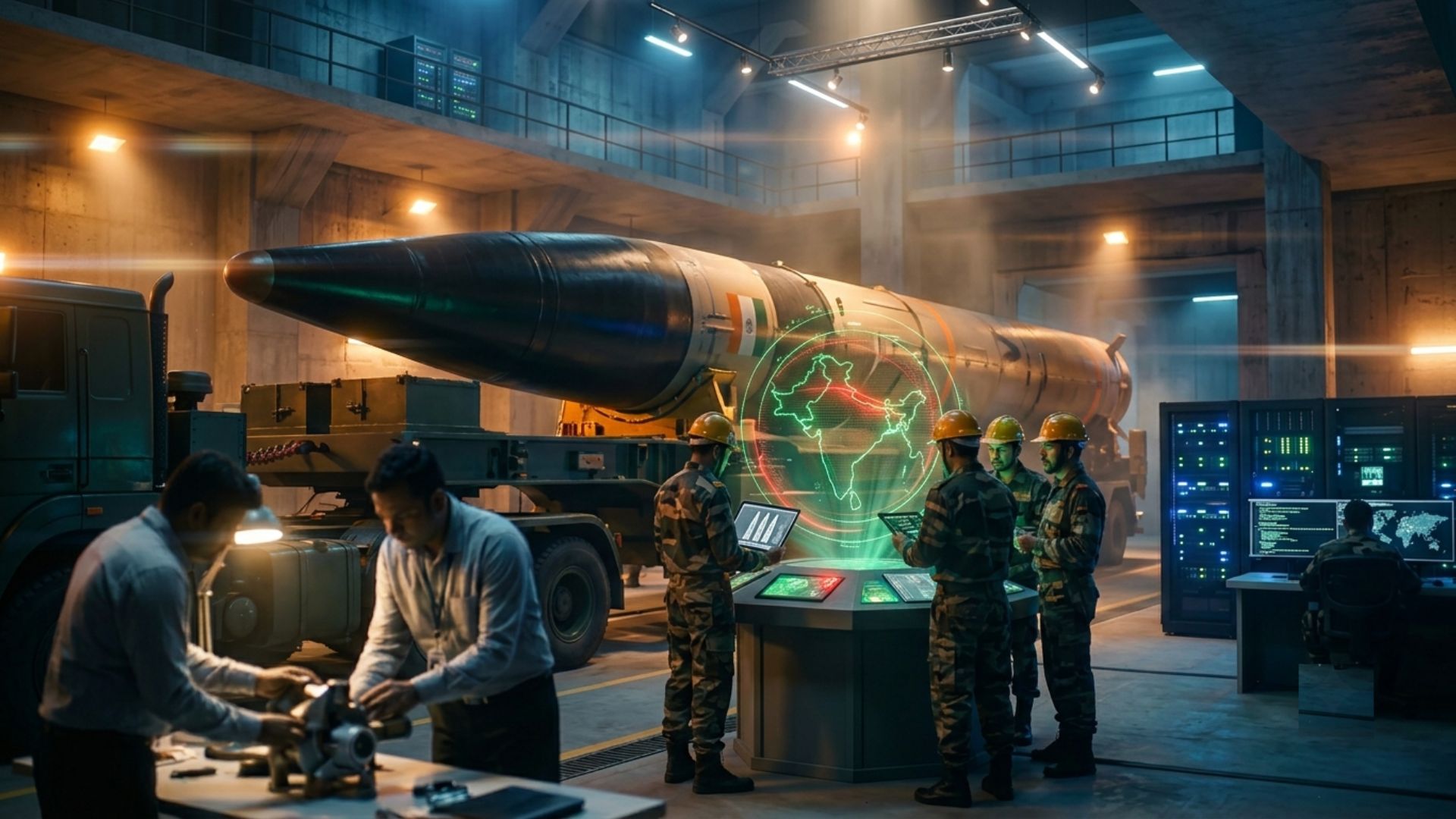
India's Nuclear Modernisation and the Changing Global Security Landscape

SIPRI Yearbook 2026 reveals India's nuclear developments amid regional tensions and evolving military strategies.
Gopi Gopi
4 mins read

“Nuclear weapons are the most destructive, inhumane and indiscriminate weapons ever created.” — United Nations

The Stockholm International Peace Research Institute (SIPRI) Yearbook 2026 highlights a world witnessing renewed strategic competition, military modernisation and growing reliance on nuclear deterrence. India's expanding nuclear capabilities, rising defence expenditure and evolving security challenges form an important part of this global picture.

What is SIPRI?

FeatureDetails
Full FormStockholm International Peace Research Institute
Established1966
HeadquartersStockholm, Sweden
Focus AreasArmaments, disarmament, military expenditure, arms trade and international security
Major PublicationSIPRI Yearbook

The Yearbook is widely regarded as one of the most authoritative assessments of global military and nuclear trends.

India's Nuclear Arsenal Expands

According to SIPRI:

Indicator2026 Estimate
Nuclear WarheadsAround 190
TrendModest increase from previous year
Focus AreaLonger-range delivery systems

Key Developments

  • India continued its nuclear modernisation programme.

  • Greater emphasis is being placed on:

    • Longer-range missiles
    • Enhanced delivery systems
    • Capability to reach targets across China
  • Simultaneously, India continues to address security concerns arising from its strategic rivalry with Pakistan.

India's Nuclear Priorities

Pakistan → Regional deterrence

China → Long-range strategic deterrence

Result → Modernisation of delivery systems

Operation Sindoor and Nuclear Risks

SIPRI described the May 2025 India-Pakistan military confrontation as an:

"Unusually severe military crisis"

Observations from the Report

  • India reportedly conducted strikes against Pakistani air and missile bases.
  • Some of these facilities were assessed as having potential nuclear-related roles.
  • Despite escalation, both countries acted to avoid uncontrolled conflict expansion.

Significance

The episode demonstrates:

  • Risks associated with nuclear-armed neighbours.
  • Importance of crisis-management mechanisms.
  • Continued relevance of deterrence in South Asia.

Emergence of Cyber Warfare

One of the most significant observations in the report is the integration of cyber operations into active military conflict.

Why It Matters

For the first time:

  • India and Pakistan reportedly employed cyber tools during a military confrontation.
  • Cyber capabilities are becoming part of modern deterrence strategies.
Traditional Warfare
      ↓
Missiles + Air Power
      ↓
Cyber Operations
      ↓
Hybrid Warfare Environment

This reflects the changing character of warfare in the digital age.

India's Defence Spending Continues to Rise

India remained among the world's largest military spenders.

Country RankingDefence Spending Position
1United States
2China
3Russia
4Germany
5India

India's Military Expenditure

YearSpending
2025$92.1 Billion
Growth8.9% increase over previous year

The increase reflects:

  • Modernisation requirements
  • Border security concerns
  • Technological upgrades
  • Strategic competition in the Indo-Pacific

India's Position in Global Arms Imports

SIPRI reported that India remained the second-largest importer of major arms during 2021-25.

Share in Global Arms Imports

CountryStatus
UkraineMajor importer
IndiaSecond largest importer
Saudi ArabiaMajor importer
QatarMajor importer
PakistanMajor importer

Together, these countries accounted for 35% of global arms imports.

India alone accounted for 8.2% of global imports during the period.

A major finding of SIPRI is that all nine nuclear-armed states continue to modernise their arsenals.

Nuclear-Armed States

  • United States
  • Russia
  • United Kingdom
  • France
  • China
  • India
  • Pakistan
  • North Korea
  • Israel

Global Nuclear Inventory

IndicatorEstimate (2026)
Total Nuclear Warheads12,187
Military Stockpiles9,745

Emerging Concern

Although total global warhead numbers continue to decline due to dismantling of retired weapons by the United States and Russia:

  • Reduction rates are slowing.
  • New warheads are being added.
  • Nuclear weapons are increasingly viewed as instruments of national power.

Way Forward

  • Strengthen strategic stability and confidence-building measures in South Asia.
  • Enhance crisis communication channels between nuclear powers.
  • Develop international norms governing cyber warfare.
  • Promote nuclear risk-reduction initiatives and arms-control dialogues.
  • Invest in credible deterrence while maintaining responsible nuclear stewardship.
  • Revitalize global disarmament efforts through multilateral cooperation.

Conclusion

The SIPRI Yearbook 2026 underscores a world moving toward renewed strategic competition rather than nuclear restraint. India's expanding arsenal, military modernisation and evolving deterrence posture reflect changing regional security dynamics involving both China and Pakistan. At the same time, the rise of cyber warfare and the continued global reliance on nuclear weapons highlight the urgent need for stronger arms-control frameworks, responsible state behaviour and sustained diplomatic engagement to preserve international peace and stability.

Attribution

Original content sources and authors

The Hindu Bureau Author The Hindu Bureau The Hindu Source The Hindu

Syllabus classification

How this article maps to GS papers

Main syllabus

GS3Science & Technology

Quick Q&A

What is nuclear deterrence and how does India's nuclear modernization programme reflect its strategic priorities?
Nuclear deterrence refers to the strategic doctrine under which a country maintains nuclear weapons to discourage adversaries from initiating military aggression. The fundamental principle is that the threat of unacceptable retaliation prevents conflict escalation. India adopted a nuclear doctrine based on 'credible minimum deterrence' and a 'No First Use' policy after conducting the Pokhran-II nuclear tests in 1998. Since then, India has sought to maintain sufficient capabilities to ensure national security without engaging in an unrestricted arms race. According to the Stockholm International Peace Research Institute (SIPRI) Yearbook 2026, India's nuclear arsenal increased to around 190 warheads by early 2026. India's ongoing modernization programme focuses increasingly on developing longer-range delivery systems capable of reaching targets across China, while simultaneously addressing security challenges arising from its long-standing rivalry with Pakistan. Modernization includes improvements in land-based missiles, sea-based deterrence through nuclear-powered submarines and advanced air-delivery capabilities. Such developments are aimed at maintaining the credibility of India's nuclear triad. Supporters argue that modernization is necessary given China's expanding arsenal and regional instability, whereas critics warn against the risks of an arms race. For UPSC aspirants, the topic is relevant to GS-III (Defence and Internal Security), GS-II (International Relations) and Essay, highlighting broader themes such as strategic autonomy and deterrence theory.
Why is India's nuclear and defence modernization increasingly important in the changing global security environment?
India's nuclear and defence modernization has acquired greater significance due to evolving geopolitical realities and technological changes in warfare. The international security environment is characterized by strategic rivalry among major powers, regional conflicts and the modernization of arsenals by all nine nuclear-armed states. According to SIPRI Yearbook 2026, all nuclear powers continued to strengthen their capabilities and increasingly relied on nuclear weapons as instruments of national power. India faces a unique strategic challenge because of two nuclear-armed neighbours, China and Pakistan. China's military modernization and expanding missile capabilities have compelled India to enhance its own long-range deterrence systems, while its historical rivalry with Pakistan necessitates maintaining credible defence preparedness. India's defence expenditure reached approximately 92.1 billion dollars in 2025, representing an increase of 8.9% over the previous year, making it the world's fifth-largest military spender. Supporters emphasize deterrence and strategic stability, whereas critics caution against excessive military expenditure and the possibility of regional arms races. Balancing national security requirements with developmental priorities remains a major challenge. For UPSC preparation, this issue is relevant to GS-II (International Relations), GS-III (Science and Technology, Defence and Security) and Essay.
How did the India-Pakistan confrontation and Operation Sindoor demonstrate the changing character of modern warfare and deterrence?
The India-Pakistan military confrontation of May 2025, described by SIPRI Yearbook 2026 as an 'unusually severe military crisis', demonstrated how modern warfare is evolving beyond conventional engagements. During Operation Sindoor, India reportedly conducted strikes against Pakistani air and missile bases associated with nuclear-related roles. Despite heightened tensions, both countries adopted measures to avoid uncontrolled escalation, highlighting the continued importance of nuclear deterrence in South Asia. A significant aspect of the crisis was the integration of cyber operations into active military conflict. According to SIPRI, this marked the first occasion when India and Pakistan incorporated cyber capabilities during a direct military confrontation. This development reflects the emergence of hybrid warfare, where conventional operations are combined with cyber attacks, electronic warfare and information campaigns. The crisis also demonstrated escalation management and strategic restraint, preventing a nuclear exchange despite severe tensions. For UPSC aspirants, the issue connects with GS-III (Internal Security and Defence Technology) and GS-II (International Relations), emphasizing themes such as cyber security, crisis management and the impact of emerging technologies on warfare.
What are the strategic implications and challenges associated with the global trend of nuclear modernization?
The global trend of nuclear modernization represents one of the most significant strategic developments of the twenty-first century. According to SIPRI Yearbook 2026, all nine nuclear-armed states—the United States, Russia, China, France, the United Kingdom, India, Pakistan, North Korea and Israel—continued modernizing their nuclear arsenals. At the beginning of 2026, the world possessed approximately 12,187 nuclear warheads, of which around 9,745 were available in military stockpiles. Supporters argue that evolving security threats and technological advancements require countries to maintain credible deterrence. Emerging technologies such as hypersonic missiles and cyber capabilities have transformed strategic calculations. However, critics warn that modernization increases the risk of arms races and undermines global disarmament efforts. Although overall warhead numbers have declined because of dismantling by the United States and Russia, the pace of reductions is slowing as new warheads are added to stockpiles. Another concern is the weakening of arms control mechanisms and the increasing role of nuclear weapons as instruments of political influence. For UPSC aspirants, the topic is relevant to GS-II (International Relations), GS-III (Defence and Technology) and Essay, requiring a balanced approach that combines deterrence with arms control and strategic dialogue.
What examples and statistics from SIPRI Yearbook 2026 highlight India's growing defence capabilities and strategic profile?
The SIPRI Yearbook 2026 provides several indicators demonstrating India's expanding defence capabilities and strategic significance. One important example is India's estimated nuclear stockpile, which reached approximately 190 warheads by early 2026. This reflects continuing efforts to maintain credible minimum deterrence and strengthen strategic capabilities vis-à-vis China and Pakistan. Another major indicator is defence expenditure. India spent around 92.1 billion dollars on defence in 2025, an increase of 8.9% over the previous year, making it the world's fifth-largest military spender after the United States, China, Russia and Germany. India also emerged as the world's second-largest importer of major arms during the 2021-25 period, accounting for 8.2% of global arms imports. Together with Ukraine, Saudi Arabia, Qatar and Pakistan, India formed part of the five largest arms-importing countries, collectively accounting for 35% of global imports. Another significant example was the integration of cyber operations during the India-Pakistan confrontation of 2025, reflecting the growing importance of technological capabilities in warfare. These examples demonstrate India's transition into a major strategic actor. For UPSC preparation, these statistics are relevant to GS-III (Defence and Security), GS-II (International Relations) and Essay.
How does the SIPRI Yearbook serve as a case study for understanding contemporary defence technologies and strategic competition?
The Stockholm International Peace Research Institute (SIPRI), established in 1966 and headquartered in Sweden, is one of the world's leading institutions studying armaments, military expenditure and international security. The SIPRI Yearbook serves as an authoritative case study for understanding contemporary defence technologies and strategic competition. The 2026 report highlights how traditional military power is increasingly intertwined with emerging technologies such as cyber warfare, missile defence systems and advanced delivery mechanisms. Its analysis of the India-Pakistan confrontation illustrates the growing significance of hybrid warfare and cyber capabilities. Another important lesson is the persistence of nuclear deterrence despite decades of disarmament efforts. While overall warhead numbers have declined compared with the Cold War era, modernization programmes among all nuclear powers indicate that strategic competition remains intense. The report also demonstrates the relationship between economic strength and military capability, with India emerging as the fifth-largest military spender and second-largest arms importer. For UPSC aspirants, SIPRI provides an analytical framework for understanding GS-III topics related to defence technologies and GS-II themes concerning international relations. It also offers insights into strategic stability, arms control, technological transformation and the future of global governance.

Practice questions

1 question for mains preparation

The nature of deterrence is undergoing significant transformation with the modernization of nuclear arsenals and the emergence of new domains of warfare. Discuss the evolving dynamics of nuclear deterrence in South Asia and examine the challenges posed by cyber capabilities and strategic competition to regional stability.

10 marks · 150 words · 8 mins
