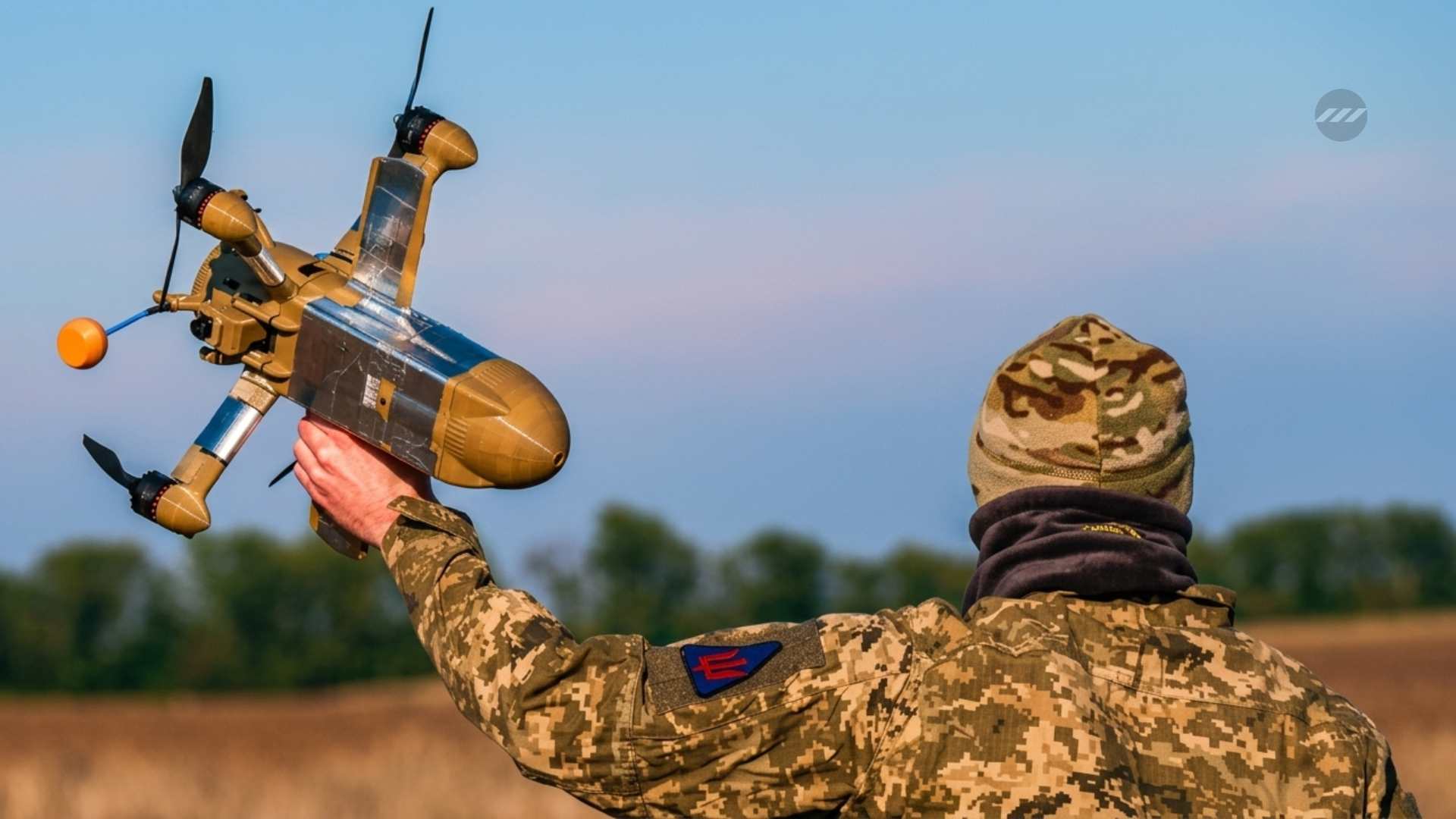
How Drones are Reshaping Modern Warfare in Ukraine and West Asia

Introduction
- The global military landscape is witnessing a shift toward low-cost, high-impact drone warfare, with conflicts like Ukraine demonstrating its transformative role.
- A $20,000 drone can neutralise assets worth millions, fundamentally altering cost equations in warfare.
- “Technology is reshaping war faster than strategy can adapt.”
“The future of warfare lies not in bigger weapons, but in smarter and cheaper ones.”
Background / Context
-
Traditional warfare relied on:
- Fighter jets
- Cruise missiles
- Large-scale troop deployment
-
Today, warfare is increasingly:
- Decentralised
- Low-cost
- Technology-driven
👉 Drones have evolved from auxiliary tools to primary weapons systems across conflicts in:
- Ukraine
- West Asia
- Yemen
Key Concept: Drone Warfare
Unmanned Combat Aerial Vehicles (UCAVs)
-
Remotely operated or autonomous systems
-
Used for:
- Surveillance
- Precision strikes
- Reconnaissance
Features of New-Age Drone Warfare
| Feature | Explanation |
|---|---|
| Low Cost | Affordable compared to missiles/jets |
| Mobility | Can be launched from trucks/mobile platforms |
| Decentralisation | No need for large infrastructure |
| Scalability | Can be deployed in swarms |
| Accessibility | Usable by non-state actors |
Case Study: Iran’s Shahed Drones
-
Example: Shahed-136
- Range: ~2,500 km
- Warhead: ~40 kg
- Guidance: GPS-based
👉 Key Characteristics:
- One-way attack drones (loitering munitions)
- Launched from mobile platforms
- Difficult to detect and intercept
👉 Strategic Advantage:
- Cost-effective asymmetry
- Can overwhelm advanced air defence systems
📌 Impact:
- Enables middle powers and proxy groups to challenge stronger militaries
Case Study: Ukraine War (2022–Present)
- First large-scale drone-intensive conflict
- Key developments:
1. Grassroots Innovation
-
Use of:
- Hobby drones
- FPV (First-Person View) drones
👉 Result:
- Cheap drones destroying expensive tanks
2. Tactical Evolution
-
Russia:
- Use of Iranian Shahed drones
-
Ukraine:
-
Developed:
- Drone interception systems
- “Drone walls”
- Acoustic detection networks
-
3. Outcome
-
Demonstrated:
- Drones > expensive missiles (cost-efficiency)
- Rapid adaptation through civilian-military collaboration
Emerging Trends in Warfare
1. Decentralisation of War
-
Warfare no longer limited to:
- Battlefields
-
Now extends to:
- Civilian areas
- Urban centres
2. “Ambient Warfare”
-
Conflict becomes:
- Continuous
- Borderless
👉 Civilians face:
- Constant threat
- Psychological stress
3. Decline of Air Supremacy
-
Traditional air dominance challenged by:
- Drone swarms
- Low-cost aerial threats
4. Rise of Non-State Actors
-
Groups like:
- Houthis
- Hezbollah
👉 Use drones for:
- Attacks
- Surveillance
Countermeasures & Defence Systems
| Country | Strategy |
|---|---|
| Ukraine | Acoustic detection + interceptor drones |
| Israel | Integrated defence + Iron Beam laser |
| USA | Cost-matched drone interceptors (LUCAS) |
👉 Emerging solutions:
- Multi-layered defence
- AI-based detection
- Laser interception
Implications
1. Strategic
- Redefines military doctrines
- Reduces importance of traditional weapons
2. Economic
-
Creates:
- Cost asymmetry (cheap attack vs costly defence)
3. Security
-
Expands battlefield into:
- Civilian zones
-
Increases unpredictability
4. Legal & Ethical
-
Challenges:
- International humanitarian law
-
Issues:
- Autonomous targeting
- Civilian safety
Key Challenges
- Lack of global regulations on drone warfare
- Difficulty in attribution (who launched attacks)
- Increased risk of escalation
- Proliferation to non-state actors
Comparative Insight
| Traditional Warfare | Drone Warfare |
|---|---|
| High cost | Low cost |
| Centralised | Decentralised |
| Limited actors | State + non-state actors |
| Defined battlefields | Borderless conflict |
Implications for India
-
Need to:
- Strengthen anti-drone systems
- Develop indigenous drone tech
- Enhance border surveillance
-
Focus on:
- Defence innovation
- Cyber-electronic warfare integration
Way Forward
1. Develop Counter-Drone Ecosystems
- Radar + AI + laser systems
2. Strengthen Legal Frameworks
-
International norms for:
- Drone usage
- Autonomous weapons
3. Promote Indigenous Capability
-
Investment in:
- Defence startups
- UAV technology
4. Global Cooperation
-
Share:
- Intelligence
- Best practices
Conclusion
The rise of drone warfare represents a paradigm shift in military strategy, where cost efficiency, decentralisation, and technological adaptability outweigh traditional military strength. While it democratises warfare, it also introduces serious risks of escalation, legal ambiguity, and civilian vulnerability. The challenge for nations lies in adapting defence systems and governance frameworks to this rapidly evolving domain.
Attribution
Original content sources and authors


Syllabus classification
How this article maps to GS papers
Main syllabus
GS3Science & TechnologyQuick Q&A
What is meant by the emerging ‘drone revolution’ in warfare, and how does it differ from traditional military doctrines?
Key differences from traditional doctrines:
- Cost asymmetry: A drone costing a few thousand dollars can destroy assets worth millions.
- Decentralisation: Operations can be conducted from mobile platforms such as trucks.
- Reduced human risk: No pilots or direct combat exposure is required.
- Rapid adaptability: Civilian innovation (e.g., hobby drones) feeds into military applications.
For example, in the Ukraine war, simple FPV drones were used to destroy tanks and armoured vehicles, demonstrating how inexpensive tools can neutralise sophisticated systems.
Broader implications: The drone revolution signifies a paradigm shift where technological accessibility replaces traditional military superiority. Air supremacy, once monopolised by powerful nations, is now contested. This transition challenges long-standing doctrines of deterrence and compels militaries to rethink force structures, procurement priorities, and defensive strategies in an increasingly unpredictable battlefield.
Why are Iran’s Shahed drones considered strategically significant in modern conflicts?
Key features contributing to significance:
- Mobility: Launch systems mounted on trucks eliminate the need for airbases.
- Swarm capability: Large numbers can overwhelm air defence systems.
- Cost-effectiveness: Forces adversaries to use expensive interceptors.
- Operational flexibility: Can be deployed by proxies like Hezbollah or Houthis.
For instance, Russia’s use of Shahed drones in Ukraine demonstrated their ability to inflict damage on critical infrastructure while exhausting Ukrainian air defences.
Geopolitical implications: Shahed drones alter the balance of power by enabling states under sanctions to maintain credible deterrence. They also facilitate proxy warfare, where attacks can be launched indirectly, complicating attribution and escalation control. This makes them not just tactical tools but strategic assets shaping regional security dynamics.
How did the Ukraine war act as a catalyst for large-scale drone innovation and deployment?
Drivers of innovation:
- Grassroots participation: Civilians, startups, and volunteers contributed to drone development.
- Rapid iteration: Continuous battlefield feedback improved designs.
- Integration with digital tools: Use of real-time intelligence and FPV systems.
- Adaptation to countermeasures: Development of fiber-optic drones to bypass jamming.
A notable example is the use of FPV drones equipped with grenades to destroy tanks and armoured vehicles, significantly lowering the cost of battlefield engagement.
Strategic outcomes: The war demonstrated that innovation ecosystems, rather than just defence budgets, determine military effectiveness. It also blurred the line between civilian and military roles, as ordinary citizens became contributors to war efforts. This model of distributed innovation is now being emulated globally, particularly by countries like Iran, marking a shift towards more agile and adaptive warfare systems.
Critically analyse the claim that ‘air supremacy is becoming obsolete’ in the age of drones.
Supporting factors:
- Cost imbalance: Cheap drones vs expensive interceptors.
- Decentralised deployment: Hard to detect and pre-empt.
- Proliferation: доступible to non-state actors.
- Persistent threat: Continuous low-intensity attacks create ‘ambient warfare’.
However, declaring air supremacy obsolete may be premature.
Counterarguments: Advanced systems like Israel’s Iron Beam laser and F-35 sensor fusion demonstrate high interception rates. Multi-layered defence systems combining radar, AI, and interceptor drones can still maintain control over airspace. Moreover, traditional air power remains crucial for large-scale operations, strategic bombing, and deterrence.
Conclusion: Rather than becoming obsolete, air supremacy is being redefined. It now requires integration of drone defence, electronic warfare, and cost-effective interception methods. The future lies in hybrid systems where traditional and emerging technologies coexist.
Provide examples of how different countries have adapted to the challenges posed by drone warfare.
Key examples:
- Ukraine: Developed ‘drone walls’ and used acoustic sensors, 3D radar, and open-source intelligence for early detection and interception.
- Israel: Employs advanced systems like F-35 sensor fusion and the Iron Beam laser, achieving over 95% interception rates against drone threats.
- United States: Introduced LUCAS drones, designed as cost-effective interceptors similar to Shahed drones.
- Gulf nations: Collaborated with Ukraine to improve ‘kill chains’ and reduce response times.
These examples illustrate how nations are prioritising speed, scalability, and affordability in defence strategies.
Lessons learned: Effective countermeasures require a combination of technology, intelligence, and coordination. The emphasis is shifting from individual systems to networked defence ecosystems. This evolution highlights the importance of adaptability in modern warfare, where threats evolve rapidly and unpredictably.
Discuss the concept of ‘ambient warfare’ with reference to recent drone conflicts and its implications for civilians.
Case studies:
- Ukraine: Villages far from the frontlines have faced drone strikes, creating a sense of მუდმ danger.
- Israel: Towns remain on alert for drones launched from Yemen or Lebanon.
- Iran: Previously secure locations are now exposed to sudden, remote attacks.
In these contexts, civilians experience continuous anxiety, with air raid alarms becoming part of daily life.
Implications:
- Psychological impact: Persistent fear and stress among civilian populations.
- Blurring of combatant roles: Civilians may become participants in defence or innovation.
- Legal challenges: International humanitarian law struggles to regulate autonomous or remote attacks.
- Escalation risks: Easy deployment lowers thresholds for conflict.
Conclusion: Ambient warfare represents a fundamental shift in how conflicts are experienced and governed. It demands new legal frameworks, improved civil defence systems, and international cooperation to mitigate its human and ethical consequences.
What are the major risks and challenges associated with the rapid proliferation of drone warfare?
Major challenges:
- Escalation dynamics: A low-cost drone attack can provoke disproportionately expensive retaliation.
- Attribution issues: Proxy usage complicates identification of the attacker.
- Legal gaps: International humanitarian law is ill-equipped to handle autonomous targeting systems.
- Proliferation to non-state actors: террорист groups can access advanced capabilities.
For example, attacks by Houthis on Red Sea shipping demonstrate how non-state actors can disrupt global trade using drones.
Economic and political implications: The cost imbalance strains national budgets, as defending against cheap drones requires expensive systems. Politically, governments face pressure to respond decisively, increasing the risk of escalation. Additionally, the erosion of deterrence mechanisms—such as pilot risk—makes conflicts more frequent and less predictable.
Way forward: Addressing these challenges requires international regulation, technological innovation, and cooperative security frameworks. Without these measures, drone proliferation could lead to prolonged, low-intensity conflicts with significant humanitarian consequences.
Practice questions
1 question for mains preparation