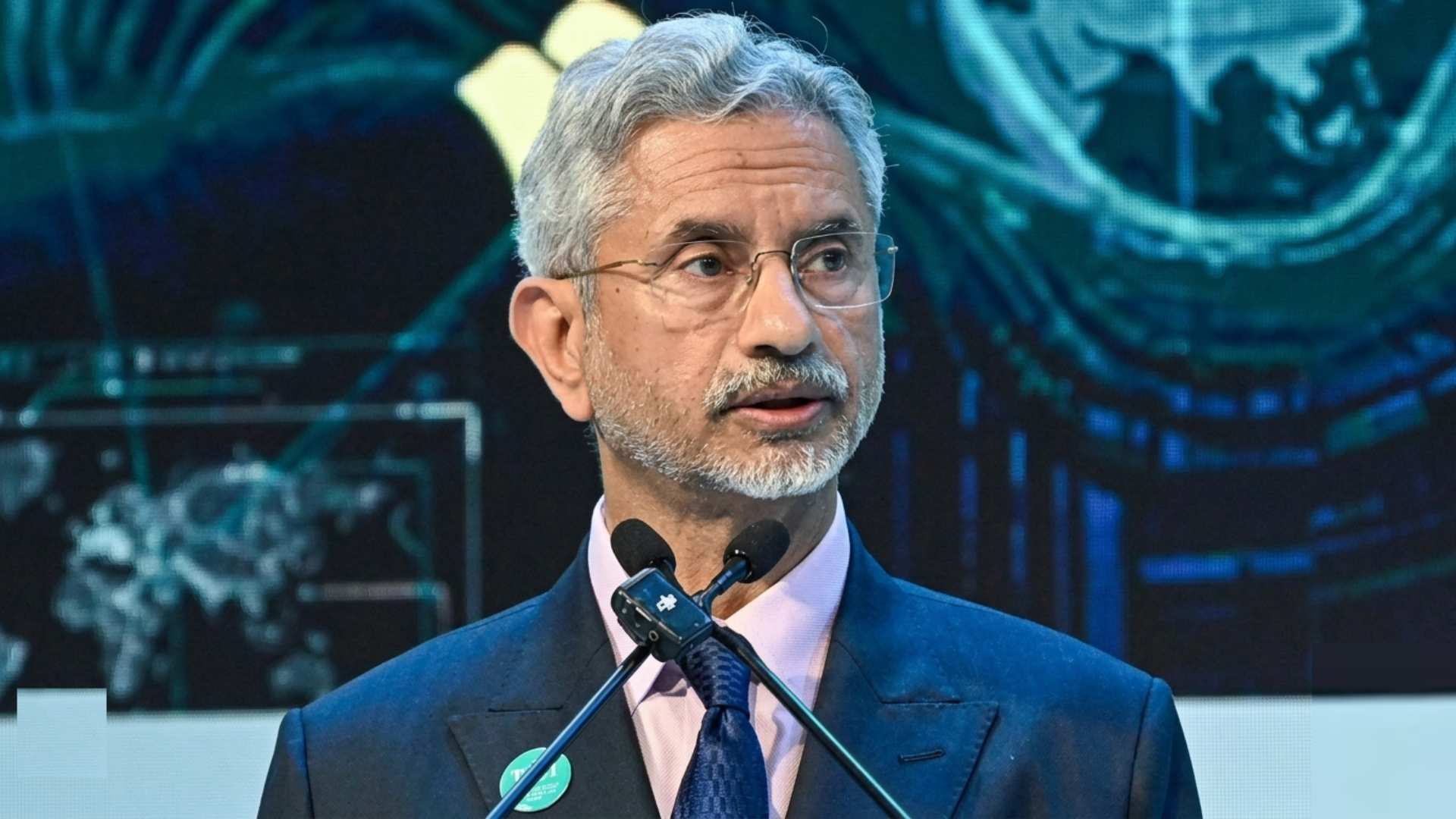
India Seeks Constructive Engagement with New Bangladesh Government
Introduction
"Geography is the mother of strategy." — Sir Halford Mackinder
India and Bangladesh share one of South Asia's most strategically significant bilateral relationships — a 4,156 km border, deep civilisational ties, and interlocking security, energy, and economic interests. The political transition in Bangladesh following the fall of Sheikh Hasina's government (August 5, 2024) created an unprecedented diplomatic stress point. The April 2026 visit of Bangladesh's Foreign Minister Khalilur Rahman to New Delhi signals the beginning of a structured diplomatic reset — critical for India's neighbourhood-first policy and its strategic depth in the Bay of Bengal region.
| Parameter | Data |
|---|---|
| India-Bangladesh shared border | 4,156 km |
| Bangladesh's rank in India's export destinations | Top 2 in South Asia |
| Hasina government's fall | August 5, 2024 |
| First high-level bilateral visit post-transition | April 7–8, 2026 |
| Diesel supplied by India (March 2026) | 5,000 metric tonnes |
Background & Context
- Sheikh Hasina's government collapsed in August 2024 amid mass protests; she fled to India
- Muhammad Yunus-led interim government took charge; Tarique Rahman's party now holds political influence
- India-Bangladesh ties entered a prolonged period of diplomatic uncertainty — Indian visa issuance slowed significantly for over 18 months
- Bangladesh's new leadership adopted a "Bangladesh First" foreign policy posture, signalling recalibration away from Hasina-era India proximity
- Khalilur Rahman had earlier visited India in November 2025 as National Security Adviser under the Yunus interim government
Key Outcomes of April 2026 Talks
Diplomatic:
- India reaffirmed desire for constructive engagement with the new government
- Both sides agreed on follow-on official meetings through bilateral mechanisms
- Bangladesh conveyed its "Bangladesh First" foreign policy principle
Security Assurances from Bangladesh:
- Bangladesh will not allow its soil to be used against Indian interests
- No new security pacts with the US, China, or Pakistan
- Broader bilateral relations will not be held hostage to the Hasina extradition issue
Extradition Demand:
- Bangladesh formally reiterated request for extradition of:
- Former PM Sheikh Hasina
- Former Home Minister Asaduzzaman Khan Kamal
- Both sentenced to death by Bangladesh's International Crimes Tribunal (ICT)
Visa & People-to-People:
- India indicated easing of medical and business visas for Bangladeshi nationals in coming weeks
Energy Cooperation:
- Bangladesh acknowledged India's March 2026 diesel supply (5,000 MT)
- Requested increased volume of diesel and fertiliser supply
- Minister Hardeep Puri indicated India would consider the request favourably
Sporting Ties:
- Bangladesh raised concern over cancellation of Mustafizur Rahman's IPL contract linked to minority rights issues
- Bangladesh Cricket Board indicated willingness to invite India for a Test series
Key Concepts & Strategic Dimensions
India's Neighbourhood First Policy
- Bangladesh is a critical pillar — connectivity, trade, anti-insurgency cooperation, and energy transit
- Losing Bangladesh to Chinese or Pakistani strategic influence would be a significant setback for India
Hasina Factor
- Hasina's presence in India is India's most sensitive leverage point
- Bangladesh seeks assurances her public statements will be curtailed and Indian territory not used for political purposes
- India faces a dilemma: extraditing Hasina risks diplomatic embarrassment; refusing strains normalisation
China-Pakistan Variable
- Bangladesh's assurance of no security pacts with China or Pakistan is strategically significant
- China has been actively expanding its footprint in Bangladesh through BRI investments
| Issue | India's Concern | Bangladesh's Position |
|---|---|---|
| Sheikh Hasina | Extradition diplomatically sensitive | Legal obligation; domestic political necessity |
| Security pacts | No China/Pakistan military alignment | Sovereignty; multi-vector foreign policy |
| Minority rights | Persecution of Hindus in Bangladesh | Internal matter; working to address |
| Visa slowdown | Leverage/signalling tool | Humanitarian concern; economic impact |
| Energy supply | Regional goodwill building | Practical necessity |
Implications
For India:
- Normalisation prevents strategic vacuum being filled by China
- Energy diplomacy (diesel, fertiliser) is a low-cost, high-goodwill tool
- Hasina extradition remains an unresolved irritant with no easy resolution
For Bangladesh:
- Visa easing addresses urgent humanitarian and business needs
- Energy security (diesel, fertilisers) is critical for economic stability
- "Bangladesh First" posture signals independence without hostility
For the Region:
- Stability in India-Bangladesh ties is essential for BIMSTEC and Bay of Bengal cooperation
- Indian Ocean Conference participation by Bangladesh signals multilateral convergence
Challenges Ahead
- Hasina extradition will remain a recurring flashpoint
- Minority rights concerns in Bangladesh create domestic political pressure in India
- Bangladesh's multi-vector diplomacy (engaging China, US simultaneously) limits India's exclusive strategic leverage
- Institutionalising the reset requires sustained diplomatic engagement beyond high-level visits
Conclusion
The April 2026 India-Bangladesh talks represent a pragmatic, interest-driven diplomatic recalibration by both sides. India's willingness to engage the new Dhaka establishment — despite the unresolved Hasina question — reflects the strategic imperative of maintaining its most important land neighbour within its sphere of influence. Bangladesh's security assurances and "Bangladesh First" framing suggest a desire for balanced autonomy rather than adversarial realignment. The real test lies in translating these signals into institutional depth — through trade mechanisms, energy agreements, and people-to-people connectivity — that can outlast political turbulence on either side.
Attribution
Original content sources and authors
Syllabus classification
How this article maps to GS papers
Main syllabus
GS2Neighbourhood RelationsQuick Q&A
What are the key features of the recent India–Bangladesh diplomatic engagement following the change in government in Dhaka?
A key feature of the engagement is Bangladesh’s articulation of a ‘Bangladesh First’ foreign policy, indicating a focus on national interests while maintaining balanced external relations. Despite sensitive issues such as the extradition request for former Prime Minister Sheikh Hasina, both sides have agreed not to let such matters derail broader cooperation. This reflects a pragmatic approach to diplomacy.
Additionally, both countries have agreed to resume and deepen institutional dialogue through follow-up meetings. Measures such as easing visa restrictions, enhancing energy cooperation, and maintaining sporting ties highlight a multidimensional partnership. Overall, the engagement demonstrates a commitment to mutual trust, regional stability, and economic cooperation.
Why is India–Bangladesh cooperation strategically important for regional stability in South Asia?
From a security perspective, Bangladesh’s assurance that its territory will not be used against Indian interests is vital. In the past, issues such as cross-border insurgency and illegal migration have posed challenges. Cooperation in counter-terrorism and intelligence sharing helps address these concerns and contributes to a stable regional environment.
Furthermore, strong bilateral ties counterbalance the influence of external powers in the region. Bangladesh’s commitment to avoiding security alliances with countries like China or Pakistan reflects a desire to maintain strategic autonomy. Thus, India–Bangladesh relations are not just bilateral but have broader implications for geopolitical stability and regional cooperation.
How do economic and energy partnerships shape India–Bangladesh relations?
Trade and connectivity initiatives further strengthen economic ties. Easing visa restrictions for business and medical purposes can enhance people-to-people contact and facilitate commerce. Improved connectivity through road, rail, and waterways also supports regional integration and economic development.
For example, cross-border energy trade and infrastructure projects like power transmission lines have created a mutually beneficial relationship. These partnerships not only address immediate economic needs but also contribute to long-term regional energy security and economic resilience, making them a central pillar of bilateral relations.
Critically analyse the challenges in India–Bangladesh relations in the current political context.
Another challenge lies in managing domestic political sentiments and minority rights issues. Concerns raised by India regarding minority communities in Bangladesh, and Bangladesh’s response to such concerns, can influence public perception and bilateral trust. Additionally, issues like visa delays and cancellation of sporting contracts indicate underlying tensions that need resolution.
However, these challenges also present opportunities for strengthening dialogue and cooperation. By focusing on shared interests such as trade, energy, and security, both countries can mitigate conflicts. The key lies in maintaining a balanced and pragmatic approach, ensuring that short-term disagreements do not undermine long-term strategic partnership.
Provide examples of how people-to-people and cultural ties influence India–Bangladesh relations.
However, recent developments such as the cancellation of Bangladeshi cricketer Mustafizur Rahman’s IPL contract highlight how political or social issues can impact cultural exchanges. Despite this, both countries have shown a willingness to maintain sporting ties, with Bangladesh inviting the Indian team for a test series. This demonstrates the resilience of cultural diplomacy.
Additionally, easing visa restrictions for medical and business travel can significantly enhance people-to-people interactions. Such measures build trust and mutual understanding, which are essential for sustaining long-term relations. These examples illustrate that cultural and social linkages are not merely symbolic but have practical implications for diplomacy and cooperation.
Examine the post-2024 political transition in Bangladesh as a case study in India’s neighbourhood diplomacy.
India’s response demonstrates the principle of ‘Neighbourhood First’, where stability and cooperation in neighbouring countries are prioritised. By focusing on areas such as energy cooperation, security assurances, and economic engagement, India has avoided taking a confrontational stance on sensitive issues like extradition demands. This balanced approach helps maintain diplomatic stability.
At the same time, the case highlights the complexities of managing relations amid political change. India must navigate competing interests, domestic sensitivities, and external influences. The Bangladesh example underscores the importance of flexible and adaptive diplomacy, where long-term strategic goals are prioritised over short-term political differences.
Practice questions
2 questions for mains preparation